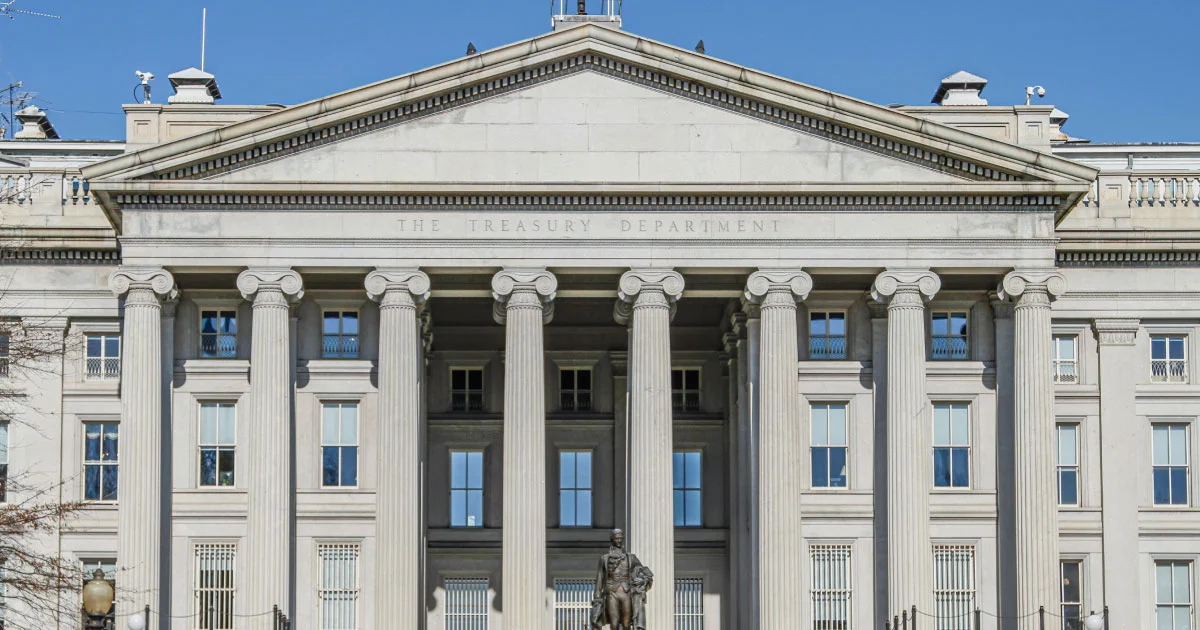
In a decisive escalation of financial warfare, the United States Department of the Treasury officially inaugurated Operation Economic Outcast on August 24, 2026. This wide-reaching economic offensive is designed to systematically dismantle the financial architecture supporting the Islamic Republic of Iran, with a specific focus on the burgeoning digital asset sector that has increasingly served as a primary conduit for sanctions evasion. Treasury Secretary Scott Bessent characterized the initiative as an "economic D-Day," signaling a shift toward a total-pressure strategy aimed at severing the lifelines of the Iranian regime and its elite military wing, the Islamic Revolutionary Guard Corps (IRGC).
The operation represents one of the most aggressive uses of U.S. financial authorities to date, combining traditional maritime sanctions with cutting-edge digital asset enforcement. Central to this campaign is a landmark sectoral determination that empowers the Office of Foreign Assets Control (OFAC) to target any individual or entity globally found to be operating within, or providing material support to, Iran’s digital assets sector. This move effectively treats the cryptocurrency industry in Iran with the same level of scrutiny as its energy, shipping, and construction sectors, marking a significant evolution in U.S. foreign policy.
The Strategic Pivot to Digital Asset Sectoral Sanctions
For years, the U.S. government has utilized Executive Order 13902 to target key pillars of the Iranian economy. However, the August 24 declaration marks the first time digital assets have been formally designated as a specific sector subject to these authorities. Under this new determination, OFAC no longer needs to prove a direct link between a transaction and specific prohibited activities, such as terrorism or weapons proliferation. The mere act of operating within Iran’s digital asset ecosystem is now sufficient grounds for designation.
This expansion of authority carries profound implications for the global financial system. By invoking secondary sanctions, the U.S. Treasury has sent a clear warning to foreign cryptocurrency exchanges, over-the-counter (OTC) desks, and blockchain infrastructure providers. Any entity that knowingly facilitates transactions for Iranian digital asset players now faces the risk of being cut off from the U.S. financial system. This "guilt by association" framework is designed to create a chilling effect, forcing global virtual asset service providers (VASPs) to implement more rigorous screening processes or abandon Iranian-nexus business entirely.
Chronology of the 2026 Enforcement Wave
The launch of Operation Economic Outcast was preceded by a series of coordinated law enforcement actions that set the stage for the August 24 announcement.
On August 18, 2026, the Department of Justice (DOJ) unsealed a major superseding indictment charging 17 Iranian nationals with conducting a massive cyber-theft campaign. These individuals were linked to the Mabna Institute, a notorious hacking-for-hire organization known for targeting academic and government institutions. This legal action provided the necessary groundwork for OFAC to apply financial pressure on the same actors.

By August 24, the Treasury Department moved to synchronize these efforts. The department sanctioned nearly 60 entities, individuals, and maritime vessels. The timing was calculated to maximize the impact on the IRGC’s financial planning for the upcoming fiscal quarter, following reports that Iranian crypto-outflows had spiked significantly following regional geopolitical tensions earlier in the year.
Targeting the Cyber-Intelligence Nexus
Operation Economic Outcast specifically highlights the intersection of state intelligence and cybercrime. OFAC’s latest designations include high-ranking members of a group operating within Iran’s Ministry of Intelligence and Security (MOIS). This group has been identified as a primary driver of malicious cyber activity targeting U.S. critical infrastructure, government offices, and private corporations.
Among those designated are group co-leader Behzad Mesri and key operatives Keyvan Fayyaz Ghareh Blagh and Arman Kahzadian. Digital forensic analysis has identified numerous Bitcoin, Ethereum, and TRON wallets associated with these individuals. These wallets were not merely used for state-directed espionage; evidence suggests they were also utilized for personal enrichment and "side-hustle" cybercrime.
For instance, investigators discovered that Arman Kahzadian was involved in the direct theft of cryptocurrency from both international and domestic Iranian entities. Even more revealing was the activity of Keyvan Fayyaz Ghareh Blagh, whose Bitcoin wallet received payments from a Russian-speaking "Initial Access Broker." This suggests a disturbing level of collaboration between Iranian state actors and the broader underground cybercriminal ecosystem. In one instance, Blagh is believed to have resold access to MOIS-compromised networks to independent criminals, pocketing the profits in Bitcoin.
Furthermore, Blagh was found to be making deposits to "Bulletproof Hosting" providers—services that ignore take-down requests and law enforcement inquiries. These payments underscore how digital assets are used to maintain the technical infrastructure necessary for sustained cyber warfare against Western interests.
The IRGC’s Shadow Fleet and Crypto-Oil Trade
While cyber-espionage remains a critical concern, the most significant volume of Iranian crypto activity is tied to the illicit sale of oil. The IRGC-Qods Force (IRGC-QF) has mastered the use of digital assets to settle oil sales and pay proxy groups across the Middle East. Data from the end of 2025 indicated that IRGC-associated addresses accounted for more than 50% of the total value received in Iran’s crypto economy, with annual volumes exceeding $3 billion.
Operation Economic Outcast has brought several key facilitators of this trade into the crosshairs. One of the primary targets is Ivan Obukhov, a UAE-based Ukrainian national. According to the Treasury, Obukhov has spent years acting as a broker for the "shadow fleet"—the network of aging tankers used to transport sanctioned Iranian crude. Since 2023, Obukhov has allegedly processed over $100 million in cryptocurrency payments to facilitate these sales on behalf of the IRGC-QF.

Obukhov did not act alone. He worked in close coordination with Mohammad Ahmed Suhil Fattouh, a Syrian national based in the UAE known by the alias "Captain Hamzah." Together, they utilized cryptocurrency to purchase vessels and manage the logistics of sanctions evasion. By targeting these middlemen, the U.S. aims to increase the friction and cost for Iran to bring its oil to market, thereby reducing the revenue available for the IRGC’s regional operations.
Broader Impact and Industry Implications
The ripple effects of Operation Economic Outcast are expected to be felt across the global fintech and crypto sectors for months to come. Compliance teams at major financial institutions are now faced with the daunting task of auditing their exposure to any entity that might fall under the new sectoral determination.
- Heightened Due Diligence: Exchanges and OTC desks must now look beyond simple blacklists. They must assess whether their counterparties—even those in seemingly neutral jurisdictions like the UAE or Turkey—are providing services to the Iranian digital asset sector.
- Infrastructure Vulnerability: The targeting of hosting providers and node operators suggests that the U.S. is looking at the "plumbing" of the crypto world. Service providers that offer anonymity or resist regulatory oversight are now at higher risk of being designated as enablers of the Iranian regime.
- The TRON Factor: The specific mention of TRON wallets in the OFAC designations highlights the shift in preference for state actors. While Bitcoin remains the primary store of value, stablecoins on the TRON network have become a preferred medium for high-velocity trade settlements due to lower fees and perceived lower levels of scrutiny compared to the Ethereum network.
Official Responses and Strategic Analysis
The Treasury’s move has garnered significant support from U.S. national security circles. In a statement following the announcement, the FBI noted that the coordination between the August 18 indictments and the August 24 sanctions demonstrates a "unified front" against state-sponsored digital crime. "We are no longer just chasing individual hackers; we are dismantling the financial engines that power their keyboards," an FBI spokesperson stated.
Market analysts suggest that Operation Economic Outcast is a recognition that traditional sanctions are no longer sufficient in a world of decentralized finance. By designating the digital asset sector itself, the U.S. is attempting to "future-proof" its sanctions regime. However, critics argue that such broad sectoral determinations could drive Iranian activity further into the dark web or toward non-compliant jurisdictions, potentially making it harder for blockchain analytics firms to track.
Despite these challenges, the U.S. Treasury remains committed to the campaign. The department has indicated that the nearly 60 designations made on August 24 are only the first phase of Operation Economic Outcast. As blockchain forensic techniques improve and more data is gathered from the August 18 indictments, further tranches of sanctions are expected.
In conclusion, Operation Economic Outcast represents a watershed moment in the history of economic sanctions. By treating digital assets as a core sector of the Iranian economy, the United States has signaled that the era of "crypto-sanctions evasion" is being met with a sophisticated and well-resourced response. For the Iranian regime, the IRGC, and their global network of enablers, the digital frontier is no longer a safe haven, but a primary battlefield in the ongoing struggle for financial transparency and global security.