Market commentator Osemka recently highlighted that the digital asset ecosystem is likely in the nascent stages of a "minor impulse" within a much larger, multi-year altcoin cycle. According to this perspective, the current phase of price action serves as a foundational period that could unfold over several months before a temporary market stabilization occurs toward the end of the year. The long-term outlook, however, remains aggressively bullish, with projections suggesting that the pinnacle of capital inflows and retail attention for altcoins may not arrive until 2027. This view aligns with the historical four-year cycle theory, which has governed the crypto markets since the inception of Bitcoin, though the current cycle is characterized by significantly deeper liquidity and institutional involvement.
Historical Context and the Mechanics of Altcoin Seasons
To understand the magnitude of the projected expansion, one must look at the historical performance of altcoins during previous market cycles. In the 2017 bull run, the total altcoin market capitalization—excluding Bitcoin—surged from a modest $10 billion to over $600 billion. This represented a staggering 6,000 percent increase in valuation within a single year. This era was defined by the Initial Coin Offering (ICO) boom, which saw thousands of new projects launch on the Ethereum network, driving demand for ETH and its associated tokens.
The subsequent cycle between 2020 and 2021 followed a similar, albeit more mature, pattern. The sector expanded from approximately $90 billion to a peak of roughly $1.7 trillion, marking a rise of about 1,800 percent. While the percentage gain was lower than in 2017, the absolute dollar value added to the market was significantly higher, reflecting the entry of institutional capital and the rise of Decentralized Finance (DeFi) and Non-Fungible Tokens (NFTs).
Crypto strategist Mark Chadwick notes that the current market setup bears striking similarities to these previous accumulation phases. Historically, altcoin "seasons" begin with a prolonged period of sideways movement or "boring" price action, where smart money accumulates assets from exhausted retail investors. This is typically followed by a breakout and a rapid vertical move in total market value. Chadwick argues that the current cycle could potentially eclipse previous ones due to the emergence of tokenized financial markets and the integration of blockchain technology into traditional finance (TradFi) infrastructure.
The Ethereum Catalyst: The Milestone in Question
The premise of a broad altcoin expansion is often inextricably linked to the performance of Ethereum. As the primary platform for decentralized applications and the second-largest cryptocurrency by market cap, Ethereum acts as a bellwether for the rest of the altcoin market. Analysts suggest that the "milestone" required to ignite the next leg of the rally is two-fold: the sustained reclamation of the $4,000 price level and a decisive breakout in the ETH/BTC trading pair.
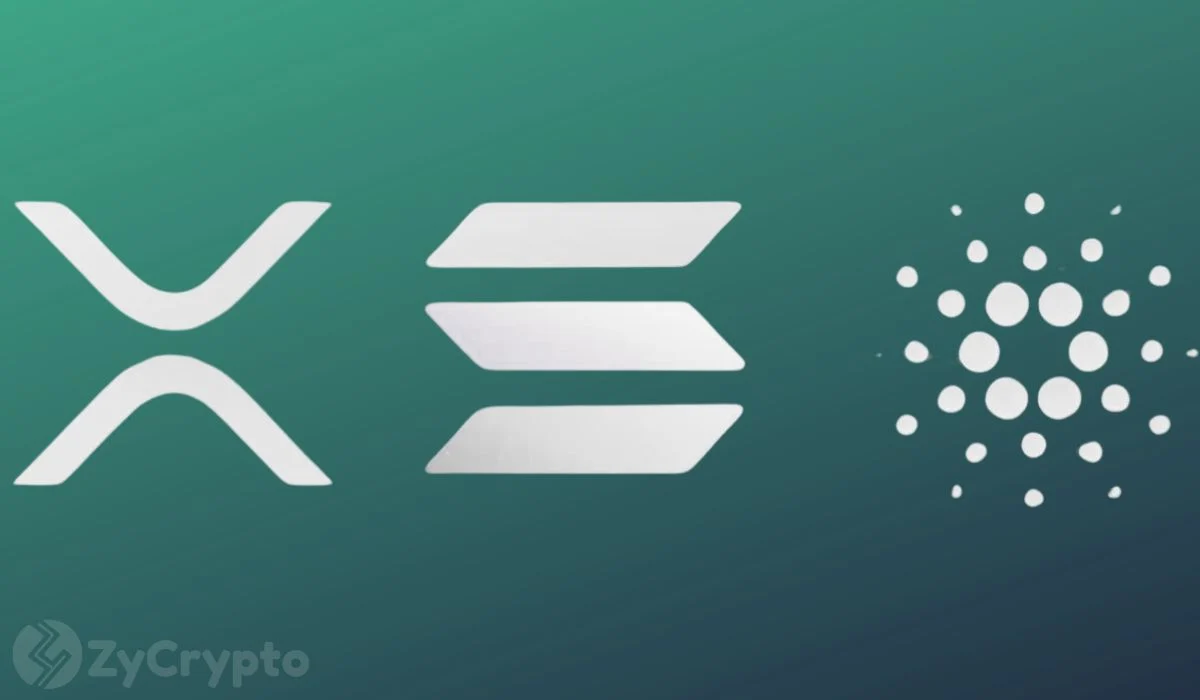
When Ethereum outperforms Bitcoin, it signals a shift in investor risk appetite. This "rotation" sees capital flow from the relative safety of Bitcoin into higher-beta assets like Solana, XRP, and Cardano. Furthermore, the recent approval and launch of Spot Ethereum Exchange-Traded Funds (ETFs) in the United States represent a fundamental shift in how institutional investors access the asset. If Ethereum can demonstrate sustained demand through these regulated vehicles, it provides the "green light" for the broader market to follow.
Asset Profiles: XRP, Solana, and the Infrastructure Leaders
Each of the assets mentioned in the current expansion thesis carries its own unique fundamental catalysts. XRP, the digital asset associated with Ripple, has been a focal point of market discussion due to its long-standing legal battle with the U.S. Securities and Exchange Commission (SEC). With the lawsuit largely resolved in terms of programmatic sales, XRP is now positioned for institutional adoption in the cross-border payment sector. Some projections suggest that the volume of cross-border payments handled by XRP-based systems could reach $10 trillion by 2030, providing a massive fundamental floor for the token’s valuation.
Solana (SOL), on the other hand, has emerged as the primary competitor to Ethereum’s dominance in the smart contract space. Known for its high throughput and low transaction costs, Solana has become the preferred network for retail-driven activities, including meme coin trading and decentralized physical infrastructure networks (DePIN). Analysts believe that if Solana can maintain its key support levels, it has a clear path toward its previous all-time highs, particularly as the "Firedancer" validator client nears implementation, promising even greater network stability and speed.
Cardano (ADA) continues to focus on a research-driven, methodical approach to scaling. The upcoming "Chang" hard fork and the transition into the Voltaire era represent a significant milestone in decentralized governance. While Cardano’s price action has been more muted compared to Solana, its loyal community and focus on institutional-grade security make it a prime candidate for expansion as the market matures and moves away from speculative assets toward functional utility.
The Role of BNB, Tron, and Dogecoin
Binance Coin (BNB) remains a powerhouse within the ecosystem, despite the regulatory challenges faced by the Binance exchange over the past year. As the native token of the BNB Chain, it powers a massive ecosystem of decentralized applications. The token’s resilience in the face of a $4 billion settlement with the U.S. Department of Justice has been viewed by many as a sign of its long-term viability.
Tron (TRX), led by Justin Sun, has carved out a massive niche in the stablecoin market. Tron currently hosts a significant portion of the world’s circulating USDT (Tether), making it one of the most utilized blockchains for actual value transfer. The network’s ability to generate consistent protocol revenue even during bear markets sets it apart from many of its peers.
Finally, Dogecoin (DOGE) continues to defy critics who label it a mere "meme coin." With the vocal support of figures like Elon Musk and a growing community of developers, DOGE is increasingly being viewed as a potential "people’s currency" for micro-payments. Its inclusion in the projected expansion list highlights the market’s continued appetite for high-liquidity, community-driven assets that can capture the public imagination.
Current Market Sentiment and Macroeconomic Pressures
Despite the optimistic long-term projections, the short-term reality is characterized by volatility and "fear." Data from CoinMarketCap indicates a recent 2.37% drop in total market capitalization, reflecting a broader retreat from risk assets. Macroeconomic uncertainty, driven by fluctuating inflation data and the Federal Reserve’s stance on interest rates, continues to weigh heavily on investor sentiment.
The "Fear and Greed Index" currently sits in a neutral-to-fearful range, suggesting that retail investors remain hesitant to commit fresh capital. Analysts note that this divergence between long-term structural signals and short-term price weakness is common before major market shifts. The current "wall of worry" is seen by contrarian investors as a necessary precursor to a sustained bull market.
Timeline of the Multi-Year Expansion
The projected timeline for this expansion suggests a phased rollout of growth:
- 2024 (The Foundation): Continued accumulation and institutional positioning. The market is expected to react to the initial inflows from Ethereum ETFs and the aftermath of the Bitcoin halving.
- 2025 (The Impulse): The first major upward move, where altcoins begin to reclaim significant percentage gains. This phase is often characterized by a "catch-up" trade where altcoins outperform Bitcoin.
- 2026 (The Consolidation): A mid-cycle pause, as described by Osemka. This allows the market to digest gains and flush out over-leveraged positions.
- 2027 (The Peak): The culmination of the multi-year cycle. This is the period where the most dramatic "vertical" moves are expected, driven by mass retail adoption and the full integration of tokenized assets into the global financial system.
Broader Implications for the Global Economy
The expansion of these digital assets carries implications far beyond the crypto market. As XRP and Tron facilitate global liquidity and Solana and Ethereum host decentralized financial services, the very nature of banking and value transfer is being redefined. The "milestone" for Ethereum is not just a price target; it is a signal of the growing legitimacy of decentralized infrastructure.
The emergence of "tokenized financial markets" mentioned by Mark Chadwick refers to the process of putting real-world assets (RWA)—such as real estate, bonds, and commodities—onto the blockchain. This transition requires robust, high-liquidity networks like those provided by the top altcoins. If the projected 2027 peak is realized, the cryptocurrency sector will likely have transitioned from a speculative niche into a core component of the global financial architecture.
In conclusion, while the current market may be "wallowing in fear," the underlying structural data and historical patterns point toward a significant expansion. The success of Ethereum remains the linchpin for this movement. Should ETH achieve its critical milestones, the path for XRP, Solana, Cardano, BNB, and DOGE to reach new heights appears increasingly clear, supported by deeper capital pools and a more sophisticated technological foundation than ever before.