


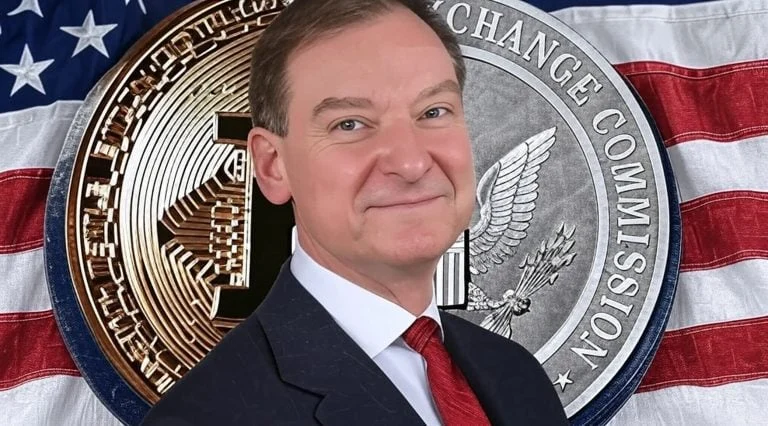
In a definitive move to reshape the United States’ standing in the global digital asset economy, Securities and Exchange Commission (SEC) Chairman Paul Atkins has detailed a comprehensive regulatory proposal designed to align with upcoming federal legislation and reverse the trend of domestic firms moving operations offshore. Speaking in a recent interview with Fox Business’s "Mornings with Maria," Atkins characterized the SEC’s new approach as a "historic step" intended to fulfill the executive branch’s vision of transforming the United States into the world’s primary hub for cryptocurrency and blockchain innovation. The proposed framework focuses on providing clear exemptions for capital formation and fundraising, aiming to provide the regulatory certainty that has been a point of contention between the agency and the private sector for several years.
The announcement comes at a critical juncture for the digital asset industry, as the United States Senate prepares for a high-stakes vote on the CLARITY Act, scheduled for September 15. Atkins emphasized that the SEC’s proposed rules were meticulously crafted to function in tandem with this legislation, ensuring that the agency’s administrative actions do not conflict with the statutory goals of Congress. By initiating a public comment period now, the SEC seeks to have a ready-to-implement regulatory structure that can be finalized immediately should the CLARITY Act receive legislative approval and the President’s signature.
The Shift from Enforcement to Collaboration
For much of the past decade, the relationship between the SEC and the cryptocurrency industry has been defined by "regulation by enforcement." Under previous leadership, the agency frequently pursued litigation against digital asset firms, alleging that many tokens constituted unregistered securities. This approach, while intended to protect investors, was widely criticized by industry leaders for its lack of proactive guidance. Chairman Atkins’ latest remarks signal a paradigm shift toward a collaborative and rules-based environment.
Atkins noted that the previous administration’s policies inadvertently drove American innovators to foreign jurisdictions, such as Dubai, Singapore, and Switzerland, to develop products and raise capital. This "brain drain" and "capital flight" have been major concerns for economic policymakers. Since modern capital is highly mobile and can be moved globally with a few clicks, Atkins argued that the United States must provide a legal framework that allows domestic investors to participate in the market safely at home rather than seeking opportunities in less regulated or foreign markets.
The SEC’s proposed framework includes specific exemptions related to fundraising. These exemptions are intended to allow startups to raise capital from investors without the prohibitive costs and legal complexities associated with traditional initial public offerings (IPOs), provided they adhere to certain transparency and investor protection standards. By lowering the barriers to entry, the SEC hopes to attract developers and venture capital back to American shores.
The CLARITY Act and the September 15 Deadline
The CLARITY Act represents one of the most significant legislative efforts to date regarding the oversight of digital assets. While the specific provisions of the bill have undergone various iterations, its primary goal is to provide a clear legal definition for digital assets and to delineate the jurisdictional boundaries between the SEC and the Commodity Futures Trading Commission (CFTC).
The upcoming Senate vote on September 15 is viewed as a litmus test for the bipartisan support of the crypto industry. Atkins expressed optimism that the measure would pass the Senate and eventually reach President Donald Trump’s desk for signing. The Chairman’s strategy of preemptively aligning SEC rules with the CLARITY Act is intended to prevent a "regulatory vacuum" that often occurs between the passage of a law and the implementation of its associated rules.
If passed, the CLARITY Act would provide the "statutory grounding" that Atkins insists is necessary for the long-term stability of the market. While the SEC currently possesses the authority to issue exemptions and guidance under existing laws, these administrative actions are vulnerable to the changing whims of future commissions. A statutory mandate from Congress would make these rules more permanent and less susceptible to being overturned during future political transitions.
Addressing the Offshore Challenge: Data and Context
The push to "reshore" crypto innovation is backed by significant economic data. According to reports from venture capital firms specializing in blockchain, the share of crypto developers based in the United States has steadily declined over the last five years. In 2018, nearly 40% of the world’s blockchain developers were located in the U.S.; by 2024, that number is estimated to have fallen below 25%.
Furthermore, the "Global Crypto Adoption Index" indicates that while American retail interest remains high, the institutional infrastructure—such as exchange headquarters and custodial services—has increasingly migrated to jurisdictions with bespoke digital asset laws. The European Union’s Markets in Crypto-Assets (MiCA) regulation and the United Kingdom’s efforts to become a "global crypto-asset technology hub" have provided templates that many in the industry believe the U.S. should emulate.
Chairman Atkins highlighted that the SEC’s new proposal is not merely about deregulation but about "smart regulation." He pointed out that US investors are already participating in the global crypto market through offshore platforms, often without the protections afforded by U.S. law. By creating a domestic framework that is both rigorous and accessible, the SEC aims to bring these activities under a supervised umbrella, thereby enhancing market integrity and protecting national economic interests.
The SEC’s Path Forward Without Congressional Action
A pivotal moment in Atkins’ interview occurred when he was asked about the SEC’s contingency plans should the CLARITY Act fail to pass the Senate or face a veto. Atkins was clear: the agency does not intend to wait indefinitely for Congress. He reiterated that the SEC has substantial authority under existing securities laws to advance its proposal independently.
"Our goal is to get them [the rules] adopted to get them taken up by the industry so that you have a course of dealing and practice," Atkins explained. By establishing a "course of dealing," the SEC can create a de facto standard for the industry. This involve using the SEC’s power to grant "no-action" letters or specific safe harbors for firms that meet certain criteria.
However, Atkins was quick to add a caveat regarding the sustainability of this approach. Without the backing of a new statute like the CLARITY Act, any rules established by the current commission could be revised or rescinded by future commissions through the standard notice-and-comment process. This "regulatory seesaw" is precisely what the industry fears, as it makes long-term business planning nearly impossible. Therefore, while the SEC can act alone in the short term, Atkins maintains that legislative action is the only way to ensure the rules are "sustainable and lasting into the future."
Reactions from the Industry and Political Landscape
The reaction to Atkins’ statements has been largely positive within the digital asset community, though some skeptics remain cautious. Industry trade groups, such as the Blockchain Association and the Chamber of Digital Commerce, have long advocated for the types of exemptions Atkins is proposing. Leaders from major U.S.-based exchanges, including Coinbase and Kraken, have frequently called for a "level playing field" that allows them to compete with offshore entities like Binance or Bybit.
On the political front, the SEC’s new direction is closely tied to the broader economic platform of the current administration. President Trump has frequently stated his desire to make the United States a leader in emerging technologies, including Bitcoin mining and decentralized finance (DeFi). Atkins’ reference to the president’s call to make the U.S. a "crypto capital" underscores the alignment between the independent regulatory agency and the executive branch’s policy goals.
Conversely, some consumer advocacy groups have expressed concern that broadening exemptions for fundraising could expose retail investors to higher levels of risk. These critics argue that the "unregistered securities" labels of the past were necessary to prevent fraud and ensure that investors received adequate disclosures. The SEC will likely face significant scrutiny during the public comment period as it attempts to balance these investor protection concerns with the need for competitive innovation.
Chronology of Recent Regulatory Developments
The current push for reform is the culmination of several years of escalating tension and legislative attempts. Below is a timeline of the events leading to the current SEC proposal:
- 2021–2023: The SEC under previous leadership increases enforcement actions, targeting major exchanges and token issuers. The industry responds with calls for "clearer rules of the road."
- Early 2024: The CLARITY Act is introduced in Congress, aiming to define the regulatory boundaries for digital assets and stablecoins.
- June 2024: The executive branch issues a memorandum emphasizing the importance of the United States maintaining leadership in financial technology and digital assets.
- August 2024: Chairman Paul Atkins announces the SEC’s intent to propose a new framework that aligns with the CLARITY Act and focuses on reshoring innovation.
- September 1, 2024: The SEC officially opens the public comment period for its proposed rule changes and fundraising exemptions.
- September 15, 2024 (Scheduled): The United States Senate is set to vote on the CLARITY Act, a move that will determine the permanent legal landscape for the industry.
Broader Implications for the Global Financial Market
The implications of the SEC’s shift extend far beyond the borders of the United States. As the world’s largest economy and the home of the global reserve currency, the U.S.’s regulatory stance often sets the tone for international standards. If the SEC successfully implements a framework that encourages innovation while maintaining oversight, it could trigger a "race to the top" among global regulators.
Furthermore, the focus on "fundraising and other conditions" suggests that the SEC is looking at the entire lifecycle of a digital asset company—from its initial seed funding to its eventual public listing. By providing a clear path for growth within the U.S. regulatory system, the SEC could potentially unlock billions of dollars in sidelined institutional capital. Many institutional investors have remained on the sidelines of the crypto market not due to a lack of interest, but due to the "regulatory risk" associated with the previous environment of uncertainty.
As the industry looks toward the September 15 vote, the focus remains on whether the legislative and executive branches can achieve the harmony that Chairman Atkins has proposed. The goal of making the United States a "crypto capital" is ambitious, but with the SEC moving toward a framework of exemptions and clarity, the foundation for that transition is being laid. The coming weeks will be instrumental in determining whether this "historic step" leads to a new era of American technological dominance or whether the complexities of the digital age continue to challenge traditional regulatory structures.














