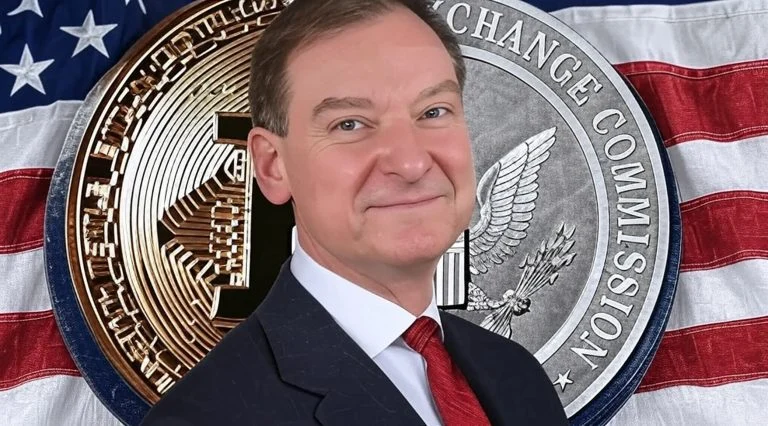
Securities and Exchange Commission (SEC) Chairman Paul Atkins has formally outlined a strategic regulatory pivot aimed at transforming the United States into the world’s leading jurisdiction for digital asset innovation. In a comprehensive interview with Fox Business on "Mornings with Maria," Atkins detailed a proposed regulatory framework designed to align with the upcoming CLARITY Act, signaling a definitive end to the "regulation by enforcement" era that characterized the previous administration. The chairman emphasized that the agency’s primary objective is to reshore innovators and capital that migrated to offshore jurisdictions due to domestic regulatory uncertainty, thereby fulfilling a central policy goal of the current executive branch to secure American dominance in the burgeoning crypto-economy.
The SEC’s new proposal represents a significant departure from past practices, focusing on creating a predictable environment for fundraising and product development. According to Atkins, the framework is the most "historic step yet" in bridging the gap between existing securities laws and the unique requirements of the digital asset sector. By providing clear exemptions for capital formation and establishing a collaborative notice-and-comment process, the SEC intends to create a "course of dealing" that encourages domestic growth while ensuring investor protection through transparency rather than litigation.
The Push for a Domestic "Crypto Capital"
The cornerstone of Chairman Atkins’ strategy is the stated goal of making the United States the "crypto capital of the world." This objective is not merely rhetorical; it is a response to a multi-year trend of "brain drain" and capital flight. Since 2021, a significant number of high-profile blockchain projects and decentralized finance (DeFi) developers have relocated their operations to jurisdictions such as the United Arab Emirates, Singapore, Switzerland, and Hong Kong. These regions have historically offered more specific regulatory taxonomies for digital assets, attracting billions in venture capital that might otherwise have remained in the U.S.
Atkins argued that the previous administration’s restrictive policies effectively penalized domestic innovators, forcing them to seek friendly regulatory environments to raise money and develop decentralized products. "Our goal is to try to bring reality to the president’s call," Atkins noted, referring to the administration’s broader economic agenda. He highlighted the irony of the previous status quo: while innovators were driven offshore, U.S. investors remained capable of accessing these global markets through digital means. By reshoring these activities, the SEC aims to bring these transactions back under U.S. oversight, where they can be conducted within a legal framework that balances innovation with market integrity.
Synchronization with the CLARITY Act
A critical component of this regulatory shift is its integration with legislative efforts on Capitol Hill. The United States Senate is scheduled to vote on the CLARITY Act on September 15, a piece of legislation that seeks to define the boundaries of digital asset regulation and provide the statutory clarity that the industry has long demanded. Atkins expressed strong support for the measure, stating his hope that it will pass the Senate and reach President Donald Trump’s desk for an official signature.
The SEC’s proposed rules have been specifically engineered to function in tandem with the CLARITY Act. By initiating the rulemaking process now, the agency is preparing to implement the legislation’s mandates immediately upon its enactment. This proactive stance is intended to prevent the "regulatory lag" that often occurs when new laws are passed. The proposal includes specific exemptions related to fundraising—a perennial pain point for crypto startups—and sets forth conditions under which certain tokens may be exempt from traditional registration requirements, provided they meet strict transparency and decentralization criteria.
Navigating Statutory Grounding and Long-term Stability
One of the more nuanced aspects of Atkins’ interview was the discussion regarding the SEC’s independent authority versus the need for Congressional action. When asked how the agency would proceed if the CLARITY Act failed to advance through Congress, Atkins was firm in his assertion that the SEC already possesses the authority under existing laws to implement significant portions of the proposal. Through the use of administrative exemptions and the formal rulemaking process, the SEC can provide relief for fundraising and clarify the status of various digital instruments without waiting for a new mandate.
However, Atkins was quick to point out that administrative rules alone are not a permanent solution. He argued that "statutory grounding" is essential for the long-term health of the industry. Rules established solely by an SEC commission can be revised or rescinded by future commissions through the same notice-and-comment process. To provide the "stable, sustainable, and lasting" environment that institutional investors and large-scale developers require, the backing of federal law is necessary.
"Our goal is to get them adopted to get them taken up by the industry so that you have a course of dealing and practice," Atkins explained. This approach suggests a two-pronged strategy: first, establishing a functional "status quo" through SEC rulemaking, and second, solidifying that status quo through the CLARITY Act to ensure it survives changes in political leadership.
Chronology of the Shift in U.S. Crypto Policy
The path to this proposed framework has been marked by several pivotal moments over the last two years:
- Mid-2023 to Early 2024: Heightened enforcement actions by the SEC against major exchanges led to a surge in industry advocacy and legal challenges. This period saw a significant increase in U.S.-based firms opening "international hubs."
- The 2024 Election Cycle: Digital asset policy became a mainstream political issue, with candidates vying for the support of the "crypto vote." The current administration made the establishment of a "crypto capital" a key plank of its economic platform.
- Late 2024: Following the change in leadership at the SEC, Chairman Paul Atkins was appointed with a mandate to modernize the agency’s approach to technology and capital markets.
- Early September: The SEC opens the public comment period for its new regulatory framework, specifically designed to anticipate the passage of the CLARITY Act.
- September 15 (Upcoming): The Senate is scheduled to hold a high-stakes vote on the CLARITY Act, which will determine the legislative future of digital assets in the U.S.
Supporting Data and Market Context
The urgency of Chairman Atkins’ proposal is underscored by recent economic data regarding the global digital asset landscape. According to reports from venture capital firms like a16z and Electric Capital, the United States’ share of the global crypto developer population has seen a steady decline over the last five years, dropping from approximately 40% to less than 30%. This decline corresponds with the rise of regulatory "safe harbors" in Europe (under the MiCA framework) and Asia.
Furthermore, the "offshore" nature of the crypto market has historically led to significant risks for U.S. investors, most notably exemplified by the collapse of FTX in 2022, which was headquartered in the Bahamas. Atkins’ push to "reshore" innovation is seen by many analysts as a consumer protection move as much as an economic one. By providing a domestic path for capital formation, the SEC reduces the incentive for U.S. citizens to use unregulated, offshore platforms that lack the oversight and recovery mechanisms found in the American financial system.
Industry and Political Reactions
While the SEC’s proposal has been met with optimism from many corners of the industry, it has also sparked a debate regarding the speed and scope of the changes.
Industry Advocates: Organizations such as the Blockchain Association and the Chamber of Digital Commerce have tentatively welcomed Atkins’ comments. Industry leaders have long argued that the U.S. does not need "new" laws as much as it needs "clear" interpretations of how old laws apply to new technology. The mention of fundraising exemptions is particularly popular among startups that have struggled with the costs of securities registration.
Legislative Supporters: Proponents of the CLARITY Act in the Senate argue that the SEC’s alignment with the bill is a sign of a "unified front" between the executive and legislative branches. Senatorial supporters believe that a successful vote on Sept. 15 will provide the necessary "statutory grounding" Atkins mentioned, effectively ending the era of regulatory ambiguity.
Skeptics and Consumer Groups: On the other hand, some consumer advocacy groups express concern that "reshoring" through exemptions might lead to a dilution of investor protections. These groups argue that the SEC must remain vigilant to ensure that "innovation" does not become a pretext for circumventing the disclosures that keep markets fair and efficient.
Broader Implications for Global Finance
The SEC’s move is likely to trigger a competitive response from other global financial hubs. If the United States successfully implements a framework that combines the depth of its capital markets with regulatory clarity for digital assets, it could reclaim its position as the undisputed center of financial technology. This would have significant implications for the dominance of the U.S. dollar, as many digital asset innovations—particularly stablecoins—are pegged to the greenback.
The focus on "fundraising and other conditions" suggests that the SEC is looking toward the future of "tokenization," where traditional assets like real estate, bonds, and private equity are issued on blockchain networks. By creating a legal home for these activities, the U.S. could modernize its entire financial infrastructure, potentially lowering costs for issuers and increasing access for investors.
As the September 15 Senate vote approaches, the global financial community remains focused on Washington. The outcome of the vote and the subsequent finalization of the SEC’s rules will determine whether the United States can indeed "bring reality" to the vision of a crypto capital, or if the digital asset industry will remain a fractured, globalized frontier. For Chairman Atkins and the SEC, the goal is clear: to ensure that the next generation of financial technology is "Made in America."