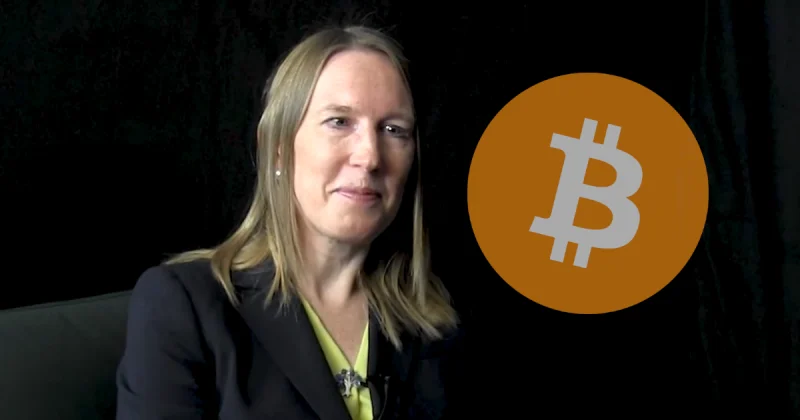
The landscape of decentralized finance (DeFi) faced a significant moment of regulatory clarity this week as Securities and Exchange Commission (SEC) Commissioner Hester Peirce issued a detailed statement addressing the legal status of crypto vaults and onchain lending strategies. On Wednesday, Peirce, a figure frequently referred to by the industry as "Crypto Mom" for her generally pro-innovation stance, emphasized that the mere transition of financial products onto a blockchain does not grant them immunity from existing federal securities laws. Her statement serves as both a warning to developers and an invitation for collaboration, highlighting the thin line between automated software and regulated investment vehicles.
According to the statement released by the SEC, Peirce clarified that while recent guidance has helped distinguish which crypto assets fall outside the agency’s purview, many activities involving tokenized vaults and automated lending remain squarely within the jurisdiction of the SEC. The Commissioner’s remarks underscore a growing concern within the agency that the "onchain" label is being used as a shield to bypass long-standing investor protection frameworks. Peirce stressed that the underlying economic reality of a transaction—rather than its technological delivery mechanism—is the primary factor in determining whether a product constitutes a security.
The Intersection of Automation and Securities Law
At the heart of Peirce’s analysis is the application of the "Howie Test," a legal standard used in the United States to determine whether a transaction qualifies as an investment contract. Applying this principle to crypto vaults, Peirce noted that tokenizing or automating financial services does not fundamentally alter their legal character. If a vault is designed to generate yield through staking, lending, or other active strategies, it may be classified as a security or an investment company under the Investment Company Act of 1940.
The distinction often hinges on the level of "managerial effort" involved. In many DeFi protocols, "vaults" are smart contracts that aggregate user capital to execute specific yield-generating strategies. Peirce pointed out that if these strategies involve a centralized team or a group of developers making active decisions about where to deploy capital, the arrangement likely meets the criteria for a security. This is because investors are relying on the efforts of others to generate a profit—a core pillar of the Howie Test.
Furthermore, Peirce highlighted that onchain lending arrangements are not exempt from scrutiny. Depending on how they are structured, these arrangements could raise issues not only regarding securities registration but also regarding the status of the entities as investment advisers or investment companies. The Commissioner warned that firms attempting to bypass these regulations through clever coding or decentralization "in name only" could face significant legal repercussions.
Chronology of SEC Regulatory Evolution in the Crypto Sector
The statement from Commissioner Peirce does not exist in a vacuum; it is the latest chapter in a multi-year effort by the SEC to define the boundaries of the digital asset market.
- The 2017 DAO Report: The SEC first signaled its interest in DeFi with the "DAO Report," which concluded that tokens issued by a decentralized autonomous organization were securities.
- The 2020 Safe Harbor Proposal: Commissioner Peirce introduced her "Token Safe Harbor" proposal, which suggested a three-year grace period for developers to decentralize their networks before facing securities enforcement. This proposal, however, was never officially adopted by the Commission.
- The 2022 Lending Crackdown: Following the collapse of several centralized lending platforms, the SEC took aggressive action against firms like BlockFi, which settled for $100 million over charges related to its interest-bearing accounts.
- 2023-2024 Enforcement Actions: The agency launched high-profile lawsuits against major exchanges including Coinbase and Binance, alleging that they operated as unregistered brokers and clearing agencies.
- July 2024 Statement: Peirce’s latest remarks specifically target the "vault" and "onchain lending" models, which have seen a resurgence in popularity as DeFi markets recover.
This timeline illustrates a steady progression from broad warnings to specific technical critiques of DeFi primitives. Peirce’s recent statement suggests that the SEC is now looking past the "exchange" level and moving deeper into the protocol level to identify potential securities violations.
Supporting Data and the Rise of DeFi Vaults
The significance of Peirce’s warning is underscored by the massive growth in the DeFi sector. As of mid-2024, the Total Value Locked (TVL) in decentralized finance protocols fluctuates between $80 billion and $100 billion. A significant portion of this capital is held in "yield aggregators" or "vaults."
According to data from DeFiLlama, protocols that utilize vault-like structures—such as Yearn Finance, Beefy, and various liquid staking derivatives—manage billions of dollars in user assets. For example, liquid staking, which Peirce specifically mentioned as a potential trigger for securities law, currently represents the largest sector in DeFi, with over $40 billion in TVL.
The SEC’s concern is rooted in the fact that many of these vaults offer "set and forget" products for retail investors. While the code may be open-source, the ongoing maintenance of the strategies, the selection of collateral types, and the management of liquidation thresholds are often performed by a core group of developers or a DAO with concentrated voting power. From a regulatory perspective, this looks remarkably similar to a traditional mutual fund or a hedge fund, both of which are heavily regulated.
Official Responses and Industry Reaction
While the SEC’s official stance under Chair Gary Gensler has been one of "regulation by enforcement," Peirce has consistently advocated for a more collaborative approach. In her Wednesday statement, she encouraged industry participants to engage with the SEC during the product development phase rather than after a launch. She noted that the agency remains open to considering regulatory updates that could enable innovation while maintaining fair and orderly markets.
Industry reactions to Peirce’s statement have been mixed. Legal experts in the blockchain space argue that her emphasis on "managerial efforts" creates a difficult path for DeFi developers. "The challenge is that many protocols require some level of human intervention to fix bugs or update parameters for security," said one DeFi legal consultant. "If that intervention is labeled as ‘managerial effort,’ then true decentralization becomes a legal impossibility in the eyes of the SEC."
On the other hand, some institutional players have welcomed the clarity. Large financial institutions looking to enter the onchain lending space have expressed a desire for a "compliant path" that Peirce alluded to. These entities are often hesitant to use protocols that may be deemed unregistered securities offerings, and a clearer framework for compliant vaults could pave the way for more institutional capital to enter the ecosystem.
Fact-Based Analysis of Implications
The implications of Peirce’s statement are far-reaching for the DeFi ecosystem. If the SEC begins to move against vault providers, it could lead to a fragmentation of the market. Developers may choose to move their operations to more crypto-friendly jurisdictions, such as the European Union under the MiCA (Markets in Crypto-Assets) regulation or the United Arab Emirates.
There is also the "Free Speech" argument which Peirce notably included in her statement. She remarked that any regulatory analysis must "safeguard developers’ free speech rights." This is a reference to the legal theory that writing and publishing software code is a form of protected speech under the First Amendment. This creates a potential constitutional showdown: can the SEC regulate the deployment of code if the code itself is protected speech?
Moreover, the recent Supreme Court ruling in Loper Bright Enterprises v. Raimondo, which overturned "Chevron deference," may limit the SEC’s ability to broadly interpret its statutory authority. Peirce acknowledged this by stating that the SEC must respect the "limits of its statutory authority." Without Chevron deference, courts may be less likely to defer to the SEC’s interpretation of whether a specific crypto vault is a security, potentially giving DeFi developers more leverage in future litigation.
Conclusion and Future Outlook
Commissioner Hester Peirce’s statement serves as a critical reminder that the digital asset industry is still operating under a cloud of regulatory uncertainty, despite the technological advancements of the last decade. By specifically calling out crypto vaults and onchain lending strategies, the SEC has signaled that it is looking closely at the core components of the DeFi economy.
For developers, the message is clear: automation does not equal exemption. The focus remains on the economic relationship between the service provider and the user. As the industry moves forward, the "compliant paths" Peirce mentioned will likely involve more robust KYC/AML (Know Your Customer and Anti-Money Laundering) integrations and potentially the registration of certain DeFi protocols as investment companies.
The path ahead will likely be defined by a series of court cases and potential legislative action from Congress. In the meantime, Peirce’s call for engagement suggests that there is still a window for the industry to help shape the rules of the road. However, as the Commissioner herself noted, that window requires a willingness to acknowledge that the "onchain" world is not a lawless frontier, but a new medium for age-old financial activities.