


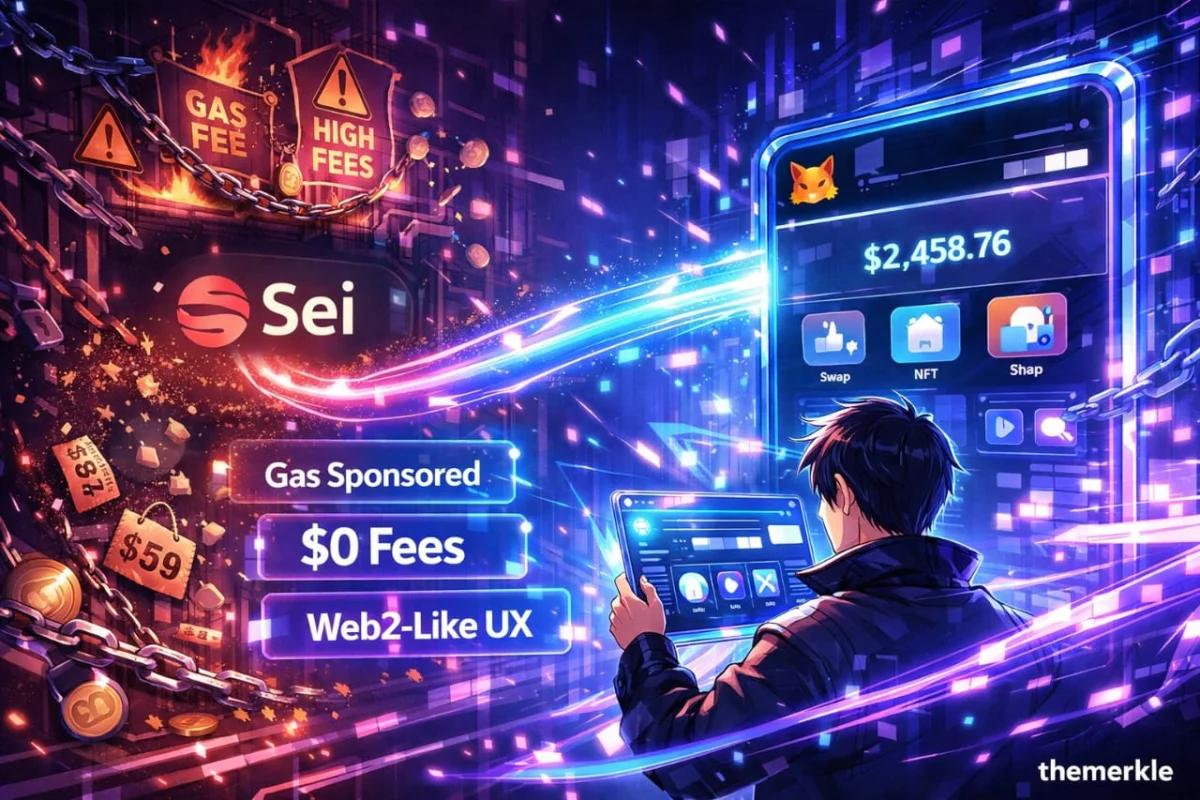
Sei Network, the high-performance Layer 1 blockchain optimized for trading, announced on April 9, 2026, the immediate activation of gas-sponsored transactions, a groundbreaking feature designed to eliminate transaction fees for users, particularly those interacting via MetaMask. This strategic initiative aims to dismantle one of the most persistent barriers to widespread blockchain adoption by providing a seamless, "Web2-like" experience where all transaction costs are automatically covered behind the scenes. The move is set to significantly enhance usability across the Sei ecosystem, empowering users to engage with decentralized applications (dApps), perform swaps, and trade non-fungible tokens (NFTs) on platforms like "Degen farm" without the friction of managing gas fees.
The Genesis of Gas Fee Challenges in Blockchain
For over a decade, transaction fees, commonly known as "gas fees," have been an inherent and often contentious aspect of interacting with blockchain networks. Initially conceived as a mechanism to compensate network validators for processing transactions and to deter spam, these fees have historically presented a significant hurdle for both retail users and institutional entities. On prominent networks like Ethereum, gas fees have frequently surged during periods of high network congestion, making small transactions prohibitively expensive and unpredictable. This volatility and cost have created a complex user experience, requiring users to constantly monitor gas prices, estimate costs, and maintain a separate balance of the native cryptocurrency solely for transaction payments.
This operational friction has been widely identified as a major impediment to achieving mainstream adoption of Web3 technologies. New users, accustomed to the frictionless digital experiences of Web2 platforms where service providers absorb or abstract away processing costs, often find the concept of gas fees confusing and intimidating. Even experienced users express frustration over failed transactions due to insufficient gas or the unexpected depletion of their crypto holdings simply to move assets or interact with a smart contract. The institutional sector, while dealing with larger volumes, faces similar challenges in terms of cost predictability, operational overhead, and the need for dedicated treasury management for gas.
Sei Network was purpose-built to address the inherent limitations of existing Layer 1 blockchains, particularly concerning speed, scalability, and user experience for trading-centric applications. Its architecture is specifically optimized for exchanges, DeFi protocols, and other high-throughput use cases, aiming to provide near-instant finality and extremely low latency. The integration of gas-sponsored transactions represents a natural evolution of this design philosophy, directly tackling the user-facing cost component that often undermines even the most performant underlying infrastructure.
A New Paradigm: Zero Transaction Costs for MetaMask Users
The core of Sei Network’s latest announcement is the full integration of MetaMask, one of the most ubiquitous self-custodial cryptocurrency wallets, into its gas sponsorship system. This means that millions of MetaMask users can now connect to Sei-based dApps and execute transactions without ever having to think about gas fees. Whether initiating a token swap, participating in a liquidity pool, minting an NFT, or listing an item on a marketplace like "Degen farm," the transaction costs are seamlessly handled by the network itself.
This mechanism fundamentally transforms the user journey. Instead of encountering prompts for gas limits, network fees, and estimated costs, users will experience a transaction confirmation process akin to making an online purchase with a credit card – the focus remains solely on the action being performed, not the underlying payment infrastructure. The system leverages sophisticated "meta-transaction" relayers, which are services that pay the gas fees on behalf of the user and then submit the transaction to the blockchain. While the technical specifics occur in the background, the user’s perception is one of complete fee elimination, thereby achieving the desired "Web2-like" fluidity.
The strategic choice to prioritize MetaMask integration underscores Sei Network’s commitment to accessibility. MetaMask serves as a gateway for a vast global audience to interact with the decentralized web. By removing the gas fee barrier directly within this widely adopted wallet, Sei is poised to capture a significant segment of users who may have previously been deterred by the complexities and costs associated with other blockchain ecosystems. This move not only simplifies engagement for existing crypto enthusiasts but also dramatically lowers the entry barrier for newcomers to the Web3 space.
Essentializing Barriers for Retail and Institutional Users Alike
The ramifications of eliminating transaction fees extend across the entire spectrum of blockchain participants, from individual retail investors to large-scale institutional traders. Historically, the economic viability of executing small trades or frequent micro-transactions has been undermined by fixed or volatile gas fees. For a retail user looking to swap a small amount of tokens or engage in play-to-earn gaming, even a few dollars in gas fees can represent a significant percentage of their transaction value, making such interactions uneconomical or unappealing. Sei’s gas-sponsored model completely removes this disincentive, fostering greater participation and enabling a wider array of use cases that rely on frequent, low-value interactions.
On the institutional front, the benefits are equally profound. While institutions operate with larger capital, they are acutely sensitive to operational costs, predictability, and efficiency. High-frequency trading firms, market makers, and institutional liquidity providers often execute thousands, if not millions, of transactions daily. Managing the variable costs of gas fees across such volume adds substantial overhead, complexity, and unpredictability to their trading strategies. By abstracting away these fees, Sei Network offers a more stable and cost-effective environment for institutional-grade operations, potentially attracting significant capital and trading volume. This predictability allows institutions to model their costs more accurately, reducing risk and improving overall profitability.
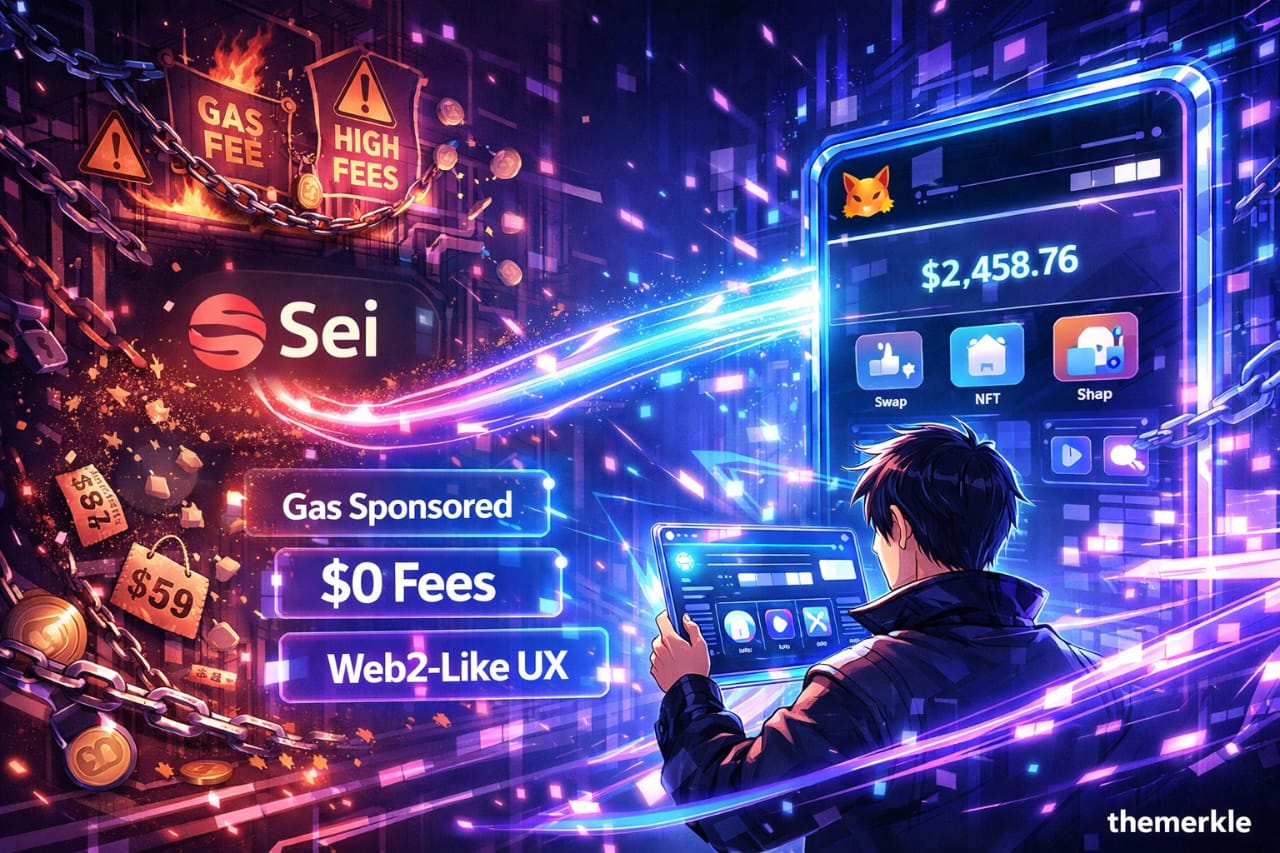
Experts within the blockchain industry have been quick to highlight the potential for this model to catalyze an exponential expansion of the Sei ecosystem. Developers, no longer burdened by the need to factor gas fees into their dApp economics or to design complex relaying mechanisms themselves, are incentivized to build directly on Sei. This "fee-less" environment lowers the barrier to entry for innovation, encouraging the creation of more user-friendly and economically viable applications across DeFi, NFTs, gaming, and social platforms. The network thereby positions itself as a prime destination for builders seeking to create truly mass-market Web3 experiences.
An Integrated Experience to Encourage Ecosystem Development
The seamless integration of gas-sponsored transactions offers a superior user experience (UX) across all applications deployed on the Sei Network. Users are no longer confronted with the underlying technical complexities of blockchain. The typical mental overhead associated with "gas wars," monitoring network congestion, or ensuring sufficient native token balances for fees is entirely removed. This intuitive, friction-free interaction is paramount for driving mainstream adoption, allowing users to focus purely on the utility and value proposition of the dApps they are using, much like they interact with familiar Web2 applications and services.
This enhanced user-friendliness is a powerful catalyst for ecosystem growth. A smoother user journey translates directly into higher engagement, increased retention, and a greater willingness to explore new applications. Developers are incentivized to build on a network where their users face fewer obstacles, knowing that the core interaction layer is optimized for simplicity. This creates a virtuous cycle: more users attract more developers, who in turn build more innovative dApps, further attracting users.
Sei Network’s focus on transaction gas-free operations provides a significant competitive advantage in an increasingly crowded and competitive blockchain landscape. While other Layer 1s and Layer 2s continue to grapple with varying fee structures, often relying on complex scaling solutions that still involve some form of user-paid gas, Sei’s direct approach offers a clear differentiator. This strategy positions Sei not just as a high-performance chain, but as a truly user-centric platform, appealing to a broader audience seeking simplicity and efficiency in their decentralized interactions.
Strategic Implementation for Wider Adoption and Industry Transformation
The gas-free initiative by Sei Network transcends mere user convenience; it is a calculated strategic maneuver aimed at fundamentally reshaping its market position and accelerating mainstream adoption. By entirely eliminating transaction costs, Sei Network directly challenges the prevailing economic models of many existing blockchains, positioning itself as a "user-first" platform where engagement is prioritized over micro-transactions. This bold move signals a long-term vision focused on fostering a vibrant, expansive ecosystem rather than short-term revenue generation from transaction fees.
This strategic implementation is anticipated to create a powerful "flywheel effect." The absence of fees acts as a potent magnet for new users who may have previously been deterred by the financial and psychological barriers of excessive gas costs. As more users flock to Sei due to its frictionless environment, the network’s liquidity and activity increase. This, in turn, attracts more developers and projects seeking a highly engaged user base, further enriching the ecosystem with diverse dApps and services. The increased utility and vibrant community then attract even more users, perpetuating the growth cycle.
This focus on frictionless interaction is central to Sei Network’s ambition to reach mainstream adoption. By abstracting away the underlying complexities of blockchain technology, Sei aims to make Web3 as accessible and intuitive as the internet itself. This approach aligns with broader industry trends advocating for "account abstraction" and improved user experience as critical components for Web3’s eventual widespread integration into daily life.
Industry Response and Future Outlook
Sei Network’s announcement has been met with significant positive feedback from across the blockchain community. Users and developers alike recognize the profound implications of gas-sponsored transactions, particularly its potential to reset user expectations for interaction costs across the entire industry. The concept of paying for every digital action, which has been a staple of blockchain, is being challenged, and many believe this move by Sei could be a harbinger of a new standard.
From an industry perspective, such a bold strategy could precipitate similar reassessments of transaction fee paradigms across the broader landscape of networks. As the race for adoption intensifies, networks that can offer superior user experiences and lower barriers to entry will gain a distinct competitive edge. Sei’s innovation exemplifies how thoughtful infrastructure design, when approached with a clear focus on user needs, can have a transformative impact on participation, usability, and ultimately, the growth trajectory of an entire blockchain ecosystem.
Looking ahead, the success of Sei’s gas-sponsored model will undoubtedly be closely watched. Key metrics will include the growth in active users, the number of new dApps deployed, and the overall transaction volume on the network. The sustainability of this model, likely supported by Sei’s tokenomics, treasury management, and strategic partnerships, will be crucial for its long-term viability. However, the immediate impact is clear: Sei Network has taken a decisive step towards a future where blockchain interaction is as effortless and cost-free as using traditional online services, setting a new benchmark for user-centric design in the decentralized world. The innovation underscores how foundational elements like transaction fee management can be redesigned to profoundly influence user participation and drive global adoption of Web3 technologies.














