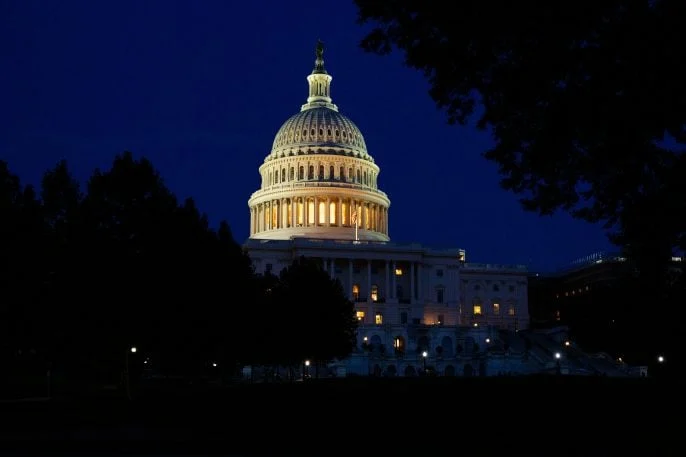
The United States Senate’s efforts to advance the Clarity Act, a pivotal piece of legislation aimed at regulating the burgeoning digital asset market, have encountered a significant impasse after Democratic lawmakers rejected a set of ethics provisions supported by the White House. This legislative friction, reported on Thursday, has forced a return to the negotiating table as a bipartisan group of senators seeks to reconcile deep-seated disagreements over how to handle potential conflicts of interest involving high-ranking federal officials, most notably President Donald Trump. The dispute centers on the extent of enforcement authority and the specific restrictions placed on the executive branch regarding the issuance and promotion of cryptocurrencies.
The Core of the Contention: Ethics and Enforcement
At the heart of the current stalemate is a series of ethics provisions released on Wednesday as part of a revised version of the Clarity Act. These provisions were designed to address mounting concerns regarding President Trump’s financial ties to various cryptocurrency ventures. The proposed language would explicitly prohibit senior federal officials, including the President and Vice President, from issuing or sponsoring digital assets while serving in office. While both parties generally agree on the necessity of preventing self-dealing, the mechanism for enforcing these rules has become a "poison pill" for the Democratic caucus.
The White House-backed proposal seeks to grant the Department of Justice (DOJ) exclusive authority to enforce these ethics rules. Democrats have criticized this move, arguing that centralized enforcement within an executive department lacks the necessary independence to oversee the President. They contend that exclusive DOJ jurisdiction would effectively allow the administration to police itself, potentially leading to a lack of accountability.
Senator Ruben Gallego (D-AZ) has emerged as a vocal critic of the current proposal. Despite months of bipartisan discussions, Gallego described the final ethics language as inadequate, suggesting it failed to capture the consensus previously built between the two parties. His primary grievance rests on the exclusion of state attorneys general from the enforcement process. Democrats argue that allowing state-level officials to investigate and prosecute violations would provide a vital check on federal power and ensure that ethics breaches do not go unpunished due to political considerations at the federal level.
Bipartisan Reactions and the Breakdown of Negotiations
The ethics language was the product of a concentrated effort involving the White House and Republican Senators Cynthia Lummis (R-WY) and Bernie Moreno (R-OH). Senator Lummis, a long-time advocate for the crypto industry, defended the proposal, asserting that President Trump is voluntarily agreeing to ethics standards that go beyond any current legal requirements. She characterized the proposed rules as the most stringent ever applied to the American presidency, aimed at providing the public with "total clarity" regarding the administration’s involvement in the digital asset space.
However, the breakdown in communication became apparent when Senator Gallego revealed that negotiations with Lummis, Moreno, and White House officials stalled specifically over the role of state-level enforcement. Gallego’s frustration with the proposal was palpable, as he indicated that the current draft did not reflect the spirit of the bipartisan cooperation that had characterized earlier stages of the bill’s development.
In response to the deadlock, a new bipartisan coalition has begun to form. Senator Gallego is now reportedly working with Senator Thom Tillis (R-NC) and other unnamed Republican colleagues to draft a counterproposal. Senator Tillis has taken a more measured approach, acknowledging that while the White House-backed plan served as a "positive starting point," it clearly lacks the broad support necessary to clear the 60-vote threshold required for passage in the Senate. Tillis emphasized that any successful legislation must be palatable to both the Democratic caucus and the White House, a balance that has yet to be achieved.
Background: The Clarity Act and the Crypto Landscape
The Clarity Act is widely viewed as the most significant attempt to date to provide a comprehensive regulatory framework for stablecoins and digital assets in the United States. The bill seeks to define which digital assets fall under the jurisdiction of the Securities and Exchange Commission (SEC) and which are overseen by the Commodity Futures Trading Commission (CFTC). Furthermore, it aims to establish rigorous reserve requirements for stablecoin issuers to prevent the kind of systemic collapses seen in previous years, such as the 2022 fall of the Terra-Luna ecosystem.
The urgency of the bill is underscored by the rapid growth of the digital asset market. As of mid-2026, the global market capitalization of cryptocurrencies remains volatile but substantial, with stablecoins playing a critical role in the plumbing of decentralized finance (DeFi). Proponents of the bill argue that without federal oversight, the U.S. risks losing its position as a global financial leader to jurisdictions with more established regulatory regimes, such as the European Union under its Markets in Crypto-Assets (MiCA) regulation.
The intersection of President Trump’s private business interests and public policy has added a layer of complexity to the legislative process. Throughout his tenure and during his campaign, Trump has pivoted from a crypto-skeptic to a vocal supporter, even participating in the launch of "World Liberty Financial," a decentralized finance platform. This involvement has prompted ethics watchdogs and Democratic lawmakers to demand ironclad protections against the use of the presidency to pump the value of private digital holdings.
A Chronology of the Legislative Struggle
To understand the current impasse, it is necessary to examine the timeline of the Clarity Act’s development:
- Early 2026: The Clarity Act is reintroduced in the Senate with bipartisan sponsorship, aiming to bridge the gap between pro-innovation Republicans and consumer-protection-focused Democrats.
- March 2026: The House of Representatives passes a version of the bill, placing pressure on the Senate to act.
- May 2026: Negotiations intensify over the "de-banking" provisions and the role of the Federal Reserve in overseeing stablecoin issuers.
- June 2026: The focus shifts heavily toward ethics as President Trump’s ties to new crypto ventures become a central talking point in the media and in committee hearings.
- July 15, 2026: Senators Lummis and Moreno begin closed-door meetings with White House counsel to draft specific ethics language intended to appease critics of the President’s crypto involvements.
- July 22, 2026: The updated Clarity Act, including the DOJ-exclusive enforcement language, is released to the public.
- July 23, 2026: Democrats formally reject the ethics language, leading to the current stalemate and the announcement of a counterproposal by Senators Gallego and Tillis.
Data and Economic Implications
The delay in passing the Clarity Act has broader implications for the U.S. economy and the stability of the financial system. According to data from industry analytics firms, the uncertainty surrounding U.S. regulation has led to a "capital flight" of sorts, with several major crypto startups relocating their headquarters to Dubai, Singapore, and London.
Investment in the U.S. blockchain sector saw a 15% decline in the second quarter of 2026 compared to the previous year, a trend analysts attribute directly to the lack of regulatory certainty. Furthermore, the stablecoin market, currently valued at over $170 billion, remains in a legal gray area. Without the Clarity Act, the Federal Reserve lacks the explicit mandate to regulate these assets as part of the broader monetary aggregate, which some economists warn could pose a risk to the stability of the U.S. dollar if a major stablecoin were to experience a "run" on its reserves.
| Metric | 2025 (Actual) | 2026 (Projected/Current) |
|---|---|---|
| U.S. Crypto Lobbying Spend | $22 Million | $38 Million |
| Stablecoin Market Cap (USD) | $145 Billion | $172 Billion |
| Blockchain Startups Relocating OUS | 42 | 68 (YTD) |
| Institutional Crypto Adoption Rate | 12% | 18% |
The Role of State Attorneys General
The demand by Democrats to include state attorneys general (AGs) in the enforcement of the Clarity Act is rooted in the "dual banking system" philosophy that has governed U.S. finance for over a century. State AGs have historically played a major role in consumer protection, often pursuing cases that federal regulators might overlook due to resource constraints or political shifts.
For example, during the 2008 financial crisis and the subsequent mortgage settlements, state AGs were instrumental in securing billions of dollars for homeowners. In the context of crypto, states like New York, through the Department of Financial Services (NYDFS), have already established rigorous "BitLicense" requirements. Democrats argue that stripping these state actors of enforcement power in favor of a sole federal entity—the DOJ—would weaken the overall regulatory net and leave consumers vulnerable to fraud and market manipulation.
Republicans, conversely, argue that a "patchwork" of 50 different state enforcement actions would create an impossible compliance burden for crypto companies, effectively stifling innovation and driving the industry offshore. They advocate for a "preemption" model where federal law and federal enforcement take precedence to ensure a uniform national market.
Future Outlook: The August Recess and Beyond
The unresolved ethics debate has cast a shadow over the immediate future of the bill. Senate Majority Leader John Thune (R-SD) admitted on Thursday that the likelihood of the chamber passing the Clarity Act before the upcoming August recess is slim. While Thune expressed a desire to at least begin the floor debate to signal progress to the markets, the lack of a consensus version makes even a preliminary vote difficult.
The path forward depends heavily on the success of the Gallego-Tillis counterproposal. If they can craft a compromise that allows for some level of state-level oversight—perhaps through a "referral" system or shared jurisdiction under specific circumstances—they may be able to secure the 60 votes needed to overcome a filibuster.
However, any such compromise must also be acceptable to the White House. If President Trump views the inclusion of state AGs as a targeted political tool intended to harass his private ventures, he may threaten a veto, which would effectively kill the bill in its current form.
As lawmakers prepare to adjourn for the summer, the digital asset industry remains in a state of suspended animation. The "clarity" promised by the act’s title remains elusive, replaced by a complex web of political maneuvering and ethical disputes that reflect the broader tensions of the current American political landscape. For now, the crypto market must continue to navigate a landscape defined more by legislative uncertainty than by the rule of law.