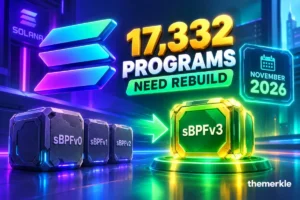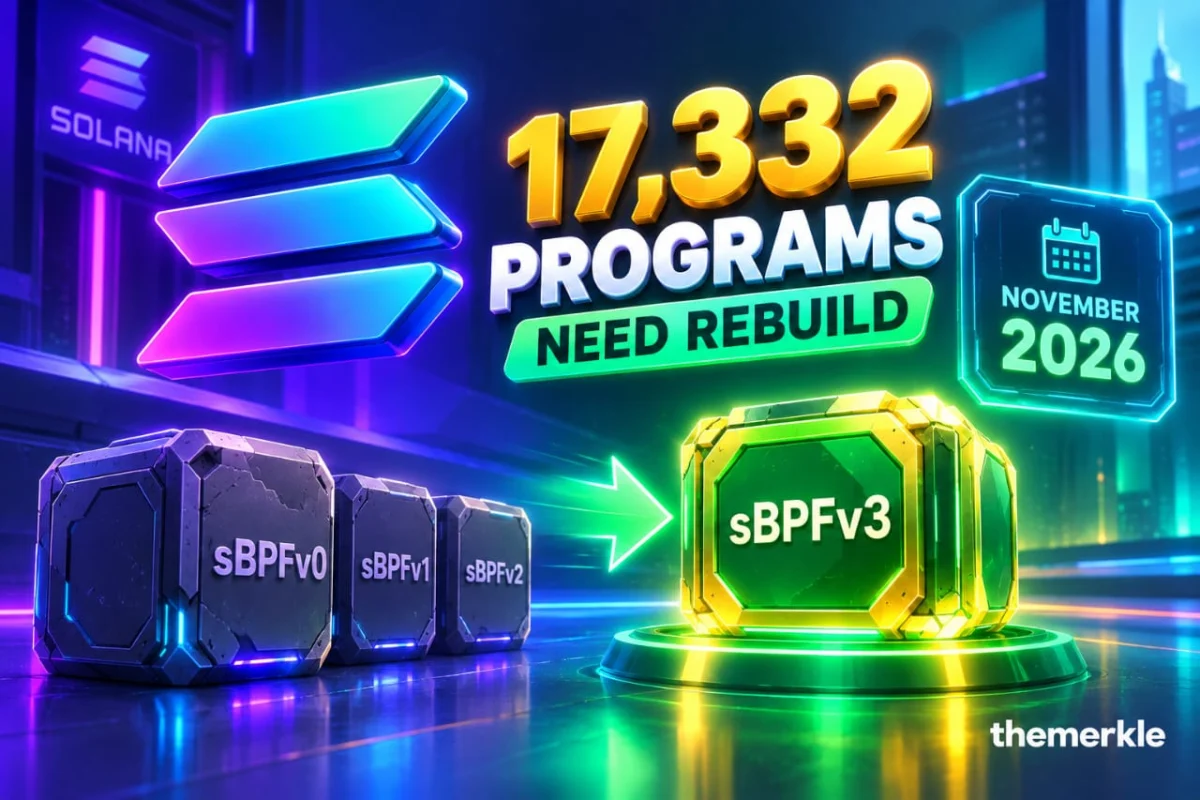
The Solana ecosystem is on the cusp of a significant architectural shift with the impending mandatory adoption of sBPFv3 for all new program deployments, upgrades, and finalizations. While the full Agave 4.4 network upgrade is slated for November 2026, the feature gate for rejecting older sBPF versions (v0, v1, v2) for these critical operations is set to activate much sooner, effectively rendering programs built with default, outdated toolchain configurations undeployable after November. Developers currently using the Solana CLI version recommended by Solana’s own migration guide, coupled with a standard cargo build-sbf command without specific flags, will find their programs rejected by the network, creating an urgent readiness gap for a substantial portion of the blockchain’s decentralized applications.
This mandate means that any developer who cannot produce a v3-compliant build will be unable to ship essential bug fixes, introduce new features, or finalize their programs. While existing programs already on-chain will continue to function without interruption, the inability to update or secure these applications post-activation poses a significant operational risk for development teams and potentially for the broader Solana community. This comprehensive transition necessitates a thorough understanding of the changes, an updated toolchain, and meticulous configuration adjustments across the board.
Understanding sBPFv3: The Evolution of Solana’s Execution Environment
Solana programs, or smart contracts, are executed within a specialized virtual machine environment known as the Solana Bytecode Packet Filter (sBPF). This environment is derived from the Linux kernel’s extended Berkeley Packet Filter (eBPF), adapted and optimized for the unique requirements of a high-throughput blockchain like Solana. The evolution from sBPFv0 to sBPFv3 represents a series of critical improvements aimed at enhancing the security, performance, and overall robustness of the network.
Each iteration of sBPF introduces optimizations and features designed to make program execution more efficient and secure. For instance, earlier versions might have had certain limitations in memory management or instruction set capabilities that are addressed in later versions. sBPFv3, in particular, is engineered to provide a more secure execution environment, preventing potential vulnerabilities that could arise from older bytecode formats. It also lays the groundwork for future network enhancements, including improved runtime performance, reduced resource consumption, and greater compatibility with upcoming Solana Virtual Machine (SVM) innovations. This continuous evolution is vital for a network striving for enterprise-grade performance and reliability, allowing Solana to maintain its competitive edge in transaction speed and cost-efficiency. By mandating sBPFv3, the Solana Foundation aims to standardize on the most secure and performant execution environment, ensuring a more resilient and future-proof ecosystem.
The Mandate’s Specifics: What Changes When sBPFv3 Becomes Mandatory
The upcoming changes are clearly outlined in Solana’s network upgrade tracker, specifically under "sBPFv3 Programs" associated with Agave 4.4, with a broader network upgrade expectation in November 2026. However, the critical aspect for developers is the activation of a feature gate that will disable the deployment of older sBPF versions. The rules governing this transition are detailed in SIMD-0500, titled "Disable deployment of SBPF-v0, -v1 and -v2."
Once the designated feature gate is activated on the mainnet, Solana validators will begin rejecting three specific loader-v3 operations if the program attempting these operations is built for sBPFv0, v1, or v2. These critical operations are:
- Deploy: Preventing the initial deployment of new programs.
- Upgrade: Halting any attempts to update existing upgradable programs.
- Finalize: Disallowing the process of making an upgradable program immutable.
Crucially, other operations such as InitializeBuffer, Write, ExtendProgram, and Close will remain unaffected. More importantly, programs that are already deployed and running on-chain will continue to execute normally. Users interacting with these existing programs will experience no disruption and will not need to make any changes. However, developers attempting a blocked deploy will encounter a specific error message: "Detected sbpf_version required by the executable which are not enabled."
The necessary code for this enforcement is already integrated into the Solana client. The Agave 4.4.0 release candidate, for example, includes the feature disable_sbpf_v0_v1_v2_deployment, identified by the key B8JJXCy5amZyWG9r7EnUYLwzXSXTxG7GZ1qZ1qggo83g. As of recent updates, this feature was not yet activated on testnet, and no specific devnet activation date had been announced. This staggered activation allows for testing and preparation, but the "after November" timeline for mainnet rejection implies that the window for developers to act proactively is rapidly closing, even if the full Agave 4.4 network upgrade is further out.
The Scale of the Challenge: 17,332 Upgradable Programs at Risk
The scope of this mandate is considerable. Data compiled using Blueshift’s program-sync tool, and included in SIMD-0500, reveals that a significant number of mainnet programs still utilize older sBPF formats. While the exact distribution across v0, v1, and v2 isn’t explicitly detailed, the overarching statistic is stark: a total of 17,332 upgradable programs across the Solana mainnet still rely on these older formats. An overwhelming majority, approximately 99.7% of these, are built on the oldest format, v0.
Programs classified as "finalized" are not impacted by this change, as they are inherently immutable and cannot be upgraded regardless of their sBPF version. The critical concern lies entirely with the 17,332 upgradable programs. Each of these will require a rebuild to sBPFv3 before its next necessary upgrade. This means that if a critical bug is discovered, a security vulnerability needs patching, or new functionality is to be introduced, the development team responsible for that program must first successfully migrate to sBPFv3 before they can deploy any updates.
This situation presents a substantial operational hurdle for thousands of projects. Imagine a decentralized finance (DeFi) protocol discovering a critical exploit. If its underlying program is still on sBPFv0 and the team hasn’t migrated, they would face a race against time to not only fix the exploit but also complete a full sBPFv3 migration, rebuild, and retesting cycle, all while under immense pressure. This could lead to extended periods of vulnerability, service downtime, or even irreparable damage to user trust and locked value.
SIMD-0500 also clarifies the long-term vision behind this mandate: to gradually reduce the number of old-format programs on the network, which will eventually enable the deprecation of the execution of these older SBPF versions. While the SIMD explicitly states that execution of older versions "will remain supported" for now, the Agave client does include a disable_sbpf_v0_execution feature from an older proposal (SIMD-0161). In the 4.4 release candidate, this feature currently uses only a placeholder test key, meaning it cannot be activated on mainnet. This indicates a phased approach, with deployment restrictions preceding eventual execution deprecation, giving the ecosystem ample time to adapt.
The Toolchain Trap: Default Configurations and Developer Preparedness
One of the most insidious aspects of this transition lies in the default behavior of the commonly used Solana toolchains. The cargo-build-sbf compiler wrapper, which is central to nearly all Solana program builds, only changed its default build target to sBPFv3 with the 4.4 toolchain.

Specifically, the cargo-build-sbf repository shows that the default behavior for builds remained on older versions until recent updates. Solana’s widely recommended migration guide advises developers to install Solana CLI v4.3.0. However, even with this version, a standard cargo build-sbf command without any additional flags will still produce an sBPFv0 program. This is precisely why the guide’s instructions for native Rust, Pinocchio, and Quasar projects explicitly add the --arch v3 flag.
This creates a significant "toolchain trap." A development team diligently following Solana’s recommendations and upgrading their CLI to v4.3.0 might mistakenly assume they are ready for the sBPFv3 mandate. If they maintain their existing build scripts, which typically don’t include the --arch v3 flag by default, they will continue to produce v0 programs. The team would only discover this critical oversight when their next deployment attempt fails after the feature gate activates, potentially in a high-pressure scenario requiring an urgent update.
The default behavior only shifts with the 4.4 toolchain. Agave v4.4.0-rc.1 was tagged on October 26, making the 4.4 toolchain a release candidate. Until this toolchain achieves a stable release and widespread adoption, the prudent assumption for all developers is that the --arch v3 flag must be explicitly set in their build commands to ensure sBPFv3 compliance. This highlights the importance of not just upgrading tools, but meticulously reviewing and updating build processes.
Framework by Framework: Assessing Readiness Across the Ecosystem
While the underlying toolchain presents a default challenge, major Solana development frameworks have made strides in supporting sBPFv3. Solana’s official sBPFv3 page lists minimum versions for various frameworks, but the critical detail often lies in their default build behaviors or the need for explicit flags.
-
Anchor: Generally considered the most prepared among the major frameworks. Anchor 1.2.0, released on September 4, introduced
--archand--tools-versionflags to itsanchor buildcommand. Crucially, Anchor’s CLI also setsDEFAULT_BUILD_ARCHto "v3," meaning projects using this version and later should automatically produce sBPFv3 programs without needing to explicitly set the flag. Anchor has also released maintenance versions (0.30.2, 0.31.2, and 0.32.2) on September 14, enabling projects on older major versions to still meet Solana’s minimum requirements. Anchor 2.0 is also in release candidate, with rc.2 tagged on October 12, further solidifying its sBPFv3 readiness. -
Pinocchio: The minimum version for sBPFv3 support is v0.10, released on January 5. However, developers planning to move to v0.11 (released April 8) face an additional complexity: Solana’s page notes that v0.11 "changed the entrypoint signature," which may necessitate code modifications beyond a simple rebuild. Regardless of the version, Pinocchio builds on the 4.3 toolchain still require the explicit
--arch v3flag. -
Native Rust: Projects built directly with native Rust need
solana-programversion 2.3.0 or later. Similar to Pinocchio, these projects also require the--arch v3flag to be explicitly passed during the build process. -
Quasar: For Quasar projects, version 0.1.0 or later is the minimum requirement for sBPFv3 compatibility. Like many others, Quasar builds must also include the
--arch v3flag. -
solana-verify: The verifiable-build tool, crucial for ensuring the integrity and reproducibility of Solana programs, shipped v0.5.2 on September 21. This update includes support for Agave 4.2/4.3 Dockerfiles and sBPFv3 toolchain pins. Its newest build image is Agave 4.3.0. However, even with
solana-verify, the--arch v3flag still needs to be passed through:--cargo-build-sbf-args="--arch v3". Projects not dependent onsolana-program(like Pinocchio programs) must also declare their CLI version in theirCargo.tomlto ensure the correct build image is selected. A critical warning here is that if a team’s local build environment and their verification build environment use different settings, the resulting program hashes will not match, defeating the purpose of verifiable builds.
In summary, while the frameworks themselves offer the necessary versions and capabilities, the primary risk lies in configuration. Except for Anchor 1.2.0 and later, most build paths will only target sBPFv3 if developers proactively set the explicit flag.
Broader Implications and Risks for the Solana Ecosystem
The sBPFv3 mandate, while a crucial step for Solana’s long-term health, carries significant implications for development teams and the broader ecosystem if not addressed proactively.
-
Operational Risk for Projects: The most immediate and severe impact falls on project teams. An upgradable program that has not been rebuilt for sBPFv3 cannot be upgraded or finalized after the feature gate activates. If a critical bug, a security vulnerability, or an urgent feature enhancement is identified, the team will be unable to deploy the necessary fix or update. This could leave protocols exposed to exploits, lead to extended downtime, or cause significant financial losses for users. The pressure of migrating and rebuilding under an emergency scenario is far greater than performing a planned, proactive upgrade.
-
Security Implications: While sBPFv3 inherently offers improved security features, the inability to patch older programs means that any undiscovered vulnerabilities in sBPFv0/v1/v2 programs will persist indefinitely until a v3 migration is completed. This creates a potential security debt for the entire ecosystem. As more programs transition to v3, the overall security posture of the network improves, but those left behind could become targets.
-
Development Bottlenecks and Resource Strain: The mandate effectively forces thousands of development teams to undertake a migration process. For larger, more complex protocols, this is not a trivial task. It involves updating dependencies, adjusting build scripts, rigorous testing, and potentially minor code changes, especially for frameworks like Pinocchio v0.11. This can strain development resources, divert attention from new feature development, and introduce new bugs during the migration process if not handled carefully.

-
Ecosystem Fragmentation and Trust: While existing programs will continue to run, an inability to upgrade them could lead to a form of ecosystem fragmentation. Users might lose trust in protocols that appear "stuck" or are unable to respond to incidents promptly. This could impact liquidity flows, user adoption, and the overall perception of reliability within the Solana ecosystem.
-
Testing Infrastructure Adaptation: SIMD-0500 also points out a less visible but important effect: testing frameworks and mocks will need to be adapted. Local test environments that simulate Solana’s network behavior will either need to deactivate the sBPFv3 feature gate for testing older formats or bypass the deployment checks entirely. This means development teams maintaining their own testing infrastructure must also update these components to accurately reflect the new network realities.
-
User Experience (Indirect): While users of existing programs won’t directly experience a change, the indirect impact could be significant. If a core protocol experiences an issue and cannot be updated, users relying on that protocol could face frozen funds, inability to execute transactions, or other disruptions. The long-term stability and security of the applications users interact with depend on the developers’ ability to maintain and upgrade them.
The transition to sBPFv3 is a necessary evolution for Solana, promising a more robust, secure, and performant network. However, the readiness gap, particularly concerning default toolchain behaviors and the sheer number of affected programs, necessitates an urgent and coordinated response from the developer community.
A Crucial Checklist Before Agave 4.4 Activates
To navigate this critical transition smoothly and avoid operational disruptions, Solana development teams should adhere to a comprehensive checklist based on official guides and toolchain insights:
-
Upgrade Solana CLI: Ensure your development environment is running Solana CLI v4.3.0 at minimum. Ideally, keep an eye on the stable release of the 4.4 toolchain and upgrade as soon as it’s available. This provides access to the latest features and, eventually, the sBPFv3 default build behavior.
-
Update
solana-programDependency: For projects using native Rust, verify that yourCargo.tomlspecifiessolana-programversion 2.3.0 or later. This ensures compatibility with the sBPFv3 architecture. -
Update Framework Versions:
- Anchor: Upgrade to Anchor 1.2.0 or a later maintenance release (e.g., 0.30.2, 0.31.2, 0.32.2) to benefit from the automatic sBPFv3 target.
- Pinocchio: Ensure your project is on Pinocchio v0.10 or later. Be prepared for potential code changes if upgrading to v0.11 due to entrypoint signature modifications.
- Quasar: Upgrade to Quasar v0.1.0 or later.
-
Explicitly Add
--arch v3to Build Commands: This is the most critical step for most projects, especially until the 4.4 toolchain is stable and widely adopted. Modify yourcargo build-sbfor framework-specific build commands to explicitly include--arch v3.- For native Rust/Pinocchio/Quasar:
cargo build-sbf --arch v3 - For
solana-verify:--cargo-build-sbf-args="--arch v3"
- For native Rust/Pinocchio/Quasar:
-
Perform a v3 Rebuild and Thorough Testing: After adjusting your toolchain and build scripts, execute a full rebuild of your program to ensure it compiles to sBPFv3. Crucially, conduct comprehensive testing of the newly built program in a development or testnet environment. Verify all functionalities, especially critical paths, to catch any regressions or unexpected behaviors introduced by the migration.
-
Update
Cargo.tomlforsolana-verify(if applicable): If your project usessolana-verifyand doesn’t depend onsolana-program, declare your CLI version inCargo.tomlto ensure the correct build image is selected, preventing hash mismatches between local and verified builds.
The Anza migration guide offers more detailed instructions for these steps, serving as an invaluable resource for developers. The most strategic approach is to undertake this sBPFv3 migration proactively, well before an urgent bug fix or feature deployment forces a rushed and potentially error-prone process. By embracing these changes now, the Solana developer community can ensure the continued stability, security, and innovation of the network’s burgeoning ecosystem.