


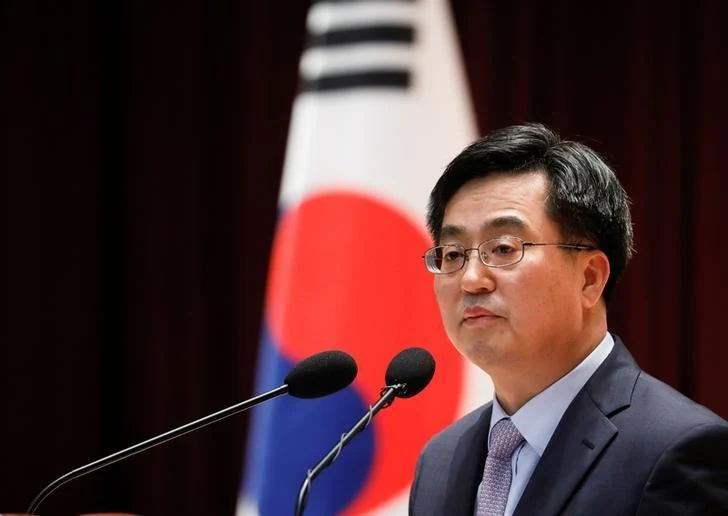
The South Korean government is reportedly preparing to reverse its hardline stance on Initial Coin Offerings (ICOs), signaling a significant shift in the nation’s regulatory landscape for digital assets. According to reports from the Korea Times, financial authorities have entered into high-level discussions with the country’s national tax agency, the Ministry of Justice, and other relevant governmental bodies to draft a framework that would permit ICOs under specific, regulated conditions. This potential policy reversal marks a dramatic departure from the blanket ban imposed in late 2017 and suggests that one of the world’s most influential cryptocurrency markets is moving toward a more nuanced, "crypto-friendly" ecosystem.
The discussions come at a critical juncture for the South Korean economy, which has grappled with the dual challenge of curbing speculative excess while attempting to maintain its status as a global leader in technological innovation. While the Financial Services Commission (FSC) has not yet issued an official decree, sources familiar with the matter indicate that the government is seeking a middle ground that protects investors without stifling the burgeoning blockchain sector.
The 2017 Crackdown and the "Kimchi Premium"
To understand the weight of this potential policy shift, it is essential to examine the climate of 2017, a year defined by extreme volatility and regulatory aggression in South Korea. At the height of the global cryptocurrency bull run, South Korea emerged as a primary hub for digital asset trading. The phenomenon known as the "Kimchi Premium"—where Bitcoin and other assets traded at significantly higher prices on Korean exchanges compared to global averages—became a symbol of the nation’s "crypto-fever."
In response to fears of a speculative bubble and concerns regarding money laundering, South Korean regulators took drastic measures. In September 2017, the FSC announced a total ban on all forms of ICOs, regardless of the project’s technical merit or the currency used. This move was followed by a series of high-profile statements from government officials, including Justice Minister Park Sang-ki, who at one point suggested the possibility of closing down all domestic cryptocurrency exchanges.
These statements, combined with a series of high-profile security breaches at major exchanges, sent shockwaves through the global market. Given South Korea’s substantial share of the Asian market, the regulatory uncertainty contributed to a sharp correction in Bitcoin prices and a broader sell-off across the altcoin market. The 2017 ban forced many South Korean blockchain startups to move their operations overseas to jurisdictions like Singapore and Switzerland, leading to concerns about "capital flight" and the loss of domestic talent.
Current Regulatory Sentiment and the FSC’s Stance
The narrative began to shift in early 2018 as the government faced mounting pressure from the public and the technology sector. A petition submitted to the Blue House (the executive office and official residence of the South Korean head of state) garnered over 220,000 signatures, demanding that the government stop its "unjust" regulation of virtual currencies.
Recent developments indicate that the FSC is now adopting a more pragmatic approach. Kang Young-soo, who leads the cryptocurrency trading policy team at the FSC, recently addressed the issue during an industry forum at the National Assembly. While he maintained a cautious tone, his comments suggested that the door is opening for legitimate projects.
"The financial authorities have been talking to the country’s tax agency, justice ministry, and other relevant government offices about a plan to allow ICOs in Korea when certain conditions are met," an anonymous source told the Korea Times.
Kang Young-soo clarified that as of now, there is no official government policy that explicitly prohibits all business activities associated with ICOs, provided they do not violate existing laws. "There are many speculating about the possibility of allowing ICOs," Kang stated. "The FSC has acknowledged a third-party view regarding the issue, but there’s nothing that we can say officially at the moment."
This "wait-and-see" approach is interpreted by many industry analysts as a sign that the government is waiting for the right regulatory framework to be finalized before making a formal announcement. The focus is no longer on a total ban, but on "conditional permission."
The "Conditional Permission" Framework
While the government may lift the blanket ban, the new era of South Korean ICOs will likely be characterized by stringent oversight. The "certain conditions" mentioned by government sources are expected to focus on several key pillars of financial security:
- Anti-Money Laundering (AML) Compliance: The South Korean government has already implemented a "real-name account system" for cryptocurrency trading. Any entity launching an ICO would likely be required to adhere to rigorous Know Your Customer (KYC) and AML protocols to prevent the flow of illicit funds.
- Investor Protection Measures: To prevent the fraudulent "exit scams" that plagued the 2017 market, the FSC is considering requirements for escrow accounts and mandatory financial audits for startups seeking to raise funds via ICOs.
- Institutional Oversight: Projects may need to be vetted by financial authorities or authorized third-party auditors to ensure they meet minimum technical and financial standards.
- Taxation: The involvement of the national tax agency in these discussions suggests that the government is preparing a framework to tax both the funds raised through ICOs and the capital gains realized by investors.
Chronology of South Korea’s Crypto Evolution
The journey from a total ban to the current state of potential legalization reflects a maturing understanding of digital assets within the South Korean bureaucracy:
- September 2017: The FSC bans all ICOs, citing risks of financial fraud.
- December 2017: The government introduces emergency measures to curb speculation, including a ban on anonymous trading accounts.
- January 2018: Conflicting reports regarding an exchange shutdown cause market panic. Finance Minister Kim Dong-yeon later clarifies that the government intends to regulate, not ban, exchanges.
- February 2018: The government responds to a mass petition, pledging to foster blockchain technology while maintaining strict oversight of speculative trading.
- March 2018: Reports surface that the FSC is actively discussing the legalization of ICOs with other ministries.
Distinguishing Blockchain from Cryptocurrency
A recurring theme in the South Korean government’s discourse is the clear distinction between "blockchain technology" and "cryptocurrency speculation." While officials remain wary of the volatility of the retail trading market, they have expressed immense enthusiasm for the underlying technology.
"Yes, we have to have plans on how to advance blockchain-related technologies and effectively regulate crypto-trading. This is a separate issue," Kang Young-soo told the National Assembly forum.
The South Korean government views blockchain as a cornerstone of the "Fourth Industrial Revolution." Various ministries have already announced plans to pilot blockchain projects in logistics, voting systems, and public administration. By allowing ICOs, the government aims to provide a domestic funding mechanism for these technological advancements, ensuring that South Korean firms do not have to look abroad to fuel their growth.
Economic and Market Implications
The potential lifting of the ICO ban has profound implications for both the domestic and global markets. Domestically, it could provide a massive boost to the country’s tech startups. South Korea has a highly educated, tech-savvy workforce and a culture that is quick to adopt new digital trends. Reopening the ICO market would allow local developers to raise capital directly from a supportive domestic audience.
Globally, a more permissive stance from South Korea could serve as a catalyst for other Asian nations. As China continues its strict prohibition of cryptocurrency activities, South Korea has the opportunity to position itself as the primary alternative hub for digital innovation in the region.
Furthermore, the integration of ICOs into the formal financial system would likely lead to increased institutional participation. If the government provides a clear legal framework, major South Korean conglomerates (Chaebols)—many of which have already expressed interest in blockchain—could begin to integrate digital assets into their business models more aggressively.
Challenges and Remaining Restrictions
Despite the optimistic outlook, significant hurdles remain. The government’s stance on foreign participation remains restrictive. Currently, foreigners are largely unable to operate in the South Korean cryptocurrency markets due to the strict real-name verification requirements tied to local bank accounts. This isolationist policy is designed to prevent international money laundering and capital flight, but it also limits the globalization of South Korea’s crypto economy.
Additionally, the Ministry of Justice remains a cautious voice in the room. The ministry’s primary concern is the protection of retail investors, many of whom are young professionals or retirees who may not fully understand the risks associated with early-stage venture funding in the digital space.
Analysis: A Strategic Realignment
The move toward allowing ICOs should not be seen as a surrender to market forces, but rather as a strategic realignment. The South Korean government has realized that a total ban is difficult to enforce and potentially detrimental to the nation’s long-term economic competitiveness. By bringing ICOs into the light of regulation, the government gains three things: transparency, tax revenue, and the ability to steer the direction of technological development.
This shift mirrors a global trend where regulators are moving away from "prohibition" and toward "supervision." As the "certain conditions" for ICOs are finalized, the world will be watching to see if South Korea can successfully balance the high-octane growth of the crypto sector with the stability required of a major global economy.
In the coming months, the FSC is expected to provide more concrete guidelines. Until then, the industry remains in a state of cautious optimism, hopeful that the "Good News" from the Korea Times marks the beginning of a more stable and prosperous era for South Korean blockchain innovation. The transition from a restrictive regime to a regulated one may be complex, but for the thousands of developers and investors in the country, it represents a vital step toward legitimacy.














