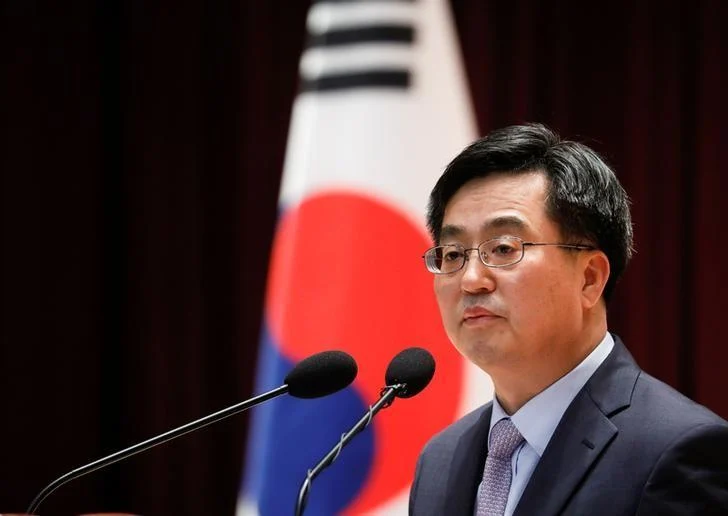
The South Korean government is reportedly moving toward a significant policy reversal that could see the country lift its blanket ban on Initial Coin Offerings (ICOs), according to reports surfacing from domestic media outlets including The Korea Times. This potential shift indicates a move away from the restrictive stance adopted in late 2017 and toward a more nuanced, regulated framework for digital assets. Financial authorities are currently engaged in high-level discussions with the nation’s tax agency, the Ministry of Justice, and other relevant government departments to establish a protocol that would allow ICOs to proceed under specific regulatory conditions. While the ban remains technically in place, the emergence of these discussions suggests that the South Korean administration is recognizing the economic necessity of fostering a domestic blockchain ecosystem while maintaining strict oversight to prevent financial crimes.
Historical Context: The 2017 Crackdown and Market Volatility
To understand the gravity of this potential policy shift, it is essential to revisit the climate of 2017. During that period, South Korea emerged as one of the world’s most vibrant hubs for cryptocurrency trading, often accounting for a disproportionate share of global Bitcoin and Ethereum volume. This fervor led to the "Kimchi Premium," where digital assets traded at significantly higher prices on South Korean exchanges compared to international platforms.
However, the rapid growth of the market also brought systemic risks. In September 2017, the Financial Services Commission (FSC) announced a total ban on all forms of ICOs, regardless of the project’s technical merit or compliance. The regulator cited concerns over the increasing risk of financial scams, money laundering, and the highly speculative nature of the market. This announcement was followed by a series of aggressive statements from high-ranking officials. In early 2018, Justice Minister Park Sang-ki sent shockwaves through the global markets by suggesting that the government was preparing a bill to shut down all local cryptocurrency exchanges.
The impact of these statements was immediate and profound. The uncertainty contributed to a massive sell-off, with Bitcoin prices plummeting from their December 2017 highs. The South Korean "crypto winter" was further exacerbated by high-profile security breaches. Exchanges such as Youbit filed for bankruptcy following hacks, while Bithumb, one of the world’s largest exchanges at the time, faced repeated security challenges. These events solidified the government’s resolve to tighten the noose on the industry, leading to the implementation of the "real-name account system" in January 2018, which ended anonymous trading.
The Shift Toward a Regulated Framework
Despite the initial hostility, the narrative began to change in the first quarter of 2018. The South Korean public reacted strongly to the proposed crackdown, with over 200,000 citizens signing a petition to the Blue House (the presidential residence) demanding that the government stop its "unjust regulation" of virtual currencies. This public pressure, combined with the realization that a total ban might stifle technological innovation, prompted a re-evaluation of the state’s strategy.
The current discussions involve creating a conditional environment for ICOs. According to an anonymous source familiar with the matter, the government is looking for a middle ground where blockchain startups can raise capital through token sales provided they meet rigorous standards for transparency and investor protection. This would likely involve mandatory audits, disclosure of whitepapers, and strict adherence to Anti-Money Laundering (AML) and Know Your Customer (KYC) protocols.
Kang Young-soo, the official overseeing cryptocurrency trading policies at the FSC, has noted that while there is no "official" new policy yet, the authorities are no longer viewing the industry through a purely prohibitive lens. In a statement to the press, Kang acknowledged that the government is listening to third-party views and industry stakeholders. He emphasized that as long as activities are not expressly identified as illegal under existing statutes, there is a gray area that the government is looking to clarify with formal legislation.
Chronology of South Korea’s Cryptocurrency Regulatory Journey
The evolution of South Korea’s relationship with digital assets can be broken down into several key phases:
- The Boom (Mid-2017): South Korea becomes a top-three market for Bitcoin trading. The "Kimchi Premium" reaches levels as high as 30% to 50% over global prices.
- The Prohibition (September 2017): The FSC bans all domestic ICOs, characterizing them as a violation of the Capital Markets Act.
- The Crisis (December 2017 – January 2018): Security breaches at local exchanges and threats of exchange closures by the Ministry of Justice lead to a domestic market crash.
- The Normalization (Late January 2018): The government mandates real-name trading accounts, effectively banning anonymous transactions and tightening AML controls.
- The Re-evaluation (March 2018 – Present): Reports emerge of inter-departmental talks to lift the ICO ban. The National Assembly begins holding forums on blockchain advancement, signaling a legislative shift.
Supporting Data and Economic Implications
The potential lifting of the ICO ban is not merely a regulatory adjustment; it is a response to the massive economic scale of the industry. In 2017 alone, global ICOs raised over $5.6 billion, a figure that dwarfed traditional venture capital in the blockchain sector. South Korean tech giants, such as Kakao (the operator of KakaoTalk) and Naver (the nation’s largest search engine), have expressed significant interest in integrating blockchain technology. Without a domestic path for ICOs, many South Korean firms were forced to set up foundations in crypto-friendly jurisdictions like Switzerland or Singapore to launch their tokens.
By allowing ICOs domestically, South Korea could recapture this lost capital and talent. Industry analysts suggest that a regulated ICO market could contribute significantly to the country’s "Creative Economy" initiative, a government-led effort to foster startups and reduce dependence on traditional conglomerates (Chaebols). Furthermore, data from the Korea Customs Service suggests that the volume of illegal foreign exchange transactions involving cryptocurrency reached nearly 637 billion won ($600 million) in early 2018. A legalized, transparent framework is seen by many as the only effective way to bring these flows into the light of the formal economy.
Official Responses and the Stance on Blockchain Technology
The South Korean government has been careful to distinguish between "cryptocurrency speculation" and "blockchain technology." While the former has been met with skepticism, the latter is viewed as a pillar of the Fourth Industrial Revolution. Kang Young-soo told an industry forum at the National Assembly that the government is committed to advancing blockchain-related technologies.
This dual-track approach means that while the ICO ban might be lifted, the regulatory environment will remain among the strictest in the world. The FSC has signaled that any new framework will continue to enforce the ban on foreign investors participating in South Korean crypto-markets. This isolationist policy is designed to prevent the country from becoming a laundry for international "hot money" and to protect the domestic financial system from external volatility.
Furthermore, the tax agency is working on a comprehensive taxation scheme for digital assets. The Ministry of Strategy and Finance is expected to announce a framework that treats cryptocurrency gains as either capital gains or miscellaneous income, bringing the industry in line with traditional financial assets.
Fact-Based Analysis of Future Implications
The implications of South Korea softening its stance are manifold. First, it would likely provide a boost to the global cryptocurrency market sentiment. Given South Korea’s role as a liquidity provider, a move toward legalization is often interpreted by investors as a sign of institutional maturity for the asset class.
Second, the move would force a competitive response from other Asian economies. If South Korea successfully implements a "regulated ICO" model, it could provide a blueprint for countries like Japan, which has recognized Bitcoin as legal tender but remains cautious about ICOs, or even China, which maintains a strict ban.
Third, the entry of traditional South Korean financial institutions into the space would accelerate. Major banks like Shinhan and NH Bank have already developed infrastructure for "crypto-wallets" and virtual account services. A formal lifting of the ban would allow these institutions to offer more sophisticated services, such as custodial solutions and tokenized asset management.
However, challenges remain. The South Korean government must balance the desire for innovation with the need to protect retail investors, who were hit hard by the 2018 crash. Any new ICO regulation will likely include "suitability tests" for investors and limits on the amount of capital that individuals can contribute to a single project.
Conclusion
The reported discussions within the South Korean government represent a pivotal moment for the cryptocurrency industry in Asia. By moving away from a policy of outright prohibition and toward one of sophisticated regulation, South Korea is attempting to harness the potential of blockchain technology while mitigating the risks that characterized the 2017 market frenzy. While the FSC remains cautious in its official communications, the direction of travel is clear: the South Korean government is preparing for a future where digital assets are an integrated, albeit strictly controlled, part of the national economy. As the National Assembly continues to debate the specific legal frameworks, the global crypto community remains watchful, recognizing that South Korea’s next steps will significantly influence the regulatory trajectory of the entire industry.