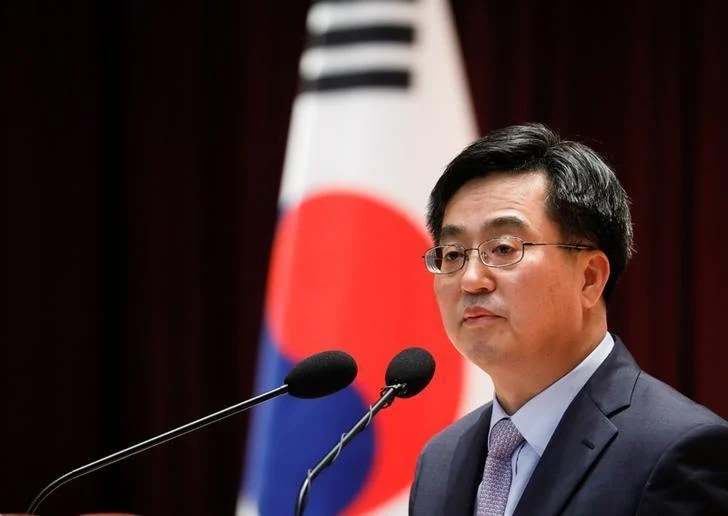
The South Korean government is reportedly preparing to recalibrate its regulatory framework regarding digital assets, with high-level discussions currently underway to lift the blanket prohibition on Initial Coin Offerings (ICOs). This potential policy shift, reported by local media outlets including The Korea Times, suggests a transition from a stance of total prohibition toward a regulated environment where blockchain-based fundraising can operate under specific legal conditions. According to internal sources familiar with the matter, the Financial Services Commission (FSC) has been engaged in intensive deliberations with the national tax agency, the Ministry of Justice, and other relevant governmental bodies to draft a roadmap that would allow companies to launch new tokens within the country’s borders.
This development marks a significant departure from the hardline approach adopted by Seoul in late 2017. During that period, South Korea emerged as a focal point for global cryptocurrency volatility, as regulators moved to curb what they described as "irrational exuberance" and speculative mania. The original ban on ICOs was implemented in September 2017, effectively halting all domestic token sales regardless of their utility or technical merit. At the time, the FSC cited concerns over the high risk of fraud, money laundering, and the potential for retail investors to suffer catastrophic financial losses. However, the burgeoning maturity of the blockchain industry and the persistent demand from domestic tech startups have prompted a re-evaluation of these restrictive measures.
The Evolution of South Korea’s Regulatory Climate
To understand the magnitude of this potential policy reversal, it is essential to examine the chronology of South Korea’s relationship with the digital asset sector. In 2017, the country accounted for a disproportionately large share of global cryptocurrency trading volume, often ranking as the third-largest market behind the United States and Japan. This high concentration of activity led to the phenomenon known as the "Kimchi Premium," where digital assets like Bitcoin traded at significantly higher prices on Korean exchanges compared to international platforms due to strict capital controls and overwhelming local demand.
The government’s response to this frenzy was swift and multifaceted. Beyond the ICO ban, officials issued a series of stern warnings that frequently sent shockwaves through the global markets. Statements from the Ministry of Justice regarding a potential total shutdown of cryptocurrency exchanges in early 2018 contributed to a massive market correction, erasing billions of dollars in market capitalization within weeks. This period was further complicated by high-profile security breaches; the hacking of exchanges such as Youbit, which eventually filed for bankruptcy, and the massive $534 million Coincheck hack in neighboring Japan, reinforced the government’s perception that the industry was a "Wild West" requiring immediate containment.
However, as 2018 progressed, the tone of the South Korean administration began to soften. The realization that blockchain technology could serve as a pillar of the "Fourth Industrial Revolution"—a key economic policy for the incumbent government—led to a more nuanced distinction between speculative trading and technological innovation.
Official Statements and the Path to Regulation
The current discourse within the FSC indicates that the government is looking for a middle ground. Kang Young-soo, who oversees cryptocurrency trading policies at the FSC, recently addressed the speculation surrounding the ICO ban. While he maintained a cautious public stance, his comments suggested that the door is no longer closed. Kang noted that while there is no official, finalized government policy that explicitly permits ICOs yet, the authorities are acknowledging the necessity of a structured framework.
"The financial authorities have been talking to the country’s tax agency, justice ministry, and other relevant government offices about a plan to allow ICOs in Korea when certain conditions are met," a source told The Korea Times on the condition of anonymity. These "certain conditions" are expected to include rigorous investor protection protocols, mandatory disclosures, and strict adherence to Anti-Money Laundering (AML) and Know Your Customer (KYC) standards.
Furthermore, Kang emphasized that the government is distinguishing between the regulation of speculative trading and the advancement of blockchain technology. Speaking at an industry forum held at the National Assembly, he stated, "We have to have plans on how to advance blockchain-related technologies and effectively regulate crypto-trading. This is a separate issue." This separation of concerns is a critical indicator that Seoul views blockchain as a legitimate infrastructure for the future economy, even if it remains wary of the risks associated with volatile asset trading.
The Economic Implications of a Policy Shift
Lifting the ICO ban would have profound implications for South Korea’s domestic tech ecosystem. For years, Korean blockchain startups have been forced to incorporate in "crypto-friendly" jurisdictions such as Singapore, Switzerland, or Gibraltar to conduct their token sales. This "brain drain" and capital flight have concerned policymakers who wish to see South Korea become a global hub for financial technology.
By allowing ICOs domestically, the government could:
- Retain Intellectual Property: Ensure that innovative blockchain projects remain headquartered in Seoul or Busan.
- Tax Revenue: Create a legal framework that allows the government to tax the proceeds of token sales and the capital gains of investors effectively.
- Investor Protection: Bring fundraising activity into the light where it can be monitored by the FSC, rather than having citizens invest in offshore projects with little to no legal recourse.
Data suggests that despite the ban, South Korean retail investors have remained highly active in the global ICO market. A policy shift would essentially legitimize and localize an activity that is already occurring, albeit under the radar or through foreign intermediaries.
Maintaining the Integrity of the Financial System
Despite the move toward a more tolerant ICO policy, the South Korean government has no intention of relaxing its oversight of the broader market. The AML laws adopted in early 2018 remain the cornerstone of the country’s regulatory strategy. One of the most significant measures currently in place is the "real-name verification system," which requires cryptocurrency traders to have bank accounts in their real names at the same bank as their chosen exchange.
This system effectively ended anonymous trading and provided the government with a mechanism to track the flow of funds into and out of the crypto-ecosystem. Additionally, the ban on foreigners trading on domestic Korean exchanges remains in force. This measure is designed to prevent the country from being used as a conduit for international money laundering and to stabilize the domestic market from external shocks.
The government’s interest in blockchain extends into the public sector as well. Various ministries are exploring the use of Ethereum-based and private blockchain technologies for logistics, voting systems, and the management of public records. This top-down support for the underlying technology provides a stable foundation for the eventual re-introduction of ICOs, as the government seeks to foster a "blockchain-ready" society.
Public Pressure and Political Considerations
The shift in government sentiment is not occurring in a vacuum. It is, in part, a response to significant public pressure. In early 2018, a petition on the Blue House website (the executive office of the President) garnered over 220,000 signatures. The petition urged the government to stop the heavy-handed regulation of virtual currencies, arguing that the technology represented a democratization of finance and a legitimate investment opportunity for the younger generation who felt priced out of the traditional real estate market.
Under South Korean law, any petition that receives more than 200,000 signatures requires an official response from the government. The administration’s subsequent replies have been more measured, acknowledging the potential of the technology while maintaining the necessity of protecting the financial system. This democratic feedback loop has been a vital component in steering the FSC toward a more collaborative approach with the industry.
Global Context and Comparative Analysis
South Korea’s potential lifting of the ICO ban would place it in a unique position among Asian economies. While China has maintained a total ban on both ICOs and cryptocurrency trading, and Japan has moved toward a highly regulated licensing system for exchanges (though it remains cautious about ICOs), South Korea is attempting to find a "third way."
By permitting ICOs "when certain conditions are met," South Korea is aligning itself more closely with jurisdictions like Hong Kong and Singapore, which have issued guidelines on when a token sale falls under securities law. This move could signal a broader regional trend where governments move away from reactionary bans and toward sophisticated, technology-neutral regulation.
Conclusion and Future Outlook
While the FSC has not yet set a definitive date for the formal lifting of the ban, the consensus among industry analysts is that the process is irreversible. The "prohibition-first" era of 2017 is giving way to a "regulation-first" era in 2018 and beyond. The challenge for the South Korean government will be to draft legislation that is flexible enough to encourage innovation but robust enough to prevent the return of the fraudulent schemes that characterized the early ICO boom.
For the global cryptocurrency market, a "crypto-friendly" South Korea provides a significant boost in institutional confidence. As one of the world’s most technologically advanced nations, South Korea’s embrace of regulated token sales could serve as a blueprint for other G20 nations grappling with the integration of digital assets into the legacy financial system. The coming months will be critical as the FSC, the Ministry of Justice, and the tax authorities finalize the "certain conditions" that will define the next chapter of South Korea’s blockchain journey.