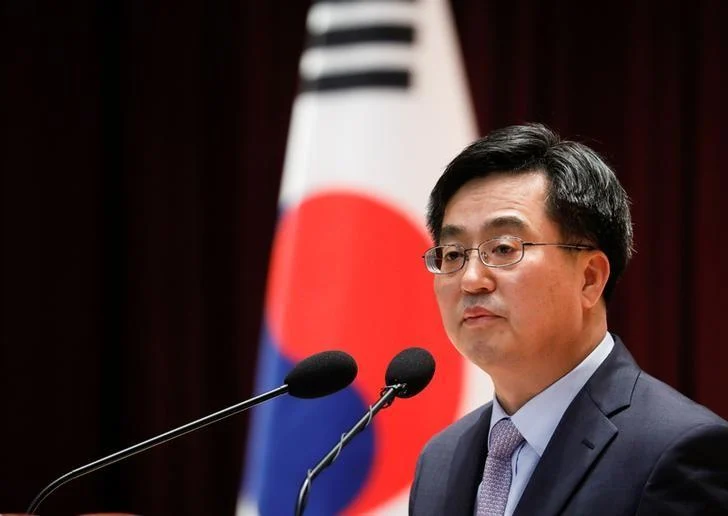
The South Korean government is reportedly moving toward a significant recalibration of its stance on digital assets, with internal discussions now underway regarding the potential lifting of the blanket ban on Initial Coin Offerings (ICOs). According to reports emerging from The Korea Times and sources familiar with the matter, financial regulators are engaging in high-level consultations with the nation’s tax agency, the Ministry of Justice, and other relevant administrative bodies to establish a framework that would allow ICOs to operate within the country under strictly defined conditions. This development marks a stark departure from the prohibitive environment established in late 2017, signaling a transition from outright suppression to a more nuanced, regulated ecosystem.
The shift in sentiment follows a tumultuous period for the South Korean cryptocurrency market, which remains one of the largest and most active in the world. For much of 2017 and early 2018, South Korean politicians and financial authorities were characterized by their vocal opposition to the proliferation of digital currencies, citing concerns over speculative bubbles, money laundering, and the lack of investor protections. However, recent statements from officials at the Financial Services Commission (FSC) suggest that the government is now seeking a middle ground that balances the need for financial stability with the desire to foster technological innovation in the blockchain sector.
Historical Context: The 2017 Crackdown and the Kimchi Premium
To understand the magnitude of this potential policy shift, one must look back at the aggressive regulatory measures implemented by Seoul in late 2017. During that period, South Korea became a global focal point for cryptocurrency fever, leading to the emergence of the "Kimchi Premium"—a phenomenon where Bitcoin and other digital assets traded at significantly higher prices on South Korean exchanges compared to international markets due to intense local demand and capital controls.
In September 2017, the FSC announced a total ban on all forms of ICOs, regardless of the project’s merit or technical foundation. The regulator argued at the time that the risk of financial fraud and the "unproductive" nature of speculation outweighed the potential benefits of the technology. This move, combined with threats of exchange closures and a series of high-profile security breaches at major Asian exchanges, contributed to a massive correction in the global cryptocurrency market. The uncertainty emanating from South Korea was a primary driver behind the collapse of Bitcoin prices from their late-2017 peaks, which subsequently dragged down the valuation of the broader altcoin market.
Furthermore, the hacking of exchanges like Coincheck in neighboring Japan and domestic platforms like Youbit intensified the government’s resolve to tighten the noose on the industry. The subsequent months were defined by a "wait-and-see" approach, as investors navigated a landscape of shifting legal threats and administrative warnings.
The Evolving Regulatory Dialogue
The current atmosphere in Seoul appears markedly more pragmatic. Kang Young-soo, a senior official overseeing cryptocurrency trading policies at the FSC, recently addressed the speculation surrounding ICOs during an industry forum at the National Assembly. While he maintained a degree of bureaucratic caution, his comments indicated that the door is no longer firmly shut. Kang noted that there is no "official" government policy that expressly forbids ICOs if they are not identified as illegal under existing statutes, though he clarified that a comprehensive framework is still being drafted.
"The financial authorities have been talking to the country’s tax agency, justice ministry, and other relevant government offices about a plan to allow ICOs in Korea when certain conditions are met," an anonymous source told The Korea Times. This inter-agency collaboration is crucial, as any reversal of the ICO ban would require a synchronized approach involving tax law amendments and updated Anti-Money Laundering (AML) protocols.
The FSC has acknowledged the growing pressure from the domestic tech industry to permit ICOs, as many South Korean blockchain startups have been forced to incorporate in jurisdictions like Singapore or Switzerland to raise capital. This "brain drain" and loss of tax revenue have become significant points of contention for policymakers who wish to see South Korea remain a leader in the Fourth Industrial Revolution.
Strategic Separation of Blockchain and Cryptocurrency
A cornerstone of the government’s new philosophy is the clear distinction between blockchain technology as an industrial utility and cryptocurrency as a speculative asset. While the FSC remains wary of the volatility associated with coin trading, the broader administration is heavily invested in the underlying decentralized ledger technology.
During his address at the National Assembly, Kang Young-soo emphasized this distinction: "Yes, we have to have plans on how to advance blockchain-related technologies and effectively regulate crypto-trading. This is a separate issue."
The South Korean government has already committed hundreds of millions of dollars to blockchain research and development. Pilot programs are being explored in sectors ranging from logistics and supply chain management to electronic voting and the distribution of social welfare benefits. By lifting the ICO ban, the government would essentially be providing a domestic funding mechanism for these very technologies, provided the projects meet rigorous transparency and security standards.
Data and Market Impact: South Korea’s Global Footprint
South Korea’s influence on the global digital asset market cannot be overstated. Despite having a population of only 51 million, the country has consistently ranked in the top three globally for Bitcoin trading volume in KRW (Korean Won) pairs. At the height of the 2017 bull market, South Korea was estimated to account for upwards of 20% to 30% of the world’s total Ethereum trading volume.
The potential legalization of ICOs is expected to have several immediate impacts on market data:
- Reduction of the Kimchi Premium: By legitimizing the domestic primary market (ICOs), the government may help stabilize the secondary market (exchanges), potentially narrowing the price gap between local and international platforms.
- Increased Venture Capital Inflow: A clear legal framework would likely attract institutional investors who have previously stayed on the sidelines due to regulatory uncertainty.
- Growth of Domestic Exchanges: Major South Korean platforms like Bithumb, Upbit, and Korbit would likely see a surge in new listings and trading fees if local projects are allowed to launch natively.
However, the government remains steadfast in its protectionist measures. The ban on foreigners trading on South Korean exchanges—a policy introduced to curb money laundering and prevent capital flight—remains in effect. This restriction serves as a counterpoint to the globalization of the market, but regulators argue it is necessary given the high volume of suspicious transactions and the nation’s specific geopolitical risks.
Timeline of Regulatory Milestones
The path toward the current deliberation has been marked by several key milestones:
- September 2017: The FSC declares all ICOs illegal, citing a "risk of financial scams."
- January 2018: The government implements a "Real-Name Account System," ending anonymous trading and requiring investors to link their exchange accounts to verified bank accounts.
- February 2018: Finance Minister Kim Dong-yeon clarifies that the government has no intention of "banning or suppressing" the market, but rather aims to make it "transparent."
- March 2018: Reports surface of inter-agency talks to lift the ICO ban, provided certain investor protection criteria are met.
- Present: The FSC and the National Assembly continue to debate the "Blockchain Industry Promotion Act" and related regulatory amendments.
Challenges and Investor Protection
The primary hurdle for the "pro-ICO" faction within the government is the issue of investor protection. The FSC is reportedly considering a "tiered" approach to ICOs, where only "institutional-grade" offerings or those that undergo a rigorous vetting process by the government would be permitted.
Key conditions likely to be included in the new framework involve:
- Mandatory Disclosures: Detailed whitepapers with audited financial projections.
- Know Your Customer (KYC) Compliance: Strict verification of all participants to prevent money laundering.
- Escrow Requirements: Ensuring that funds raised are held in escrow and released only when specific project milestones are achieved.
- Taxation: The National Tax Service is expected to introduce a capital gains tax or a transaction tax on crypto-related profits as part of the legalization process.
Broader Implications for the Asian Market
South Korea’s move to reconsider the ICO ban places it in a unique position within the Asian regulatory landscape. While China maintains a strict prohibition on both ICOs and domestic exchange operations, and Japan has moved toward a comprehensive licensing system for exchanges, South Korea appears to be carving out a "regulated-but-active" niche.
If South Korea successfully integrates ICOs into its financial system, it could serve as a blueprint for other G20 nations. The move would signal that even a government that was once highly skeptical of the technology can find a way to coexist with the digital asset economy through sophisticated oversight rather than blunt prohibition.
The potential lifting of the ban is also seen as a political response to a massive public outcry. In early 2018, over 200,000 South Koreans signed a petition to the Blue House (the presidential residence) demanding that the government stop its "unjust" regulation of virtual currencies. This public pressure has forced the administration to acknowledge that cryptocurrency is not merely a fad, but a significant financial interest for a large portion of the younger demographic and the tech-savvy workforce.
Conclusion and Future Outlook
While the FSC has not yet released a definitive timeline for the policy change, the direction of travel is clear. The South Korean government is moving away from the "emergency measures" of 2017 and toward a sustainable regulatory framework. The acknowledgment by officials like Kang Young-soo that ICOs are being discussed at the highest levels of government provides the market with a much-needed sense of long-term clarity.
The transition will likely be gradual. The authorities are expected to release a set of "ICO Guidelines" before any formal legislative changes are made. These guidelines will serve as a litmus test for the industry, determining whether startups can operate responsibly within the government’s parameters. For the global cryptocurrency community, South Korea’s evolution from a restrictive regulator to a potential hub for compliant ICOs represents a major milestone in the maturation of the digital asset class. As the government continues its dialogue with tax and justice officials, the world will be watching to see if Seoul can truly balance the risks of the "crypto-frontier" with the rewards of blockchain innovation.