The South Korean government is reportedly considering a significant pivot in its regulatory stance regarding cryptocurrency, moving away from a blanket prohibition on Initial Coin Offerings (ICOs) toward a more structured and permissive framework. This potential shift, reported by local media outlets including The Korea Times, suggests that the financial authorities are exploring ways to allow domestic ICOs under specific conditions, marking a departure from the hardline stance adopted in late 2017. This development is being viewed by market analysts and industry stakeholders as a sign of maturity in the South Korean regulatory landscape, which has historically oscillated between extreme skepticism and a desire to lead the global blockchain revolution.
According to internal sources within the government, the Financial Services Commission (FSC) has entered into high-level discussions with the Ministry of Justice, the National Tax Service, and other relevant departments. The objective of these deliberations is to establish a set of stringent guidelines that would permit blockchain startups to raise capital through token sales while ensuring investor protection and preventing illicit financial activities. While no official policy has been finalized, the dialogue indicates a growing recognition within the Moon Jae-in administration that a total ban may be counterproductive to the nation’s aspirations in the Fourth Industrial Revolution.
The Historical Context of the 2017 ICO Ban
To understand the magnitude of this potential policy reversal, it is necessary to examine the events of late 2017. During that period, South Korea emerged as one of the most fervent cryptocurrency markets in the world. The "Kimchi Premium"—a phenomenon where Bitcoin and other digital assets traded at significantly higher prices on Korean exchanges compared to international markets—became a global symbol of the country’s speculative fever. At its peak, South Korea, despite its relatively small population, accounted for nearly 20% to 30% of total global Bitcoin trading volume.
Concerned by the risks of market overheating, money laundering, and potential "Ponzi-style" schemes, the FSC announced a total ban on all forms of ICOs in September 2017. The regulator argued that raising funds through virtual currencies increased the risk of financial fraud and lacked the oversight necessary to protect retail investors. This move was followed by a series of aggressive statements from the Ministry of Justice, which at one point suggested that the government was preparing a bill to shut down all cryptocurrency exchanges entirely.
The resulting uncertainty, combined with high-profile security breaches at domestic exchanges like Youbit—which filed for bankruptcy after a major hack—contributed to a significant correction in the global cryptocurrency market. Prices of Bitcoin and various altcoins plummeted as investors feared that one of the world’s most liquid markets was being permanently shuttered. However, the proposed exchange ban met with massive public backlash, including a petition to the Blue House that garnered over 200,000 signatures, forcing the government to temper its rhetoric and seek a middle ground.
Current Regulatory Deliberations and Official Statements
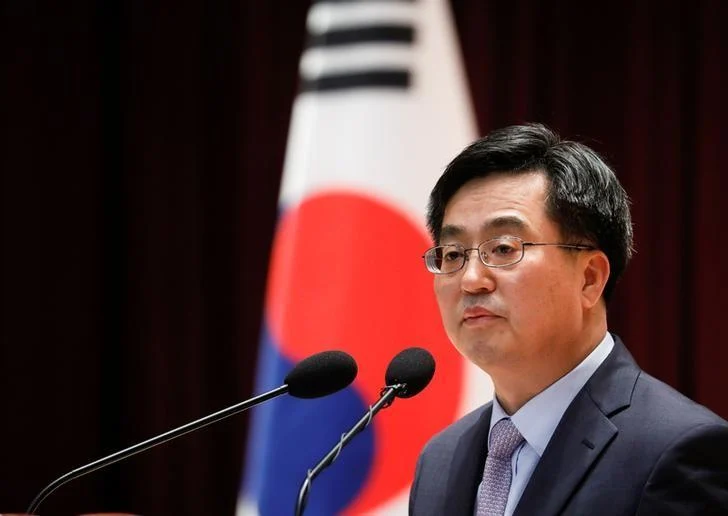
The recent change in tone suggests that the government is now prioritizing the creation of a "safe" environment for crypto-assets rather than an outright exclusion of the technology. Kang Young-soo, the official in charge of cryptocurrency trading policies at the FSC, recently addressed the issue during an industry forum held at the National Assembly. While he maintained a cautious stance, his comments reflected a more nuanced approach to the legality of token sales.
"The financial authorities have been talking to the country’s tax agency, justice ministry, and other relevant government offices about a plan to allow ICOs in Korea when certain conditions are met," an anonymous source told The Korea Times. This sentiment was echoed by Kang, who noted that while there is no official change to the government’s stance yet, the FSC is aware of the industry’s demands and is monitoring the evolving legal landscape. Kang clarified that those activities not expressly identified as illegal under existing statutes would technically be allowed to operate, provided they comply with broader financial regulations.
The "certain conditions" mentioned by officials are expected to include rigorous Know Your Customer (KYC) and Anti-Money Laundering (AML) protocols. Furthermore, the government is looking into the possibility of requiring ICO issuers to undergo audits and provide transparent whitepapers that detail the use of funds and the technical roadmap of the project. This would essentially bring ICOs closer to the regulatory standards of traditional Initial Public Offerings (IPOs), albeit adapted for the digital asset space.
The Role of Blockchain Technology in the National Strategy
A key driver behind the softening stance on ICOs is the South Korean government’s broader economic strategy. The administration has identified blockchain as a core technology of the Fourth Industrial Revolution, alongside artificial intelligence and big data. There is an internal concern that by maintaining a ban on ICOs, the government is inadvertently driving local talent and capital overseas to jurisdictions like Singapore, Switzerland, and Estonia.
Kang Young-soo emphasized this distinction during his address at the National Assembly, stating, "Yes, we have to have plans on how to advance blockchain-related technologies and effectively regulate crypto-trading. This is a separate issue." By decoupling the underlying technology from the speculative aspects of coin trading, the government hopes to foster a domestic blockchain ecosystem that can enhance transparency and efficiency in sectors such as logistics, public administration, and healthcare.
The National Assembly has also been proactive in this regard. Several lawmakers have proposed bills aimed at establishing a legal basis for blockchain industry promotion. These legislative efforts seek to define the legal status of cryptocurrencies and provide a "regulatory sandbox" where startups can test new business models—including token sales—without the immediate threat of legal prosecution.
Market Impact and Data-Driven Insights
The prospect of a regulated ICO market in South Korea has significant implications for the global digital asset economy. Data from various market trackers shows that South Korean investors remain some of the most active in the altcoin space. If domestic ICOs are legalized, it is expected that a surge of local capital will flow into homegrown projects, potentially reducing the reliance on foreign platforms and stabilizing the "Kimchi Premium" through increased local liquidity and institutional participation.
Furthermore, the retention of AML and protection policies remains a cornerstone of the Korean approach. Currently, foreigners are still restricted from trading on South Korean exchanges using local bank accounts. This measure was implemented to prevent capital flight and ensure that the domestic market does not become a conduit for international money laundering. Analysts suggest that even if ICOs are allowed, these restrictions on foreign participation are likely to remain in place for the foreseeable future as a safeguard for the domestic financial system.
Supporting data indicates that the South Korean "crypto-economy" is not merely a retail phenomenon. Major conglomerates, including Kakao, Samsung, and LG, have all initiated blockchain projects or integrated crypto-wallets into their hardware. The legalization of ICOs would provide these corporate giants and smaller startups alike with a legitimate pathway to monetize their blockchain innovations within their home country.
Chronology of South Korea’s Cryptocurrency Regulation
- September 2017: The FSC announces a total ban on all domestic ICOs, citing risks of fraud and speculation.
- December 2017: The government introduces a ban on anonymous trading, requiring all crypto-traders to use real-name bank accounts linked to their exchange profiles.
- January 2018: The Ministry of Justice suggests a total ban on cryptocurrency exchanges, leading to a massive market sell-off and a public petition against the move.
- February 2018: The government clarifies that it has no intention to ban or suppress "legitimate" cryptocurrency trading but will focus on transparency and investor protection.
- March 2018: Reports emerge that the FSC and other ministries are discussing the conditional lifting of the ICO ban to support the growth of the blockchain industry.
Broader Implications and Future Outlook
The shift in South Korea’s policy reflects a broader global trend where major economies are moving from "reactionary prohibition" to "structured regulation." Countries like Japan have already established a licensing system for exchanges, while the United States continues to refine its stance through the SEC and CFTC. South Korea’s move to allow ICOs under specific conditions would align it more closely with these advanced economies, providing a blueprint for how a high-tech nation can balance innovation with financial stability.
For the cryptocurrency industry, the news is a morale booster. The potential return of South Korea as a hub for token launches could trigger a new wave of development in the Asia-Pacific region. However, the path forward remains fraught with bureaucratic challenges. The FSC must navigate the concerns of the Ministry of Justice, which remains wary of the potential for crypto-assets to be used in cybercrime and tax evasion.
In conclusion, while the official "ban" on ICOs in South Korea has not been formally struck down, the internal discussions and public statements by officials like Kang Young-soo signal a clear change in trajectory. By moving toward a conditional allowance of ICOs, South Korea is attempting to reclaim its position as a leader in the digital economy while implementing the safeguards necessary to prevent a repeat of the chaotic speculation seen in late 2017. The coming months will be critical as the government works to translate these discussions into a concrete legal framework that can provide the certainty the industry and investors have long been seeking.