The South Korean government is reportedly preparing to shift its regulatory posture regarding Initial Coin Offerings (ICOs), moving away from the blanket prohibition established in late 2017 toward a more nuanced, conditional framework. Financial authorities, including the Financial Services Commission (FSC), are currently engaged in high-level discussions with the nation’s tax agency, the Ministry of Justice, and other relevant governmental bodies to draft a roadmap that would allow blockchain-based fundraising under specific regulatory safeguards. This potential policy reversal marks a significant turning point for one of the world’s most active cryptocurrency markets, signaling a transition from reactive suppression to proactive oversight.
The Evolution of South Korea’s Regulatory Landscape
To understand the significance of this policy shift, it is essential to examine the volatile climate of 2017. During that period, South Korea emerged as a global epicenter for cryptocurrency speculation. The "Kimchi Premium"—a phenomenon where digital assets traded at significantly higher prices on Korean exchanges compared to international platforms—became a symbol of the country’s "crypto-fever." Concerned by the risks of financial fraud, money laundering, and the destabilizing effect of retail speculation, the South Korean government took a hardline stance.
In September 2017, the FSC announced a total ban on all forms of ICOs, regardless of the project’s merit or technical foundation. This decision was followed by a series of aggressive rhetorical interventions from high-ranking officials, who compared cryptocurrency trading to gambling. These statements, combined with high-profile security breaches at major regional exchanges, contributed to a sharp correction in global Bitcoin prices and a broader downturn in the altcoin market. However, the total ban also resulted in an unintended "brain drain," as South Korean blockchain startups were forced to relocate their operations to more favorable jurisdictions like Singapore and Switzerland to raise capital.
Internal Deliberations and the Shift Toward Conditional Legalization
Recent reports from local media outlets, including The Korea Times, suggest that the internal consensus within the Moon Jae-in administration is evolving. Anonymous sources familiar with the matter indicate that the government is no longer viewing a total ban as a sustainable long-term strategy. Instead, the focus has shifted toward creating a "white list" or a set of rigorous compliance standards that projects must meet to operate legally within the country.
A government source, speaking on the condition of anonymity, noted that the financial authorities are exploring ways to permit ICOs when certain transparency and investor protection conditions are satisfied. This collaborative effort involves the tax agency and the justice ministry to ensure that any new framework does not inadvertently facilitate tax evasion or illicit financial flows.
Kang Young-soo, the official overseeing cryptocurrency trading policies at the FSC, has offered a cautious but revealing perspective on the matter. While maintaining that there is no "official" change in policy yet, he acknowledged that the commission is aware of the growing demand for a revised regulatory approach. Kang emphasized that as long as activities are not expressly identified as illegal under existing statutes, the government is looking for ways to integrate them into the formal economy.
The Push for Blockchain Innovation and Economic Competitiveness
The primary driver behind this regulatory softening appears to be the government’s recognition of blockchain technology as a cornerstone of the Fourth Industrial Revolution. While the administration remains wary of the volatility associated with digital tokens, it is increasingly enthusiastic about the underlying distributed ledger technology (DLT).
During a recent industry forum held at the National Assembly, Kang Young-soo articulated this distinction, stating that the government must have separate plans for advancing blockchain technology and effectively regulating crypto-trading. This dual-track approach aims to foster an environment where South Korean tech firms can innovate in sectors such as logistics, voting systems, and public administration without being hampered by the stigma associated with the 2017 ban.
By potentially legalizing ICOs, the government hopes to recapture the capital and talent that fled the country over the past year. Industry analysts suggest that a regulated ICO market would provide much-needed clarity for institutional investors, who have largely remained on the sidelines due to the legal ambiguity surrounding digital assets in South Korea.
Maintaining Rigorous Anti-Money Laundering (AML) Standards
Despite the prospective lifting of the ICO ban, the South Korean government has made it clear that there will be no compromise on financial security. The strict Anti-Money Laundering (AML) and Know Your Customer (KYC) protocols adopted in early 2018 will remain the bedrock of the regulatory system.
Currently, South Korea utilizes a real-name verification system for cryptocurrency accounts, which requires that the names on exchange accounts match the names on linked bank accounts. This system was designed to prevent anonymous trading and curb money laundering. Furthermore, the restriction preventing foreigners and minors from trading on domestic exchanges is expected to persist for the foreseeable future.
These measures are a response to the massive volumes of capital flowing through Korean exchanges. At its peak, the Korean Won (KRW) has frequently been the second or third most traded fiat currency for Bitcoin globally, trailing only the US Dollar and occasionally the Japanese Yen. Given this scale, the government views domestic market stability as a matter of national economic security.
Chronology of South Korean Cryptocurrency Policy
The path toward the current discussions has been marked by several key milestones:
- September 2017: The FSC announces a comprehensive ban on all domestic ICOs, citing concerns over "Ponzi schemes" and market manipulation.
- January 2018: The Ministry of Justice suggests a potential shutdown of all cryptocurrency exchanges, causing a global market sell-off. This is later walked back by the Blue House following a public outcry and a petition signed by over 200,000 citizens.
- February 2018: The government implements the real-name verification system for all virtual currency transactions.
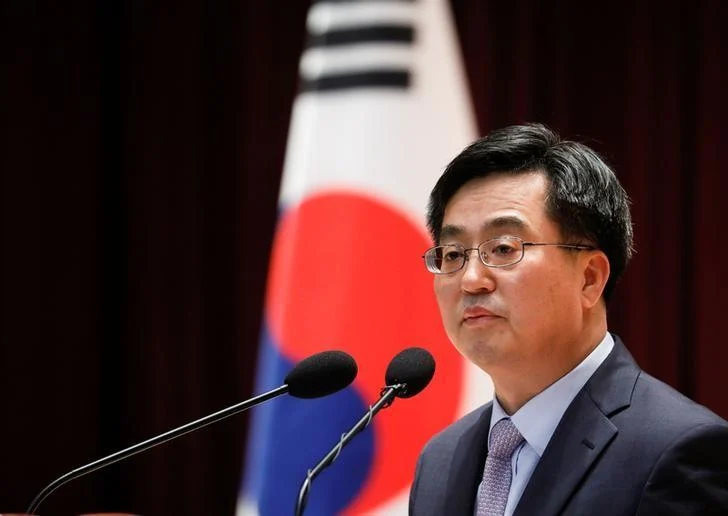
- March 2018: Finance Minister Kim Dong-yeon and other officials begin to signal a more "tolerant" stance, focusing on the distinction between blockchain technology and speculative trading.
- Present: High-level inter-agency talks begin regarding the conditional legalization of ICOs and the establishment of a formal regulatory framework for the digital asset industry.
Comparative Global Context and Market Implications
South Korea’s potential policy shift reflects a broader global trend of "regulation through recognition." While China has maintained a strict prohibition on both ICOs and domestic exchanges, other regional neighbors like Japan have opted for a licensing system that provides legal legitimacy to exchanges while enforcing strict oversight.
If South Korea successfully implements a conditional ICO framework, it could serve as a model for other G20 nations grappling with similar issues. The move is expected to have several immediate implications:
- Market Liquidity: A legalized ICO framework would likely see an influx of domestic capital into new projects, potentially increasing liquidity across the broader South Korean market.
- Institutional Participation: Clearer guidelines would allow South Korean venture capital firms and traditional financial institutions to participate in token sales, providing a more stable foundation for the industry.
- Taxation Revenue: By bringing ICOs into the legal fold, the South Korean tax agency (the National Tax Service) will be better positioned to implement capital gains taxes and corporate taxes on blockchain entities, providing a new revenue stream for the state.
- Technological Sovereignty: By supporting local projects, South Korea reduces its dependence on foreign blockchain platforms and establishes itself as a hub for decentralized innovation.
Challenges and Future Outlook
While the news of a potential policy shift has been met with optimism by the crypto community, significant challenges remain. The government must balance the need for innovation with the protection of retail investors who may not fully understand the risks associated with early-stage blockchain projects. Defining the "certain conditions" under which an ICO may be permitted will be a complex task, likely involving audits, whitepaper verification, and mandatory disclosure requirements.
Furthermore, the Ministry of Justice remains cautious. The memory of the 2017 "frenzy" is still fresh in the minds of regulators, and any move toward legalization will likely be incremental rather than immediate. The FSC has indicated that while they are acknowledging "third-party views" and international trends, the formalization of these plans will require extensive legislative review.
In conclusion, South Korea appears to be moving toward a more mature and sophisticated phase of cryptocurrency regulation. By acknowledging that a total ban is perhaps an outdated response to a rapidly evolving technology, the government is positioning the country to remain a dominant player in the global digital economy. The transition from a "ban-first" mentality to a "regulated-growth" strategy marks a significant milestone for the blockchain industry, both in Asia and worldwide. As the FSC and other ministries continue their deliberations, the global financial community will be watching closely to see how the world’s most tech-savvy nation balances the promise of decentralization with the necessity of state oversight.