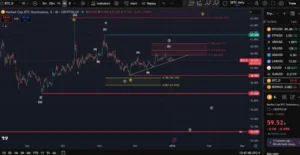
Shares of Strategy Inc. (MSTR) experienced a significant upward surge exceeding 3% during Friday’s premarket trading session, climbing to $136.60, as a confluence of favorable regulatory developments provided a substantial boost to cryptocurrency-related equities across the financial sector. This rally unfolded despite what appeared to be challenging macroeconomic and legislative landscapes earlier in the week, underscoring the market’s nuanced reaction to evolving regulatory frameworks. The company, known for its pioneering strategy of holding a substantial portion of its treasury reserves in Bitcoin, typically sees its stock performance closely mirroring broader movements within the volatile cryptocurrency market. The digital asset itself demonstrated resilience, with Bitcoin increasing 2.3% to $78,112 during the previous 24-hour period, building on a modest 1.3% gain since Monday’s opening, even as it remains approximately 38% beneath its all-time peak established last October.
Strategy Inc.’s Bold Bitcoin Bet and Market Positioning
To fully comprehend Strategy Inc.’s market sensitivity to cryptocurrency news, it is crucial to understand its unique corporate treasury strategy. Founded in 1989, Strategy Inc. is primarily a business intelligence, mobile software, and cloud-based services company. However, under the leadership of its co-founder and former CEO, Michael Saylor, the company embarked on an audacious and unprecedented strategy in August 2020: converting a significant portion of its corporate treasury into Bitcoin. Saylor, a vocal advocate for Bitcoin, articulated this decision as a hedge against inflation and a superior long-term store of value compared to traditional fiat currencies. The initial purchase of 21,454 Bitcoins for $250 million was just the beginning, with subsequent acquisitions through various financing mechanisms, including convertible notes and debt offerings, swelling its holdings to over 190,000 Bitcoins as of early 2024.
This strategy effectively transformed Strategy Inc. from a pure-play software firm into a de facto publicly traded Bitcoin proxy. Investors seeking exposure to Bitcoin without directly holding the cryptocurrency often turn to MSTR stock, making its valuation highly correlated with Bitcoin’s price movements. This positioning means that any news impacting the broader cryptocurrency market, especially regulatory developments that could foster adoption or clarify legal standing, directly influences MSTR’s stock performance. The recent surge is a testament to this intrinsic link, as the market interprets regulatory progress as a de-risking event for the entire crypto ecosystem.
Pivotal Regulatory Announcements Fuel Optimism
The primary catalyst for Friday’s premarket gains stemmed from two distinct, yet complementary, regulatory announcements from key U.S. financial watchdogs: the Securities and Exchange Commission (SEC) and the Commodity Futures Trading Commission (CFTC). These actions, while not sweeping legislative reforms, provided targeted clarity and signaled a proactive approach to integrating digital assets within existing financial frameworks.
Firstly, the SEC announced a significant five-year exemption concerning tokenized stock trading. This move addresses a critical area of innovation where traditional securities are represented as digital tokens on a blockchain. For years, the regulatory status of such tokenized assets has been ambiguous, hindering their widespread adoption and development within the regulated financial sector. The exemption, which is likely tied to specific operational frameworks or pilot programs, provides a temporary but crucial legal pathway for firms to engage in tokenized stock trading without immediate fear of enforcement actions under existing securities laws. This clarity is particularly beneficial for institutional players looking to leverage blockchain technology for enhanced efficiency, transparency, and liquidity in traditional markets, ultimately fostering a more robust digital asset infrastructure. While the specifics of the exemption were not fully detailed in the original report, such moves typically aim to allow for controlled innovation while regulators gather more data to inform future, more permanent rules.
Secondly, the Commodity Futures Trading Commission (CFTC) released a "no-action" stance for certain passive software providers working alongside regulated entities. A "no-action letter" or stance from a regulator indicates that the agency will not recommend enforcement action against a party for engaging in a particular activity, even if that activity might technically fall under existing regulations, provided certain conditions are met. In this context, the CFTC’s stance is a boon for technology companies developing software infrastructure that supports regulated entities (like futures commissions merchants or exchanges) in the crypto derivatives space. "Passive software providers" likely refers to firms offering non-custodial or non-trading related services, such as data analytics, compliance tools, or technical support, which are crucial for the efficient and secure functioning of regulated crypto markets. By offering this clarity, the CFTC reduces regulatory uncertainty for these essential service providers, thereby facilitating greater participation and innovation within the regulated crypto derivatives market, an area where the CFTC has traditionally asserted jurisdiction over certain digital assets deemed commodities.
These two announcements, emanating from the two primary federal agencies with overlapping jurisdiction over digital assets, worked in tandem to significantly enhance optimism surrounding cryptocurrency-focused firms. They suggest a pragmatic approach to regulation, acknowledging the need for innovation while ensuring market integrity and investor protection. This piecemeal but progressive approach to regulatory clarity is often viewed more favorably by the market than an outright ban or excessively restrictive framework.
The Clarity Act’s Setback: A Non-Event for Markets
The upward movement in crypto-related stocks, including Strategy Inc., occurred despite what initially appeared to be challenging legislative developments earlier in the week. The "Clarity Act," a significant piece of proposed federal cryptocurrency regulation legislation, was defeated in the Senate on Tuesday. This bill aimed to establish a comprehensive framework for digital assets, defining their legal status, allocating regulatory oversight between the SEC and CFTC, and providing guidelines for stablecoins, decentralized finance (DeFi), and other emerging areas. Its failure could have been perceived as a major setback for the industry’s quest for legal certainty.
However, market participants largely shrugged off this legislative defeat. The prevailing sentiment was that the Clarity Act faced an uphill battle from the outset, with wide anticipation that it would not secure passage this year due to bipartisan disagreements, competing legislative priorities, and the complex nature of digital asset regulation. The Senate’s decision, therefore, was relatively unsurprising and had already been largely "priced in" by sophisticated investors.
Crucially, following the legislation’s defeat, both the SEC and CFTC promptly affirmed their commitment to developing robust crypto regulations independently of new congressional legislation. This assurance helped stabilize market confidence, demonstrating that the regulatory agencies are prepared to use their existing authorities to provide necessary guidance and oversight. This commitment signals a continued, albeit slower and more agency-driven, march towards regulatory maturity, which is ultimately what the market craves. It also highlights the ongoing "turf war" or, more constructively, the distinct but overlapping roles these agencies play in shaping the future of digital asset regulation in the United States.
Macroeconomic Headwinds: Fed Rate Hike and Market Resilience
Adding another layer of complexity to the week’s market dynamics was the Federal Reserve’s decision to implement an interest rate increase for the first time in over three years, announced on Wednesday. This move typically signals a tightening monetary policy aimed at combating inflation, and it often leads to a "risk-off" environment where investors rotate out of speculative assets like growth stocks and cryptocurrencies into safer, yield-bearing instruments. Higher interest rates increase the cost of borrowing for companies and consumers, potentially slowing economic growth and reducing the attractiveness of future earnings, thereby impacting valuations.

However, similar to the Clarity Act’s defeat, this significant macroeconomic event also failed to generate the anticipated negative market reaction in the crypto space. There are several reasons for this apparent market resilience. Firstly, market participants had already largely incorporated expectations of a tightening cycle into their valuations. The Fed had been signaling its intent to raise rates for several months, allowing investors to adjust their portfolios accordingly. The specific magnitude of the hike, which was generally in line with expectations, minimized any "surprise" factor that might trigger a sharp sell-off.
Secondly, declining oil prices in recent sessions may have played a crucial role in alleviating pressure for additional aggressive Fed tightening measures in the near future. Energy prices are a significant component of inflation, and a sustained drop in oil could temper overall inflationary pressures, potentially giving the Fed more flexibility and reducing the urgency for a rapid series of steep rate hikes. This prospect may have offered some comfort to risk asset investors, suggesting that the current tightening cycle might not be as severe or prolonged as initially feared. The interplay between inflation, commodity prices, and monetary policy is complex, and the market’s reaction reflects a sophisticated interpretation of these interconnected factors.
Broader Market Reaction: Crypto-Adjacent Equities Mirror Strategy Inc.’s Upward Trajectory
The positive sentiment generated by the regulatory developments was not confined solely to Strategy Inc. Other prominent cryptocurrency-related stocks mirrored its upward trajectory, indicating a sector-wide positive reassessment. Coinbase Global Inc. (COIN), the largest cryptocurrency exchange in the United States, advanced 3.1% during premarket hours. Similarly, Robinhood Markets Inc. (HOOD), a popular trading platform that offers cryptocurrency services alongside traditional equities, registered a 3.5% gain. These movements underscore the interconnectedness of the crypto ecosystem and how regulatory clarity, even in incremental steps, can de-risk the entire sector, making it more attractive to investors. Other publicly traded companies with significant exposure to the crypto mining sector, such as Riot Platforms (RIOT) and Marathon Digital Holdings (MARA), likely also experienced similar positive momentum, although specific data for them was not provided in the original snippet. This broader market reaction signals a collective sigh of relief and renewed confidence in the operational viability and future growth prospects of companies operating within the digital asset space.
Deep Dive into Strategy Inc.’s Technical Indicators
From a technical analysis perspective, Strategy Inc.’s stock performance presents a mixed but cautiously optimistic picture, reflecting the tug-of-war between fundamental catalysts and underlying market dynamics. The stock is currently positioned approximately 5.2% above its 20-day simple moving average (SMA) of $129.57 and a more substantial 24.3% above its 50-day SMA of $109.61. These positions above key short- and medium-term moving averages are generally considered bullish signals, indicating that the stock is experiencing upward momentum and that recent buying pressure has been strong enough to push it above its average price over these periods.
However, a notable resistance point that Strategy Inc. has yet to decisively surpass is the 200-day SMA, currently positioned at $137.13. Trading at $136.60, the stock sits marginally below this critical long-term technical level. The 200-day SMA is often viewed as a key indicator of a stock’s long-term trend; a sustained break above it is typically interpreted as a strong bullish signal, while remaining below it can suggest continued long-term weakness or consolidation. The proximity to this resistance level highlights the importance of the upcoming trading sessions in determining if the current rally can translate into a more durable long-term uptrend.
Technical momentum indicators present a varied picture, suggesting caution amidst the enthusiasm. The Moving Average Convergence Divergence (MACD) indicator sits beneath its signal line with a negative histogram reading. The MACD is a momentum indicator that shows the relationship between two moving averages of a security’s price. A MACD below its signal line and a negative histogram typically indicate bearish momentum, suggesting that while the price is rising, the underlying strength of that rise might be waning or that the short-term trend is still struggling against a longer-term downtrend. Additionally, the 50-day SMA continues trading below the 200-day SMA, a configuration known as a "death cross" when the 50-day crosses below the 200-day. While this configuration can be a lagging indicator, some technical analysts interpret it as a cautionary signal, suggesting that the longer-term trend remains bearish, despite recent short-term gains. These mixed technical readings underscore the volatility inherent in MSTR stock and the broader crypto market, advising investors to maintain a balanced perspective.
Analyst Outlook and Future Projections
Notwithstanding these mixed technical readings, Strategy Inc. maintains a "Buy" consensus among analysts covering the stock. This positive fundamental outlook suggests that professional analysts believe the company’s long-term prospects, driven by its Bitcoin treasury and underlying software business, outweigh the current technical headwinds or short-term market fluctuations. The average price target from analysts stands at an impressive $232.82, significantly exceeding current trading levels. This target implies a substantial upside potential of approximately 70% from Friday’s premarket price, reflecting a strong conviction in the company’s ability to appreciate in value.
Analyst price targets are typically based on a combination of fundamental analysis, including discounted cash flow models, comparable company analysis, and projections of Bitcoin’s future price and its impact on Strategy Inc.’s valuation. The high price target suggests that analysts foresee continued growth in the cryptocurrency market, further adoption of Bitcoin, and a sustained premium for MSTR as a liquid proxy for Bitcoin exposure. While these targets are not guarantees, they provide a valuable insight into the professional investment community’s long-term expectations for the company.
Implications for the Cryptocurrency Ecosystem and Beyond
The events of this week, culminating in Strategy Inc.’s surge, carry significant implications for the broader cryptocurrency ecosystem. Firstly, they highlight the growing maturity of the market. The ability of digital assets and related equities to withstand major legislative setbacks and macroeconomic tightening without capitulating suggests a more robust and resilient investor base. The market is increasingly sophisticated in distinguishing between anticipated events and genuine surprises, and in interpreting the nuances of regulatory actions.
Secondly, the regulatory transparency delivered by the SEC and CFTC, despite the Clarity Act’s failure, seems to have provided the precise catalyst cryptocurrency stocks required to advance into the weekend trading session. This underscores the critical importance of regulatory clarity for institutional adoption and mainstream integration of digital assets. While a comprehensive legislative framework remains the ultimate goal for many, incremental guidance from regulators can significantly de-risk the sector and encourage further investment and innovation. The actions by the SEC and CFTC demonstrate a willingness to engage with the evolving landscape of digital assets, even in the absence of new mandates from Congress.
Finally, Strategy Inc.’s continued performance as a bellwether for the crypto market reinforces its unique position. As long as Bitcoin remains a volatile yet high-potential asset, and as long as traditional investment vehicles for Bitcoin remain somewhat limited or complex for certain investors, MSTR will likely continue to attract capital as a readily accessible, publicly traded proxy. The ongoing narrative around digital assets, regulatory evolution, and macroeconomic shifts will continue to shape its trajectory, making it a closely watched indicator of market sentiment in the exciting, yet challenging, world of cryptocurrencies. The coming months will be crucial in observing whether the positive momentum can be sustained, particularly as the broader regulatory landscape continues to take shape and as global economic conditions evolve.