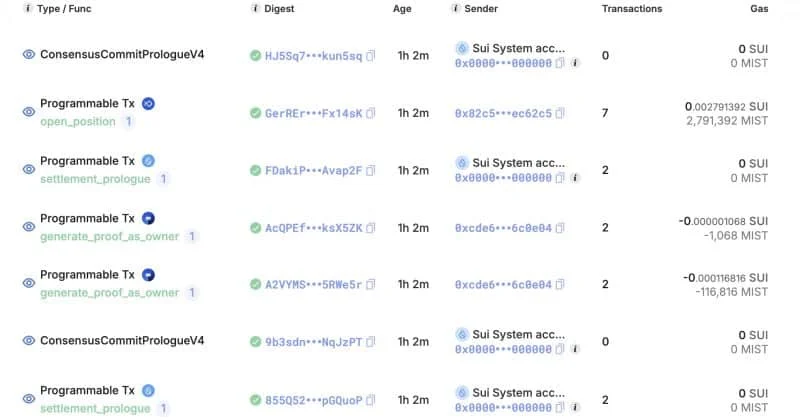
The Sui mainnet has successfully resumed operations following a critical bug in its latest software release, version 1.72, which led to a network standstill lasting approximately 5 hours and 55 minutes. The incident, which began on May 28, disrupted the network’s ability to process new transactions and finalize blocks, impacting decentralized finance (DeFi) protocols and causing a temporary dip in the SUI token’s price. Validators, the decentralized entities responsible for maintaining the network, collaborated to implement a fix and upgrade to a patched version, restoring normal checkpoint production on May 29.
The Genesis of the Disruption: A Flaw in Gas Charging
The root cause of the extensive outage has been identified as a flaw within the gas charging logic of Sui’s 1.72 release. This critical component of the blockchain’s architecture is responsible for calculating the transaction fees users must pay to execute operations on the network. When this logic malfunctioned, it prevented the network from accurately assessing and processing these fees, consequently halting the production of new blocks and effectively freezing the entire system. The absence of new transactions being finalized meant that no progress could be made on the blockchain, leading to the prolonged downtime.
A Detailed Chronology of the Outage and Recovery
The incident unfolded on May 28, when validators who had adopted the 1.72 software update began experiencing the gas charging bug. This led to an immediate cessation of new checkpoint production, the network’s mechanism for verifying and committing batches of transactions. Without the ability to create new checkpoints, the Sui blockchain became unresponsive to incoming transactions.
The recovery process was not as simple as a single entity issuing a command. Sui’s robust consensus mechanism, designed to ensure security and decentralization, mandates that a supermajority of validators – those holding more than two-thirds of all staked tokens – must upgrade to the patched software before the chain can resume normal operations. This distributed consensus requirement, while a cornerstone of blockchain security, necessitates coordinated action among a geographically dispersed and independent group of validators.
The Sui Foundation and the core development team worked diligently with the validator community to identify the precise nature of the bug and to develop and deploy a corrected version of the software. Once the patched software was ready, the arduous task of coordinating the widespread adoption of this update across the global validator set commenced. This process involved clear communication, technical support, and the collective will of the community to restore the network’s integrity.
After hours of concerted effort, the threshold of two-thirds of staked validators was met, allowing the network to recommence checkpoint production and re-establish the flow of transactions. The restoration of normal operations was confirmed on May 29, bringing an end to the nearly six-hour period of inactivity.
Resilience in Design: Safety Guarantees Upheld
Despite the significant disruption, Sui’s underlying design proved resilient. Crucially, no user funds were lost or compromised during the outage. The network’s safety guarantees held firm, preventing any unauthorized access or manipulation of assets. Furthermore, the blockchain’s architecture successfully prevented any data inconsistencies from arising while the chain was stalled. This means that once the network was back online, the state of the blockchain was accurate and reflected the last valid state before the incident.
The impact on decentralized applications (dApps) built on Sui was immediate and comprehensive. DeFi protocols, which rely on continuous and seamless transaction processing, were effectively frozen. Users were unable to adjust their existing positions, execute new trades, or participate in any actions that required on-chain interaction. This also meant that automated processes like liquidations, which are critical for maintaining the stability of lending and borrowing protocols, could not be triggered. The standstill created a period of uncertainty and potential financial risk for participants in the Sui DeFi ecosystem, though the ultimate safety of their principal remained intact.
A Recurring Pattern: Examining Sui’s Uptime History
This recent network disruption is not an isolated incident for Sui. The blockchain has experienced significant downtime previously, raising questions about its stability. On January 14, 2026, Sui’s mainnet suffered a similar multi-hour stall, lasting approximately six hours. That earlier incident was attributed to a consensus commit bug, a different but equally critical issue that also halted network operations.
The occurrence of two outages of this magnitude within a span of roughly five months presents a discernible pattern. Both incidents share a common profile: a bug introduced through a software update, followed by a complex and time-consuming process of coordinating validator upgrades across the network to implement a fix. This recurring nature of extended downtime suggests potential underlying challenges in the software development and deployment lifecycle or the robustness of the consensus mechanism under certain error conditions.
Market Reaction: SUI Token’s Volatility
The SUI token, the native cryptocurrency of the Sui blockchain, reflected investor sentiment in real-time during the outage. As news of the network’s paralysis spread, the SUI token experienced a price decline, falling to approximately $0.89. This represented a drop in the range of 6-8% from its pre-outage levels. Following the successful restoration of normal network operations, the SUI token saw a partial recovery, indicating that the market reacted positively to the resolution of the technical issue. However, the volatility underscores the sensitivity of cryptocurrency markets to network stability and operational integrity.
Implications for Investors and the Sui Ecosystem
Sui has positioned itself as a high-throughput Layer 1 blockchain, designed to be a robust infrastructure capable of supporting demanding DeFi applications and, in the long term, attracting institutional capital. The network has seen substantial growth in its ecosystem since its launch, with the total value locked (TVL) across its DeFi protocols reaching hundreds of millions of dollars. This growth trajectory is predicated on the network’s ability to deliver on its promises of speed, scalability, and, critically, reliability.
For traders and investors, the recent price action provides a potential playbook for future events. The 6-8% decline during the outage, followed by a partial recovery, suggests that the market may react similarly if another significant disruption occurs. This highlights the importance of network uptime and stability as key factors influencing investor confidence and asset valuation.
The recurring nature of these outages raises important questions for the Sui Foundation and its development team. While the network’s safety features have proven effective in preventing fund loss, the operational disruptions impact user experience, developer confidence, and the overall perception of Sui as a reliable blockchain platform. Addressing the underlying causes of these bugs and refining the software update and validator coordination process will be crucial for building long-term trust and attracting the sustained investment necessary for Sui to achieve its ambitious goals.
The focus for Sui moving forward will likely be on enhancing its testing protocols, strengthening its release management processes, and potentially exploring more resilient methods for deploying critical updates across its validator network. The ability to maintain consistent uptime and minimize the impact of unforeseen technical issues will be a significant determinant of Sui’s success in the competitive Layer 1 blockchain landscape. The coming months will be critical in demonstrating whether Sui can overcome these recent challenges and solidify its position as a dependable platform for the future of decentralized finance and beyond.