


The landscape of e-commerce and digital marketing has undergone a seismic shift, with social media platforms increasingly becoming central hubs for consumer transactions. In a testament to this transformative trend, TikTok Shop, the burgeoning e-commerce arm of the popular short-form video platform, facilitated a staggering $64.3 billion in merchandise sales in 2025, nearly doubling its performance from the previous year. A significant portion of this explosive growth, particularly the $15.1 billion generated in the U.S. market alone, was fueled by an innovative, cost-effective marketing strategy: short, engaging, face-to-camera videos showcasing products and articulating their perceived value. What was once a labor-intensive process, demanding models, professional lighting, and numerous retakes, has now been dramatically streamlined and democratized by the advent of artificial intelligence. Today, aspiring marketers and established brands alike can conjure compelling video advertisements with little more than a product photograph and a trio of readily accessible, often free, AI tools, effectively enabling anyone to build a marketing empire with minimal technical expertise.
The E-commerce Revolution on Short-Form Video
The meteoric rise of social commerce is intrinsically linked to the dominance of short-form video content. Platforms like TikTok, YouTube Shorts, and Instagram Reels have cultivated a culture of instant gratification and visual storytelling, making them ideal fertile ground for direct-response marketing. Consumers are increasingly discovering products through these bite-sized videos, swayed by authentic-feeling user-generated content (UGC) that breaks down traditional advertising barriers. This shift represents a significant evolution from static product listings or lengthy infomercials, moving towards a more interactive and relatable shopping experience.
TikTok Shop’s impressive growth figures underscore this paradigm shift. The platform’s ability to integrate discovery, engagement, and direct purchase within a single user experience has proven incredibly potent. Merchants benefit from TikTok’s immense reach and sophisticated algorithm, which connects products with highly targeted audiences based on their viewing habits. The model prioritizes authenticity and rapid communication, making it fertile ground for agile content creation. The year 2025 marked a pivotal moment, as the platform solidified its position as a major player in the global e-commerce arena, demonstrating that social engagement can directly translate into substantial economic activity.
The Dawn of AI-Powered Marketing Content Creation
The traditional bottlenecks of video production – cost, time, and specialized skills – have historically limited access to high-quality marketing for small businesses and individual entrepreneurs. However, the rapid advancements in generative AI are dismantling these barriers, ushering in an era where sophisticated content creation is within reach for virtually anyone. These AI tools leverage complex algorithms to generate images, text, and video from simple prompts, mimicking human creativity and significantly reducing the resources required for content production.
The core innovation lies in the AI’s capacity to understand and synthesize visual and textual information, allowing users to transform basic product images into dynamic video advertisements. This technological leap has profound implications for the marketing industry, enabling faster iterations, personalized campaigns, and a more diverse range of creative outputs without the prohibitive costs associated with traditional production houses or even hiring individual content creators. The shift from human-intensive production to AI-assisted generation is not just an efficiency gain; it’s a fundamental change in how marketing content is conceived and executed.
A Step-by-Step Guide to AI-Generated Video Ads
The following workflow illustrates how even those without a technical background can harness the power of AI to create compelling marketing videos for platforms like TikTok Shop, YouTube Shorts, and Instagram Reels.
Step 1: Product Selection and Image Preparation
The foundation of any successful AI-generated ad is a pristine product image. Before diving into the technical aspects, the primary decision revolves around the product itself. Marketers can either leverage their passion for a specific niche, ensuring genuine enthusiasm translates into compelling content, or strategically identify trending items on platforms like TikTok Shop, using data to inform their choices. Once a product is selected, the next crucial step is obtaining a high-quality, unadulterated image. This could involve using supplier photos if affiliated with a company, or downloading images of popular items.
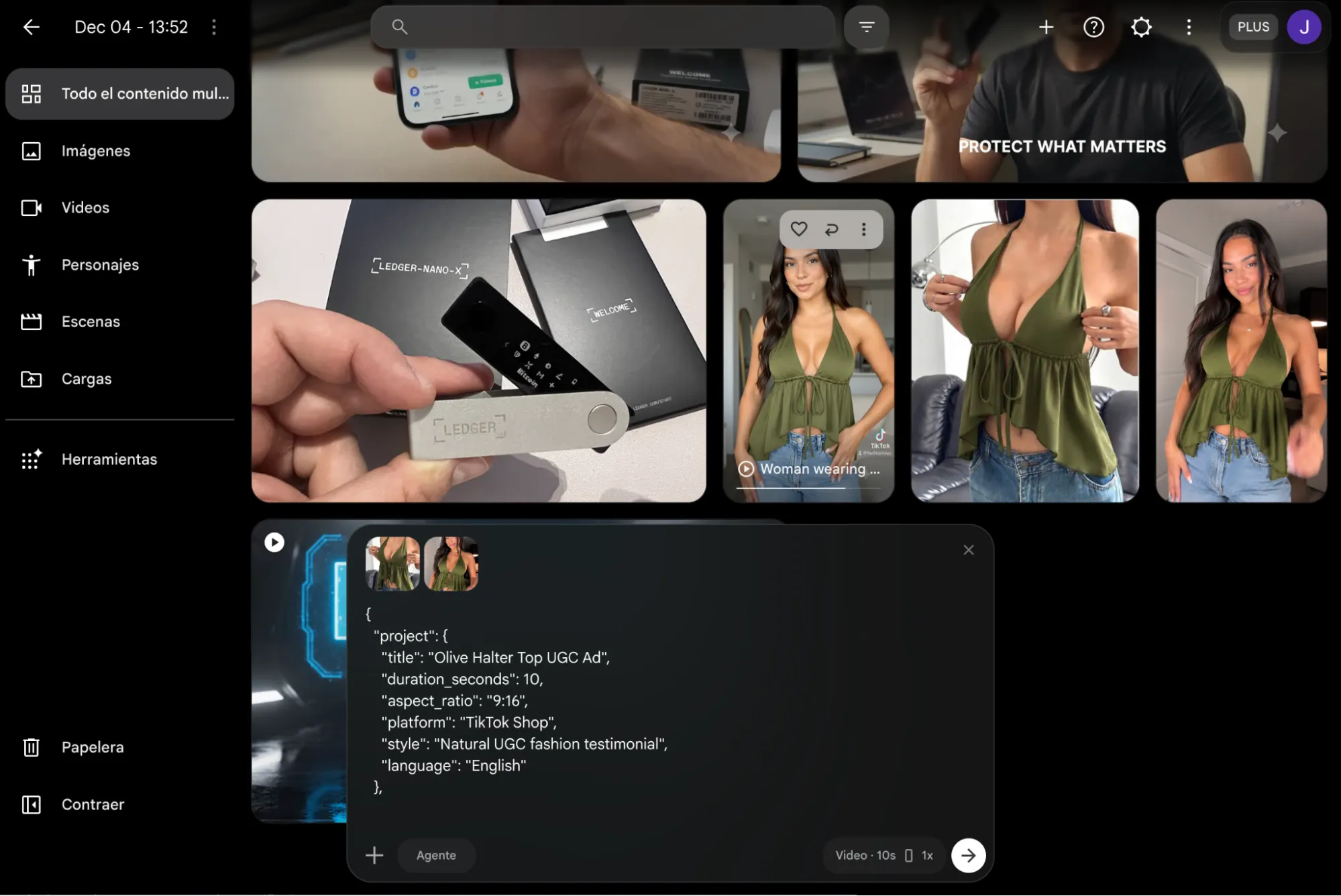
The importance of a clean product image cannot be overstated. The AI models used in subsequent steps treat this image as the "source of truth." This means the image should be meticulously cropped to feature only the product, free from models, distracting background clutter, or watermarks. For instance, an example might involve a green top for a vertical TikTok ad or a Ledger crypto wallet for a horizontal YouTube video. The cleaner and more precise the initial reference image, the more accurate and faithful the AI’s rendering of the product will be in the final advertisement. Any inconsistencies or extraneous details in the source image risk being replicated or misinterpreted by the AI, leading to less desirable outcomes.
Step 2: Crafting the Visual Narrative with AI Models
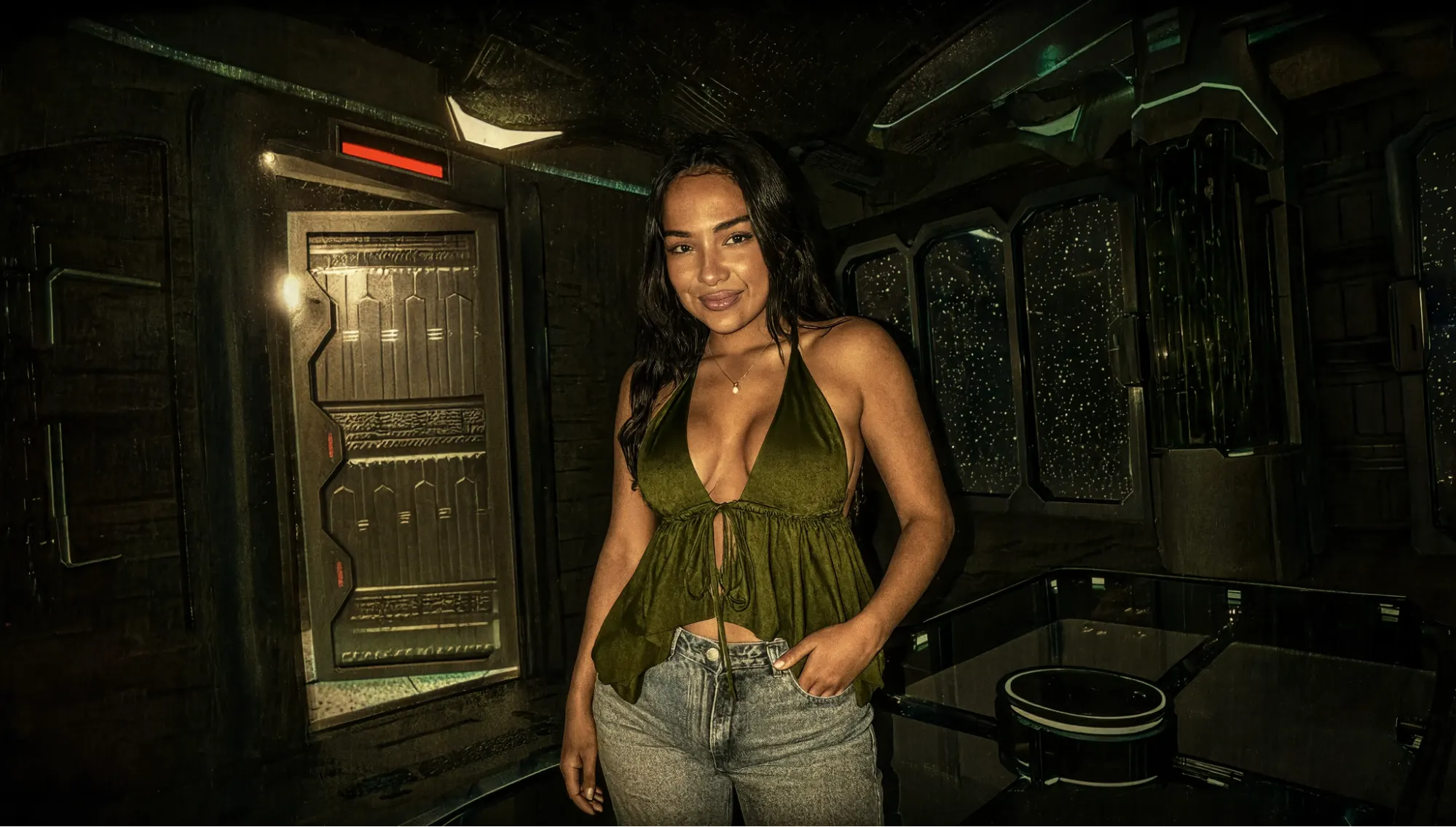
For products like clothing and accessories, a human element often enhances relatability and appeal. This is where advanced AI image generation comes into play. Tools like ChatGPT, specifically utilizing models such as GPT Image 2, excel at this task. Decrypt’s head-to-head testing in 2025 highlighted GPT Image 2’s superior photorealism and product fidelity compared to competitors like Google’s Nano Banana 2, making it an ideal choice for creating believable AI-generated ads.
The process involves uploading the cropped product image to ChatGPT and crafting a detailed prompt that describes the desired scene and model. For example, a prompt could be: "Generate a vertical 9:16 photo of a Latina woman in her late 20s wearing this exact garment, posing for a casual smartphone photo in a bright apartment. Preserve every characteristic of the product exactly as shown in the reference image: shape, proportions, color, fabric texture, stitching, and fit. Do not redesign, recolor, or alter the product in any way."
The power of this step lies in its customizability. Marketers can easily swap demographic details (ethnicity, age, body type) to align with their target audience or alter the setting (a gym for activewear, a café for accessories, a bustling street for streetwear) to match the product’s context. For non-clothing items, the prompt can be adjusted to "holding" or "using" the product. Furthermore, advanced techniques allow for compositing, where a second image of a desired location can be uploaded, and ChatGPT instructed to place the generated model within that environment. While Google’s Nano Banana 2 also handles compositing effectively, and Reve offers a cheaper alternative, the emphasis remains on maintaining product accuracy and photorealism, which can sometimes be compromised by less robust models.

Step 3: AI-Driven Scriptwriting for Impact
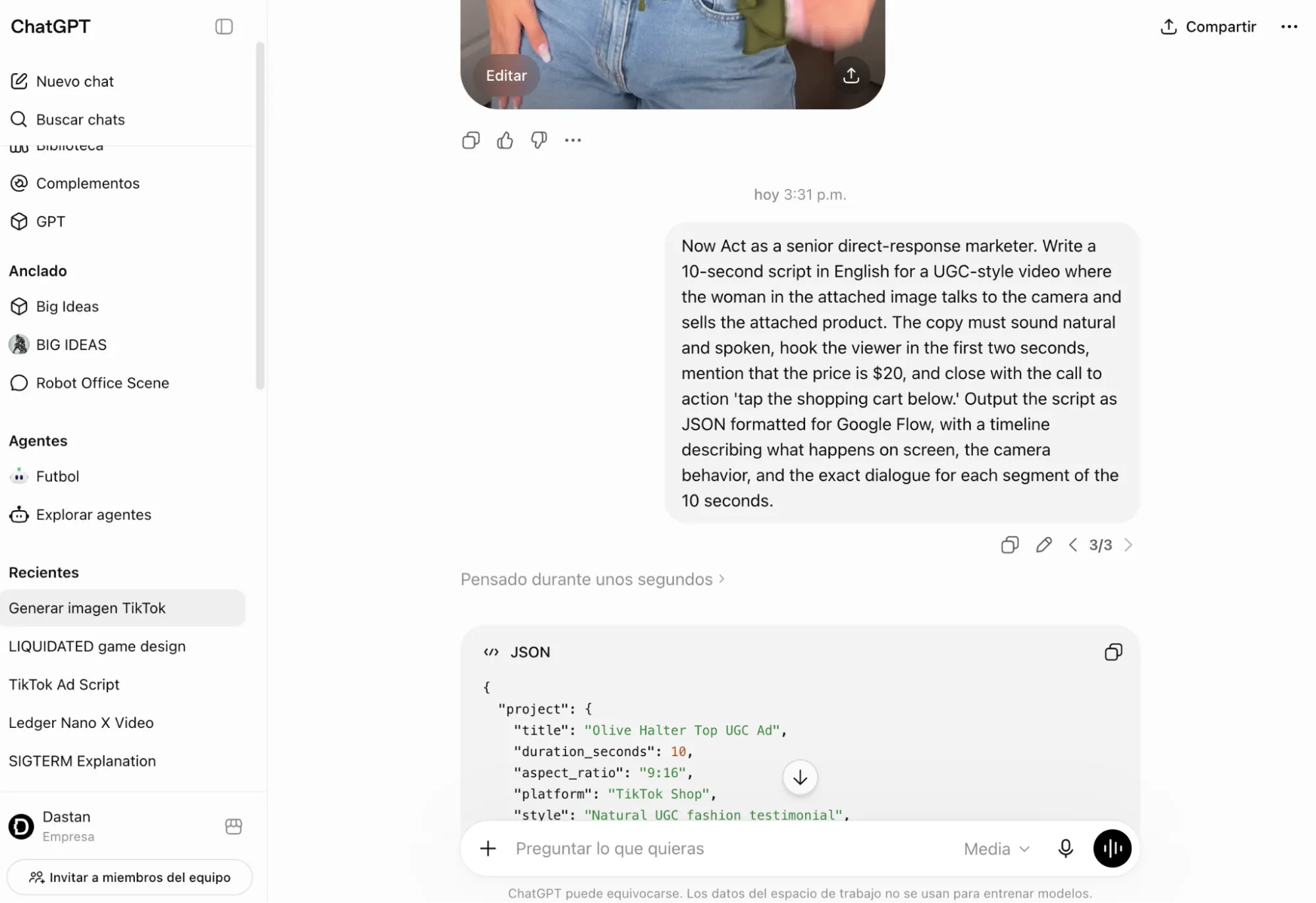
Once the visual component is ready, the next critical element is the narrative – a concise, engaging script for a short video. Rather than relying on human copywriters, AI tools like ChatGPT can be leveraged to generate high-converting scripts. The key is to provide a detailed prompt, instructing the AI to act as a seasoned direct-response marketer.
A sophisticated prompt might look like this: "Act as a senior direct-response marketer. Write a 10-second script in English for a UGC-style video where the woman in the attached image talks to the camera and sells the attached product. The copy must sound natural and spoken, hook the viewer in the first two seconds, mention that the price is $20, and close with the call to action ‘tap the shopping cart below.’ Output the script as JSON formatted for Google Flow, with a timeline describing what happens on screen, the camera behavior, and the exact dialogue for each segment of the 10 seconds."
The JSON format is not merely aesthetic; it’s a functional requirement for optimal performance with advanced video models, particularly those from Google. This structured format ensures that the AI video generator precisely follows the intended dialogue, gestures, and pacing described in the script. A crucial warning: always review the AI’s output, as overly literal interpretations can sometimes lead to redundant actions if the timeline ends before the full duration.
Moreover, the script can be personalized for different platforms. For TikTok, phrases like "The best top I’ve seen on my TikTok feed" can be used, while "on X," "in my Reels," or "on Shorts" would be appropriate for other platforms. Call-to-actions also vary: "tap the shopping cart below" for TikTok, "link in bio" for Instagram, and "check the pinned comment" for YouTube. This level of customization, driven by AI, allows for highly targeted and platform-native messaging.
Step 4: Bringing the Vision to Life with AI Video Generation
The culmination of the previous steps is the actual video generation. Google Flow, particularly with its Gemini Omni model, launched at I/O 2026, has emerged as a frontrunner in this domain. Gemini Omni is capable of generating video clips up to 10 seconds long, complete with native audio where the AI-generated model actually speaks the dialogue, and crucially, it accepts reference images, maintaining fidelity to the product and model generated earlier. While Google Veo is another viable option and arguably offers superior quality, Omni presents a more cost-effective solution, making it appealing for marketers operating on tighter budgets.
The process involves uploading both the AI-generated image of the model wearing/holding the product and the original cropped product close-up as references. The JSON-formatted script is then pasted into the prompt box. Users can select the appropriate video aspect ratio: vertical 9:16 for TikTok, Reels, and Shorts, or horizontal 16:9 for standard YouTube videos and pre-roll advertisements.
Regarding cost, Google Flow offers non-subscribers 50 free daily credits, though these are typically restricted to older Veo 3.1 models. To access the recommended Gemini Omni model, a paid Google AI plan is necessary. Plans range from Plus ($7.99/month for 200 credits) to Ultra tiers offering up to 25,000 credits. A significant "backdoor" for free access to Omni exists through YouTube Shorts and the YouTube Create app for users 18 and older. For developers, the API pricing for Omni is approximately $0.10 per second of video, equating to about a dollar per 10-second clip.
It’s paramount to note that every Omni video inherently carries Google’s invisible SynthID watermark, identifying it as AI-generated. This watermark is undetectable on-screen but can be recognized by platforms, enforcing transparency regarding AI-generated content. Marketers should be aware that video generation involves a degree of randomness due to the creative nature of these models. If the initial output isn’t satisfactory, multiple attempts are often necessary to achieve the desired result. Minor irregularities that can be easily fixed in post-production should not deter users from accepting a generation, saving valuable credits.
Step 5: Refining and Polishing in Post-Production
The final step in this AI-powered workflow involves polishing the generated video in a user-friendly editing application like CapCut. Despite the sophistication of AI video generators, occasional anomalies such as repetitive phrases or looping gestures can occur. CapCut allows for precise trimming, ensuring the clip is exactly as intended before direct export to social media platforms.
Subtitles are a particularly important feature for social media, where many users watch videos on mute. CapCut offers animated, word-by-word caption styles that are highly popular on TikTok, though these often require a CapCut Pro subscription ($7.99/month or $59.99/year), and the free tier caps automatic captions. Manual text entry remains free for those willing to invest the time. This post-production phase is crucial for addressing minor imperfections and adding elements that enhance viewer engagement, transforming a raw AI-generated clip into a polished, platform-ready advertisement.
Beyond the Basics: Advanced AI Workflows
While the outlined five-step process offers a highly effective and accessible entry point into AI-powered marketing, the world of generative AI extends far beyond these foundational tools. As marketers gain experience and seek greater control, they often venture "down the rabbit hole" into more sophisticated workflows. This includes integrating tools like ElevenLabs for generating consistent, high-quality brand voices across numerous videos, or exploring Kling for persistent AI avatars and advanced motion control capabilities.
Node-based workflows, such as ComfyUI, provide granular control over scene composition and AI generation parameters, allowing for highly specific and customized outputs. Automation platforms like n8n can be used to orchestrate complex AI video creation and multi-platform publishing pipelines, significantly scaling operations. Each of these advanced tools introduces additional cost and complexity, but they offer unparalleled creative control and efficiency for those looking to push the boundaries of AI-driven marketing. The basic pipeline, however, remains a robust and cost-effective method for initial product testing and market validation before investing in more elaborate setups.
Navigating the Regulatory Landscape: Platform Policies and Disclosure
The rapid proliferation of AI-generated content has necessitated new policies from social media platforms, emphasizing transparency and authenticity. Both TikTok and YouTube permit AI-generated promotional videos, but with stringent disclosure requirements.
Under TikTok’s AI-generated content policy, realistic AI-generated images, audio, or video must be explicitly labeled. Advertisers running non-Spark ads are required to activate the "This ad contains AI-generated content" option within TikTok Ads Manager. Furthermore, anyone promoting a brand, product, or service must enable TikTok’s commercial-content disclosure setting. These measures are designed to ensure users are aware when content is not organically produced by a human.
YouTube has similar requirements. Creators must select "Yes" under "AI use" if a video contains realistic content generated or meaningfully altered with AI, leading to an AI label applied by the platform. Additionally, sponsored, endorsed, or commercially influenced videos must separately utilize YouTube’s paid-promotion disclosure. These policies reflect a broader industry push for transparency, safeguarding against potential misinformation or deceptive marketing practices.
X (formerly Twitter), while not explicitly banning AI-generated content in promotions, operates under an Authenticity policy that prohibits synthetic or manipulated media if it is deceptively presented and could cause widespread confusion, threaten public safety, or produce serious harm. Its advertising rules mandate that ads be honest, lawful, and consistent with the promoted product. While X’s policies may seem less prescriptive than TikTok’s or YouTube’s on AI disclosure, the overarching principle of honesty and authenticity still applies to AI-generated marketing content.
Beyond content generation, platforms have also adjusted their affiliate and merchant programs to lower entry barriers. Selling on TikTok Shop, for instance, primarily requires being 18 or older with a government ID and matching bank details, with approval typically within three days. TikTok charges a 6% referral fee on most orders. For affiliates, 1,000 followers are needed to apply, and full access usually requires 5,000 followers and 30 days in the program. YouTube significantly lowered its barrier in March 2025, opening its Shopping Affiliate program to Partner Program creators with just 500 subscribers across 12 countries, including the U.S. and Brazil, demonstrating a clear move to empower a wider range of creators to participate in social commerce.
The Economics of Social Commerce: Opportunities and Challenges
The tools for creating AI-powered marketing content are increasingly accessible and affordable, democratizing the ability to enter the social commerce space. However, this accessibility also translates into intensified competition. As Camille Moore, president of the marketing agency Third Eye Insights, starkly pointed out, "of the 803,500 TikTok Shop stores operating in the U.S. last year, more than half recorded zero sales." This sobering statistic underscores a critical reality: while the tools may be nearly free, the competition is anything but.
The democratization of marketing content creation presents immense opportunities for small businesses, startups, and individual entrepreneurs who previously lacked the resources to compete with larger brands. AI allows them to produce high-volume, diverse, and targeted marketing campaigns quickly and efficiently. This agility can be a significant competitive advantage in fast-moving social commerce environments.
However, the sheer volume of content generated by AI also poses challenges. The market risks saturation, where individual pieces of content struggle to cut through the noise. Success will increasingly depend on strategic product selection, astute prompt engineering, continuous optimization based on performance data, and the ability to maintain a distinctive brand voice even with AI assistance. The future of social commerce will likely favor those who can master both the technological capabilities of AI and the nuanced art of authentic audience engagement, using AI as a powerful accelerant rather than a complete replacement for human insight and creativity.
The Future of Marketing: Democratization vs. Saturation
The integration of AI into marketing workflows marks a pivotal moment, offering unprecedented opportunities for content creation and distribution. The 2025 surge in TikTok Shop sales, significantly driven by AI-assisted videos, is a clear indicator of this new era. While AI democratizes access to sophisticated marketing tools, enabling individuals and small businesses to compete on a playing field once dominated by large corporations, it simultaneously intensifies the competitive landscape.
The challenge for marketers will be to move beyond simply generating content to generating effective content that resonates with audiences amidst a flood of AI-produced material. This requires a deeper understanding of target demographics, continuous adaptation of prompts and strategies, and a commitment to transparency regarding AI use, as mandated by platform policies. The ethical implications of AI-generated content, particularly regarding authenticity and disclosure, will remain a central focus for platforms and regulators.
Ultimately, the AI-powered revolution in social commerce is not just about technology; it’s about reimagining the entire marketing pipeline. It demands a new skill set that blends creative vision with prompt engineering, data analysis, and an acute awareness of platform dynamics. As AI models continue to evolve in sophistication and accessibility, the potential for innovation in marketing is boundless, but so too is the imperative for strategic thinking and ethical practice. The era of the AI-powered marketing empire has truly begun, promising both immense rewards and formidable challenges for those who seek to build it.














