The rapid expansion of the blockchain and crypto landscape has fundamentally reshaped the digital economy, introducing a diverse array of digital assets with distinct applications. Among these, utility tokens have emerged as a pivotal force, driving innovation and facilitating the core functions of decentralized ecosystems. While often misunderstood or conflated with purely speculative assets like memecoins or regulated instruments such as security tokens, utility tokens possess a unique intrinsic value tied directly to their functionality within a specific blockchain or Web3 project. Their proliferation is a significant factor in the sporadic but undeniable growth of crypto market capitalization and trading volumes, signaling a shift towards digital assets with tangible, use-driven purpose. For professionals seeking to build a robust identity as certified blockchain experts, understanding these dynamics is crucial, and platforms like 101 Blockchains offer specialized certifications designed to provide enhanced career prospects in this evolving field.
Understanding the Core "Utility" of Digital Assets
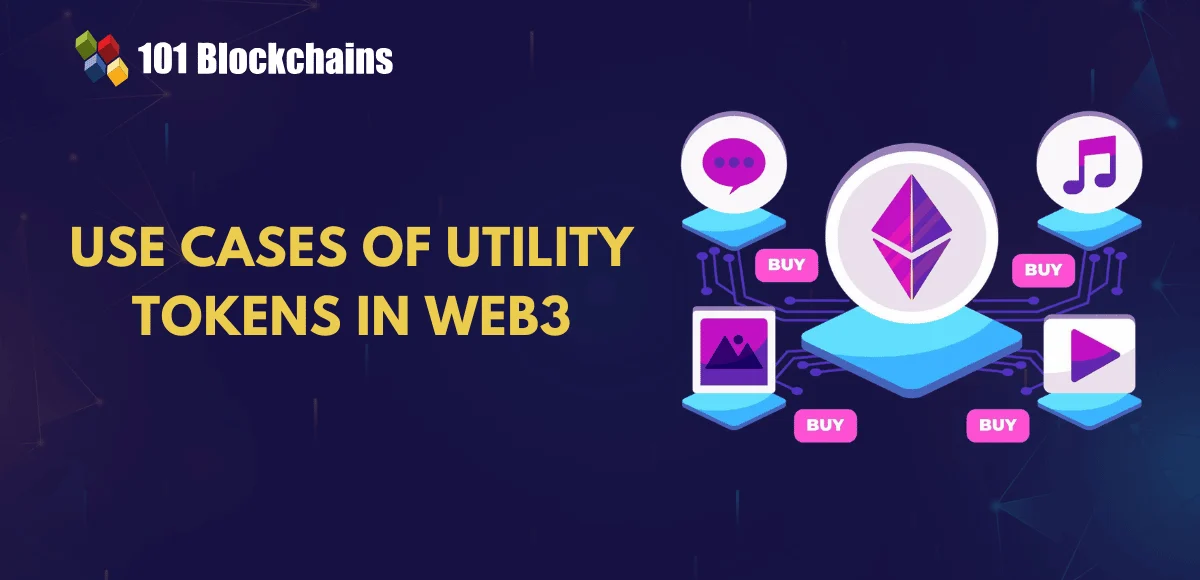
At its essence, a utility token is a digital asset specifically engineered to grant access to a particular service, feature, or function within a decentralized application (dApp) or blockchain ecosystem. Unlike traditional cryptocurrencies such as Bitcoin, which primarily serve as a store of value or a medium of exchange, utility tokens are the operational fuel for decentralized networks. They function akin to digital keys, membership cards, or even vouchers, unlocking capabilities within their native environments. Their value is not derived from promises of dividends or speculative market hype alone, but rather from the demand for the services, features, or actions they enable. As the concepts of blockchain gaming, Decentralized Finance (DeFi), and the broader suite of Web3 applications continue to capture global attention, utility tokens have solidified their position as indispensable drivers for these burgeoning decentralized economies.
The genesis of utility tokens can be traced back to the early days of blockchain, when developers sought mechanisms to incentivize participation and facilitate operations within their nascent decentralized networks. Ethereum’s native token, Ether (ETH), serves as a foundational example, acting as a utility token that pays for computational services (gas fees) on the Ethereum Virtual Machine. This model demonstrated the power of an internal token economy to sustain and grow a complex decentralized infrastructure. Over time, as the blockchain paradigm matured, the application of utility tokens diversified, moving beyond simple transaction fees to encompass a wide range of functional roles, from governance to content access and reward systems. This evolution underscores the adaptability and strategic importance of these digital assets in the broader Web3 landscape.
The Web3 Imperative: Why Projects Need Utility Tokens
The transition from Web2 to Web3 represents a paradigm shift from centralized, platform-controlled internet services to decentralized, user-owned, and permissionless applications. In this new architecture, traditional business models—reliant on advertising, data monetization, or subscription fees managed by central entities—often fall short. Web3 projects, built on principles of decentralization and community governance, require innovative mechanisms for funding, incentivizing, and managing their ecosystems. This is where utility tokens become not just advantageous, but often essential.
For a Web3 project, a well-designed utility token serves multiple critical functions simultaneously. It can act as the native currency, a governance tool, a means to bootstrap network effects, and a mechanism for user engagement. Without a token, many Web3 projects would struggle to achieve true decentralization, distribute ownership, or create sustainable incentive structures that align the interests of developers, users, and investors. The challenge for new Web3 ventures, therefore, is not merely to launch a token, but to meticulously design its tokenomics—the economic model governing its creation, distribution, and usage—to ensure it provides genuine utility and fosters long-term ecosystem health. Identifying and implementing the right use cases for these tokens is paramount to preventing them from becoming mere speculative instruments and instead transforming them into powerful engines of growth and innovation.
Foremost Use Cases of Utility Tokens in the Web3 Era
The strategic deployment of utility tokens underpins the functionality and growth of countless Web3 initiatives. Here, we delve into the primary applications that define their indispensable role.
1. Payment and Access to Features in Web3 Projects
One of the most straightforward yet impactful applications of utility tokens is their role as a native currency and a gateway to services and features within a Web3 ecosystem. By serving as the primary medium of exchange, utility tokens transform Web3 projects into independent, self-sustaining economies, reducing reliance on traditional fiat currencies or centralized payment processors. Users can leverage these tokens to pay for services, acquire digital assets, or unlock premium features directly within the project’s environment. This model offers several distinct advantages:
- Reduced Transaction Fees: By operating on a native blockchain, transactions often incur lower fees compared to conventional payment systems, especially for microtransactions, making digital interactions more economically viable.
- Enhanced Efficiency: Transactions can be processed more rapidly, without the need for intermediaries, improving user experience and operational speed.
- Direct Demand Creation: The necessity of holding and spending the utility token to access core functionalities creates direct, organic demand for the token itself, linking its value to the utility it provides.
- Examples: Filecoin, for instance, utilizes its FIL token to allow users to pay for decentralized data storage and retrieval services on its network. Similarly, many decentralized content platforms might require their native utility token for creators to publish content or for users to access premium material, thereby fostering a direct economic relationship within the platform. This approach empowers users to become active participants in the economy of the platform, rather than passive consumers.
Web3 startups can strategically design their token-based payment systems and access controls to not only create direct demand for their utility tokens but also to cultivate long-term user engagement through effective tokenomics. This often involves mechanisms that reward consistent use or offer discounts for transactions conducted with the native token, further embedding it into the project’s operational fabric.
2. Community Ownership and Decentralized Governance
The ethos of Web3 is deeply rooted in decentralization and community empowerment. Utility tokens are central to achieving this vision, particularly through their role in decentralized governance models. Many Web3 ecosystems, moving away from centralized decision-making, leverage utility tokens to grant voting rights to their holders. These "governance tokens" empower community members to:
- Propose and Vote on Changes: Token holders can submit proposals for protocol upgrades, modifications to the project’s roadmap, or changes in operational parameters.
- Manage Treasury Funds: In many Decentralized Autonomous Organizations (DAOs), governance token holders collectively decide on the allocation of treasury funds, directing resources towards ecosystem development, grants, or partnerships.
- Define Policies: Beyond technical upgrades, governance tokens can influence broader policy decisions, such as content moderation rules for decentralized social platforms, partnership agreements, or marketing strategies.
Decentralized Autonomous Organizations (DAOs) represent the pinnacle of this utility token application. In a DAO, governance tokens shift the power from a traditional executive team to the collective community. Prominent examples include Uniswap (UNI token) and Aave (AAVE token), where token holders actively participate in decisions affecting the protocol’s future. This model not only enhances transparency and trust but also fosters a strong sense of loyalty and ownership among community members. It taps into "collective intelligence," allowing a diverse group of stakeholders to contribute to the project’s evolution, often leading to more robust and community-aligned development paths. The growth of the DAO ecosystem, with hundreds of active DAOs managing billions in assets, underscores the profound impact of utility tokens on decentralized governance. According to DeepDAO, as of early 2024, the total assets under management by DAOs exceeded $20 billion, with over 2 million governance token holders, highlighting the scale of this decentralized shift.
3. Successful Launch and Scaling of New Web3 Projects
Utility tokens play a crucial role in the initial bootstrapping and ongoing scaling of decentralized ecosystems, offering a novel mechanism for fundraising, incentive alignment, and network growth. Web3 startups often face the challenge of simultaneously attracting users, developers, and early investors in a nascent market. Utility tokens provide a flexible framework to address these challenges:
- Incentivizing Early Participation: Through mechanisms like airdrops, ecosystem grants, and early investor rewards, utility tokens can incentivize initial adoption and participation. Airdrops distribute tokens to a broad base of potential users, generating initial interest and decentralizing token distribution.
- Developer Incentives: Tokens can be allocated to developers as rewards for building applications, tools, or integrations on the platform, fostering a vibrant developer ecosystem. Ethereum’s early success, for instance, was significantly aided by incentivizing developers and miners through its native token, which paid for computational effort and secured the network.
- Partner Alignment: Strategic partners can receive utility tokens for contributing to the project’s growth, whether through integrations, marketing, or service provision, creating a shared stake in the ecosystem’s success.
This token-centric approach to launching and scaling differs significantly from traditional venture capital funding. While VCs still play a role, token sales (Initial Coin Offerings, Initial Exchange Offerings, Decentralized Exchange Offerings) allow projects to raise capital directly from a global community, often distributing ownership more broadly. This creates a continuous loop of growth: as the project gains traction, the utility of its token increases, attracting more users and developers, which in turn reinforces the token’s value and the project’s sustainability. The ability to reward early adopters and contributors directly with a share in the network’s future success is a powerful driver for rapid growth and community building, a concept exemplified by countless successful Web3 launches.
4. Promoting User Engagement and Network Growth
Beyond initial incentives, utility tokens are powerful tools for fostering sustained user engagement and driving network growth, often outperforming conventional loyalty programs. By creating clear economic relationships between user participation and financial value, Web3 platforms can cultivate highly active and loyal communities.
- Play-to-Earn (P2E) Models: In blockchain gaming, players earn utility tokens by engaging with the game, completing tasks, winning battles, or contributing to the in-game economy. These tokens can then be spent on in-game assets, traded for other cryptocurrencies, or even converted to fiat currency, creating a tangible economic incentive for gameplay. Axie Infinity, for example, pioneered this model, demonstrating how utility tokens (SLP and AXS) could drive massive user adoption and create livelihoods for players globally.
- Learn-to-Earn, Create-to-Earn, and Other X-to-Earn Models: The P2E concept has expanded into various "X-to-earn" models where users are rewarded with utility tokens for learning (e.g., watching educational content), creating content (e.g., posting on a decentralized social media platform), or providing liquidity in DeFi protocols.
- Decentralized Applications (dApps): Many dApps leverage token incentives to encourage specific user behaviors, such as providing data, contributing computational resources, or curating content. This not only drives engagement but also ensures the ongoing functionality and decentralization of the dApp.
- DeFi Liquidity Mining: DeFi platforms frequently use utility tokens as rewards for users who provide liquidity to their decentralized exchanges or lending protocols. This "liquidity mining" has been instrumental in bootstrapping capital and driving early adoption for numerous DeFi projects, creating deep pools of assets that enable the entire ecosystem to function.
These reward systems establish a direct link between user activity and economic benefit, fostering a dynamic where participation inherently generates value. This model not only deepens digital user engagement but also translates into real-world economic opportunities, distinguishing Web3 incentive structures from traditional, often one-sided, loyalty programs.
5. Foundation for Real-World Asset (RWA) Tokenization
An emerging and increasingly significant use case for utility tokens lies in the tokenization of both digital and physical assets. This involves representing rights to ownership, access, or usage of an asset on a blockchain, bringing unprecedented flexibility, liquidity, and transparency to various asset classes. While security tokens directly represent ownership of regulated assets, utility tokens can provide access or rights related to an asset, acting as a gateway or membership.
- Digital Assets and Exclusive Access: Utility tokens can grant access to premium digital communities, exclusive content, virtual assets within metaverses, or advanced features on creator platforms. For instance, a music artist might issue utility tokens that grant holders early access to new tracks, backstage passes in the metaverse, or voting rights on future creative decisions, fostering a deeper connection with their fanbase.
- Physical Assets and Experiences: In physical contexts, utility tokens can represent membership in a club, exclusive event tickets, loyalty points for a brand, or even fractional access to physical properties (e.g., a utility token granting access to a shared vacation home for a certain period each year).
- Enhanced Liquidity and Transparency: By tokenizing rights or access, utility tokens introduce greater flexibility and liquidity to assets that were traditionally illiquid. The blockchain ledger provides immutable proof of these rights, enhancing transparency and reducing the potential for fraud.
- Brand Loyalty and Engagement: Many established brands are exploring utility tokens to create unique customer experiences and foster deeper brand loyalty within Web3 projects. These tokens can offer exclusive perks, early access to products, or participation in brand decision-making, providing ongoing value that drives long-term engagement.
The tokenization of real-world assets, facilitated in part by utility tokens, is poised to unlock new markets and business models, bridging the gap between the digital and physical worlds. It represents a powerful mechanism for democratizing access to assets and services, making them more tradable, transparent, and programmable.
Broader Impact and Implications
The pervasive influence of utility tokens extends beyond these specific use cases, fundamentally reshaping the landscape of digital commerce, community building, and value creation. Their growth signifies a maturation of the blockchain ecosystem, moving beyond purely speculative ventures towards tangible, functional applications. This shift has profound implications:
- Democratization of Ownership and Participation: Utility tokens enable a more equitable distribution of ownership and decision-making power, moving away from centralized control towards community-driven models.
- New Business Models: They facilitate innovative business models that prioritize user engagement, incentivize contributions, and create self-sustaining economies, challenging traditional corporate structures.
- Global Accessibility: By operating on open, permissionless blockchains, utility tokens can facilitate access to services and financial opportunities for a global audience, unhindered by geographical or institutional barriers.
- Regulatory Evolution: The increasing sophistication of utility tokens, and their clear distinction from security tokens, is prompting regulatory bodies worldwide to develop clearer frameworks, which will further legitimize and stabilize the market.
However, the field is not without its complexities. The design of effective tokenomics requires deep expertise, and poorly designed utility tokens can fail to attract users or sustain their ecosystems. Market volatility also remains a factor, influencing the perceived value of these tokens. Navigating these challenges requires a sophisticated understanding of blockchain technology, economics, and community dynamics.
Empowering the Next Generation of Blockchain Professionals
As utility tokens become increasingly integral to the Web3 landscape, the demand for skilled professionals who can design, implement, and manage these tokenized ecosystems is soaring. From blockchain architects and tokenomics designers to Web3 developers and project managers, expertise in utility tokens is now a critical differentiator.
Recognizing this burgeoning need, platforms like 101 Blockchains are at the forefront of providing comprehensive educational resources and professional certifications. Their Blockchain Certifications are specifically designed to equip individuals with the knowledge to understand the intricacies of utility tokens, their various use cases, and the underlying blockchain technology that powers them. The Certified Cryptocurrency Professional program delves into the broader digital asset landscape, providing the context necessary to distinguish utility tokens from other asset classes. Furthermore, the Web3 Application Development Course offers practical skills for those looking to build and integrate utility tokens into decentralized applications. These programs are not just about theoretical understanding; they are about fostering the practical skills required to contribute meaningfully to the Web3 revolution.
Final Thoughts
The journey of utility tokens from a niche concept to an indispensable component of the Web3 ecosystem is a testament to their inherent value and versatility. They are the conduits through which decentralized networks operate, govern themselves, attract participants, and build sustainable economies. By providing access to services, empowering community governance, facilitating project launches, driving user engagement, and enabling asset tokenization, utility tokens are foundational to the promise of a more open, transparent, and user-centric internet. For anyone looking to thrive in the rapidly evolving digital asset landscape, a deep understanding of utility tokens and their strategic applications is no longer optional, but essential. Investing in accredited education and certification, such as those offered by 101 Blockchains, provides the necessary toolkit to navigate this dynamic frontier and contribute to shaping the future of Web3.
Disclaimer: The article should not be taken as, and is not intended to provide any investment advice. Claims made in this article do not constitute investment advice and should not be taken as such. 101 Blockchains shall not be responsible for any loss sustained by any person who relies on this article. Do your own research!