


The Unfolding Panic on X: A Digital Firestorm
The initial hours of the incident saw X transform into a digital firestorm of confusion and alarm. Users reported seeing notifications from NordVPN’s Dark Web Monitor, often alongside attempts to log into their accounts on various services or unsolicited password reset emails. The sheer volume and simultaneous nature of these alerts led many to an immediate, and understandable, conclusion: NordVPN itself had been hacked. The platform’s real-time nature amplified the panic, as individual posts detailing personal experiences coalesced into a collective narrative of a widespread breach. Screenshots of alarming notifications, expressions of frustration, and urgent pleas for information spread rapidly, creating a feedback loop of fear and uncertainty. The sight of a security company’s name linked to thousands of simultaneous compromise warnings naturally triggered an instinctual reaction of alarm, mirroring public responses to high-profile data breaches. This immediate assumption underscored the critical importance of clear communication during cybersecurity incidents.
NordVPN’s Clarification: Understanding the Dark Web Monitor
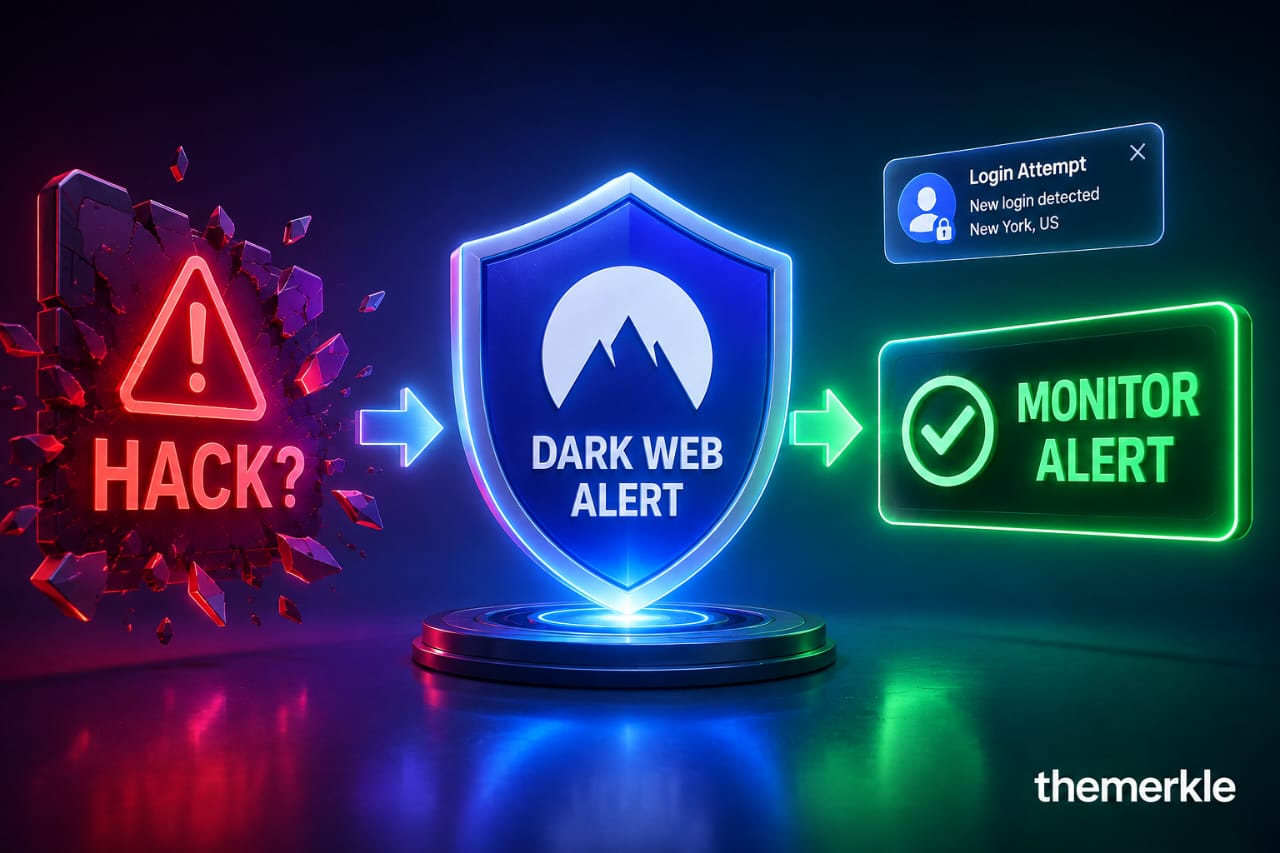
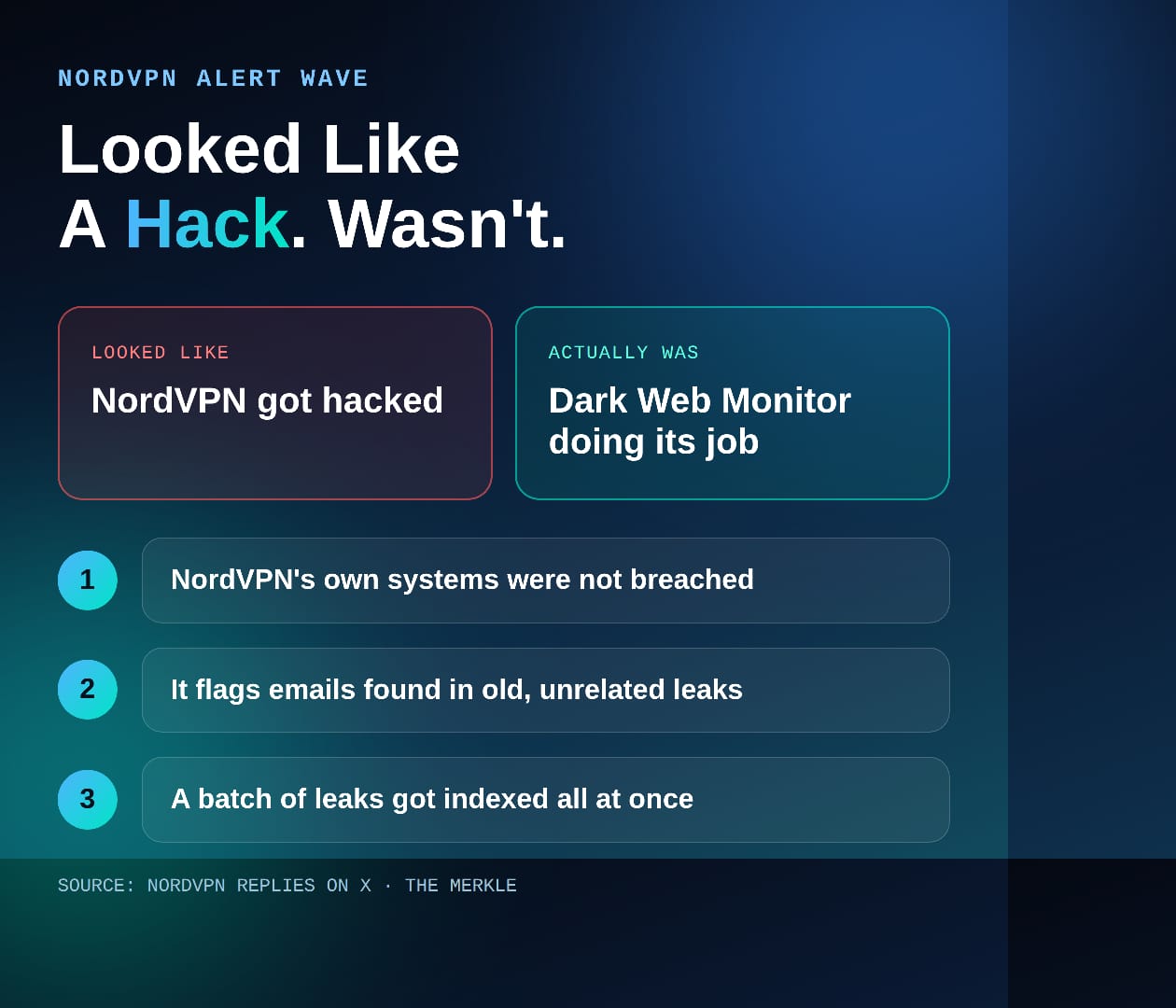
Amidst the escalating panic, NordVPN swiftly moved to clarify the situation, addressing user concerns directly on X. The company’s consistent message across numerous replies was unequivocal: NordVPN’s services and infrastructure had not been compromised. Instead, the notifications were generated by its Dark Web Monitor feature, a proactive security tool designed to scan the dark web for user information that may have surfaced in third-party data leaks. This feature continuously checks registered email addresses and other specified digital assets for signs of exposure, such as compromised passwords or other sensitive personal information. Upon detecting a potential threat, it automatically dispatches an alert to the user, prompting them to take immediate action to secure their accounts.
The distinction between a direct breach of NordVPN and the Dark Web Monitor flagging data from other breaches is crucial. While a NordVPN breach would imply a compromise of its internal security systems and potentially sensitive VPN usage data, the current situation indicated that users’ email addresses and associated credentials had been exposed through unrelated data breaches affecting other services or platforms. NordVPN’s tool merely acted as an early warning system, aggregating information from the vast, often illicit, databases circulating on the dark web and cross-referencing it with its users’ registered details.
The Scale of the Exposure: Five Million Accounts
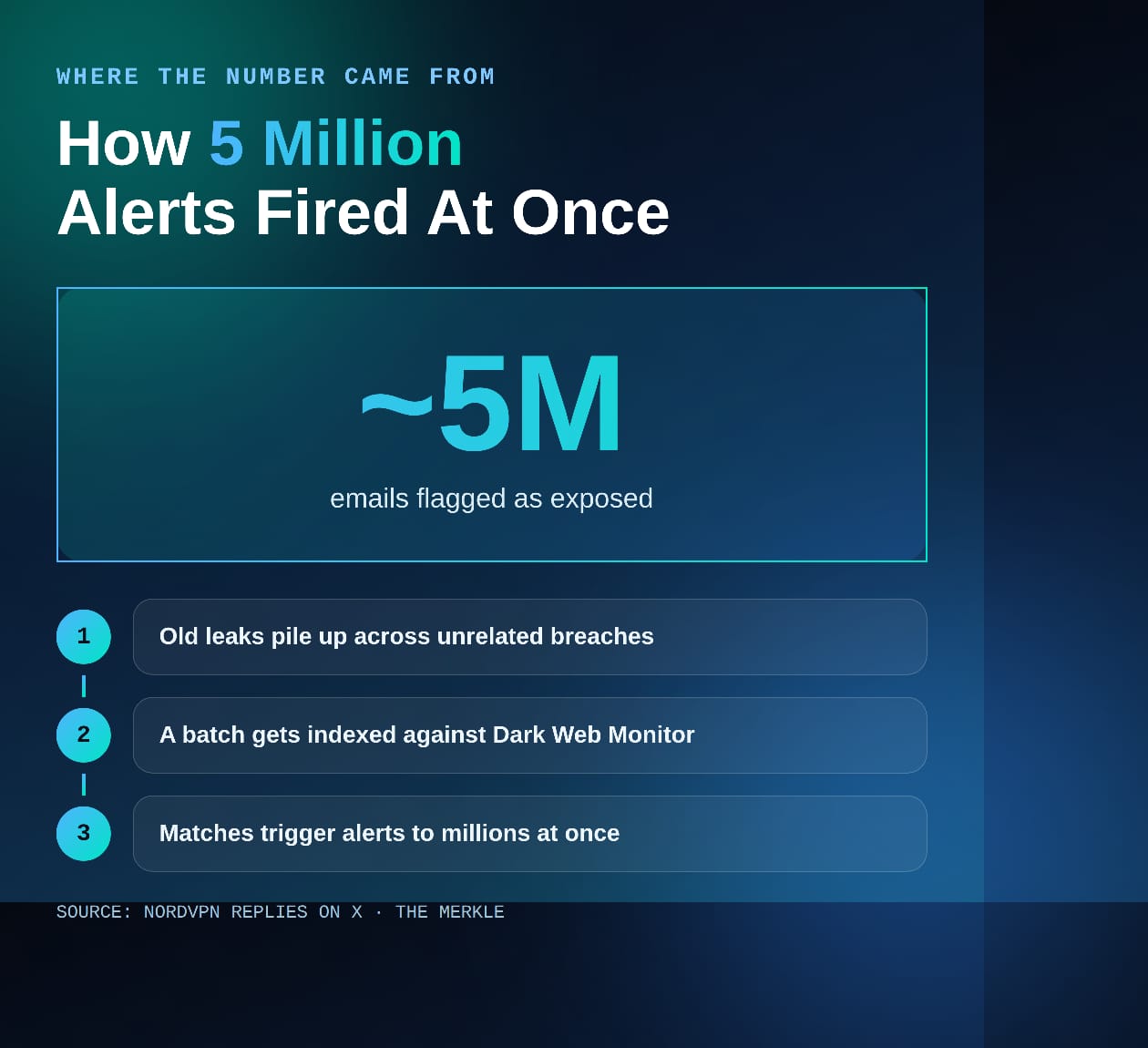
The magnitude of the alert was staggering, with NordVPN confirming that approximately five million email addresses were flagged as exposed. This substantial figure, disseminated through individual, personalized alerts rather than a single corporate announcement, intensified the perception of an immediate, fresh breach. The sheer scale contributed significantly to the widespread panic, as users grappled with the realization that their personal information might be circulating on the dark web.
This incident highlights a critical aspect of modern cybersecurity: data leaks are rarely isolated events. The dark web is a repository for an enormous volume of stolen credentials and personal data, meticulously compiled from countless breaches over many years. These datasets are frequently traded, repackaged, and indexed by threat actors. What likely occurred in this instance was the indexing of a substantial new batch of these previously leaked credentials, originating from various unrelated breaches, into the databases scanned by NordVPN’s Dark Web Monitor. When this new data was cross-referenced with NordVPN’s user base, it triggered a mass wave of alerts simultaneously, creating the impression of a fresh, unified attack. This mechanism underscores the persistent danger posed by historical data compromises, which continue to fuel new attack vectors long after their initial occurrence.
The Broader Landscape of Data Breaches and the Dark Web
To fully appreciate the context of this event, it’s essential to understand the pervasive nature of data breaches and the role of the dark web. In recent years, data breaches have become an alarmingly common occurrence, affecting billions of records globally. Major incidents involving companies like Yahoo, LinkedIn, Adobe, and Equifax have demonstrated the vulnerability of even large, established organizations to sophisticated cyberattacks. These breaches often result in the theft of vast quantities of personal data, including email addresses, passwords (often hashed, but sometimes plaintext), phone numbers, and other sensitive information.
The dark web serves as a marketplace and repository for this stolen data. It is a hidden part of the internet, accessible only through specific software like Tor, where illicit activities, including the trading of compromised credentials, flourish. Threat actors continuously collect, aggregate, and sell these datasets, which are then used for various malicious purposes, most notably credential stuffing attacks and phishing campaigns. Dark web monitoring services like NordVPN’s are designed precisely to scour these clandestine corners of the internet, alerting users when their digital identities appear in such compromised databases. This proactive approach aims to empower users to take defensive measures before their exposed data can be exploited.
Why These Alerts Matter: The Threat of Credential Stuffing
Despite the debunking of the "NordVPN hack" narrative, the underlying alerts from the Dark Web Monitor remain profoundly serious and warrant immediate attention. The presence of an email address in a third-party leak signifies real exposure, a potent signal that precedes more direct forms of cyberattack. The most prevalent threat stemming from such leaks is "credential stuffing." This automated attack method involves hackers taking leaked combinations of email addresses and passwords and attempting to use them to log into other online services. The success of credential stuffing relies heavily on the widespread practice of password reuse, where individuals employ the same login credentials across multiple accounts.
When a leaked email-and-password combination is confirmed active, automated tools can rapidly test these credentials across dozens, if not hundreds, of different platforms. This explains the wave of suspicious login attempts and unsolicited password reset emails reported by users during the incident. These attempts are often the first sign that attackers are actively trying to exploit newly discovered or re-indexed credentials. If successful, credential stuffing can lead to account takeovers, financial fraud, identity theft, and further compromise of personal data. Therefore, even if NordVPN itself was secure, the alerts served as a critical warning of a real and present danger to millions of users’ broader online security.
Navigating the Digital Minefield: Identifying Real Threats vs. Phishing
In moments of widespread digital panic, the line between legitimate security alerts and malicious phishing attempts can become dangerously blurred. Scammers are notoriously adept at exploiting such confusion, crafting sophisticated fake "security alert" messages that mimic authentic warnings. These phishing attempts aim to trick users into clicking malicious links, divulging sensitive information, or approving fraudulent login requests. During a mass alert event like this, the risk of falling victim to such scams significantly increases.
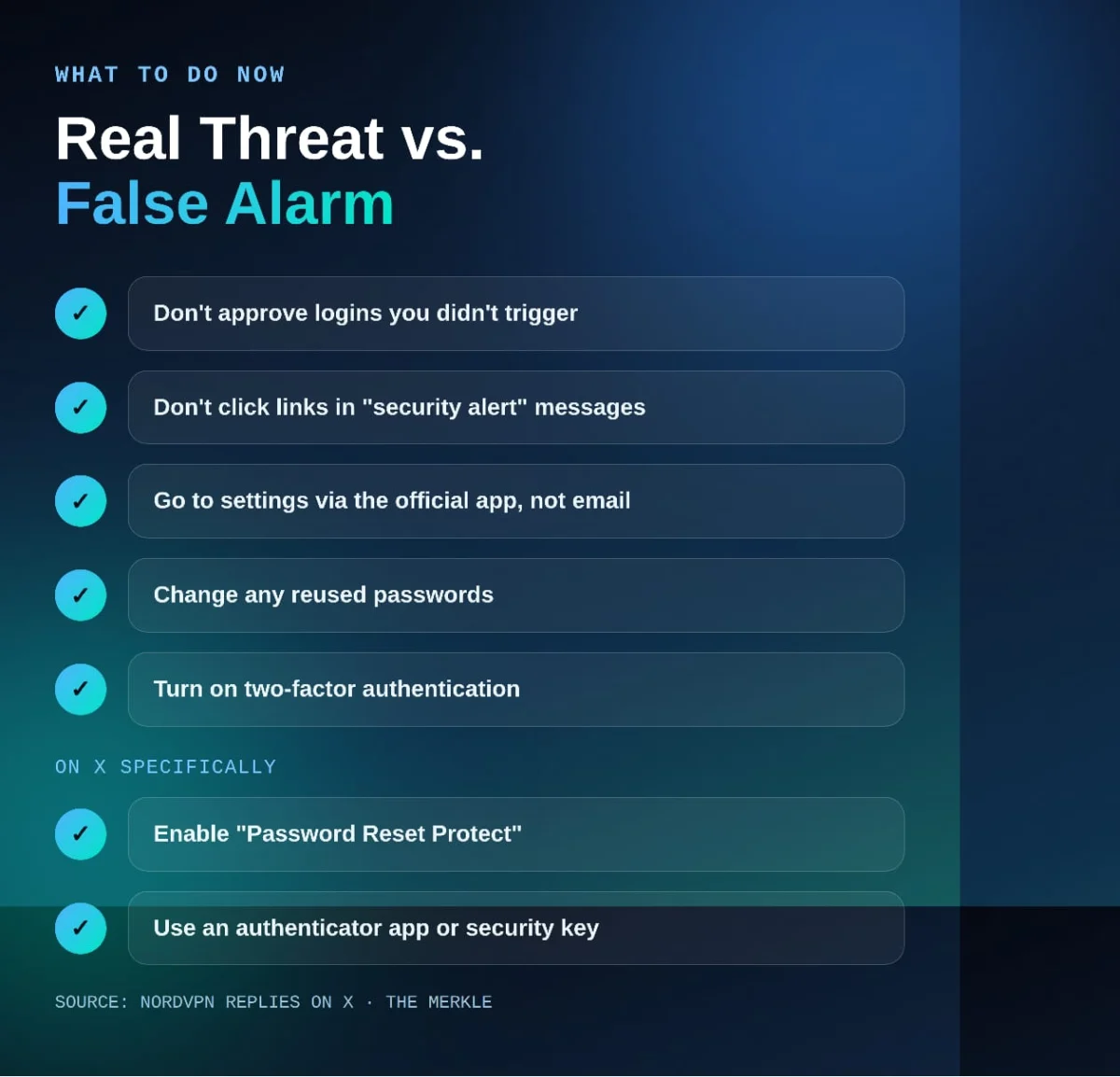
It is paramount for users to exercise extreme caution. A legitimate Dark Web Monitor notification from NordVPN indicates that an email address has appeared in a third-party leak, not that the NordVPN account itself has been breached. The appropriate response is to update passwords associated with that email address, especially for any accounts where old or reused passwords might still be in use. Conversely, any unsolicited email or message claiming to be a security alert, even if it convincingly imitates NordVPN branding, should be viewed with suspicion. Users should never click on links embedded in such messages. Instead, they should navigate directly to the official service’s website or app to verify any alerts or make password changes.
Proactive Measures for Digital Security
To safeguard against the persistent threats highlighted by this incident, users must adopt a multi-layered approach to digital security:
- Unique, Strong Passwords: The single most effective defense against credential stuffing is to use a unique, complex password for every online account. Password managers can greatly simplify the creation and management of strong, distinct passwords.
- Two-Factor Authentication (2FA): Enable 2FA on all accounts where it is available. This adds an essential layer of security, requiring a second verification method (e.g., a code from an authenticator app, a fingerprint, or a security key) in addition to the password. Even if a password is leaked, 2FA can prevent unauthorized access. For heightened security, authenticator apps or physical security keys are generally more secure than SMS-based 2FA, which can be vulnerable to SIM-swapping attacks.
- Vigilance Against Phishing: Be perpetually skeptical of unsolicited communications, especially those demanding urgent action or containing links. Always verify the sender and the legitimacy of the request by directly visiting the official website or contacting the service through official channels.
- Regular Password Updates: While not necessary for every account every month, regularly updating passwords for critical services, particularly those tied to financial information or frequently used, is a sound practice.
- Dark Web Monitoring: Utilize reputable dark web monitoring services, whether built into VPNs or standalone, to receive timely alerts about personal data exposure. These tools provide an early warning system, allowing users to react proactively.
- Review Account Activity: Periodically review account activity logs for unusual logins or changes. For platforms like X, enabling "Password Reset Protect" and employing authenticator apps or security keys for login are highly recommended to mitigate the risk of unsolicited password resets and account takeovers.
Lessons Learned and Future Implications
The NordVPN Dark Web Monitor alert incident serves as a potent reminder that the digital world is a continuous battleground against evolving cyber threats. It underscored several critical lessons: the pervasive nature of data exposure from past breaches, the psychological impact of widespread security alerts, and the vital distinction between a company’s internal breach and its monitoring tools reporting on external compromises. While the initial panic was rooted in a misunderstanding, the underlying threat to user security was undeniably real.
This event highlights the increasing responsibility of both cybersecurity providers and individual users. Providers must strive for clearer communication regarding the nature of security alerts, ensuring that the urgency of the message does not overshadow its precise meaning. Users, in turn, must cultivate a higher degree of digital literacy and skepticism, distinguishing between legitimate warnings and malicious attempts to exploit their fear. As data breaches continue to be an inevitable facet of the internet, the ability to understand, react appropriately, and proactively secure one’s digital footprint will remain paramount for online safety and privacy.














