


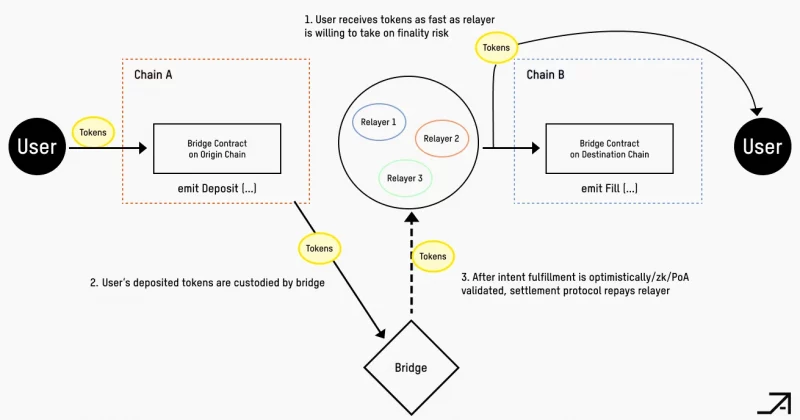
The landscape of blockchain interoperability is undergoing a significant transformation with the emergence of the Open Intents Framework (OIF). Launched in February 2025, the OIF is rapidly gaining momentum as a foundational infrastructure for building and executing cross-chain intents, a novel approach to inter-blockchain communication. Spearheaded by the Ethereum Foundation in collaboration with Hyperlane and Bootnode, the framework has garnered substantial support from over 30 prominent teams within the blockchain ecosystem. This impressive backing, which includes major players like Arbitrum, Optimism, Polygon, ZKsync, and Starknet, underscores the OIF’s ambition to establish itself as a universally adopted, neutral standard rather than a proprietary solution controlled by a single entity.
Unpacking the Mechanics of the Open Intents Framework
At its core, the Open Intents Framework provides a comprehensive toolkit designed to facilitate seamless cross-chain intent execution across a multitude of blockchain networks. Developers can integrate this framework into their applications without requiring explicit permission from any central authority. The OIF’s architecture is built upon a foundation of open-source components, including smart contracts, a network of solvers, aggregators, and a Software Development Kit (SDK). This modular design empowers developers with the flexibility to customize and extend the framework’s functionalities to meet their specific needs.
The technical underpinnings of the OIF are centered around three critical smart contract types: InputSettler, OutputSettler, and Oracle contracts. These contracts work in conjunction with the interoperability SDK to manage and execute cross-chain transactions. The InputSettler acts as an entry point for intents originating from one chain, while the OutputSettler handles the settlement of those intents on the destination chain. Oracle contracts provide necessary off-chain data to the smart contracts, ensuring accurate and reliable execution. The SDK then serves as the glue that binds these components together, simplifying the development process for cross-chain applications.
The OIF’s design is deeply rooted in the ERC-7683 standard, a proposed Ethereum Request for Comment that defines the structured format for cross-chain intents. When a user initiates an intent – for instance, a cross-chain token swap – the OIF framework triggers a competitive process. A network of independent "solvers" then races to fulfill this request with optimal efficiency. These solvers are decentralized entities that leverage computational resources to identify the most advantageous execution paths for user intents, earning rewards for successful and timely completion. This competitive dynamic incentivizes solvers to act swiftly and cost-effectively, ultimately benefiting the end-user.
Early deployments of the OIF have already been established on prominent testnets, including Ethereum Sepolia and Optimism Sepolia. These deployments are crucial for testing and refining the framework’s performance and reliability in real-world conditions. Under optimal network conditions, the OIF has demonstrated the capability to complete solver-filled orders within an impressive timeframe of 10 to 60 seconds. This rapid execution speed is a critical factor in enhancing the user experience for cross-chain applications, making them more competitive with traditional centralized solutions.
Coinbase’s Strategic Entry and the Permissionless Ethos
A significant development that has amplified the OIF’s credibility and reach occurred in September 2025, with Coinbase Payments announcing its role as a core contributor. The payments division of the prominent cryptocurrency exchange is actively collaborating with the OIF team to standardize cross-chain asset transfers. This partnership signifies a major endorsement from a leading institutional player in the crypto space, suggesting a growing recognition of the OIF’s potential to shape the future of digital asset movement across different blockchains.
The OIF’s design is intentionally modular and operates on a permissionless basis. This means that any development team can deploy, extend, and contribute to the framework’s smart contracts and infrastructure without needing approval from a governing body or central authority. This open and decentralized approach is further reinforced by the absence of a dedicated governance token. There are no protocol fees extracted for using the framework, and crucially, there is no risk of vendor lock-in. This commitment to an open standard is designed to foster broad adoption and prevent the centralization of control over a critical piece of blockchain infrastructure. Production-ready smart contracts have already been deployed across various testnets and mainnets, with ongoing security audits and the development of additional solver capabilities planned for later in the current year.
The Significance of a Tokenless Framework
The deliberate decision to eschew a dedicated token or cryptocurrency asset for the Open Intents Framework is a foundational element of its strategic positioning. By remaining tokenless, the OIF asserts its identity as neutral, foundational infrastructure. This approach offers several key advantages for developers and the broader ecosystem. Firstly, it eliminates the complexities and potential volatilities associated with tokenomics, such as navigating fluctuating token prices, understanding staking requirements, or adapting to governance-driven changes in fee structures. Developers can focus on building innovative applications without the added burden of managing or speculating on a native token.
However, the absence of a token also presents unique challenges. Typically, a native token serves as a direct financial incentive mechanism to bootstrap and grow a network of participants, including solvers and users. Without this built-in incentive, the OIF relies on the inherent competitive dynamics within the solver ecosystem. Solvers are motivated by the opportunity to profit from efficiently fulfilling user intents. The more efficiently they can execute transactions and the greater the volume of intents they can process, the more revenue they can generate. This market-driven approach to incentivization is a testament to the framework’s belief in the power of open competition to drive innovation and efficiency.
Broader Context and Historical Precedents
The development of the OIF can be understood within the broader historical context of blockchain technology’s evolution. The early days of cryptocurrency were characterized by isolated networks, with limited ability to communicate or transfer assets between them. This fragmentation posed significant challenges for developers and users alike, hindering the potential for truly decentralized applications and a unified digital economy.
The advent of various interoperability solutions, such as bridges and cross-chain communication protocols, marked a crucial step towards addressing this fragmentation. However, many of these early solutions were proprietary, operated by centralized entities, or lacked a standardized approach, leading to concerns about security, censorship, and interoperability lock-in. The OIF aims to address these shortcomings by offering a truly open and neutral standard.
The ERC-7683 standard, which underpins the OIF, represents an effort to standardize the way cross-chain intentions are expressed and processed. This standardization is critical for enabling seamless communication and execution between disparate blockchain networks. By building upon this standard, the OIF is fostering a common language for cross-chain interactions, which is essential for the long-term growth and adoption of decentralized technologies.
The collaboration with established blockchain foundations like Ethereum, alongside prominent Layer 2 scaling solutions and zero-knowledge technology providers, is a strategic move to ensure broad industry adoption. The Ethereum Foundation’s involvement lends significant credibility and technical expertise, while the participation of teams like Arbitrum, Optimism, Polygon, ZKsync, and Starknet signals a collective commitment to a shared, open future for blockchain interoperability. These entities, themselves at the forefront of scaling and innovation, recognize the need for robust and neutral infrastructure to support the next wave of decentralized applications.
Future Implications and the Path Forward
The success of the Open Intents Framework hinges on its ability to foster a vibrant and competitive ecosystem of solvers and attract a wide range of developers and applications. The permissionless nature of the framework is a double-edged sword: it promotes accessibility and decentralization but also requires a robust incentive model to ensure active participation. The reliance on competitive solver dynamics, while promising, will need to be closely monitored to ensure its long-term sustainability and effectiveness.
The partnership with Coinbase Payments is a strong indicator of the framework’s potential to facilitate real-world asset transfers and integrate with existing financial infrastructure. As the OIF matures, it could pave the way for a more interconnected and efficient blockchain ecosystem, enabling seamless value transfer and complex interactions between different decentralized networks. This could lead to novel use cases in areas such as decentralized finance (DeFi), gaming, supply chain management, and identity verification, where cross-chain functionality is paramount.
The ongoing audits and the planned expansion of solver development suggest a commitment to security and continuous improvement. The OIF’s journey is still in its early stages, but its foundational principles of openness, neutrality, and standardization position it as a compelling contender to become a cornerstone of future blockchain interoperability. The coming months and years will be crucial in determining whether the OIF can translate its strong initial momentum into widespread adoption and become the de facto standard for building and executing cross-chain intents.
The framework’s commitment to being a neutral standard rather than a proprietary product is a significant differentiator in a space often characterized by competition and walled gardens. By providing a common, open-source infrastructure, the OIF aims to democratize cross-chain capabilities, allowing any developer to build sophisticated applications without being beholden to a single platform or protocol. This approach is likely to foster greater innovation and accelerate the development of a truly interconnected blockchain internet.
The ongoing development and deployment of OIF on various testnets and mainnets, coupled with rigorous security audits, underscore the project’s dedication to building a robust and trustworthy infrastructure. As the ecosystem matures, the OIF’s impact on the broader blockchain landscape could be profound, simplifying cross-chain interactions and unlocking new possibilities for decentralized applications and services.














