The decentralized finance (DeFi) landscape, while promising unparalleled financial freedom and innovation, continues to be a fertile ground for sophisticated scams that prey on user trust and the inherent finality of blockchain transactions. In a stark reminder of these persistent risks, an experienced cryptocurrency trader, identified online as @ika_xbt, recently suffered a devastating loss, seeing their entire portfolio, valued at over $400,000, vanish after falling victim to a deceptive phishing campaign. The culprits exploited a vulnerability not within the blockchain itself, but within the trusted pathways of online search, using a fraudulent Google advertisement that mimicked the legitimate interface of the popular decentralized exchange, Uniswap.
This sophisticated phishing operation, which reportedly surfaced on May 26th, employed meticulously crafted clone versions of Uniswap’s user interface. These fraudulent sites were then strategically promoted through sponsored ads on Google Search, targeting users actively seeking access to the decentralized exchange. The immediate aftermath of the attack saw two cryptocurrency wallets linked to the perpetrators identified, collectively holding approximately 146 Ether (ETH). At the time of their discovery, this amount was valued at roughly $306,000, but the total stolen funds, as confirmed by the victim’s loss, demonstrably exceeded the $400,000 mark. This incident underscores a recurring modus operandi that continues to challenge the security of the cryptocurrency ecosystem, highlighting the critical need for enhanced vigilance among digital asset investors.
The Anatomy of Deception: A Digital Bait-and-Switch
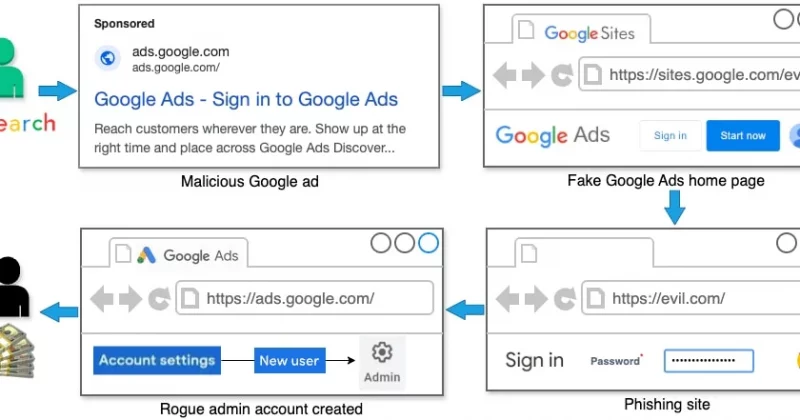
The methodology behind this particular phishing scam is a chillingly effective blend of social engineering and technological mimicry. Attackers begin by investing in sponsored advertisements on Google, specifically targeting the highly sought-after keyword "Uniswap." This strategic placement ensures that when users, eager to engage with the decentralized exchange, type "Uniswap" into their search bar, the fraudulent advertisement appears prominently at the top of the search results page, often eclipsing the legitimate, organic listing.
The visual deception is where the scam truly shines. The cloned Uniswap website is designed to be virtually indistinguishable from the real platform. Every element, from the branding and layout to the subtle functionalities, is replicated with painstaking detail. This visual fidelity is crucial for lulling unsuspecting users into a false sense of security. The goal is to create an environment where a user believes they are interacting with the genuine Uniswap platform, a trusted gateway to their digital assets.
The critical juncture of the attack occurs when a user, having navigated to the fake website, proceeds to connect their cryptocurrency wallet. This action, often performed routinely by DeFi users, grants the malicious contract deployed by the attackers a degree of access. The subsequent step involves the user approving a transaction. This is where the true nature of the scam is revealed. The "transaction" they approve is not for a legitimate exchange or DeFi interaction, but rather a directive to the malicious contract to drain the connected wallet of all accessible funds.
The irreversible nature of blockchain transactions is a double-edged sword. While it underpins the security and transparency of DeFi, it also means that once a malicious transaction is approved and confirmed, there is no recourse. Unlike traditional financial systems, there is no customer service hotline to call, no chargeback mechanism to initiate, and critically, no "undo" button. The victim’s experience with @ika_xbt serves as a stark illustration of this reality. A single, seemingly innocuous approval was all it took to completely liquidate their entire digital asset portfolio.
It is vital to note that this particular attack did not exploit any inherent vulnerabilities within Uniswap’s smart contracts or its underlying infrastructure. The protocol itself remained uncompromised. Instead, the scam’s success hinged entirely on exploiting human trust and the perceived authority of search engine results. By leveraging Google’s advertising platform, the attackers effectively bypassed the need for technical exploits, instead focusing on a psychological manipulation of user behavior.
A Troubling Pattern: Google Ads as a Phishing Conduit
The incident involving @ika_xbt is not an isolated event, but rather a manifestation of a persistent and escalating threat within the cryptocurrency space. The Security Alliance, widely known as SEAL, has been diligently tracking and documenting an alarming surge in Google Search phishing campaigns targeting various cryptocurrency protocols since March 2026. The modus operandi remains remarkably consistent across these attacks: attackers procure sponsored advertisements on search engines, meticulously clone the interfaces of trusted DeFi platforms, and then patiently await users who, in their haste or trust, connect their wallets and authorize fraudulent transactions.
This pattern has led to significant financial losses, often reaching six-figure sums. As recently as February 2026, similar Google-driven phishing schemes were responsible for substantial financial hemorrhages. The scale of these attacks can be staggering; in July 2025, a comparable operation resulted in an estimated $1.2 million being stolen from unsuspecting investors. These figures highlight the significant financial incentive driving these criminal enterprises and the broad impact they are having on the broader crypto community.
Prominent figures within the cryptocurrency industry have been vocal in their condemnation of such practices. Hayden Adams, the founder of Uniswap, has repeatedly expressed his frustration and disappointment with search platforms for their perceived inaction in decisively combating these fraudulent advertisements. His public statements, often made in the wake of earlier incidents, echo the growing chorus of concern from industry leaders who believe that greater accountability is needed from the platforms that facilitate these scams. The failure to adequately police sponsored search results, they argue, directly contributes to the erosion of trust and security within the digital asset ecosystem.
Implications for Investors: Navigating the Digital Minefield
The persistent threat of these phishing scams necessitates a proactive and informed approach from all cryptocurrency investors. While the landscape can seem daunting, several critical defensive measures can significantly mitigate the risks associated with these types of attacks.
1. The Power of Bookmarks: Perhaps the most straightforward and effective defense against this specific form of attack is to regularly bookmark the correct URLs for all DeFi protocols and cryptocurrency services used. This simple habit eliminates the reliance on search engine results, which can be easily manipulated. By directly navigating to a trusted, bookmarked address, users bypass the possibility of landing on a fraudulent clone site promoted by a sponsored ad. This practice costs nothing and takes mere seconds to implement but provides a robust layer of protection.
2. Hardware Wallets: A Crucial, Though Not Foolproof, Safeguard: Users of hardware wallets, such as Ledger or Trezor, possess a partial advantage in this scenario. These devices are designed to provide an additional layer of security by requiring explicit on-device confirmation of transaction details before they are executed. This critical checkpoint allows users to carefully review the proposed transaction details on the hardware wallet’s screen, which is separate from their computer or mobile device. This provides a final opportunity to identify any discrepancies or malicious intent before irrevocably authorizing a transaction.
However, it is imperative to understand that hardware wallets are not an infallible panacea. Their effectiveness hinges on the user’s diligence. If an individual, even when presented with the on-device confirmation, fails to meticulously review the transaction details—such as the recipient address, the amount, or the function being approved—they can still fall victim to a phishing attack. The scammer can still present a seemingly legitimate transaction that, upon superficial review, appears innocuous but is, in fact, a directive to drain the wallet.
3. The Inherent Liability of Immutability: The immutable nature of blockchain transactions, a cornerstone of its appeal, becomes its most significant liability in moments of compromise. Traditional financial systems have evolved with inherent safeguards precisely because human error, oversight, and outright fraud are realities of the human experience. These systems incorporate mechanisms such as fraud protection, chargeback capabilities, and insurance policies, offering a safety net for consumers who make mistakes or are victims of malicious activity.
DeFi, by its very design, often eschews these centralized safety nets. The ethos of decentralization and user autonomy means that the individual user bears the ultimate responsibility for the security of their assets. While this empowers users and fosters innovation, it also means that in the absence of robust personal security practices, the consequences of a mistake or a successful attack can be absolute and irreversible. This fundamental difference between traditional finance and decentralized finance is a critical factor that all participants in the crypto space must understand and respect.
The ongoing prevalence of these sophisticated phishing campaigns, amplified by the reach of major search engines, underscores the evolving nature of cyber threats in the digital asset economy. As the cryptocurrency market matures, so too do the tactics of those seeking to exploit its participants. Vigilance, education, and the adoption of robust security practices are no longer optional but essential for navigating the promise and peril of the decentralized future.