The cryptocurrency mining landscape has undergone a seismic shift following the successful completion of the Ethereum Merge, an event that transitioned the world’s second-largest blockchain from a Proof-of-Work (PoW) consensus mechanism to Proof-of-Stake (PoS). While the Merge was celebrated as a landmark achievement for environmental sustainability, reducing Ethereum’s energy consumption by more than 99.9%, it has simultaneously triggered a financial crisis for the global community of GPU miners. In the days following the transition, mining profits for nearly all remaining PoW cryptocurrencies have plummeted into negative territory, as a massive influx of hashing power from displaced Ethereum miners has overwhelmed smaller networks.
The core of the issue lies in the sheer scale of the Ethereum mining ecosystem. Prior to the Merge, Ethereum was the primary destination for miners utilizing Graphics Processing Units (GPUs). Unlike Bitcoin, which is dominated by specialized Application-Specific Integrated Circuit (ASIC) hardware, Ethereum’s algorithm allowed for general-purpose hardware to secure the network. When Ethereum moved to PoS, these miners were effectively "evicted," leaving them with millions of dollars in hardware and two primary options: sell their equipment or migrate to alternative PoW chains such as Ethereum Classic (ETC), Ravencoin (RVN), Ergo (ERG), or Flux.
The Mechanics of the Profitability Crater
The sudden migration of miners has led to what industry analysts describe as a "difficulty explosion." In a PoW system, the network protocol automatically adjusts the "mining difficulty"—a measure of how hard it is to find a new block—based on the total amount of computing power (hashrate) connected to the network. This mechanism ensures that blocks are produced at a consistent interval regardless of how many miners are active.
When the Merge occurred, hundreds of terahashes of computing power were redirected toward alternative coins. However, the market caps and block rewards of these secondary coins are significantly smaller than Ethereum’s were. Ethereum Classic, for instance, saw its hashrate surge by nearly 500% in the immediate aftermath of the Merge. Because the total rewards available on these networks remained static while the number of competitors for those rewards increased exponentially, the individual "slice of the pie" for each miner shrank to a level that no longer covers the cost of operation.

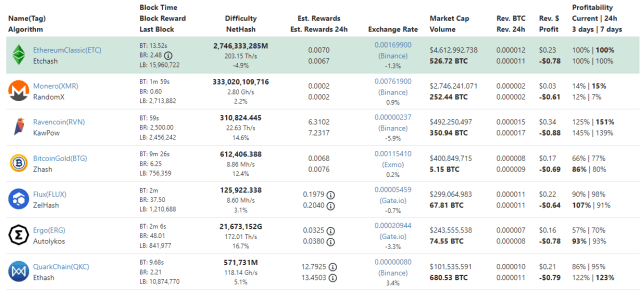
According to data from the mining profitability aggregator WhatToMine, the economic reality for miners is now dire. Using a standard benchmark of three AMD RX 480 graphics cards—a once-reliable setup for modest profits—miners are currently seeing a net loss of approximately $0.78 per hour when accounting for an average electricity cost of $0.10 per kilowatt-hour (kWh). Even those equipped with the most powerful consumer hardware available, such as the NVIDIA GeForce RTX 3090 Ti, are reporting hourly losses of roughly $0.50. These figures suggest that, for the vast majority of participants, mining has transitioned from a revenue-generating activity to a "charitable" contribution to network security, or simply a losing gamble.
A Chronology of the Transition
The road to this profitability crisis began years ago but accelerated rapidly in 2022. To understand the current state of the market, one must look at the timeline of the "Great Migration":
- Pre-Merge Anticipation (Early 2022): As the Ethereum Foundation solidified the September 2022 timeline for the Merge, hashrates on networks like Ethereum Classic began to climb as proactive miners tested their equipment on alternative algorithms.
- The Final Block (September 15, 2022): Ethereum officially transitioned to PoS at block 15,537,393. Within minutes, the hashrate on the Ethereum mainnet dropped to zero, and a "tsunami" of computing power began flooding alternative chains.
- The Hashrate Peak (September 16–18, 2022): Ethereum Classic’s hashrate hit an all-time high, surpassing 300 TH/s, up from a pre-Merge average of around 60 TH/s. Similar spikes were recorded on Ravencoin and Ergo.
- The Profitability Realization (September 19, 2022 – Present): As difficulty adjustments kicked in, mining calculators across the web began showing red figures. Small-scale "home miners" began shutting off their rigs as electricity bills threatened to exceed the value of the coins being mined.
Comparative Data: The Impossible Absorption
The fundamental problem is one of economic capacity. Before the Merge, Ethereum’s daily miner revenue was estimated at roughly $20 million to $25 million. In contrast, the combined daily revenue of all other GPU-mineable coins—including ETC, RVN, ERG, and others—totaled less than $1 million.
It was mathematically impossible for these smaller ecosystems to absorb the $20 million+ worth of daily hashrate without a corresponding 2,000% increase in the prices of those alternative coins. Since the prices of ETC and RVN have remained relatively stagnant or even declined in line with broader market trends, the influx of miners simply diluted the rewards to the point of insolvency for the average operator.
| Coin | Pre-Merge Hashrate | Post-Merge Peak Hashrate | Current Profitability (per 100 MH/s) |
|---|---|---|---|
| Ethereum Classic (ETC) | ~60 TH/s | ~310 TH/s | -$0.80/day |
| Ravencoin (RVN) | ~2.5 TH/s | ~20 TH/s | -$1.10/day |
| Ergo (ERG) | ~14 TH/s | ~200 TH/s | -$0.95/day |
Note: Profitability estimates based on $0.10/kWh electricity costs.

Market Reactions and Official Responses
The fallout from the Merge has prompted various reactions from hardware manufacturers, mining pools, and developers. NVIDIA, which saw record-breaking revenues during the mining boom of 2020 and 2021, had already begun warning investors of a "crypto-winter" affecting GPU demand. With mining no longer profitable, the secondary market is being flooded with used graphics cards, leading to a sharp decline in retail prices for new units—a development welcomed by the gaming community but signaling a period of stagnation for the mining hardware sector.
Mining pools have also had to pivot. F2Pool and Antpool, two of the world’s largest mining collectives, have aggressively promoted their support for Ethereum Classic and the newly forked "Ethereum PoW" (ETHW). However, ETHW has struggled to gain traction, with its price tumbling shortly after launch, further exacerbating the lack of profitable venues for miners.
Vitalik Buterin, the co-founder of Ethereum, has long maintained that the transition to PoS was necessary for the long-term viability of the network. In past statements, Buterin suggested that miners who wished to continue PoW activities should migrate to Ethereum Classic, acknowledging that while the transition would be difficult for the mining industry, it was a secondary concern compared to the scalability and environmental goals of the Ethereum mainnet.
Broader Implications and the Future of PoW
The current "negative profit" era raises significant questions about the future of Proof-of-Work outside of Bitcoin. If mining remains unprofitable for an extended period, several scenarios could unfold:
1. Network Security Risks: As miners shut down their rigs due to high costs, the total hashrate of networks like ETC or RVN may drop. If the hashrate falls significantly, these networks become more susceptible to 51% attacks, where a single entity gains enough power to manipulate the blockchain.
2. The End of Amateur Mining: The era of the "hobbyist" miner, running a few GPUs in a basement or garage, appears to be over. Only those with access to ultra-low-cost electricity (below $0.03/kWh) or those operating in regions with subsidized power can currently hope to break even. This could lead to a further centralization of PoW mining in industrial-scale facilities.
3. Hardware Repurposing: The surplus of GPU power is already being eyed for other computational tasks. Some mining firms are investigating "High-Performance Computing" (HPC) applications, such as AI training, 3D rendering, and video transcoding, as a way to monetize their existing hardware fleets.
4. The "Shakeout" Period: Historically, the crypto market has seen periods of extreme difficulty followed by "shakeouts" where only the most efficient survive. If a particular PoW coin sees a massive price surge in the next bull market, it could restore profitability. However, until such a price action occurs, the "GPU mining is dead" narrative remains a mathematical reality.
As of the latest market data, Ethereum (ETH) is trading at approximately $1,400, reflecting a 6% decline over the past week as the "sell the news" sentiment took hold following the Merge. For the miners who once secured this network, the focus has shifted from daily yields to a desperate search for a new economic anchor in a landscape that has fundamentally changed. The "Great Migration" has, for now, led to a dead end, leaving the future of decentralized GPU-based security in a state of profound uncertainty.