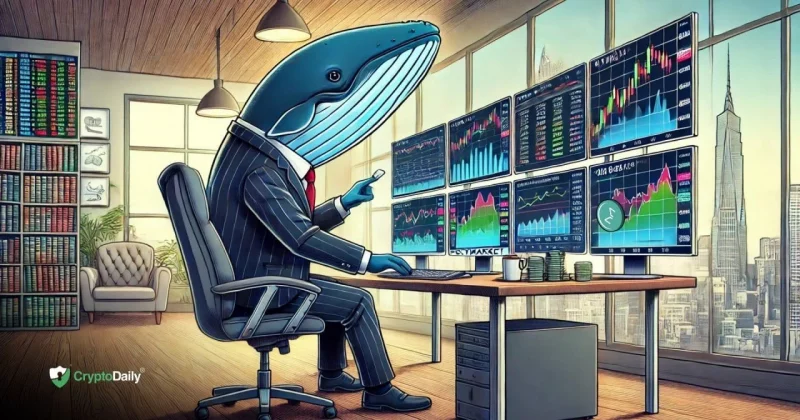
Prediction markets, theoretically designed to harness the collective intelligence of a global community to forecast future events with probabilistic accuracy, are facing a significant challenge to their fundamental promise. At Polymarket, the world’s largest platform for decentralized prediction markets, a recent analysis by The Wall Street Journal has revealed a startling concentration of power, casting doubt on the very notion of "wisdom of the crowd." The investigation found that the resolution of contested market outcomes, a crucial function for ensuring market integrity, is disproportionately influenced by a small group of token holders. Specifically, the ten largest holders of UMA tokens, the cryptocurrency underpinning Polymarket’s dispute resolution mechanism, collectively control over 50% of the voting power in most contentious market settlements. This concentration raises serious concerns as these "whales," as they are colloquially known in the cryptocurrency space, may have financial incentives that do not necessarily align with accurately resolving a market’s outcome, potentially skewing results to their advantage.
The "Oracle Problem" and its Polymarket Manifestation
The core of this issue lies in what is commonly referred to as the "oracle problem" in blockchain technology. Decentralized applications, like prediction markets, often require real-world information to trigger smart contract execution. Oracles are systems designed to bridge this gap, providing external data to the blockchain. In Polymarket’s case, this function is managed by UMA’s Optimistic Oracle. This system empowers UMA token holders to vote on and settle disputed market outcomes. However, the Wall Street Journal’s analysis uncovered a deeply intertwined relationship between UMA token holders and Polymarket itself.
According to their reporting, at least 60% of active UMA voters over the past year have been directly linked to Polymarket accounts. This statistic is particularly telling, as it suggests that the individuals tasked with impartially resolving market disputes are, in fact, active participants within those very markets. This creates a clear conflict of interest: these voters are not dispassionate arbiters; they are traders with "skin in the game," whose financial positions can be directly impacted by how a market is settled. Their votes, therefore, could be influenced by a desire to maximize their personal gains rather than by an objective assessment of the facts.
The implications of this concentrated voting power have already become apparent in high-stakes scenarios. The report specifically highlights instances where whale voters have intervened in markets tied to significant geopolitical events, including those concerning Ukraine and the actions of its president, Volodymyr Zelenskyy. The ability of a small, financially vested group to influence the resolution of such sensitive and widely followed predictions raises questions about the reliability and fairness of the platform.
A Timeline of Governance Reforms: Promises and Stalled Progress
In an effort to address the growing concerns surrounding governance and potential manipulation, UMA, the protocol powering Polymarket’s oracle system, has undergone several governance updates. One notable reform was UMIP-189, also known as MOOV2, which was passed in August 2025. This governance update aimed to refine the dispute resolution process by introducing a whitelist of approximately 37 addresses. The intention behind this whitelist was to restrict voting rights to a select group of seasoned and vetted participants, thereby reducing the "noise" from less informed or potentially malicious actors and preventing trivial disputes from overwhelming the system.
The goal of MOOV2 was to enhance the quality and reliability of dispute resolutions by ensuring that only those with a demonstrated understanding of the system and a vested interest in its integrity could participate in critical voting processes. This move was seen as a step towards professionalizing the oracle function and building greater trust in the outcomes.
However, the effectiveness of MOOV2 in genuinely decentralizing power and mitigating the influence of whales is debatable. The core issue of concentrated ownership remains. Whitelisting a limited number of addresses does not inherently solve the problem if the same influential whales simply occupy a majority of those whitelisted slots. The concentration of voting power can persist, even within a seemingly more curated group.
Meanwhile, Polymarket itself has been actively exploring more radical structural changes to its governance and oracle mechanisms. The platform has publicly floated the idea of launching its own native token, tentatively referred to as POLY. The strategic objective behind this proposed token is to internalize the oracle functions currently reliant on UMA’s voting apparatus. By bringing dispute resolution under its direct control, Polymarket aims to reduce its dependence on the UMA token’s governance and potentially implement a system better suited to its specific needs and market dynamics.
This exploration of a native POLY token signals a recognition by Polymarket that the current reliance on UMA’s architecture, with its inherent governance challenges, is a liability rather than an asset. Such a move would grant Polymarket greater autonomy over its dispute resolution design, allowing it to tailor mechanisms for efficiency, fairness, and alignment with its platform’s ethos.
However, the POLY token initiative remains in its early stages, described as being in the "considering" phase. This means that while the platform is actively exploring this avenue, there is no definitive timeline or guarantee of its implementation. The MOOV2 whitelist, while a step in the right direction for filtering out some of the less desirable participants, has not fundamentally addressed the underlying issue of power concentration. The same whales that have wielded significant influence can, and likely will, continue to do so if they are included in any whitelisted group.
Implications for Traders and the Broader Decentralized Finance Ecosystem
The concentration of voting power on Polymarket has tangible and significant implications for its users, particularly retail participants. For individuals who engage with the platform by placing bets on a wide array of events, from political outcomes to economic indicators, the governance structure creates a decidedly asymmetric playing field. When a market outcome is contested and requires a vote, the payout for retail traders may ultimately hinge not on objective truth or the collective will of the broader user base, but rather on the decisions of a select few large token holders.
This reality undermines the core appeal of decentralized prediction markets: the idea that they offer a transparent and trustless mechanism for forecasting the future. If the resolution of these forecasts is susceptible to the financial interests of a small, powerful group, the perceived integrity and fairness of the entire system are called into question. Retail traders may become hesitant to engage with contentious markets, fearing that their bets could be unfairly manipulated.
Furthermore, Polymarket’s contemplation of a native POLY token is a strong indicator that the platform perceives UMA’s governance structure as a bottleneck and a potential point of failure. The pursuit of internalized oracle functions suggests a desire for greater control and the ability to implement solutions that directly address the platform’s unique challenges. This move, if realized, could offer Polymarket more flexibility in designing dispute resolution mechanisms that are both efficient and robust against manipulation. It would also allow them to potentially align incentives more directly with their own user base, rather than relying on the governance framework of an external protocol.
The situation on Polymarket also serves as a broader cautionary tale for the entire decentralized finance (DeFi) ecosystem. As DeFi protocols mature and strive for greater decentralization, the question of governance and how to prevent the concentration of power remains a persistent challenge. The "oracle problem," as exemplified by Polymarket’s reliance on UMA, highlights the complexities of securing reliable, unbiased data inputs for decentralized systems. Solutions that appear robust on paper, such as whitelisting, can fall short if the underlying economic incentives for participation are not carefully considered and managed.
The ongoing developments at Polymarket and UMA will be closely watched by the broader DeFi community. The platform’s attempts to navigate these governance challenges, whether through incremental reforms or more radical structural changes, will offer valuable lessons for other decentralized protocols seeking to achieve true decentralization and maintain user trust in the face of concentrated economic power. The future of prediction markets, and indeed many decentralized applications, may depend on finding effective and scalable solutions to ensure that the "wisdom of the crowd" is not drowned out by the influence of a select few. The pursuit of robust, transparent, and truly decentralized governance remains an ongoing, critical endeavor.