Ondo Finance, a prominent player in the tokenized real-world assets (RWA) sector, has announced a significant milestone: its newly launched Intelligent Portfolios product line achieved over $20 million in total value locked (TVL) in less than a month since its introduction. This rapid accumulation of assets underscores growing interest in structured, on-chain investment products that bridge traditional finance with blockchain technology. However, a deeper analysis of the on-chain data for its flagship BlackRock-branded token, Ondo High Income Powered by BlackRock (BLKHIon), reveals a highly concentrated ownership structure, prompting closer examination of what TVL figures truly represent in the evolving landscape of decentralized finance.
The Ascent of Intelligent Portfolios: A Rapid Rise
The $20 million TVL figure, announced on October 20, reflects a swift adoption curve for Ondo’s Intelligent Portfolios, which were first introduced on September 24. These portfolios are designed as curated investment strategies, each encapsulated within a single, traceable on-chain token. This innovative approach aims to simplify access to diversified asset exposures for eligible investors by leveraging the efficiency and transparency of blockchain. The initial rollout featured three portfolios prominently labeled "Powered by BlackRock," signaling a strategic alignment with one of the world’s largest asset managers. The quick accumulation of capital suggests a strong demand for these types of hybrid financial products, particularly from institutional or high-net-worth individuals seeking regulated exposure to traditional assets via digital rails.
A Deeper Look at Ondo Finance and Tokenized Real-World Assets (RWAs)
Ondo Finance has positioned itself at the forefront of the tokenized RWA movement, a burgeoning sector within blockchain that seeks to bring tangible assets like bonds, real estate, and commodities onto the blockchain as digital tokens. Founded with the mission to enhance market efficiency and accessibility, Ondo has previously offered products such as OUSG (tokenized US Treasuries), OMMF (tokenized money market funds), and USDY (yield-bearing stablecoin). These offerings collectively demonstrate Ondo’s commitment to creating a transparent, compliant, and liquid market for tokenized securities.
The concept of tokenized RWAs is gaining considerable traction as it offers several advantages over traditional asset management. These include fractional ownership, 24/7 trading, increased transparency through on-chain record-keeping, and reduced settlement times. For institutions, tokenization provides a pathway to leverage blockchain technology without abandoning familiar asset classes, thereby mitigating perceived risks associated with more volatile native cryptocurrencies. The collaboration with established financial giants like BlackRock, even if limited in scope, lends significant credibility and familiarity to these new digital products, potentially accelerating institutional adoption. The global market for tokenized assets is projected to grow substantially in the coming years, with some estimates placing it in the trillions of dollars, making Ondo’s current initiatives highly relevant to this broader trend.
Chronology of Innovation: From Launch to Milestone
Ondo’s journey with its Intelligent Portfolios began on September 24 with the official launch of the initial suite of products. These inaugural offerings included three portfolios explicitly branded as "Powered by BlackRock," leveraging the renowned asset manager’s expertise in allocation design. This initial offering targeted a specific segment of investors looking for structured exposure to traditional asset classes through a tokenized wrapper.
Just a week later, on October 1, Ondo significantly expanded its product lineup. It introduced four additional portfolios, designed by Ondo itself, to cater to a wider range of investment preferences. These included:
- MAG7Xon: A portfolio focusing on the "Magnificent 7" stocks (a term referring to the largest and most influential tech companies) combined with exposure to cryptocurrencies.
- BRAINon: Designed to invest in leading companies within the artificial intelligence (AI) sector.
- YLD5on and YLD8on: Two income-focused portfolios targeting 5% and 8% yields, respectively.
This rapid expansion underscored Ondo’s ambition to become a comprehensive provider of tokenized investment solutions. The culmination of these efforts was announced on October 20, when Ondo proudly declared that the total value locked across its Intelligent Portfolios had exceeded $20 million. The portfolios are currently operational on the Ethereum and BNB Chain networks, with plans to extend support to Solana in the near future. It is crucial to note that access to these products is restricted to eligible non-US investors, and strict Know Your Customer (KYC) protocols are mandatory for both minting and redeeming portfolio tokens, emphasizing a commitment to regulatory compliance and investor protection.
Unpacking the "Powered by BlackRock" Distinction
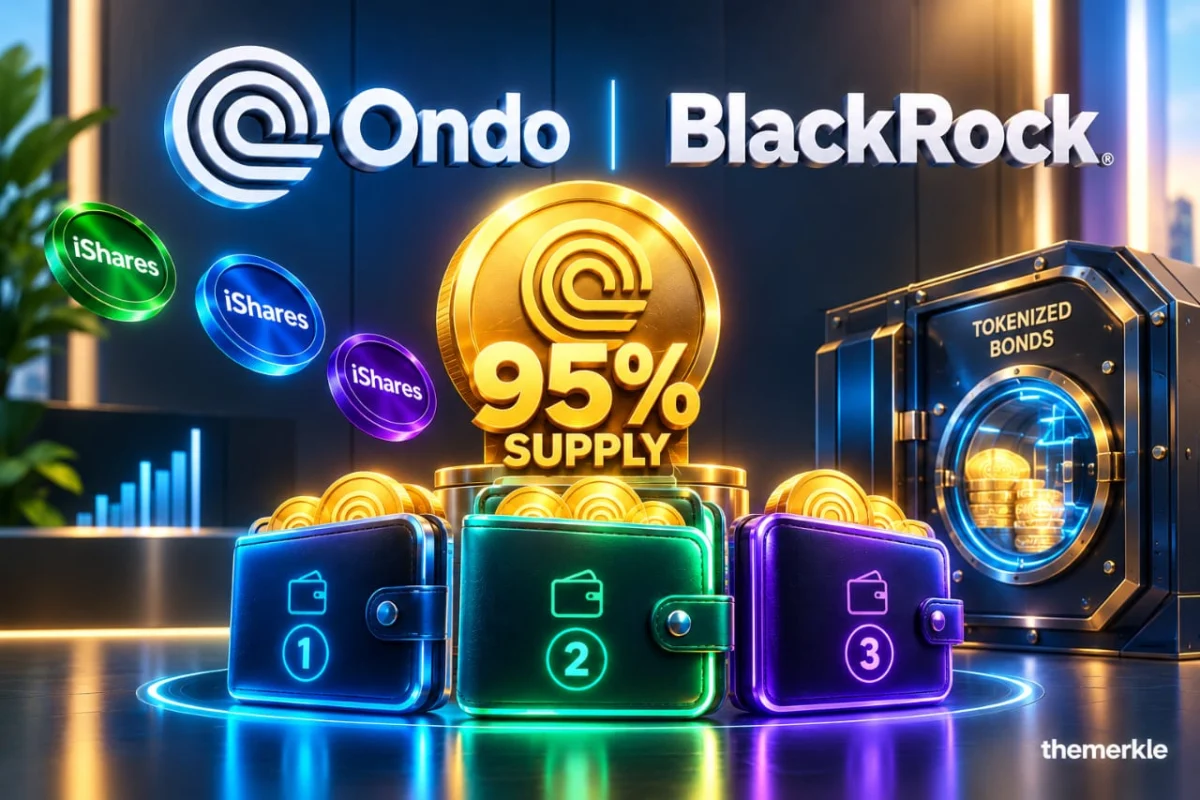
The branding "Powered by BlackRock" naturally draws significant attention, implying a strong collaboration with the financial behemoth. However, a closer examination of Ondo’s disclosures provides a more nuanced understanding of BlackRock’s role. For instance, the Intelligent Portfolios page on Ondo’s website offers a detailed breakdown of only one portfolio, BLKHIon (Ondo High Income Powered by BlackRock). This portfolio is composed entirely of iShares Exchange Traded Funds (ETFs), which are BlackRock’s proprietary fund family. These iShares ETFs are held as tokenized "on" versions, issued through Ondo Global Markets.
The underlying assets of BLKHIon, as detailed by Ondo, include:
- iShares Core U.S. Aggregate Bond ETF (AGG)
- iShares iBoxx $ High Yield Corporate Bond ETF (HYG)
- iShares 1-5 Year Laddered Corporate Bond ETF (SLQD)
- iShares 0-5 Year High Yield Corporate Bond ETF (SHYG)
- iShares Core Total USD Bond Market ETF (IUSB)
- iShares iBoxx $ Investment Grade Corporate Bond ETF (LQD)
- iShares U.S. TIPS Bond ETF (TIP)
- iShares Global Corporate Bond ETF (IGLB)
- iShares Core U.S. Treasury Bond ETF (GOVT)
Categorically, this translates to an allocation of approximately 32% in aggregate bonds, 30% in high-yield bonds, 24% in credit, and 14% in other bond types. Essentially, BLKHIon represents a BlackRock bond strategy, executed entirely with BlackRock funds, but wrapped twice: first as Ondo stock tokens representing the underlying iShares ETFs, and then as an overarching Ondo portfolio token.

Ondo’s own disclosures clarify BlackRock’s limited, albeit impactful, involvement:
- BlackRock provides the underlying asset allocation and composition for the "Powered by BlackRock" portfolios.
- Ondo Finance is solely responsible for the issuance, management, and operational aspects of these tokenized portfolios.
- Crucially, holding BLKHIon (or any "Powered by BlackRock" portfolio token) establishes a claim on Ondo Finance, not directly on BlackRock or the underlying iShares funds.
This distinction is vital for understanding the legal and operational framework. BlackRock’s contribution is primarily in the intellectual property of portfolio design and the provision of its widely recognized financial products as underlying assets. Ondo, on the other hand, bears the full operational responsibility, from token issuance and smart contract management to the custody of the actual underlying securities and compliance with regulatory requirements. This strategic partnership allows Ondo to leverage BlackRock’s reputation and expertise in traditional asset management while maintaining its position as an innovator in the tokenized finance space.
The Nuance of Total Value Locked (TVL) and Holder Distribution
While the $20 million TVL figure is a testament to the initial success of Ondo’s Intelligent Portfolios, a deeper dive into the on-chain data for BLKHIon on Ethereum reveals a significant concentration of ownership. As of October 21, the BLKHIon contract on Ethereum held approximately 792,111 tokens, valued at around $4.92 each, summing up to roughly $3.9 million. This amount constitutes about 19.5% of the reported $20 million total TVL across all portfolios and chains.
The distribution of these BLKHIon tokens among holders is particularly noteworthy:
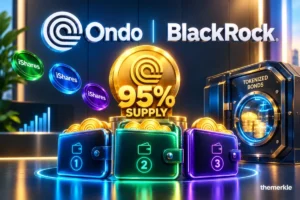
- Wallet 1: Holds 479,004 tokens, representing 60.47% of the total supply.
- Wallet 2: Holds 129,860 tokens, representing 16.39% of the total supply.
- Wallet 3: Holds 77,092 tokens, representing 9.73% of the total supply.
- Other 1,558 wallets: Collectively hold 106,155 tokens, representing 13.40% of the total supply.
This means that just three wallets control approximately 86.59% of the BLKHIon supply on Ethereum. The remaining 1,558 wallets, while numerous, collectively hold a relatively small portion, amounting to around $522,000, or an average of about $335 per wallet.
This phenomenon highlights a crucial distinction in the analysis of blockchain-based financial products: TVL alone does not inherently convey the breadth of investor participation or the degree of decentralization. While a high TVL indicates significant capital inflows, concentrated ownership suggests that a large portion of this capital might originate from a few large entities or institutional investors. This is not necessarily a negative indicator, as institutional participation can bring stability and substantial capital to nascent markets. However, it challenges the narrative of broad retail adoption often associated with the "number of holders" metric. In the context of tokenized RWAs, large wallet holdings could represent treasury management by institutional participants, market-making activities, or even early strategic investments by Ondo-affiliated entities or partners. It underscores the need for transparency beyond just the headline TVL figure, allowing for a more nuanced understanding of market dynamics and participant behavior.
Tracing the Digital Footprint: On-Chain Minting Insights
The transparency afforded by blockchain technology allows for a granular examination of the minting history of tokens like BLKHIon, offering insights into the flow of capital and the origins of large holdings. For BLKHIon on Ethereum, the minting records reveal specific patterns:
- Wallets 1 and 3, comprising the two largest individual holders, were both funded by the same originating address. This address executed 25 distinct minting transactions, collectively generating 625,804 BLKHIon tokens. Every one of these minted tokens was subsequently transferred to either Wallet 1 or Wallet 3. This indicates that a single entity or coordinated operation was responsible for approximately $3.08 million, or 79% of the entire BLKHIon supply on Ethereum, distributing it between these two primary recipient wallets.
- Two particular details from this minting history stand out:
- The largest single mint, totaling 129,860 tokens (worth about $640,000), occurred on September 24, coinciding with the official launch date of Ondo’s Intelligent Portfolios. This suggests a significant initial capital injection right at the product’s debut.
- An additional substantial mint of 115,285 tokens (worth approximately $567,000) took place on October 1, the same day Ondo announced the expansion of its portfolio lineup to include four new Ondo-designed products. This timing could indicate a strategic increase in capital deployment aligned with product development milestones.
Wallet 2’s position, though significant, reflects a more recent accumulation. A separate address initiated the minting of 129,860 BLKHIon tokens through three mintWithAttestation calls. These mints occurred on October 16, October 20, and October 21. Notably, the October 20 mint, valued at approximately $265,000, happened on the very day Ondo announced its $20 million TVL milestone. All tokens from these mints were subsequently transferred to Wallet 2 at 16:17 UTC on the day of the analysis. This pattern suggests a continuous, strategic acquisition by this particular entity, potentially timed with market announcements or specific investment strategies. The ability to trace these transactions provides invaluable insight into the actual dynamics behind the headline TVL figures, revealing the concentrated nature of early and significant investments.
Broader Implications and Future Outlook for Tokenized Portfolios
The rapid growth of Ondo’s Intelligent Portfolios, despite the concentrated ownership structure, is indicative of a broader trend: the increasing convergence of traditional finance and blockchain technology. The "Powered by BlackRock" branding, even with its defined limitations, signals a clear intent to attract institutional capital by leveraging established trust and expertise. This approach represents a significant step towards legitimizing on-chain investment products in the eyes of mainstream financial players.
For the tokenized RWA sector, Ondo’s success demonstrates a viable model for bringing complex financial instruments onto the blockchain in a compliant and structured manner. The requirement for KYC, coupled with geographical restrictions, points to a clear strategy of operating within regulatory frameworks, which is crucial for long-term institutional adoption. As more traditional asset managers explore tokenization, we can expect to see similar hybrid products emerge, offering diversification and yield opportunities through digital rails.
However, challenges remain. Liquidity for smaller investors, particularly in highly concentrated markets, needs to evolve. Regulatory clarity across different jurisdictions is still a developing area, and scalability across various blockchain networks will be key to unlocking the full potential of tokenized assets. Ondo’s strategic positioning on multiple chains (Ethereum, BNB Chain, and soon Solana) is a testament to this understanding. The transparency of blockchain, as demonstrated by the ability to analyze holder distribution and minting history, offers both opportunities and scrutiny. While it can highlight potential centralization, it also provides a level of verifiable data that is often unavailable in traditional finance, fostering a new era of accountability and insight.
In conclusion, Ondo Finance’s achievement of $20 million TVL for its Intelligent Portfolios within a month is a notable milestone, affirming the growing demand for tokenized real-world assets. It showcases a successful model for bridging traditional finance with the efficiency of blockchain. Yet, the concentrated ownership observed in the BLKHIon token underscores the critical need for a nuanced interpretation of TVL and holder metrics, reminding observers that while the capital is flowing, the distribution often reflects a more institutional-led adoption rather than broad retail decentralization in these early stages. This dynamic will continue to shape the narrative and development of the tokenized RWA market as it matures.