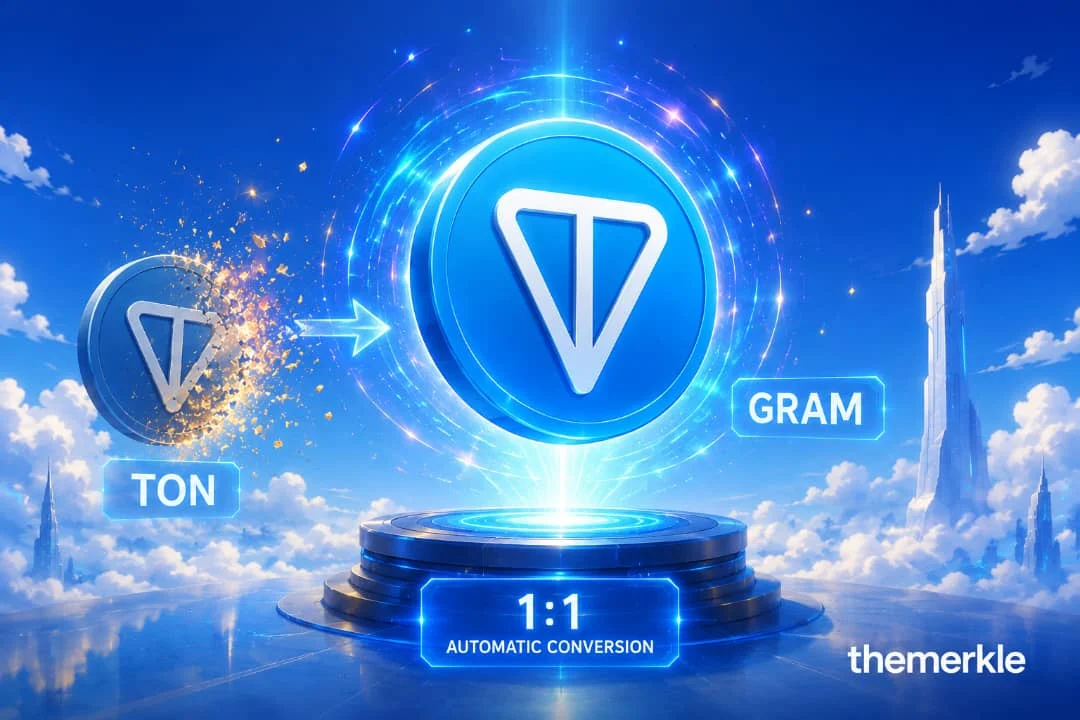
The token powering The Open Network (TON) blockchain has officially changed its name, ticker, and logo from TON to GRAM, effective following a decisive community vote. For existing holders, this significant rebrand requires no action whatsoever, as every TON token will automatically convert to GRAM at a seamless 1:1 ratio. This frictionless transition is designed to ensure maximum user convenience and maintain the integrity of holdings across the ecosystem.
This move is not merely a cosmetic update but a deliberate and symbolically charged decision to reclaim the token’s original identity. The name "GRAM" predates "TON" in the project’s lineage, having been the intended moniker in the initial whitepaper drafted during the project’s earliest conceptualization. The rebrand, endorsed by an overwhelming 81% of the community via the ton.vote platform, signifies a democratic foundation for this pivotal change, moving away from a top-down mandate towards a community-driven evolution. While the token undergoes this transformation, The Open Network blockchain itself will retain its original name, "TON," ensuring a clear distinction between the underlying infrastructure and its native digital asset.
The Genesis of GRAM: A History Forged in Innovation and Challenge
To fully appreciate the significance of the GRAM rebrand, one must delve into the intricate history of The Open Network. The project originated in 2017 under the ambitious vision of Telegram, the global messaging giant founded by Pavel Durov. Dubbed the "Telegram Open Network," it aimed to integrate a decentralized blockchain ecosystem directly into Telegram’s vast user base, potentially introducing cryptocurrency to hundreds of millions of people worldwide. The native token for this groundbreaking network was conceptualized and named "GRAM."
The original whitepaper outlined a sophisticated, sharded blockchain architecture capable of processing millions of transactions per second, designed to be highly scalable and user-friendly. GRAM tokens were envisioned as the primary medium for transaction fees, network governance, and a range of decentralized applications (dApps) within the Telegram ecosystem. The initial private sales of GRAM tokens in 2018 attracted significant investment, raising approximately $1.7 billion from institutional investors eager to participate in Telegram’s foray into Web3.
However, this ambitious venture soon encountered formidable regulatory hurdles. In October 2019, the U.S. Securities and Exchange Commission (SEC) filed a lawsuit against Telegram, alleging that GRAM tokens were unregistered securities. The SEC argued that the private sales constituted an illegal offering, preventing Telegram from distributing GRAMs to its investors. After a protracted legal battle, in May 2020, a U.S. court ruled in favor of the SEC, effectively halting the launch of the Telegram Open Network and the distribution of GRAM tokens.
Faced with an insurmountable legal challenge and a substantial fine, Telegram was compelled to abandon the project and return the remaining funds to investors. This pivotal moment could have spelled the end for TON, but a dedicated community of open-source developers, who had been inspired by Telegram’s original vision, stepped in. They continued the development of the network, rebranding it as "The Open Network" (TON) to signify its decentralized and community-driven future, distinct from its Telegram origins. The token was subsequently named "TON Coin," inheriting the network’s new identity. This rebrand to GRAM is thus a poignant return to the foundational roots, a symbolic reclamation of the name that was initially intended before regulatory pressures dictated a change.
A Democratic Mandate: The Community’s Voice
The decision to revert the token’s name to GRAM was not an executive decree but a testament to the TON ecosystem’s commitment to decentralized governance. The proposal was put to a community vote on ton.vote, a platform designed to facilitate transparent and verifiable decision-making among TON holders. The vote, which concluded recently, saw an overwhelming 81% approval rate for the rebrand. This strong mandate underscores the community’s desire to reconnect with the project’s original identity and its confidence in the leadership’s vision.
Such community-led initiatives are increasingly becoming a hallmark of mature blockchain ecosystems. They provide legitimacy to significant changes, ensuring that the direction of the project aligns with the collective will of its stakeholders rather than being imposed by a centralized entity. For TON, a network that rose from the ashes of a regulatory challenge and was rebuilt by its community, this democratic process holds particular significance. It reinforces the ethos of decentralization that underpins the entire project, empowering token holders to shape its future.
Seamless Transition for Holders: No Action Required
One of the most critical aspects of this rebrand, and a point of considerable relief for token holders, is the absolute lack of required action on their part. The conversion from TON to GRAM is entirely automatic and occurs at a 1:1 ratio. This means that every existing TON token held in a wallet or on an exchange will simply transform into a GRAM token without any manual intervention, swap process, or migration window to navigate.
This "no-action-needed" model significantly de-risks the rebrand process for users. In the past, token migrations and rebrands in the cryptocurrency space have often been fraught with challenges. Holders might miss announcements, deadlines, or struggle with complex swap interfaces, sometimes leading to lost assets or falling victim to phishing scams impersonating official migration portals. The automatic conversion implemented by the TON ecosystem circumvents these common pitfalls entirely.
For individuals holding TON in non-custodial wallets (like Tonkeeper, MyTonWallet, or Ledger), their balance will simply update to reflect the new GRAM ticker and logo once their wallet software or hardware provider completes the integration. Similarly, for users on centralized exchanges such as Binance, OKX, Bybit, and others, their TON holdings will automatically convert to GRAM within their account. Exchanges will announce their individual timelines for this update, but the underlying asset’s value and quantity will remain unchanged. This seamless, infrastructure-level transition highlights a user-centric approach, prioritizing security and convenience above all else.
Exchange and Project Timelines: A Phased Rollout
While the rebrand to GRAM is official, its implementation across the entire ecosystem will be a phased rollout rather than an instantaneous global switch. Individual exchanges, wallet providers, and decentralized applications (dApps) within the TON ecosystem are responsible for updating their systems to reflect the new GRAM ticker, logo, and display name.
Major centralized exchanges, which facilitate a significant portion of TON’s trading volume, will each communicate their specific timelines for this update. Users of these platforms are advised to monitor official announcements from their respective exchanges for precise details on when the change will be reflected in their accounts and trading interfaces. This staggered approach is standard practice for significant token rebrands, allowing each platform to conduct necessary technical integrations, ensure data consistency, and minimize disruption to trading services.
Similarly, various dApps and services built on The Open Network will gradually update their interfaces to display GRAM instead of TON. While the underlying blockchain interactions remain consistent, the visual and textual representations will evolve to reflect the new token name. This coordinated yet decentralized implementation ensures a smooth transition across the diverse and rapidly expanding TON ecosystem.
Broader Implications: Reclaiming Identity, Fueling Growth
The return to the GRAM name is far more than a simple nomenclature change; it carries profound implications for The Open Network’s identity, strategic direction, and future growth trajectory.
Reclaiming Historical Identity: By reverting to GRAM, the project reconnects with its foundational vision and the original intent laid out in Telegram’s initial whitepaper. This symbolic act signals maturity and confidence, suggesting that the network has overcome its past regulatory challenges and is now firmly rooted in its community-driven evolution. It’s a statement of continuity with an ambitious past, now free from the constraints that once defined it.
Enhanced Clarity and Branding: The distinction between "TON" (The Open Network, the blockchain infrastructure) and "GRAM" (the native token) provides much-needed clarity. Historically, having both the network and its token share the same "TON" moniker could lead to confusion, particularly for new users or those less familiar with blockchain terminology. A distinct token name like GRAM allows for clearer branding, better market differentiation, and easier comprehension of the ecosystem’s components. This separation aligns with established industry practices, where many prominent blockchains have distinct names for their network and native token (e.g., Ethereum and Ether, Solana and SOL).
Leveraging Telegram’s Ecosystem: The rebrand comes at a time when the TON network is experiencing unprecedented growth, largely fueled by its deepening integration with Telegram. With over 900 million active users, Telegram offers an unparalleled distribution channel for Web3 adoption. Recent initiatives like Wallet in Telegram, which allows users to buy, sell, and trade cryptocurrencies directly within the messaging app, and TON Space, a self-custodial wallet, have significantly boosted user engagement. Furthermore, Telegram’s decision to use TON for its ad platform payouts creates a massive real-world utility for the token. The GRAM rebrand, by aligning the token’s name with its original, ambitious vision, can enhance its appeal and recognition as it becomes more deeply embedded within Telegram’s vast user base. It signals a renewed confidence in the project’s ability to achieve mass adoption.
Attracting New Users and Developers: A new name, especially one with historical resonance and a clear community mandate, creates a fresh narrative. This can serve as a natural "news moment" that draws renewed attention from prospective users, developers, and institutional investors. For developers, a clearly defined token name within a robust, growing ecosystem backed by a major messaging app presents an attractive environment for building innovative dApps. For new users, a distinct, memorable name like GRAM, unburdened by past regulatory complexities of the "TON Coin" era, can offer a more welcoming entry point into the Web3 space.
Market Perception and Strategic Positioning: The rebrand may also influence market perception. By emphasizing a return to roots and a community-driven decision, TON positions itself as a resilient and decentralized player. This narrative can contribute to a stronger market identity and potentially attract a broader range of investors who value transparent governance and a clear vision. The clear separation of network and token names can also simplify regulatory discussions moving forward, presenting a more mature and well-defined structure to authorities.
In conclusion, the transformation of the TON token to GRAM is more than a simple change of label; it is a profound statement. It signifies a project that has come full circle, reclaiming its original identity while standing on the solid foundation of community governance and unprecedented integration with a global communication platform. This rebrand marks the beginning of a new chapter for The Open Network, one poised for continued expansion and mainstream adoption, with GRAM at its core.
Disclosure: This is not trading or investment advice. Always do your research before buying any cryptocurrency or investing in any services.