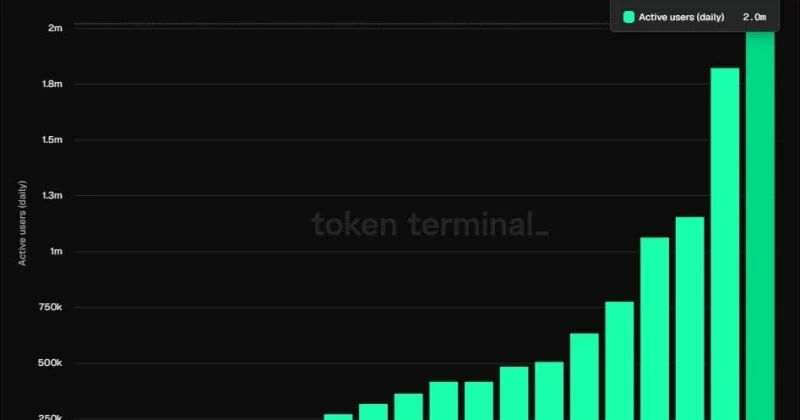
Tron has achieved a significant milestone, crossing the 4 million daily active user (DAU) threshold and outperforming Solana to claim the top position among major blockchain networks. This remarkable growth is not fueled by the speculative frenzy of Decentralized Finance (DeFi) or the ephemeral allure of Non-Fungible Tokens (NFTs). Instead, the primary engine behind Tron’s ascent is the robust and consistent activity of stablecoins, with Tether’s USDT leading the charge. This shift underscores a fundamental driver of blockchain adoption: the utility of stable, pegged assets for global commerce and financial inclusivity.
The Enduring Power of Stablecoins: A Steady Engine of Growth
The trajectory of Tron’s user growth reveals a compelling narrative of stablecoin utility driving mass adoption. In the fourth quarter of 2025, the network was averaging approximately 2.8 million DAU, placing it just behind Solana’s 2.9 million users. This initial parity highlighted a competitive landscape. However, by February 2026, Tron had already begun to pull ahead, registering around 3.2 million DAU. The most recent data indicates that this momentum has continued unabated, with the network now comfortably exceeding 4 million daily active users. This consistent and substantial increase in active users, particularly when contrasted with the more volatile metrics often associated with speculative cryptocurrency markets, points to a foundational utility being leveraged by a growing user base.
The sheer volume of stablecoin activity on Tron is staggering and provides a clear explanation for this user surge. USDT transfer volumes on the Tron network frequently surpass $20 billion on a daily basis. This indicates a high level of economic activity and liquidity within the ecosystem. Further solidifying this trend, as of May 2025, the circulating supply of USDT on the Tron network had already exceeded an impressive $75 billion. This figure represents more than half of Tether’s total global supply, demonstrating Tron’s central role in the distribution and utilization of one of the world’s most prominent stablecoins.
Beyond stablecoin transfers, the network’s overall transactional capacity and user base expansion are equally noteworthy. Tron processes over 8 million daily transactions, a testament to its high throughput capabilities. This extensive transaction volume has contributed to the accumulation of a substantial user base, with more than 306 million total user accounts now registered on the network. This broad reach suggests that Tron is not merely a platform for a niche group of crypto enthusiasts but is becoming a significant infrastructure for a wide array of digital financial activities.
Stablecoins: The Unsung Heroes of User Adoption Over Speculative Hype
The narrative of blockchain adoption has often been dominated by the parabolic rises and dramatic corrections seen in speculative assets like Bitcoin and Ethereum, or the intense interest generated by NFT booms. However, Tron’s recent success provides a compelling counterpoint, demonstrating that utility-driven use cases, particularly those involving stablecoins, can be a more sustainable and scalable engine for user growth.
Tron was founded in 2017 by Justin Sun, with its mainnet officially launching in 2018. From its inception, the network was architected with a clear focus on overcoming the scalability limitations that plagued earlier blockchain iterations. The core design principles prioritized high throughput and extremely low transaction fees. These fundamental attributes have proven to be exceptionally well-suited for the demands of stablecoin transactions. Unlike the often high and unpredictable gas fees associated with Ethereum, Tron’s low-fee environment makes it an attractive option for high-frequency, low-value transactions, which are characteristic of remittances, cross-border payments, and the everyday use of stablecoins for trading or holding value.
The strategic decision to foster a robust USDT ecosystem on Tron has paid dividends. This symbiotic relationship allows users to move value quickly and affordably across borders and between different platforms. For individuals and businesses engaged in international trade or remittances, the ability to transact in a stable digital currency with minimal friction is a significant advantage. This utility transcends speculative trading and taps into fundamental economic needs, thereby attracting a broader and more consistent user base.
This emphasis on utility over speculative excitement is a crucial differentiator. While DeFi and NFT markets can experience periods of intense activity followed by sharp declines, the demand for efficient and low-cost stablecoin transfers remains relatively constant, driven by ongoing economic activity. This creates a stable foundation for user engagement and network activity, as evidenced by Tron’s sustained growth.
Implications for Investors and the Broader Blockchain Landscape
The current dominance of stablecoins, particularly USDT on Tron, carries significant implications for investors and the broader blockchain ecosystem. Tron’s impressive transaction volume is not a fleeting phenomenon; it is structurally tied to global remittance flows and cross-border commerce. This means that the network’s performance is intrinsically linked to real-world economic activity, offering a more grounded valuation proposition compared to purely speculative assets.
The native token, TRX, plays a vital role within this ecosystem. TRX is required to pay transaction fees on the Tron network, creating a continuous demand for the token as network activity increases. Furthermore, TRX is used to participate in the network’s governance, allowing token holders to have a say in its future development and direction. This dual utility—transactional and governance—provides a fundamental value proposition for TRX.
However, this reliance on a single dominant asset, USDT, also introduces a notable risk factor: concentration. When a network’s activity and user engagement are overwhelmingly dependent on one particular stablecoin, any disruption to that asset’s stability or market position can pose an existential threat. For instance, if Tether were to face significant regulatory challenges, a loss of confidence from users, or if another stablecoin like USDC were to gain substantial traction on the Tron network, the current user numbers could experience a dramatic reversal. This scenario highlights the importance of diversification and the inherent vulnerabilities of a highly concentrated ecosystem.
From an investment perspective, this presents a dual-edged sword. The current stablecoin-driven growth offers a clear path to sustained demand for TRX, tied to real economic utility. However, investors must also remain aware of the potential risks associated with Tether’s regulatory landscape and the competitive dynamics within the stablecoin market. Monitoring these factors will be crucial for assessing the long-term viability of Tron’s current growth trajectory.
The success of Tron also serves as a case study for other blockchain networks. It demonstrates that focusing on providing essential financial infrastructure, such as efficient stablecoin transfer capabilities, can be a more effective strategy for achieving widespread adoption than chasing ephemeral trends. As the blockchain space matures, the emphasis is increasingly shifting from speculative potential to practical utility, and Tron’s current standing is a testament to this evolving paradigm. The network’s ability to scale and handle high transaction volumes at low costs has positioned it as a critical piece of infrastructure for the global digital economy, with stablecoins acting as the primary catalyst for this widespread integration.
Looking Ahead: Sustaining Momentum and Mitigating Risks
The question now for Tron and its stakeholders is how to sustain this impressive momentum while mitigating the inherent risks. Continued innovation in expanding stablecoin use cases beyond simple transfers will be key. This could involve further integration with payment processors, e-commerce platforms, and cross-border financial services.
Furthermore, while USDT’s dominance has fueled growth, exploring the integration and support for other stablecoins could serve to diversify the network’s reliance and potentially attract a broader range of users and institutional interest. This would not only enhance resilience but also cater to a more diverse global financial landscape.
The underlying technology of Tron, with its focus on scalability and low fees, remains a strong foundation. As the blockchain industry continues to mature and regulatory clarity emerges, networks that can offer efficient and cost-effective solutions for real-world financial needs are likely to thrive. Tron, with its current stablecoin-driven success, has firmly established itself as a major player in this evolving landscape, demonstrating the power of utility in driving mass adoption. The coming months and years will reveal whether Tron can solidify its position by continuing to innovate and effectively manage the risks associated with its current growth drivers.
Disclosure: This article was edited by Editorial Team. For more information on how we create and review content, see our Editorial Policy.