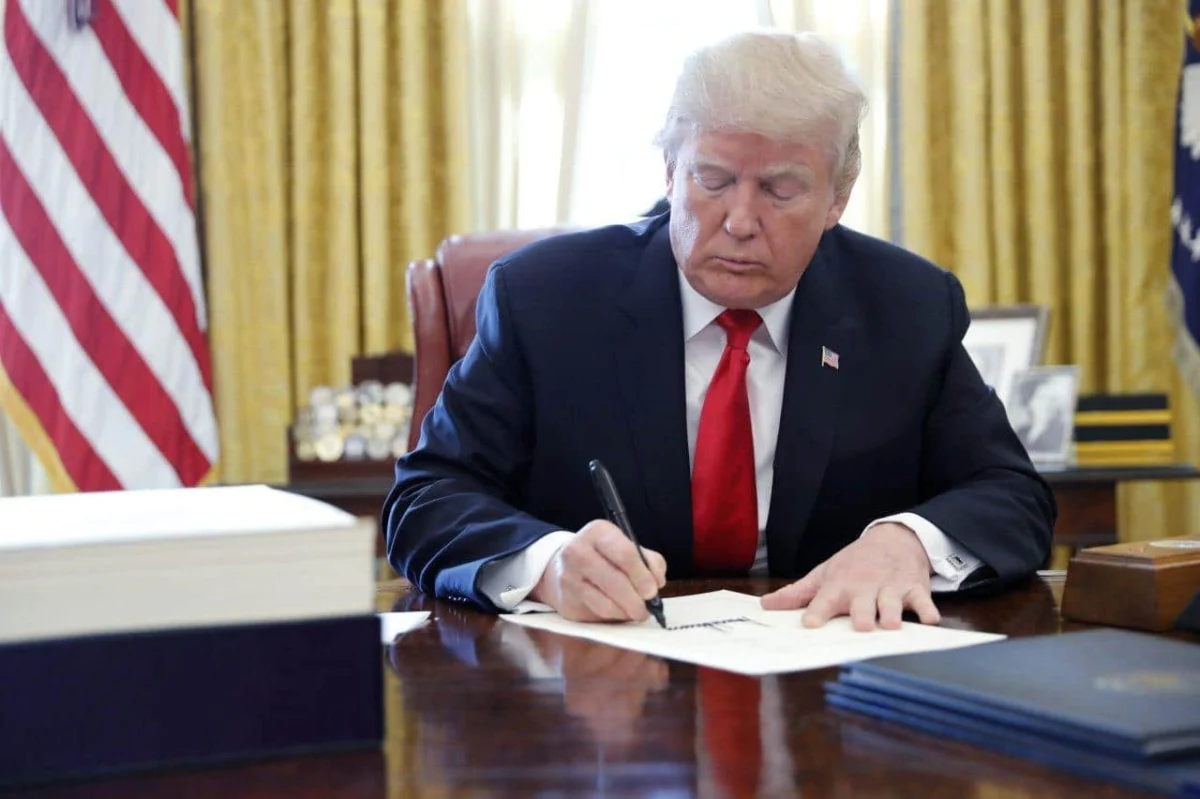
Washington D.C. – Former President Donald Trump on Sunday announced an immediate "energy ceasefire" between Russia and Ukraine, claiming both nations had agreed to halt attacks on each other’s energy infrastructure. The pronouncement, made via his Truth Social platform, stated the arrangement would take effect immediately but offered no specific terms, duration, or details regarding enforcement or the facilities covered. The unexpected declaration prompted surprise from Ukrainian officials and was met with initial silence from Moscow, raising significant questions about its veracity, scope, and the diplomatic process that purportedly led to it.
The announcement emerged amidst escalating tensions and a backdrop of recent diplomatic maneuvers, including a separate controversial Russian diesel deal brokered by Trump and renewed public exchanges between the former U.S. President and Ukrainian President Volodymyr Zelensky. Just hours before Trump’s post, Zelensky had publicly articulated a conditional offer, stating Ukraine would cease strikes on Russian diesel facilities if Russia, in turn, stopped its attacks on Ukrainian targets. This statement outlined a reciprocal proposal, not a confirmation of an already established agreement, highlighting a notable disparity with Trump’s definitive assertion.
The Unilateral Announcement and Immediate Reactions
Trump’s social media post presented the energy ceasefire as a fait accompli, urging both Russia and Ukraine to comply. However, it notably omitted any explanation of the negotiations that would have preceded such a significant international agreement. The lack of crucial details—such as the specific energy facilities encompassed by the ceasefire, its intended duration, or mechanisms for reporting and verifying violations—left analysts and international observers questioning the practical implementation and even the existence of a formal accord. Furthermore, the post did not clarify whether representatives from the Ukrainian and Russian governments had directly communicated their acceptance to Washington or any intermediaries.
Reuters, a global news agency, swiftly reported that neither Kyiv nor Moscow immediately corroborated Trump’s announcement. This information vacuum created a significant disconnect between the American statement and any public acknowledgment from the two principal nations expected to uphold the agreement. A source close to President Zelensky, speaking to CNN, described the announcement as unexpected, yet indicated Ukraine would be willing to agree if Russia reciprocated. Another Ukrainian official reportedly learned of the statement only by reading it online, further underscoring the lack of prior consultation or formal communication channels regarding the alleged deal.
These initial Ukrainian responses suggested a conditional willingness to support an energy ceasefire, contingent on Russian adherence, but did not establish that Ukrainian officials had formally approved any specific terms before Trump’s public declaration. This distinction is critical; a general willingness to suspend attacks, particularly under conditions of reciprocity, differs fundamentally from a binding, operational agreement with defined parameters and enforcement mechanisms. Neither Trump’s announcement nor the subsequent initial reactions described a shared, mutually agreed-upon framework for monitoring compliance or addressing potential violations. Furthermore, the initial statements left unresolved the complex question of how either government would differentiate between legitimate covered energy targets and other critical infrastructure affected by the ongoing conflict.
Background: Energy as a Weapon and Target in the Conflict
The conflict in Ukraine, which intensified with Russia’s full-scale invasion in February 2022, has seen energy infrastructure emerge as a critical strategic domain. Both sides have leveraged energy as a weapon and a target, aiming to undermine the opponent’s warfighting capability, economic stability, and civilian morale.
Since the initial invasion in 2014 and particularly after the 2022 escalation, Russia has systematically targeted Ukraine’s energy grid, including power plants, substations, and transmission lines, especially during colder months. These strikes aim to plunge Ukrainian cities into darkness and cold, disrupt industrial production, and strain humanitarian efforts. Ukraine, in response, has increasingly targeted Russian oil refineries, fuel depots, and other energy facilities, particularly deep within Russian territory. These strikes serve multiple purposes: to disrupt Russia’s military logistics by limiting fuel supplies, to impose economic costs by damaging lucrative export infrastructure, and to demonstrate Ukraine’s ability to project force beyond its borders.
The strategic importance of these targets means any ceasefire would require meticulous definition. "Energy facilities" can encompass a vast array of infrastructure, from oil and gas pipelines to electricity grids, coal mines, and nuclear power plants. Distinguishing between facilities vital for civilian sustenance and those directly supporting military operations is a complex challenge, often blurred in modern warfare. Previous diplomatic attempts to de-escalate or establish ceasefires in various sectors of the conflict have largely foundered due to a profound lack of trust, difficulties in verification, and an unwillingness by either side to concede strategic advantages.
A Chronology of Recent Diplomatic Friction
The energy ceasefire announcement by Trump did not occur in a vacuum but followed a series of events that added friction to diplomatic discussions involving Washington and Kyiv:
- Days Prior – Russian Diesel Deal: Days before the ceasefire announcement, Trump held discussions with Russian President Vladimir Putin regarding the supply of Russian diesel to global markets. This separate "fuel agreement," reportedly aimed at stabilizing energy prices, drew sharp criticism from President Zelensky and added considerable strain to the already complex relationship between Washington and Kyiv, particularly as Ukraine is actively working to reduce Russia’s energy revenues.
- Friday – Miami Peace Talks: On Friday, the same day the Russian diesel agreement was announced, Ukraine peace talks involving senior American officials commenced in Miami. Participants reportedly included special envoy Steve Witkoff and Jared Kushner, Trump’s son-in-law. The public account of these meetings did not establish whether they produced the arrangement Trump announced on Sunday, and no accompanying negotiating document was released alongside his social media statement. The informal nature of these talks, involving individuals not officially representing the current U.S. administration, raised eyebrows in established diplomatic circles.
- Saturday – Trump’s Criticism of Ukrainian Leadership: A day prior to his energy ceasefire announcement, Trump publicly criticized Ukrainian leadership, suggesting the country should opt for a different leader capable of "reaching a deal." This remark placed additional pressure on the diplomatic relationship at a sensitive time when officials were reportedly engaged in discussions concerning the conflict.
- Sunday Morning – Zelensky’s Conditional Offer: Earlier on Sunday, in an interview with ABC News, President Zelensky addressed the possibility of an energy ceasefire. He explicitly stated that Ukraine was open to halting attacks on Russian diesel facilities if Moscow, in turn, ceased its attacks against Ukraine. Zelensky’s position clearly linked restraint by Ukrainian forces to equivalent reciprocal action from Russia, making his offer dependent on Russian conduct rather than an unconditional Ukrainian decision to suspend strikes. His remarks also emphasized the human cost of the conflict, urging Russia to "stop killing Ukrainian children" as he explained the proposed exchange, thereby tying any Ukrainian commitment concerning diesel targets to protection from Russian aggression.
Trump’s subsequent description of the energy ceasefire as "immediate" contrasted sharply with Zelensky’s emphasis on reciprocity. Trump’s post supplied no timetable beyond the immediate start and named no officials responsible for coordinating implementation on either side, further highlighting the unilateral nature of his declaration.
Broader Impact and Implications
The unilateral and unconfirmed nature of Trump’s energy ceasefire announcement carries significant implications for the ongoing conflict, international diplomacy, and the credibility of future peace initiatives.
- Undermining Diplomatic Channels: Such an announcement, made outside established diplomatic frameworks and without prior official confirmation from the involved parties, risks undermining the authority and efforts of existing international bodies and the current U.S. administration. It creates confusion and complicates the work of career diplomats and special envoys attempting to broker genuine, verifiable agreements. For Kyiv, it could be perceived as an attempt to dictate terms or bypass their sovereignty.
- Challenges of Verification and Enforcement: Even if a reciprocal agreement were to be reached, the practical challenges of verifying compliance would be immense. Both sides have a history of mistrust and accusations of violations. Without a robust, internationally recognized monitoring mechanism – such as those involving the Organization for Security and Co-operation in Europe (OSCE) or the United Nations – any "ceasefire" would be difficult to sustain. Defining what constitutes an "energy facility" and distinguishing it from dual-use infrastructure or military targets would require detailed negotiation and agreement.
- Strategic Disadvantage for Ukraine: A poorly defined or unilaterally enforced energy ceasefire could potentially put Ukraine at a strategic disadvantage. If Ukraine were to halt its effective strikes on Russian energy infrastructure without verifiable and guaranteed reciprocal action, it could lose a key leverage point against Russia’s war machine, which heavily relies on oil and gas revenues and a robust fuel supply chain.
- Russian Ambiguity: Moscow’s initial silence could be a calculated move. Russia might choose to ignore the announcement, implicitly rejecting it, or it might offer a vague, conditional acceptance that serves its strategic interests without committing to verifiable terms. Such ambiguity could allow Russia to continue its operations while deflecting international criticism.
- Political Motivations and Domestic Impact: For Donald Trump, the announcement could be viewed through the lens of domestic politics, particularly his ongoing presidential campaign. Positioning himself as a dealmaker capable of resolving complex international conflicts, even unilaterally, aligns with his past rhetoric and could appeal to a segment of his base. However, for the current U.S. administration, it presents a foreign policy challenge, potentially creating friction with allies and complicating their consistent support for Ukraine.
- Impact on International Allies: NATO members and European Union partners, who have largely maintained a united front in supporting Ukraine and sanctioning Russia, would likely view such an unconfirmed agreement with skepticism and concern. Unilateral actions that bypass allied consultation could strain transatlantic relations and raise questions about the coherence of Western policy towards the conflict.
The coming days will be crucial in determining whether Trump’s announcement holds any practical weight or if it will be relegated to another instance of speculative diplomacy. Without explicit confirmation from both Kyiv and Moscow, and the articulation of clear, verifiable terms, the "energy ceasefire" remains, for now, a declaration largely detached from the operational realities of the ongoing conflict. The international community will undoubtedly watch closely for any official statements from the belligerent nations, as well as for any actual changes in the targeting patterns of their respective forces, to ascertain the true impact of this latest, unconventional diplomatic intervention.