The cryptocurrency market experienced a bout of volatility early this week, with Bitcoin and Ethereum prices fluctuating in response to pronouncements from U.S. President Donald Trump regarding potential peace talks with Iran. Trump’s statements, disseminated through his social media platform Truth Social, signaled a significant diplomatic development, but were juxtaposed with a stark threat that underscored the precariousness of the situation. This interplay between purported diplomatic progress and aggressive posturing has historically been a catalyst for market movements, particularly in assets as sensitive to geopolitical risk as digital currencies.
Trump’s message, posted on March 17, 2025, indicated that the United States was engaged in "serious discussions with A NEW, AND MORE REASONABLE, REGIME to end our Military Operations in Iran." He further elaborated on the progress made, stating, "Great progress has been made but, if for any reason a deal is not shortly reached, which it probably will be…" This optimistic outlook was swiftly followed by a conditional ultimatum concerning the Strait of Hormuz, a vital waterway for global oil transit. Trump warned, "…and if the Hormuz Strait is not immediately ‘Open for Business,’ we will conclude our lovely ‘stay’ in Iran by blowing up and completely obliterating all of their Electric Generating Plants, Oil Wells and Kharg Island (and possibly all desalinization plants!), which we have purposefully not yet ‘touched.’"
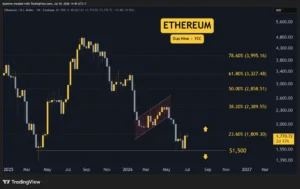
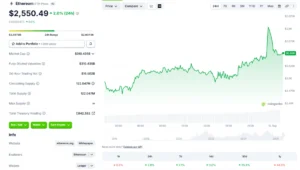
The immediate market reaction saw Bitcoin (BTC) initially climb by 0.8%, and Ethereum (ETH) surge by 2.5%. However, this initial optimism proved short-lived, as both major cryptocurrencies reversed course later in the day. At the time of publication, Bitcoin was trading at approximately $67,749, and Ethereum was priced at $2,073. This pattern of rapid gains followed by a decline is characteristic of markets reacting to uncertain news, where initial positive sentiment is tempered by underlying risks and potential negative outcomes.
This is not the first instance of Trump hinting at progress in Iran relations. Just the previous week, on March 10, 2025, he had alluded to similar potential breakthroughs. However, those claims were met with skepticism and pushback from some Iranian officials, highlighting a persistent disconnect in communication and a degree of strategic posturing from both sides. The dynamics of international diplomacy, especially in volatile regions, often involve layers of public statements, private negotiations, and domestic political considerations, all of which can influence market sentiment.
Background: A History of Tensions and Shifting Alliances
The relationship between the United States and Iran has been fraught with tension for decades, marked by diplomatic standoffs, economic sanctions, and proxy conflicts. The geopolitical landscape shifted significantly following the Trump administration’s withdrawal from the Joint Comprehensive Plan of Action (JCPOA) in 2018, a move that reimposed stringent sanctions on Iran and heightened regional instability. This period saw increased military posturing in the Persian Gulf and a series of tit-for-tat actions, including the downing of a U.S. drone and the targeted killing of Iranian General Qasem Soleimani in January 2020.
The subsequent Biden administration had initially signaled a desire to re-engage diplomatically and potentially revive the JCPOA. However, progress has been slow, and Iran’s nuclear program has continued to advance, further complicating efforts to de-escalate tensions. The economic strain imposed by sanctions has had a significant impact on Iran’s economy, while also influencing regional stability and global energy markets.
Against this backdrop, any indication of a potential diplomatic resolution, however tentative, can have ripple effects across various asset classes. For cryptocurrencies, which have become increasingly intertwined with global financial flows and investor sentiment, geopolitical events serve as significant, albeit unpredictable, drivers of price action. The volatile nature of these assets means they can amplify market reactions to news, both positive and negative.
The "Reverse Indicator" Theory and Iranian Official’s Warning
Adding another layer of complexity to the market’s reaction, Mohammad Bagher Ghalibaf, the speaker of the Iranian Parliament, issued a pointed warning on Sunday, March 16, 2025. Addressing the phenomenon of pre-market news and its potential for manipulation, Ghalibaf posted on X (formerly Twitter): "Heads-up: Pre-market so-called ‘news’ or ‘Truth’ is often just a setup for profit-taking. Basically, it’s a reverse indicator. Do the opposite: If they pump it, short it. If they dump it, go long. See something tomorrow? You know the drill."
This statement suggests a perspective from within Iran that views such pronouncements as strategic maneuvers, possibly designed to influence market sentiment for specific financial or political gains. Ghalibaf’s advice to traders—to adopt an inverse strategy based on perceived market manipulation—highlights the deep distrust and strategic communication employed in international affairs. It implies that pronouncements, especially those delivered through public platforms like social media, may not always reflect the full diplomatic reality and could be intended to create a specific market reaction.
This perspective aligns with historical patterns where geopolitical announcements are used to manipulate financial markets. The ability of influential figures to sway market sentiment through carefully worded statements, especially in the context of high-stakes negotiations, is a well-documented phenomenon. For investors in the cryptocurrency space, understanding these nuances is crucial, as the decentralized and often speculative nature of the market can make it particularly susceptible to such influences.
Supporting Data and Market Context
The current market conditions for Bitcoin and Ethereum are also relevant to understanding their reaction. As of early March 2025, both assets had experienced significant rallies in the preceding months, driven by a combination of institutional adoption, growing retail interest, and anticipation of broader economic trends. Bitcoin, in particular, had seen renewed interest following the approval of spot Bitcoin ETFs in the United States, which opened the doors for greater traditional investment. Ethereum, the second-largest cryptocurrency, had also benefited from this broader market optimism, alongside developments within its own ecosystem, such as anticipation surrounding potential Ethereum ETF approvals and upgrades to its network.
This established upward trend meant that the market was already primed for volatility. Positive news, such as signs of de-escalation in a major geopolitical hotspot, could have provided further fuel for rallies. Conversely, any hint of renewed conflict or heightened tensions could trigger rapid sell-offs as investors seek to reduce risk exposure. The sharp, albeit temporary, initial surge in prices suggests that the "peace talk" narrative was initially embraced by traders looking for further upside. The subsequent downturn, however, points to the lingering concerns about the sustainability of any potential agreement and the ever-present risk of renewed conflict.
Broader Impact and Implications
The interplay between geopolitical events and cryptocurrency markets has become increasingly pronounced. As digital assets mature and attract greater mainstream attention, they are inevitably subject to the same forces that influence traditional financial markets. The events of this week underscore several key implications:
- Geopolitical Risk Premium: The volatility observed highlights the sensitivity of cryptocurrencies to geopolitical risk. Events that create uncertainty or the potential for conflict can lead to significant price swings, even in assets that are often touted as uncorrelated with traditional markets.
- Information Warfare and Market Manipulation: The warning from the Iranian Parliament speaker points to the potential for strategic use of information in influencing financial markets. Investors must be discerning and critical of pronouncements, especially those made through non-traditional channels, and consider the potential motivations behind them.
- The Narrative Effect: The power of narratives in shaping market sentiment cannot be overstated. Trump’s claims, whether fully substantiated or not, created a narrative of potential peace, which initially boosted crypto prices. The subsequent shift indicates that the market is also factoring in the potential for the narrative to unravel.
- Diversification and Risk Management: For investors, this episode serves as a reminder of the importance of diversification and robust risk management strategies. Relying solely on a single asset class or failing to account for geopolitical factors can expose portfolios to significant, unforeseen risks.
The situation remains fluid, with the ultimate outcome of the diplomatic discussions and the potential for conflict in the Strait of Hormuz yet to be determined. However, the early week’s price action in Bitcoin and Ethereum clearly illustrates the intricate connection between global politics and the burgeoning digital asset landscape. As the situation evolves, close monitoring of both diplomatic developments and market reactions will be crucial for understanding the ongoing dynamics.