On October 28, 2026, the U.S. Department of the Treasury’s Office of Foreign Assets Control (OFAC) announced a comprehensive set of sanctions targeting 10 individuals and one entity central to a sophisticated, state-run North Korean IT worker scheme. This sprawling network, which operates across international borders, is accused of generating hundreds of millions of dollars in annual revenue to fund the Democratic People’s Republic of Korea’s (DPRK) prohibited weapons of mass destruction (WMD) and ballistic missile programs. By leveraging stolen identities, advanced generative artificial intelligence, and a network of Russian financial facilitators, these agents have successfully infiltrated legitimate global businesses, posing a dual threat of financial fraud and corporate security breaches.
The latest action by the U.S. government marks a critical escalation in the ongoing effort to dismantle the financial pipelines that sustain the Pyongyang regime. According to the United Nations Panel of Experts, North Korean IT worker operations now span dozens of countries and generate an estimated $250 million to $600 million in annual revenue. This revenue is not merely supplementary; it is a primary pillar of the regime’s strategy to bypass international sanctions and maintain its military capabilities despite near-total isolation from the traditional global banking system.
The Evolution of the DPRK IT Worker Threat
The North Korean IT worker phenomenon is not new, but its tactics have evolved significantly in recent years. Historically, these workers operated primarily from hubs in China and Russia, providing low-level coding and development services. However, the current landscape reveals a much more dangerous and technologically proficient workforce. These individuals are no longer just freelancers; they are highly trained state agents who use Virtual Private Networks (VPNs), proxy infrastructure, and stolen identities to pass themselves off as non-North Korean professionals, often claiming to be from South Korea, Japan, or Southeast Asia.

A significant development highlighted in the 2026 sanctions is the integration of generative artificial intelligence (AI) into these fraudulent operations. DPRK operatives have begun using AI tools to fabricate highly polished resumes tailored to specific job descriptions, draft convincing cover letters, and even generate deepfake video and audio for technical interviews. These tools allow less-skilled operatives to bypass rigorous corporate screening processes, making it increasingly difficult for HR departments to distinguish between legitimate applicants and state-sponsored actors. By using AI-generated profile photos and real-time deepfake filters during video calls, these workers can effectively conceal their true identities and locations.
Chronology of Enforcement and Policy Response
The October 2026 sanctions are part of a multi-year, multi-agency crackdown by the United States and its allies. To understand the significance of this latest move, it is necessary to look at the timeline of previous enforcement actions:
- May 2022: The FBI, State Department, and Treasury Department issued a joint advisory detailing the tactics used by North Korean IT workers. This was the first major public warning to the private sector regarding the specific use of stolen identities and proxy devices.
- May 2023: OFAC designated the Chinyong Information Technology Cooperation Company, an umbrella organization controlled by the DPRK government that manages delegations of IT workers globally.
- Early 2024: The U.S. Department of Justice (DOJ) began a series of indictments against U.S.-based facilitators. These individuals operated "laptop farms"—physical locations in the U.S. where they hosted computers used by DPRK workers. This allowed the workers to appear as if they were logging in from domestic IP addresses, satisfying corporate security requirements for remote work.
- March 2026: Sanctions were leveled against Amnokgang Technology Development Company, another front company responsible for managing overseas worker delegations.
- October 28, 2026: The current action targets the financial "last mile," focusing on the individuals and entities in Russia that convert the cryptocurrency earned by these workers into usable fiat currency for the North Korean state.
The Russian Nexus and Financial Intermediaries
The 2026 sanctions place a heavy emphasis on the role of Russian nationals in facilitating the DPRK’s financial crimes. As the North Korean workers earn their salaries in stablecoins or other cryptocurrencies, they require a mechanism to "off-ramp" these digital assets into cash. This is where facilitators like Vitold Viktorovich Obertas and Ilya Aleksandrovich Boykov come into play.
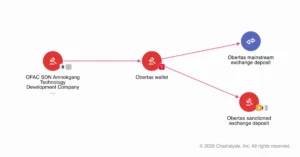
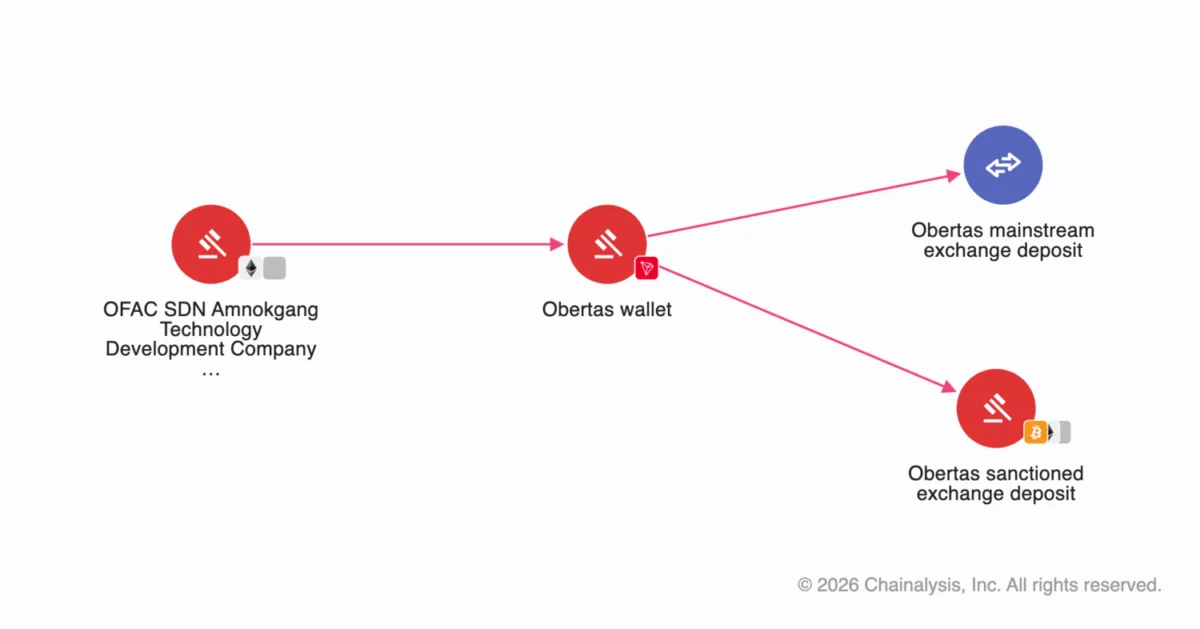
Vitold Viktorovich Obertas has been identified as a key intermediary who has allegedly converted nearly $2 million in cryptocurrency into fiat for DPRK officials since early 2025. Blockchain analysis reveals that Obertas’s relationship with illicit North Korean networks actually stretches back to early 2023. His wallets have shown direct links to Amnokgang Technology Development Company, receiving multiple transfers of USDT (Tether) before depositing the funds into both mainstream and sanctioned cryptocurrency exchanges.

Similarly, Ilya Aleksandrovich Boykov provided critical logistical and financial support to Alis, a previously sanctioned front company. Boykov facilitated the movement of millions of dollars, often using the sanctioned Russian exchange Garantex to cash out crypto earnings. The use of Garantex is particularly notable, as the exchange has been a known haven for money laundering and ransomware proceeds, providing a layer of anonymity and protection from Western law enforcement.
Detailed Profile of the Sanctioned Entity: FFTDC
The primary entity targeted in this action is the First Financial and Technical Development Center (FFTDC). Based in Russia but controlled by the DPRK, the FFTDC serves as a central node for deploying IT workers and managing their revenue. According to Treasury reports, at least six Russia-based DPRK IT workers—Kim Kyong Ju, Ri Thae Chol, So Hyon Jin, Han Yu Song, Kim Sung Gwan, and Hyon Se Il—have collectively generated more than $750,000 for the FFTDC since 2025.
These workers are not merely independent contractors; they are part of a structured hierarchy. The sanctions also designated Kim Ki Hyok and Kim Hyo Dong, two DPRK nationals who managed these delegations. Kim Ki Hyok, for instance, led a group of workers under the Alis front and was responsible for transferring nearly $500,000 in cryptocurrency. These managers ensure that the bulk of the workers’ earnings is remitted to the state, with only a small fraction used for the workers’ living expenses.
Broader Economic and Security Implications
The implications of these IT worker schemes extend far beyond simple sanctions evasion. For the corporations that unknowingly hire these agents, the risks are multifaceted:

- Financial Loss: Companies are essentially paying salaries directly to a sanctioned government, which can lead to massive fines and legal repercussions under the International Emergency Economic Powers Act (IEEPA).
- Network Security: North Korean IT workers have been known to use their privileged access to corporate networks to steal proprietary data, install backdoors for future cyberattacks, or even deploy ransomware. In several documented cases, workers who were terminated or discovered attempted to extort their former employers by threatening to leak sensitive information.
- Intellectual Property Theft: By working on high-tech projects, including blockchain development and DeFi (Decentralized Finance) protocols, these workers gain insights into cutting-edge technology that can be reverse-engineered or utilized by the DPRK’s state-sponsored hacking groups, such as the Lazarus Group.
From a geopolitical perspective, the continued success of these schemes undermines the efficacy of global sanctions. As long as Pyongyang can generate half a billion dollars a year through remote work, its incentive to return to the negotiating table regarding its nuclear program remains low.
Official Reactions and Compliance Requirements
U.S. officials have emphasized that the private sector is the first line of defense against this threat. "The DPRK’s reliance on a global network of IT workers to fund its illegal weapons programs is a direct challenge to international security," a Treasury spokesperson stated following the announcement. "We will continue to use every tool at our disposal to expose and disrupt these fraudulent activities, particularly those that exploit the digital asset ecosystem."
For businesses, particularly those in the technology and financial services sectors, the October 2026 sanctions serve as a stark reminder of the need for robust Know Your Customer (KYC) and Know Your Employee (KYE) protocols. Compliance experts recommend that companies:
- Verify the physical location of remote workers through hardware-based solutions rather than just IP addresses.
- Conduct thorough background checks that look for inconsistencies in employment history or suspicious documentation.
- Monitor for the use of "laptop farms" and proxy devices.
- Utilize blockchain analytics tools to screen for transactions involving addresses linked to the newly sanctioned individuals and entities.
As North Korea continues to refine its use of AI and decentralized finance to circumvent international law, the cat-and-mouse game between the regime’s facilitators and global regulators is expected to intensify. The October 28, 2026, action represents a significant milestone in this struggle, highlighting the critical intersection of cybersecurity, financial regulation, and national security.