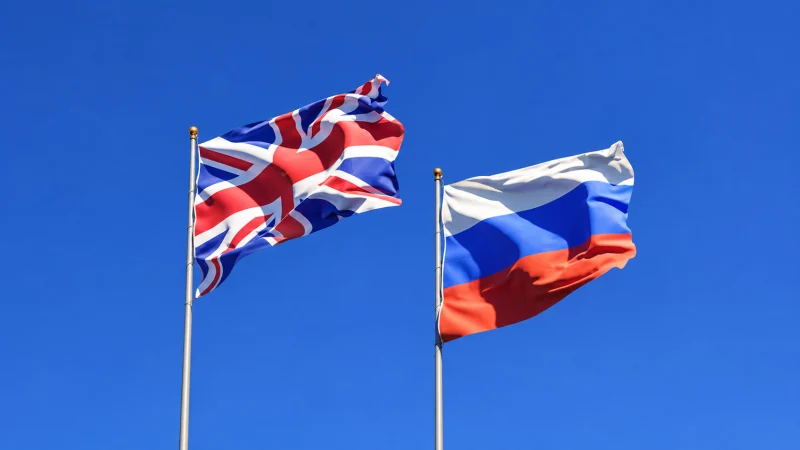
The United Kingdom has significantly ramped up its economic pressure on the Russian Federation by implementing a comprehensive new sanctions package targeting the digital asset ecosystem and the clandestine financial networks used to bypass international restrictions. On October 8, the UK government announced 38 new designations aimed at dismantling the infrastructure supporting Russia’s ongoing military efforts in Ukraine. This latest round of sanctions specifically zeroes in on cryptocurrency exchanges, payment platforms, and the "shadow fleet" of oil tankers that continue to provide the Kremlin with vital hard currency. According to an in-depth analysis by blockchain intelligence firm TRM Labs, these designations highlight a sophisticated "cat-and-mouse" game where Russian-linked entities use shared infrastructure and parallel branding to evade regulatory oversight.
The Core Designations: Crypto Exchanges and Payment Platforms
At the heart of the UK’s latest enforcement action are several high-profile cryptocurrency and payment services suspected of facilitating illicit financial flows. Among the primary targets is Xeltox Enterprises Ltd, a company registered in British Columbia, Canada. The UK authorities designated Xeltox for its role in supporting the Russian financial services sector through its operation of the Cryptomus and Heleket platforms.
Cryptomus, a well-known crypto payment gateway, has long been under the scrutiny of blockchain investigators. However, the UK’s action also extended to Heleket, a service that TRM Labs identified as being operationally linked to Cryptomus. The designation also encompassed Certa Payments, another brand operating under the same corporate umbrella. By targeting the parent company and its various iterations, the UK aims to prevent the "rebranding" strategy often employed by sanctioned entities to maintain access to global liquidity.
In addition to the North American-registered Xeltox, the UK targeted TokenSpot, a cryptocurrency exchange based in Kyrgyzstan. TokenSpot was designated for its direct support of Russia’s financial services sector. The inclusion of Central Asian entities underscores a growing trend where Russian financial activity migrates to jurisdictions with less stringent regulatory frameworks or historical ties to the Russian economy.
TRM Labs Analysis: Shared Infrastructure and Parallel Brands
The effectiveness of these sanctions relies heavily on the technical analysis provided by firms like TRM Labs, which monitor blockchain activity to uncover hidden connections between supposedly independent services. TRM Labs reported with "high confidence" as early as April that Cryptomus and Heleket were not merely competitors but were operationally intertwined.
The investigation revealed that these platforms shared critical infrastructure, including servers, personnel, and branding elements. More importantly, they shared liquidity sources, meaning the funds flowing through one platform were essentially part of the same pool as the other. This strategy of "parallel branding" allows a network to maintain operations if one brand comes under regulatory fire.
A notable shift occurred in early 2024. When Cryptomus introduced mandatory identity checks (Know Your Customer or KYC) in February, TRM Labs observed a subsequent decline in its monthly blockchain volume. Simultaneously, Heleket—which launched just a month prior in January—saw its volume rise. This suggests a coordinated effort to migrate users who wished to avoid identity verification from the more established brand to a newer, less-scrutinized alternative.
High-Volume Transactions with Sanctioned Counterparties
The data provided by TRM Labs paints a stark picture of the scale of financial activity passing through these sanctioned gateways. The investigation into Cryptomus revealed substantial exposure to Garantex, a Russian cryptocurrency exchange that was sanctioned by the U.S. Office of Foreign Assets Control (OFAC) and the UK in 2022 for its role in money laundering and facilitating ransomware payments.
According to TRM’s April analysis, Cryptomus received over $204 million from Garantex and sent approximately $101 million back to the sanctioned exchange. These flows represent a direct violation of the spirit, and often the letter, of international sanctions designed to isolate the Russian financial system.
The case of TokenSpot is even more illustrative of the "successor" strategy. TRM Labs assessed with high confidence that TokenSpot functions as a front company for Grinex. Grinex is widely considered by intelligence analysts to be the likely successor to Garantex, designed to pick up the volume lost by the latter after its designation.
The technical links between TokenSpot and Grinex are robust. Analysts identified six TRON (TRX) blockchain addresses attributed to both exchanges. Furthermore, the platforms utilized shared infrastructure for collecting customer deposits and managing transaction fee balances. In a tell-tale sign of coordination, both platforms announced service interruptions at nearly the same times in April, suggesting they were being managed by the same technical team.
The transactional volume associated with TokenSpot is immense. TRM Labs found that TokenSpot sent a combined total of more than $950 million to Grinex, Garantex, and the A7 network. The A7 network emerged as TokenSpot’s largest external counterparty, receiving a staggering $679.5 million. The A7 network is frequently cited in intelligence reports as a key node in Russia’s "shadow" financial architecture, used for large-scale value transfer outside of the SWIFT banking system.
The Kyrgyzstan Connection and Broader Financial Targets
The October 8 sanctions package also highlights the role of Kyrgyzstan as a hub for Russian financial circumvention. Beyond TokenSpot, the UK designated Tsunami Payments and Processing KG, both of which are registered in the Central Asian republic.
The UK also took the step of designating individuals, including Ulan Bukabaev, the director of Processing KG. By targeting leadership figures, the UK aims to create personal liability and deter other regional actors from facilitating Russian transactions. Other targets in the package included the Russian company Planeta and the Moscow-based bank Stolichny Kredit. These entities are viewed as essential components of the domestic Russian financial infrastructure that enables the movement of funds for military procurement.
Context: The Evolution of UK Sanctions Since 2022
The recent designations are part of a broader, multi-year strategy by the UK’s Office of Financial Sanctions Implementation (OFSI) and the Foreign, Commonwealth & Development Office (FCDO) to degrade Russia’s ability to fund its invasion of Ukraine.
Since February 2022, the UK has sanctioned over 2,000 individuals and entities under the Russia sanctions regime. This has evolved from targeting high-profile oligarchs and major state-owned banks to the current focus on "enablers"—the smaller, more agile firms that provide the plumbing for sanctions evasion.
The focus on the "shadow fleet" in this package is particularly relevant. Alongside the crypto platforms, the UK sanctioned several vessels and shipping companies involved in transporting Russian oil above the G7 price cap. The synergy between crypto exchanges and the shadow fleet is clear: the oil provides the revenue, and the crypto platforms provide the means to move that revenue across borders without triggering the alarms of the traditional banking sector.
Chronology of Recent Enforcement Actions
- February 2022: Initial wave of sanctions following the invasion, targeting major Russian banks (VTB, Sberbank) and the SWIFT ban.
- April 2022: US and UK sanction Garantex, the largest Russian-linked crypto exchange, for facilitating illicit finance.
- February 2024: Cryptomus implements mandatory KYC, leading to a volume drop as users seek anonymous alternatives.
- January – April 2024: Heleket and TokenSpot see significant volume increases; TRM Labs identifies shared infrastructure with sanctioned entities.
- October 6, 2024: TRM Labs finalizes its assessment of TokenSpot as a front for Grinex.
- October 8, 2024: The UK government officially designates 38 entities and individuals, including Xeltox (Cryptomus/Heleket), TokenSpot, and the A7 network.
Implications for the Global Crypto Industry and Compliance
The UK’s action sends a powerful message to the global cryptocurrency industry: the "corporate veil" and rebranding will not provide protection from sanctions. For compliance teams at major exchanges and financial institutions, the TRM Labs report serves as a warning that historical exposure must be reviewed.
The fact that these entities used shared infrastructure means that compliance officers cannot simply rely on blacklisting a single domain or company name. Instead, they must utilize advanced blockchain analytics to identify "successor services" that share liquidity sources, wallet clusters, or technical signatures with known sanctioned entities.
Furthermore, the designation of a Canadian-registered company (Xeltox) highlights the international nature of these networks. It signals that Western jurisdictions are willing to sanction entities within their own or allied borders if they are found to be complicit in Russian financial evasion.
Official Responses and Strategic Impact
While the Russian government has historically dismissed Western sanctions as "illegal" and "ineffective," the specific targeting of crypto-gateways suggests that the UK has identified a genuine vulnerability in Russia’s alternative financial system. By cutting off the bridges between the Russian crypto-economy and the global market, the UK increases the "friction" and cost for Russia to conduct international trade.
The UK Foreign Secretary, in statements accompanying the release, emphasized that the goal is to "starve Putin’s war machine" of the resources it needs. By targeting the financial services sector—including its modern, digital components—the UK is attempting to close the loop on the Russian economy.
Industry experts suggest that while new "fronts" will likely emerge, each round of sanctions forces these networks to become more convoluted, more expensive to operate, and more isolated. The transition of volume from Cryptomus to Heleket, and the reliance on TokenSpot as a proxy for Grinex, demonstrates that the Russian networks are on the defensive, constantly needing to rebuild their access to the global financial stage.
As the conflict continues, the intersection of blockchain technology and geopolitical warfare remains a primary battlefield. The UK’s October 8 package represents a sophisticated move to map and dismantle the digital architecture of the Russian state’s financial survival strategy. Compliance departments worldwide are now urged to monitor these "successor" services closely, as the focus shifts from the entities themselves to the underlying infrastructure that powers them.