The global financial markets, including the cryptocurrency sector, experienced notable fluctuations at the commencement of the week, directly influenced by a series of pronouncements from United States President Donald Trump regarding ongoing diplomatic efforts and potential military actions concerning Iran. President Trump, through his social media platform Truth Social, conveyed what he characterized as significant progress in peace talks with Iran, while simultaneously issuing a stark ultimatum that, if not met, would result in the "obliteration" of key Iranian infrastructure. This dual messaging, blending optimism for de-escalation with the threat of severe punitive measures, injected a palpable sense of uncertainty into markets sensitive to geopolitical developments.
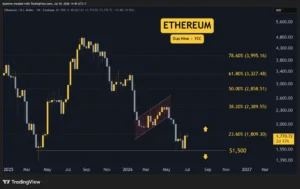
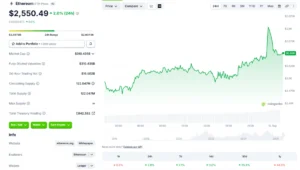
The initial reaction in the cryptocurrency space saw Bitcoin (BTC) register a modest uptick of 0.8%, and Ethereum (ETH) demonstrate a more robust gain of 2.5%. However, this positive momentum proved transient. As the trading day progressed, both major cryptocurrencies reversed course, ultimately declining to trade at $67,749 for Bitcoin and $2,073 for Ethereum at the time of reporting. This pattern of initial gains followed by a downturn is a common characteristic of cryptocurrency markets when faced with unpredictable geopolitical news, highlighting their sensitivity to external shocks and investor sentiment.
President Trump’s assertions of diplomatic breakthroughs were not entirely novel. He had previously hinted at potential progress in peace talks with Iran during the preceding week. However, these claims had been met with skepticism and outright rejection by some Iranian officials, indicating a significant divergence in perceived diplomatic realities. The latest statement from the White House, disseminated on Truth Social, reiterated the possibility of a negotiated settlement but framed it within a context of severe consequences should an agreement not materialize swiftly.
Escalation of Rhetoric and Economic Threats
The core of President Trump’s latest communication was a declaration that the United States was engaged in "serious discussions with A NEW, AND MORE REASONABLE, REGIME to end our Military Operations in Iran." He emphasized that "Great progress has been made." However, this optimistic framing was abruptly juxtaposed with a severe threat: "if for any reason a deal is not shortly reached, which it probably will be, and if the Hormuz Strait is not immediately ‘Open for Business,’ we will conclude our lovely ‘stay’ in Iran by blowing up and completely obliterating all of their Electric Generating Plants, Oil Wells and Kharg Island (and possibly all desalinization plants!), which we have purposefully not yet ‘touched.’"
This aggressive posturing represents a significant escalation in rhetoric and implies a readiness to deploy overwhelming economic and military pressure should diplomatic channels fail to yield the desired outcomes. The specific mention of targeting energy infrastructure, oil wells, and critical water desalination facilities points towards a strategy designed to cripple Iran’s economy and its ability to function, thereby forcing compliance. The Hormuz Strait, a vital chokepoint for global oil shipments, was explicitly named as a critical element in the negotiations, underscoring its strategic importance in the geopolitical calculus.
Background: The Iran-US Standoff and Previous Tensions
The current geopolitical climate between the United States and Iran has been characterized by decades of strained relations, punctuated by periods of heightened tension and direct confrontation. Following the withdrawal of the United States from the Joint Comprehensive Plan of Action (JCPOA), commonly known as the Iran nuclear deal, in 2018, sanctions were reimposed on Iran, significantly impacting its economy. This move was accompanied by an increase in military posturing and rhetoric from both sides.
The Trump administration pursued a policy of "maximum pressure," aiming to compel Iran to renegotiate a broader deal that would address its ballistic missile program and regional activities, in addition to its nuclear program. This strategy involved crippling sanctions on Iran’s oil exports, its primary source of revenue, and designating Iran’s Islamic Revolutionary Guard Corps (IRGC) as a foreign terrorist organization. These actions led to retaliatory measures from Iran, including attacks on oil tankers in the Persian Gulf and the downing of a US drone.
The region has been a flashpoint for numerous incidents, including the targeted killing of Iranian General Qassem Soleimani in January 2020, which brought the two nations to the brink of open conflict. While diplomatic efforts have intermittently been explored, the fundamental disagreements over Iran’s nuclear ambitions, regional influence, and support for proxy groups have remained significant obstacles. President Trump’s latest statements suggest a renewed attempt to leverage the threat of devastating economic and military consequences to achieve specific diplomatic objectives, potentially aiming to secure a more favorable long-term agreement or to signal a decisive end to US military involvement in the region under certain conditions.
The Role of the Hormuz Strait
The Hormuz Strait is a critical maritime passage, situated between the Persian Gulf and the Gulf of Oman. Its strategic significance cannot be overstated, as it is one of the world’s most vital oil transit points. Approximately 30% of the world’s seaborne oil trade passes through this narrow waterway. Any disruption to shipping in the Hormuz Strait, whether through blockades, attacks, or military actions, has the immediate and profound effect of driving up global oil prices and creating significant supply chain disruptions.
President Trump’s explicit mention of the Hormuz Strait being "Open for Business" as a prerequisite for de-escalation highlights its central role in his diplomatic calculus. The threat to "blow up and completely obliterate" Iranian infrastructure, including oil wells and Kharg Island (a major oil export terminal), is a direct implication that Iran’s ability to control or disrupt passage through the strait would be met with a response designed to permanently neutralize such capabilities and inflict maximum economic damage.
Iranian Response and Market Sentiment
While President Trump’s pronouncements aimed to project strength and a potential path towards resolution, the reaction from Iranian officials has been a mix of defiance and caution, with some suggesting a strategic dismissal of his claims as market manipulation. Last week, after similar hints of progress, some Iranian officials pushed back, questioning the veracity of the claims.
On Sunday, Mohammad Bagher Ghalibaf, the speaker of the Iranian Parliament, issued a warning through his official X (formerly Twitter) account. He advised market participants to be wary of information released prior to market openings, referring to it as "pre-market so-called ‘news’ or ‘Truth’ is often just a setup for profit-taking." Ghalibaf further elaborated, stating, "Basically, it’s a reverse indicator. Do the opposite: If they pump it, short it. If they dump it, go long. See something tomorrow? You know the drill."
This statement from a high-ranking Iranian official suggests a perception that statements emanating from the US, particularly those related to geopolitical developments, might be strategically timed or crafted to influence market sentiment for specific gains, possibly to affect negotiations or to create opportunities for profit-taking by certain actors. Ghalibaf’s advice to traders to "do the opposite" of what is presented as "news" indicates a deep-seated skepticism and a belief that such information should be interpreted as a contrarian signal.
Broader Market Implications and Analysis
The volatile reaction of cryptocurrencies to these geopolitical pronouncements underscores their increasing integration into the broader financial landscape and their sensitivity to macro-economic and geopolitical factors. Historically, assets like Bitcoin have been perceived as a "risk-on" asset, meaning their prices tend to rise during periods of economic stability and optimism, and fall during times of uncertainty and fear. However, their performance in response to geopolitical events also suggests they are being treated by some investors as a potential hedge against traditional market instability, or as an asset whose price can be influenced by speculation surrounding global events.
The initial uptick in Bitcoin and Ethereum could be attributed to a speculative bet on de-escalation and the potential for increased liquidity in the market if global tensions ease. However, the subsequent downturn suggests that the underlying threat of significant conflict and economic disruption, coupled with the inherent uncertainty of the situation, outweighed the optimism. Traders may have sought to secure profits from the initial surge or shifted their capital towards safer havens as the full implications of Trump’s ultimatum became clearer.
The events also highlight the complex interplay between political rhetoric, international relations, and financial markets. President Trump’s communication strategy, characterized by direct and often provocative statements on social media, has a proven track record of influencing market sentiment. In this instance, the dual message of potential peace coupled with the threat of devastating military action created a bifurcated market reaction, demonstrating the difficulty in predicting outcomes when such conflicting signals are present.
The involvement of figures like Ghalibaf in commenting on market dynamics adds another layer of complexity, suggesting a potential information war where narratives are constructed to influence both public opinion and financial markets. This can lead to increased volatility as traders attempt to decipher genuine intentions from strategic posturing.
Future Outlook and Uncertainty
The situation remains fluid, with the ultimate outcome dependent on the diplomatic negotiations and the actions taken by both the United States and Iran. The threat of severe economic consequences for Iran, particularly concerning its energy sector, carries significant implications for global energy markets. Any disruption to Iranian oil production or exports, even if not directly targeted, could lead to price spikes and increased inflation.
For the cryptocurrency market, continued geopolitical instability in a major oil-producing region could reinforce its role as a speculative asset class, susceptible to broad market sentiment shifts. Alternatively, if global markets experience significant turmoil due to escalating tensions, cryptocurrencies could see increased adoption as a hedge against inflation or as an alternative store of value, though this remains a debated point among analysts.
The coming days and weeks will be crucial in determining whether diplomatic progress is indeed achieved or if the threats of military action and economic devastation materialize. The market’s reaction will likely continue to be driven by the evolving narrative surrounding the US-Iran relationship and the perceived likelihood of a peaceful resolution versus a significant escalation of conflict. The pronouncements from both sides will be closely scrutinized for any shifts in tone or policy that could indicate a change in trajectory.
The cryptocurrency market, in particular, will be watched for its ability to withstand such geopolitical pressures and whether it can offer any form of stability amidst broader financial uncertainties. The interplay between traditional financial markets and digital assets in response to such high-stakes global events continues to be a developing area of observation for investors and analysts alike. The effectiveness of "maximum pressure" tactics versus diplomatic engagement, and the resulting impact on regional stability and global markets, will be a key narrative to follow.