The United States Senate is currently grappling with a condensed legislative calendar as it attempts to advance the Digital Asset Market Clarity Act, a landmark piece of legislation designed to provide a comprehensive regulatory framework for the burgeoning cryptocurrency industry. While Senate Majority Leader John Thune has expressed a desire to initiate the floor process before the upcoming summer recess, industry experts and congressional aides suggest that meeting the preferred August 7 deadline for passage is increasingly improbable. The bill, which represents a culmination of months of bipartisan negotiations between the Senate Banking and Agriculture committees, faces significant procedural obstacles and deep-seated ideological divisions that could delay its progress until late 2026.
The Legislative Bottleneck and Thune’s Strategy
Senate Majority Leader John Thune addressed the media on Thursday, signaling a cautious optimism regarding the bill’s initial steps. "I would like to at least get Clarity started," Thune stated, referring to the act by its common shorthand. "We’ll see where the votes are." His comments reflect the strategic necessity of beginning the floor process—a procedural move known as "invoking cloture"—to ensure the bill remains on the active agenda when lawmakers return from their state work period.
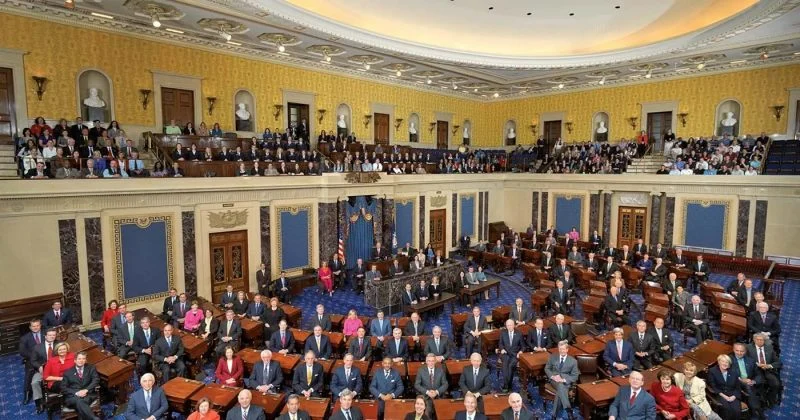
The Senate is scheduled to begin its summer recess on August 10, with a planned return on September 14. This five-week hiatus creates a narrow window for legislative action. As of late Thursday, the Senate floor remained occupied by other high-priority items, including the confirmation of several judicial nominees, a contentious Iran war powers resolution, and the massive annual National Defense Authorization Act (NDAA). The competition for floor time is fierce, and the Digital Asset Market Clarity Act must compete with these "must-pass" items for the attention of the full chamber.
Industry representatives, who have spent millions of dollars on lobbying efforts over the past two years, had identified August 7 as a critical "practical deadline." The logic behind this date is rooted in the political cycle; as the calendar turns toward the November 2026 midterm elections, the appetite for complex, bipartisan financial regulation often wanes in favor of campaign rhetoric and partisan positioning.
A Chronology of the Digital Asset Market Clarity Act
The path to the current Senate draft has been a multi-year endeavor marked by shifting political tides and evolving market conditions. The legislative journey began in earnest in early 2025, following a series of high-profile collapses in the digital asset space that prompted calls for federal oversight.
In July 2025, the House of Representatives successfully passed its version of the crypto market structure bill. That version, which received significant bipartisan support, focused heavily on the distinction between digital commodities and securities. Following the House’s lead, the Senate began a bifurcated approach, with the Agriculture Committee focusing on commodity-related assets and the Banking Committee addressing investor protection and stablecoin issuance.
By early 2026, the two committees began the difficult task of reconciling their respective proposals. The "Clarity Act" emerged as the unified product of these negotiations, released in its latest draft form only this week. The bill aims to provide a "one-stop shop" for digital asset regulation, defining the specific jurisdictions of the Securities and Exchange Commission (SEC) and the Commodity Futures Trading Commission (CFTC).
Core Provisions of the Market Clarity Framework
The Digital Asset Market Clarity Act is structured to bring order to what many lawmakers have described as the "Wild West" of finance. The bill targets four primary groups: digital asset exchanges, intermediaries (such as brokers and dealers), asset issuers, and federal oversight bodies.
One of the most significant aspects of the bill is its attempt to codify the "Howey Test" for the digital age. It proposes a set of criteria to determine when a digital asset should be treated as a security under the SEC’s purview and when it qualifies as a commodity under the CFTC. This distinction is vital for the industry, as the regulatory requirements for commodities are generally perceived as less burdensome than the rigorous disclosure and registration requirements of the SEC.
Furthermore, the act introduces mandatory registration for digital asset exchanges. Under the proposed rules, exchanges would be required to maintain strict capital reserves, implement robust anti-money laundering (AML) and "know your customer" (KYC) protocols, and provide transparent reporting on trade volumes and order books. These measures are intended to prevent the type of commingling of customer funds that led to the catastrophic failures seen in 2022 and 2023.
Sticking Points: Stablecoins and Ethics Restrictions
Despite the broad agreement on the need for oversight, the bill is currently stalled by two primary points of contention: the treatment of stablecoin rewards and the enforcement of ethics restrictions on government officials.
Stablecoins—digital assets pegged to a stable reserve like the US dollar—are a cornerstone of the crypto ecosystem. The Clarity Act seeks to establish a federal framework for stablecoin issuers, requiring them to hold 1:1 reserves in high-quality liquid assets. However, a rift has emerged regarding "stablecoin rewards" or yield-bearing stablecoins. Some Republican lawmakers argue that prohibiting or strictly regulating the rewards offered to stablecoin holders would stifle innovation and drive capital to offshore markets. Conversely, many Democrats view these rewards as a form of unregulated interest that mirrors traditional banking products, necessitating stricter oversight and FDIC-style insurance requirements.
The second major hurdle involves the enforcement of new ethics rules for senior government officials transitioning into the private crypto sector. The bill proposes a "cooling-off" period to prevent the "revolving door" between regulatory agencies and the companies they oversee. Democrats have insisted that the Department of Justice (DOJ) should have the primary responsibility for enforcing these ethics violations. Republicans, however, have voiced concerns that giving the DOJ such broad authority could lead to the politicization of enforcement actions.
Senator Cynthia Lummis, a long-time advocate for the industry and a key negotiator on the bill, acknowledged these friction points. She noted that while the draft is comprehensive, several "contentious provisions" remain open to revision. The goal is to secure the 60 votes necessary to overcome a potential filibuster, a task that requires significant buy-in from the Democratic caucus.
The Role of the SEC and CFTC
The jurisdictional tug-of-war between the SEC and the CFTC has been a defining feature of the US crypto landscape for years. The Clarity Act attempts to resolve this by granting the CFTC primary authority over "digital commodities"—which would likely include Bitcoin and Ethereum—while leaving the SEC in charge of assets that function more like traditional investment contracts or equity.
To support this division, the bill includes a provision for a joint SEC-CFTC oversight committee. This body would be tasked with harmonizing rules and resolving disputes over asset classification. However, critics argue that the criteria for classification remain ambiguous in the current draft, potentially leading to more litigation rather than less.
Supporting data from the industry suggests that the lack of jurisdictional clarity has already had a tangible impact on the US economy. A report by a leading blockchain trade association estimated that approximately 20% of crypto-related startups founded in the US between 2021 and 2024 have relocated their headquarters to jurisdictions with clearer rules, such as the European Union (under the MiCA framework) or the United Arab Emirates.
Political Implications and the 2026 Midterms
The timing of the bill’s consideration is inseparable from the political climate. With the 2026 midterm elections approaching, every legislative move is scrutinized for its impact on the polls. President Donald Trump, who has expressed varying views on digital assets throughout his tenure, remains the ultimate destination for the bill. Should the Senate pass an amended version of the Clarity Act in September, it would still need to be sent back to the House for a final vote before reaching the President’s desk.
The pressure to act is compounded by the fact that the Senate will have a very limited number of "legislative days" in September and October. If the bill does not clear the Senate floor before the August recess, it faces the risk of being sidelined by budget battles and the general election cycle.
Furthermore, the "lame duck" session—the period after the November election but before the new Congress is sworn in—is often seen as a last-ditch opportunity for passing complex bills. However, relying on a lame-duck session is considered a high-risk strategy, as outgoing members may be less inclined to engage in difficult compromises.
Broader Impact and Industry Reaction
The global crypto industry is watching the US Senate with bated breath. As the world’s largest financial market, the US’s regulatory stance often sets the tone for international standards. The passage of the Digital Asset Market Clarity Act would likely trigger a wave of institutional investment, as major banks and hedge funds have cited the lack of a clear federal framework as a primary barrier to entry.
Industry leaders have generally praised the bill’s intent while expressing concern over its specific requirements. "Certainty is the most valuable commodity we have right now," said one executive at a major US-based exchange. "Even if the rules are strict, knowing what they are allows us to build and invest for the long term. The current state of ‘regulation by enforcement’ is unsustainable."
Conversely, consumer advocacy groups have warned that the bill may not go far enough. Some argue that by shifting more authority to the CFTC—which traditionally has a smaller budget and fewer enforcement resources than the SEC—the bill could inadvertently create a "regulatory vacuum" that leaves retail investors vulnerable to fraud and market manipulation.
Conclusion: A Path Forward Amid Uncertainty
As the August 7 deadline nears, the fate of the Digital Asset Market Clarity Act remains in the balance. While Majority Leader Thune’s intent to "get the process started" provides a glimmer of hope for proponents of the bill, the reality of Senate procedure suggests a long road ahead. The disputes over stablecoins and ethics enforcement are not merely technical disagreements; they represent fundamental differences in how the two parties view the intersection of technology, finance, and government oversight.
Missing the August window would undoubtedly increase the political pressure on negotiators. However, it also provides an opportunity for lawmakers to further refine the bill and address the concerns of stakeholders on both sides of the aisle. For an industry that has operated in a legal gray area for over a decade, a few more months of negotiation may be a small price to pay for a framework that provides the "clarity" its name promises. Whether the Senate can find the 60 votes necessary to move forward in September will be the defining question for the future of digital assets in the United States.