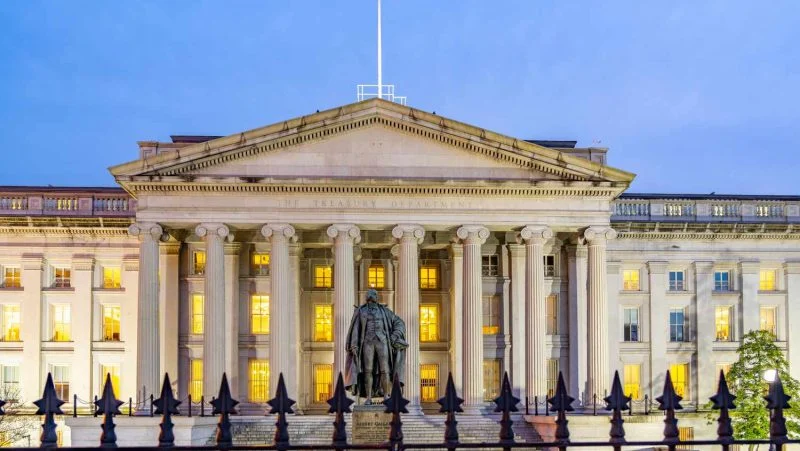
The US Treasury Department announced a comprehensive set of proposed rules on Monday, outlining the specific compliance requirements for stablecoin issuers and digital asset service providers under the landmark GENIUS Act. This Notice of Proposed Rulemaking (NPRM) represents a critical step in the federal government’s efforts to integrate digital assets into the traditional financial regulatory perimeter, focusing specifically on Section 3 of the legislation. The proposal seeks to clarify the jurisdictional boundaries of US law by defining the exact conditions under which a payment stablecoin is considered to be issued within the United States and the criteria that determine when a platform is offering or selling these assets to American residents.
The proposal is slated for official publication in the Federal Register on August 18, marking the beginning of a 60-day public comment period. During this window, stakeholders across the fintech, banking, and legal sectors are expected to provide feedback on the feasibility and technical implications of the rules. This move follows a series of preliminary guidelines released earlier this year and signals the Treasury’s intent to have a robust enforcement mechanism in place well before the GENIUS Act’s primary provisions take effect in early 2027.
Defining Jurisdictional Reach: The "Issued in the US" Standard
At the heart of the Treasury’s proposal is a rigorous definition of what constitutes domestic issuance. Under the new framework, a stablecoin is generally classified as being issued in the United States if the issuing entity is physically located within the country at the time of issuance or if the recipient of the stablecoin is located within US borders. To determine the location of an issuer, the Treasury proposes a dual-pronged test. For individual issuers, the department will look primarily at physical presence. For corporate entities, the determination will be based on the place of incorporation or the location of the company’s principal place of business.
This jurisdictional clarity is intended to close loopholes that have previously allowed offshore entities to service US customers with minimal oversight. By tethering the definition to both the issuer’s location and the recipient’s location, the Treasury ensures that any stablecoin transaction touching the US economy falls under federal or state regulatory frameworks.
However, the proposal does provide a "safe harbor" for foreign issuers. An international entity may avoid being classified as a US issuer if it meets three specific criteria: it must maintain a reasonable belief that its recipients are located outside the United States; it must implement and maintain robust technological controls designed to prevent issuance to US-based individuals; and it must refrain from targeting US users through marketing, advertising, or direct solicitation. This "reasonable belief" standard places the burden of proof on the issuer, requiring them to perform due diligence and geographic filtering.
Implementation Timeline and the 2027 Enforcement Horizon
The GENIUS Act, which was signed into law in July 2025, is a multi-year project aimed at stabilizing the digital asset market. The Treasury’s Monday proposal fits into a broader chronological rollout of the act’s mandates. According to the current timeline, the GENIUS Act is expected to become fully effective on January 18, 2027. From this date forward, any company wishing to issue payment stablecoins within the United States must obtain specific authorization under a recognized federal or state regulatory framework.
The transition for service providers follows a slightly longer trajectory. Beginning July 18, 2028, digital asset service providers (DASPs)—a category that includes centralized exchanges, brokerage platforms, and certain liquidity providers—will be strictly prohibited from offering or selling stablecoins to US-based customers unless those assets were issued by a permitted US issuer or a qualifying foreign issuer. This eighteen-month gap between issuer regulation and service provider prohibition is designed to allow the market to consolidate around compliant assets and give platforms sufficient time to delist non-compliant tokens.
Operational Requirements for Digital Asset Service Providers
The Treasury’s proposal provides granular detail on what constitutes "offering or selling" a stablecoin, an area that has been a point of contention in previous regulatory disputes. The department lists several activities that would trigger US jurisdiction, including:
- Directly soliciting US users through email, social media, or localized platforms.
- Advertising that a specific stablecoin is available for purchase by US residents.
- Responding to purchase inquiries from individuals located within the country.
- Providing technical assistance or tools, such as VPN tutorials or mirror sites, intended to help users bypass geographic IP address restrictions.
Conversely, platforms can protect themselves from liability if they can demonstrate that they reasonably believed a customer was outside the US and that they maintained active controls to prevent domestic sales. This mirrors the requirements for foreign issuers, creating a consistent compliance standard across the entire stablecoin lifecycle.
Reserve Management and Technological Compliance
The GENIUS Act’s core stability mechanism is its reserve requirement. The law mandates that payment stablecoins must maintain reserves backing their outstanding tokens on a strict one-to-one basis. These reserves must consist of highly liquid, low-risk "eligible assets," which the law defines as physical cash, insured bank deposits, and short-term US Treasury securities. This requirement is intended to prevent the kind of "run on the bank" scenarios seen in the algorithmic stablecoin collapses of 2022.
In addition to financial reserves, the Treasury’s new proposal introduces a technological mandate. Foreign issuers seeking to qualify for US market participation must demonstrate the "technological capability" to comply with lawful US orders. This includes the ability to freeze assets, reverse transactions where possible, and cooperate with applicable reciprocal arrangements between the US and foreign jurisdictions. This requirement highlights the Treasury’s focus on national security and law enforcement, ensuring that digital assets do not become a tool for sanctions evasion or money laundering.
Exemptions for Self-Custody and Peer-to-Peer Transfers
In a notable nod to the decentralized nature of blockchain technology, the Treasury proposal includes specific exemptions. Section 3 prohibitions will generally not apply to certain direct transfers between individuals, nor will they apply to transactions involving self-custody wallets. By exempting peer-to-peer (P2P) activity that does not involve a commercial intermediary, the Treasury appears to be focusing its regulatory weight on the "choke points" of the industry—the centralized issuers and exchanges—rather than the individual users of the technology.
This distinction is crucial for the preservation of privacy and the original ethos of decentralized finance (DeFi), though the Treasury has indicated that it will continue to monitor how these exemptions are used. If self-custody wallets are used to facilitate large-scale commercial activity that bypasses the intent of the GENIUS Act, further rules may be introduced.
Seeking Industry Feedback on Emerging Technologies
Recognizing that the digital asset landscape is rapidly evolving, the Treasury has invited industry feedback on several complex technical areas. The department is particularly interested in how the GENIUS Act framework should apply to:
- Airdrops: The practice of distributing free tokens to wallet holders.
- Stablecoin Buybacks: Programs where issuers purchase their own tokens to manage supply.
- Wrapped Tokens: Assets that represent a stablecoin on a different blockchain (e.g., wrapped USDC on a non-native chain).
- Blockchain Bridges: Protocols that allow assets to move between different networks.
- Market Makers and Liquidity Providers: The entities that provide the depth of market required for trading.
The inclusion of these topics suggests that the Treasury is aware of the potential for "regulatory arbitrage" through decentralized protocols and is seeking a way to apply the law without stifling technical innovation.
The Broader Regulatory Context: FinCEN and OFAC
The Monday proposal is not an isolated event but part of a coordinated effort across the US government. In April, the Treasury, alongside the Financial Crimes Enforcement Network (FinCEN) and the Office of Foreign Assets Control (OFAC), proposed rules covering anti-money laundering (AML) and sanctions compliance for stablecoin issuers. Those rules established the "Know Your Customer" (KYC) requirements that will work in tandem with the jurisdictional rules proposed this week.
The integration of these various rulesets creates a comprehensive "regulatory stack" for stablecoins. While the GENIUS Act provides the legislative foundation, the Treasury’s NPRMs provide the operational manual that companies must follow to remain in good standing.
Analysis of Market Implications
The introduction of these rules is expected to have a profound impact on the global stablecoin market, currently valued at over $160 billion. Analysts suggest that the "US-issued" definition will likely favor domestic, highly regulated issuers like Circle (the issuer of USDC) and Paxos, while placing significant pressure on offshore giants like Tether (USDT).
If Tether and other foreign issuers cannot—or will not—comply with the technological "lawful order" requirements or the strict reserve transparency mandates, they may find themselves effectively barred from the US market by 2028. This could lead to a bifurcation of the stablecoin market: a "regulated zone" consisting of US-approved tokens used for commerce and institutional finance, and an "offshore zone" used in less regulated jurisdictions.
Furthermore, the 1:1 reserve requirement in short-term Treasuries essentially turns stablecoin issuers into a significant source of demand for US government debt. By formalizing this relationship, the GENIUS Act integrates the digital dollar into the broader US monetary system, potentially strengthening the dollar’s role as the global reserve currency in the digital age.
As the August 18 publication date approaches, the industry is preparing for a period of intense legal and technical scrutiny. The 60-day comment period will likely see a flurry of activity from lobbyists and trade associations seeking to refine the definitions of "solicitation" and "technological controls." Regardless of the final tweaks, the direction of travel is clear: the era of the "wild west" in stablecoins is coming to an end, replaced by a rigorous, state-sanctioned framework designed to protect the integrity of the US financial system.