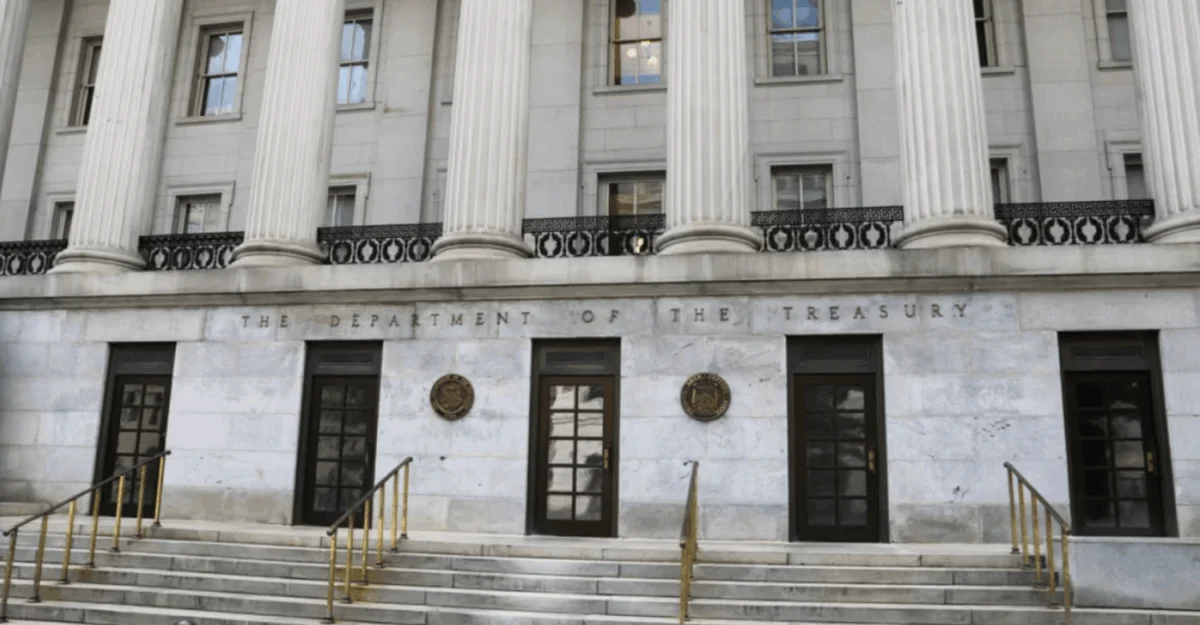
The United States Department of the Treasury’s Office of Foreign Assets Control (OFAC) has executed a significant enforcement action by designating eight Canadian money services businesses (MSBs) for their pivotal role in facilitating illicit financial transactions for the Iranian regime. This move represents a landmark shift in U.S. sanctions strategy, marking the first time federal authorities have specifically targeted Canadian-based cryptocurrency and over-the-counter (OTC) providers as integral components of Iran’s global shadow banking infrastructure. While the primary impetus for these sanctions is the disruption of the Islamic Revolutionary Guard Corps (IRGC) and its various proxies, an exhaustive analysis of blockchain data reveals that these financial conduits serve a far more diverse and dangerous clientele. Beyond state-sponsored actors, these Canadian OTCs have been identified as primary liquidity providers for some of the world’s most prolific drug trafficking organizations, including the enterprise led by former Olympic athlete Ryan Wedding.
The enforcement action underscores the increasingly blurred lines between state-sponsored illicit finance and transnational organized crime. These eight entities, primarily operating out of major Canadian hubs like Vancouver and Toronto, provided the necessary "on-ramps" and "off-ramps" for billions of dollars to bypass the regulated global financial system. By leveraging the pseudonymity of digital assets and the high-volume capacity of OTC trading desks, these businesses functioned as financial bridges between disparate criminal economies, ranging from Middle Eastern terrorist financing to North American narcotics distribution.
The Convergence of State Actors and Criminal Syndicates
The core of the Treasury’s investigation centers on a consistent pattern of financial movement across the designated OTCs. Inflows into these businesses were heavily dominated by entities linked to the IRGC and other sanctioned Iranian actors. Conversely, the outgoing transfers were often directed toward illicit criminal enterprises. This dual-purpose infrastructure allowed the Iranian regime to move crypto-assets and obscure their origins, while simultaneously providing drug cartels with a mechanism to convert massive volumes of bulk cash into stablecoins like USDT (Tether).
Our analysis of the transaction flows indicates that these Canadian OTCs, despite frequently advertising in Farsi and catering to the Iranian diaspora, were not merely community-based exchanges. Instead, they operated as sophisticated financial intermediaries. By providing deep liquidity pools, they allowed sanctioned Iranian individuals to liquidate assets in the West, while providing a "wash" service for drug proceeds that needed to be moved across international borders without triggering anti-money laundering (AML) alerts.
Deep Ties to the Iranian Regime and Terrorist Financing
The scale of the activity facilitated by these Canadian entities is staggering. Detailed blockchain forensics identified over $6 million in direct inflows originating from sanctioned jurisdictions. An additional $3.7 million was traced directly to wallets belonging to entities already on the OFAC sanctions list. Perhaps most concerning is the identification of $2.3 million in transfers originating from wallets attributed to major terrorist-financing networks, including those linked to the IRGC-Qods Force, Hamas, and the Houthi movement in Yemen.

The Iranian connections identified in this network are extensive and reach into the highest levels of the regime’s cyber and financial operations. Among the primary counterparties were several major Iranian cryptocurrency exchanges, including Nobitex, Wallex, Ramzinex, and Aban Tether Exchange. These platforms have long been suspected of acting as the primary digital gateways for the Iranian government to evade international economic pressure.
Specific individuals identified in the transaction flows include Arash Estaki Alivand, a known financier for the regime, and Keyvan Fayyaz Ghareh Blagh. The latter is a particularly significant figure, identified as a cyber threat actor working on behalf of the IRGC. Fayyaz, an employee of the Iran-based Mabna Institute, has been implicated in high-profile hacking and extortion operations targeting U.S. entertainment companies, defense contractors, and telecommunications providers. The fact that his digital assets were being processed through Canadian-regulated MSBs highlights a critical vulnerability in the North American financial perimeter.
Furthermore, the investigation uncovered that these OTCs received hundreds of thousands of dollars from laundering networks associated with Iranian state oil proceeds. In one of the most direct links to active conflict zones, blockchain analysis identified transactions involving an Al-Qassam Brigades money mover—a financial facilitator for the military wing of Hamas. This confirms that Canadian financial infrastructure was being utilized to support active military and terrorist operations abroad.
The Ryan Wedding Connection: From the Olympics to "El Jefe"
While the state-sponsored aspect of the investigation is geopolitically significant, the link to the "Wedding Criminal Enterprise" exposes the sheer scale of the domestic criminal threat. Ryan Wedding, a former Olympic snowboarder who represented Canada in the 2002 Winter Games, was arrested in January on a litany of charges, including drug trafficking, witness intimidation, and murder-for-hire. Known by the alias "El Jefe," Wedding is alleged to have transitioned from professional sports to leading one of the most sophisticated transnational cocaine trafficking organizations in recent history.
U.S. and Canadian authorities allege that Wedding’s organization was responsible for moving approximately 60 metric tons (60,000 kilograms) of Colombian cocaine through Mexico and Southern California into the Canadian market. This massive operation was reportedly conducted under the protection and collaboration of Mexico’s Sinaloa Cartel. Investigators estimate that the Wedding Cartel generated roughly $1 billion in annual revenue, utilizing violence and intimidation to maintain its dominance.
The connection between the Wedding Cartel and the sanctioned Canadian OTCs is direct and quantifiable. Blockchain analysis identified millions of dollars in outflows from the OTCs to wallets controlled by the Wedding organization. Specifically, the sanctioned OTC known as "Farah" was found to have sent $2 million directly to the cartel’s wallets, with millions more flowing through intermediary wallets designed to mask the connection.

The laundering process was systematic: couriers for the cartel would deliver suitcases of bulk cash—proceeds from street-level drug sales—to these exchange businesses in Vancouver and Toronto. The OTCs would then convert this physical cash into digital assets, primarily stablecoins, which were then transferred to intermediary wallets or directly to suppliers in South America and Mexico. This "cash-to-digital-asset pipeline" allowed the cartel to move value across borders instantly, bypassing the traditional banking system’s reporting requirements and physical border checks.
A Chronology of Sanctions and Enforcement
The January 2027 designations are the culmination of a multi-year effort by OFAC and international partners to map the Iranian crypto-financial ecosystem. The timeline of recent actions illustrates an accelerating crackdown:
- June 2026: OFAC designated several major Iranian domestic exchanges, including Nobitex, Wallex, and Ramzinex, for their role in moving funds for the regime.
- August 2026: Enforcement expanded to include Aban Tether Exchange and SHPS Shelbit, focusing on the platforms that provided the highest liquidity for state actors.
- January 2027: The focus shifted to the "last mile" of the financial chain—the international intermediaries. By targeting Canadian MSBs, the U.S. Treasury is effectively cutting off the nodes that allow Iranian and criminal funds to enter the North American and global economy.
The Canadian government, through the Financial Transactions and Reports Analysis Centre of Canada (FINTRAC), has been under increasing pressure to tighten oversight of the MSB sector. While these businesses are required to register and maintain AML programs, the Treasury’s findings suggest a widespread failure in compliance or, in some cases, active complicity in laundering operations.
Official Responses and Strategic Implications
In a statement following the designations, U.S. Treasury officials emphasized that the action is intended to protect the integrity of the international financial system. "The Iranian regime continues to rely on a complex network of multi-layered financial intermediaries to fund its destabilizing activities," a senior official noted. "By designating these Canadian businesses, we are sending a clear message: those who facilitate the movement of illicit funds, whether for state-sponsored terrorism or global drug cartels, will be held accountable."
The implications of this enforcement action are far-reaching. First, it demonstrates the "overlap" theory of illicit finance: that the same infrastructure used by rogue states is often the same infrastructure used by organized crime. This realization is forcing law enforcement agencies to adopt a more holistic view of financial networks.
Second, the action highlights the unique risks posed by the OTC sector. Unlike centralized exchanges that may have more robust automated monitoring, OTC desks often operate with a higher degree of discretion and personal relationships, making them ideal for high-value laundering. The use of stablecoins like USDT remains a focal point for regulators, as these assets provide the price stability of the dollar with the censorship-resistant qualities of blockchain technology.

Broader Impact on the Crypto Industry and Global Security
The designation of these eight Canadian businesses is likely to have a chilling effect on the unregulated OTC market. Legitimate MSBs are now on notice that "knowing your customer" (KYC) extends beyond a simple ID check; it requires understanding the source of funds and the ultimate destination of transfers. For the broader cryptocurrency industry, this action reinforces the trend toward increased regulation and the integration of blockchain analytics into standard compliance workflows.
As the Iranian regime continues to face economic isolation, its reliance on digital assets and offshore intermediaries is expected to grow. However, as this case proves, the transparency of the blockchain remains a double-edged sword for illicit actors. While it allows for fast and borderless transfers, it also leaves a permanent, traceable record that authorities can use to dismantle entire networks.
Ultimately, the disruption of these Canadian OTCs is a significant blow to both the IRGC’s financial reach and the Wedding Cartel’s operational capacity. It serves as a stark reminder that in the modern era, the fight against terrorism and the war on drugs are increasingly fought on the same digital battlefield. By following the money, investigators have unmasked a hidden alliance between state-sponsored hackers, Middle Eastern militants, and North American drug kingpins—all unified by a common reliance on a handful of illicit financial gateways in Canada.