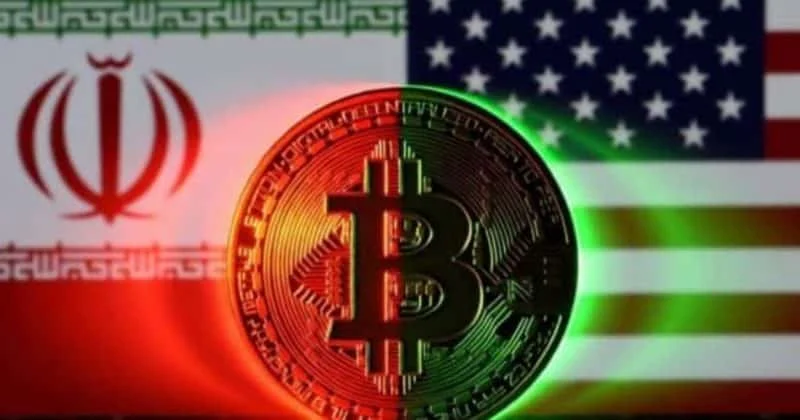
The United States Department of the Treasury’s Office of Foreign Assets Control (OFAC) has announced a comprehensive new round of sanctions targeting the Islamic Republic of Iran’s maritime revenue network, specifically identifying a sophisticated insurance scheme designed to circumvent international financial restrictions through the use of digital assets. This latest regulatory action focuses on two primary entities, the Persian Gulf Marine Insurance Company and the HormuzSafe Marine Services Authority, both of which are accused of operating an insurance framework backed by the Islamic Revolutionary Guard Corps (IRGC). These firms reportedly provided mandatory insurance policies for commercial vessels transiting the Strait of Hormuz, accepting payments in Bitcoin and other cryptocurrencies to bypass the traditional banking system and evade the reach of U.S. jurisdiction.
By targeting these entities, the U.S. government aims to disrupt a critical financial artery for the IRGC, an organization designated by the U.S. as a Foreign Terrorist Organization. The Treasury’s move highlights the evolving nature of Iranian sanctions evasion tactics, which have increasingly integrated blockchain technology and decentralized finance to maintain the flow of capital and the export of petroleum products. The sanctions represent a significant escalation in the U.S. campaign to apply "maximum economic pressure" on Tehran, focusing on the strategic and highly sensitive maritime corridor of the Strait of Hormuz.
The Mechanics of the Bitcoin-Based Insurance Scheme
According to the official Treasury report, the insurance scheme orchestrated by HormuzSafe and the Persian Gulf Marine Insurance Company was mandatory for certain vessels navigating through the Strait of Hormuz. In the world of international shipping, vessels are typically required to carry Protection and Indemnity (P&I) insurance to cover third-party liabilities, including environmental damage and vessel seizures. By establishing its own domestic insurance alternative, Iran sought to replace traditional international insurers—who are often bound by U.S. and EU sanctions—with a state-controlled entity.
The integration of Bitcoin into this scheme serves a dual purpose. First, it allows for the settlement of high-value insurance premiums without the need for the SWIFT international payment system, which is closely monitored by Western regulators. Second, it provides a layer of pseudonymity for both the shipping operators and the Iranian state entities involved. Treasury officials noted that the scheme was specifically designed to generate substantial revenue for the IRGC while simultaneously providing Tehran with increased leverage over commercial shipping in one of the world’s most vital maritime chokepoints.
Reports from Fars News earlier this year indicated that the introduction of HormuzSafe was a calculated move by the Iranian government to strengthen its oversight of the Strait. By requiring vessels to obtain liability certificates through this platform and settle fees in digital assets, Tehran believes it can generate upwards of $10 billion in annual revenue. This revenue is allegedly funneled directly into IRGC-controlled projects and regional operations, further complicating diplomatic efforts to stabilize the Middle East.
Expansion of the Sanctions List: Tankers and the Shadow Fleet
In addition to the insurance entities, the U.S. Treasury has expanded its sanctions to include eight shipping companies and eight specific oil tankers. These vessels are alleged to be part of Iran’s extensive "shadow fleet"—a collection of aging, often under-insured ships that operate under flags of convenience and use deceptive practices to transport Iranian crude oil to international markets. The Treasury revealed that these tankers have successfully delivered millions of barrels of petroleum products to destinations including the United Kingdom, China, and the United Arab Emirates (UAE).
The newly sanctioned tankers are accused of engaging in ship-to-ship (STS) transfers in deep-sea locations to hide the origin of their cargo. This "dark" activity often involves turning off Automatic Identification Systems (AIS) transponders, a practice that poses significant risks to maritime safety and the environment. The U.S. government stated that it has now sanctioned more than 100 vessels associated with the Iranian shadow fleet in 2026, reflecting a determined effort to close the loopholes that allow Iran to continue its energy exports despite a global embargo.
The eight shipping companies targeted in this round of sanctions are located across various jurisdictions, highlighting the global nature of Iran’s procurement and distribution network. By blocking these entities, the U.S. effectively freezes any assets they may hold within American jurisdiction and prohibits any U.S. citizen or company from conducting business with them.
Chronology of Iranian Sanctions Evasion and U.S. Response
The use of digital assets to bypass sanctions is not a new development for Tehran, but the scale of the HormuzSafe initiative marks a significant advancement. Below is a timeline of the events leading up to the current sanctions:
- Early 2020s: Iran begins exploring the use of state-sanctioned cryptocurrency mining to generate "clean" digital assets that can be used for imports, bypassing the need for U.S. dollars.
- January 2024: Reports emerge of the IRGC establishing new front companies in the maritime sector to manage the increasing volume of "dark" oil sales.
- May 2026: Fars News reports the official introduction of HormuzSafe, a maritime insurance platform designed to settle policies in Bitcoin for ships transiting the Strait of Hormuz.
- Mid-2026: The U.S. Treasury observes a spike in cryptocurrency transactions linked to Iranian maritime agencies, prompting a multi-agency investigation.
- Late 2026: OFAC issues the current round of sanctions under Executive Order 13902, targeting the core of the IRGC-backed insurance and shipping network.
This timeline illustrates a persistent cat-and-mouse game between Iranian financial engineers and U.S. regulatory bodies. As the U.S. tightens traditional financial controls, Iran pivot towards more technological and decentralized methods of value transfer.
Official Responses and Geopolitical Reactions
The U.S. Treasury Department emphasized that these measures are intended to hold Iran accountable for its "malign activities" and its use of the maritime sector to fund regional instability. In a statement accompanying the announcement, Treasury officials warned that the risks of doing business with the designated entities extend beyond the primary sanctions. Non-U.S. persons, including international banks and shipping agencies, may face secondary penalties or lose access to the U.S. financial system if they are found to be facilitating transactions for sanctioned parties.
While the Iranian government has not issued a formal diplomatic response to the latest OFAC announcement, state-aligned media outlets have historically framed such sanctions as "economic terrorism." Tehran has consistently maintained that its development of a domestic insurance and digital payment infrastructure is a sovereign right intended to protect its economy from Western interference.
Industry experts and maritime security analysts have expressed concern over the implications of these sanctions on global trade. The Strait of Hormuz is a narrow passage through which approximately 20% to 30% of the world’s total oil consumption passes daily. Any increase in tension or the imposition of mandatory, IRGC-backed insurance requirements could lead to higher shipping costs, increased insurance premiums for legitimate carriers, and potential delays in the global energy supply chain.
Fact-Based Analysis of Market and Security Implications
The imposition of these sanctions carries several deep-seated implications for the global economy and the future of maritime security.
1. The "Shadow Fleet" Environmental Risk:
The continued reliance on a "shadow fleet" to transport oil presents a looming environmental catastrophe. These vessels often lack the rigorous maintenance schedules and high-quality insurance coverage required by international maritime law. If a sanctioned tanker were to experience a major spill in the Strait of Hormuz or near the coast of a third-party nation, the lack of traditional P&I coverage would make it nearly impossible to fund clean-up efforts, leaving the financial and environmental burden on the coastal states.
2. The Normalization of Crypto in Sanctions Evasion:
Iran’s use of Bitcoin for maritime insurance sets a precedent for other sanctioned nations. By demonstrating a functional model for crypto-based trade services, Iran may encourage countries like Russia or North Korea to further integrate digital assets into their own sanctions-evasion strategies. This poses a significant challenge to the effectiveness of the U.S. dollar as a tool of foreign policy.
3. Economic Impact on Oil Markets:
While the U.S. aims to reduce Iran’s oil revenue to zero, the reality of global demand—particularly from China—ensures that a market for Iranian crude remains. The sanctions may force Iranian oil to be sold at even steeper discounts, but they are unlikely to stop the flow entirely. Instead, they increase the complexity and cost of the trade, which can lead to volatility in global oil prices.
4. Strategic Control of the Strait of Hormuz:
By requiring insurance through HormuzSafe, Iran is essentially attempting to exercise regulatory control over an international waterway. This move challenges the principle of "innocent passage" and could lead to increased naval presence from the U.S. and its allies to ensure the free flow of commerce. The U.S. Treasury’s move to block the revenue from this scheme is a direct attempt to undermine Tehran’s ability to enforce these new maritime "rules."
Conclusion
The U.S. Treasury’s latest action against the IRGC-backed insurance network and the Iranian shadow fleet underscores the high-stakes nature of modern economic warfare. As Iran leverages Bitcoin and other digital assets to maintain its strategic influence and fund its military operations, the United States is responding with increasingly granular and technology-focused sanctions. The success of these measures will depend on the ability of the U.S. to gain international cooperation, particularly from nations that continue to serve as destinations for Iranian oil. In the meantime, the maritime industry remains on high alert as the Strait of Hormuz continues to be a central theater for geopolitical and financial conflict.