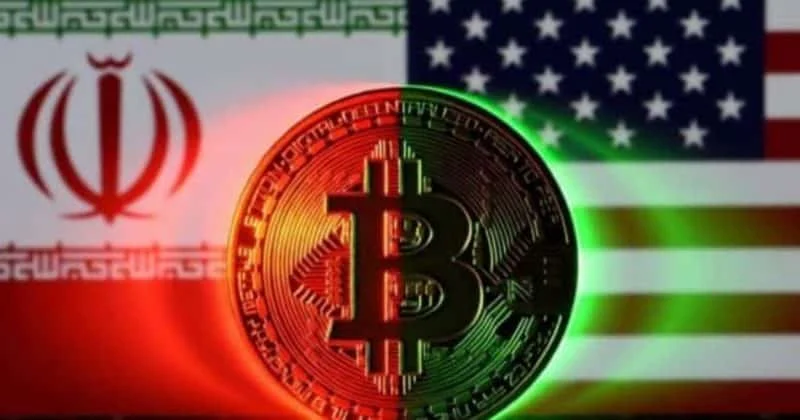
The United States Department of the Treasury’s Office of Foreign Assets Control (OFAC) has executed a comprehensive set of sanctions targeting Iran’s maritime revenue infrastructure, focusing specifically on an innovative but illicit insurance scheme backed by the Islamic Revolutionary Guard Corps (IRGC) that utilizes digital assets to bypass international financial regulations. This latest escalation in the United States’ economic pressure campaign involves the designation of two major insurance entities accused of facilitating unauthorized maritime activities in the Strait of Hormuz, alongside a broader crackdown on Iran’s "shadow fleet." The sanctioned entities, Persian Gulf Marine Insurance Company and HormuzSafe Marine Services Authority, are alleged to have mandated insurance policies for vessels transiting one of the world’s most critical maritime chokepoints, accepting payments in Bitcoin and other cryptocurrencies to obscure the financial trail and evade US-led sanctions.
The strategic move by the Treasury Department aims to dismantle a sophisticated financial network designed to provide the IRGC with both a steady stream of revenue and increased leverage over global commercial shipping. By requiring vessels to obtain insurance through these sanctioned firms, Tehran has sought to institutionalize its oversight of the Strait of Hormuz, through which approximately one-fifth of the world’s total oil consumption passes daily. The sanctions were issued under Executive Order 13902, which grants the US government the authority to target sectors of the Iranian economy—including construction, mining, manufacturing, and textiles—that support the country’s destabilizing activities and its pursuit of nuclear capabilities.
The Mechanics of the IRGC-Backed Insurance Scheme
The centerpiece of this OFAC action is the exposure of the "HormuzSafe" initiative. According to Treasury officials, the HormuzSafe Marine Services Authority and the Persian Gulf Marine Insurance Company operated a maritime insurance platform that issued mandatory liability certificates and coverage for various risks, including the potential seizure of vessels by Iranian authorities. In a departure from traditional maritime finance, these firms reportedly required ship operators to settle their premiums using Bitcoin and other digital assets. This move was a calculated effort to bypass the SWIFT banking system and the US dollar-dominated global financial infrastructure, which has become increasingly inaccessible to Iranian entities.
By utilizing decentralized digital currencies, the IRGC-backed firms were able to facilitate transactions that are inherently more difficult for Western regulators to track in real-time. The Treasury’s investigation revealed that this scheme served a dual purpose: first, it generated significant non-traditional revenue for the IRGC’s Quds Force; and second, it forced international shipping companies into a "pay-to-play" scenario where compliance with Iranian maritime demands became a prerequisite for safe passage through the Strait of Hormuz. Reports from Fars News as early as May 2024 indicated that Tehran viewed the HormuzSafe initiative as a $10 billion revenue opportunity, highlighting the scale of the operation and its importance to the Iranian state’s economic survival strategy.
Expanding the Crackdown on the Iranian Shadow Fleet
In addition to the insurance-related designations, OFAC has significantly expanded its list of sanctioned vessels and shipping companies involved in the transport of Iranian crude oil and petroleum products. The Treasury sanctioned eight shipping companies and blocked eight oil tankers that were identified as key components of Iran’s "shadow fleet"—a clandestine network of aging vessels that operate under various flags of convenience and use deceptive practices to deliver oil to international markets.
These tankers are alleged to have transported millions of barrels of Iranian oil to destinations in China and the United Arab Emirates (UAE), which remain the primary hubs for Iranian petroleum exports. The Treasury Department noted that with this latest round of designations, it has now sanctioned more than 100 vessels associated with the Iranian shadow fleet in the year 2026 alone. This high volume of sanctions reflects the persistent and evolving nature of Iran’s efforts to maintain its oil revenue despite rigorous international monitoring. The shadow fleet often employs tactics such as disabling Automatic Identification Systems (AIS), engaging in ship-to-ship (STS) transfers in deep water, and falsifying cargo documents to hide the Iranian origin of the oil.
Chronology of Sanctions and the Evolution of the "Maximum Pressure" Campaign
The current sanctions must be viewed within the broader timeline of US-Iran relations and the ongoing "Maximum Pressure" campaign. Since the US withdrawal from the Joint Comprehensive Plan of Action (JCPOA) in 2018, Washington has progressively tightened the economic noose around Tehran.
- May 2018: The United States exits the JCPOA and begins reinstating primary and secondary sanctions on Iran’s energy and financial sectors.
- 2019-2021: The US designates the IRGC as a Foreign Terrorist Organization (FTO) and ramps up pressure on the "Ghost Fleet" of tankers.
- 2022-2024: Iran increasingly turns to digital assets and peer-to-peer trade networks to settle international transactions, leading to the formalization of the HormuzSafe project.
- May 2024: Iranian state-linked media outlets report on the success of crypto-based maritime insurance, signaling a shift in Tehran’s strategy to monetize its control over the Strait of Hormuz.
- 2025-2026: The US Treasury shifts its focus toward the intersection of maritime shipping and decentralized finance (DeFi), culminating in the current round of designations against HormuzSafe and its affiliates.
This timeline illustrates a cat-and-mouse game where Iranian ingenuity in financial evasion is met with increasingly granular and technologically focused sanctions from the US Treasury.
Supporting Data: The Strategic Importance of the Strait of Hormuz
The economic impact of Iran’s control over the Strait of Hormuz cannot be overstated. Supporting data from the US Energy Information Administration (EIA) highlights why this region is the focal point of the current sanctions.
- Volume: Over 20 million barrels of oil per day (bpd) pass through the Strait, representing nearly 30% of all seaborne-traded oil.
- Liquefied Natural Gas (LNG): More than one-quarter of global LNG trade also transits the waterway, primarily from Qatar.
- Revenue Generation: Iran’s "toll" through mandatory insurance and transit fees, if fully implemented across all commercial traffic, could generate between $8 billion and $12 billion annually—a sum that would significantly offset the losses incurred from traditional oil sanctions.
- Chokepoint Dynamics: The navigable channels within the Strait are only two miles wide in each direction, making the area highly susceptible to disruption or mandatory boarding by the IRGC Navy.
By targeting the insurance mechanisms used to legitimize this "toll," the US Treasury is attempting to break the financial logic that allows Iran to profit from its geographic position without adhering to international norms.
Official Responses and International Warnings
The US Treasury Department accompanied the sanctions announcement with a stern warning to the global shipping and financial communities. Treasury officials emphasized that the latest measures do not only freeze assets subject to US jurisdiction but also carry the weight of secondary sanctions. This means that non-US persons—including ship owners, port operators, and financial institutions in Europe, Asia, and the Middle East—could themselves be designated or penalized if they are found to be facilitating transactions with the sanctioned insurance firms or tankers.
"The Iranian regime continues to leverage its maritime industry and the use of digital assets to fund the IRGC’s destabilizing activities," a senior Treasury spokesperson stated during a press briefing. "By sanctioning these entities, we are sending a clear message: the United States will not tolerate the exploitation of the global maritime commons for the purpose of evading sanctions and financing terrorism. Ship operators who engage with HormuzSafe or Persian Gulf Marine Insurance are doing so at their own peril."
While Tehran has not officially responded to this specific round of sanctions, previous statements from the Iranian Ministry of Foreign Affairs have characterized US economic measures as "economic terrorism." Iranian officials have frequently touted their ability to neutralize sanctions through the "resistance economy," a doctrine that prioritizes self-sufficiency and the development of alternative financial networks with "friendly" nations like Russia and China.
Fact-Based Analysis of Implications
The implications of these sanctions are multifaceted, affecting the maritime industry, the cryptocurrency market, and global energy security.
1. Maritime Insurance and Shipping Costs: The designation of HormuzSafe and Persian Gulf Marine Insurance creates a significant legal vacuum for ship operators who were previously forced to use these services. International P&I (Protection and Indemnity) Clubs, which provide the vast majority of global maritime insurance, generally prohibit their members from engaging with sanctioned entities. This could lead to a situation where ships are forced to choose between defying Iranian "mandatory" insurance requirements or facing US sanctions. This uncertainty is likely to drive up insurance premiums and freight rates for any cargo transiting the Persian Gulf.
2. The Digital Asset Regulatory Landscape: This move highlights the growing role of cryptocurrency in geopolitical conflict. By specifically mentioning Bitcoin in the OFAC designation, the US government is signaling to crypto exchanges and wallet providers that they must enhance their "Know Your Customer" (KYC) and "Anti-Money Laundering" (AML) protocols regarding maritime-related transactions. This could lead to stricter monitoring of large-scale crypto movements associated with the shipping industry.
3. China-UAE Trade Relations: Since the sanctioned tankers were reportedly heading to China and the UAE, the diplomatic pressure on Beijing and Abu Dhabi will likely increase. China has remained the largest buyer of Iranian oil, often using small, independent refineries known as "teapots" to process the crude. The US Treasury’s decision to block specific tankers is a direct challenge to these supply chains and may lead to a temporary cooling of trade volumes as buyers seek to avoid secondary sanctions.
4. IRGC Financial Stability: While the $10 billion revenue figure cited by Tehran may be optimistic, even a fraction of that amount is vital for the IRGC’s regional operations. Disrupting the insurance scheme strikes at a diversified revenue stream that is less volatile than direct oil sales, potentially hindering the IRGC’s ability to fund proxy groups and domestic security apparatuses.
In conclusion, the US Treasury’s latest action represents a sophisticated evolution of the sanctions regime, moving beyond simple trade bans to target the underlying financial services and digital technologies that sustain Iran’s maritime economy. As the "shadow fleet" continues to grow and Iran explores new avenues for sanctions evasion through the blockchain, the international community faces a complex challenge in balancing global energy needs with the enforcement of geopolitical security measures. The coming months will determine whether these sanctions successfully deter ship operators from participating in the IRGC’s insurance scheme or if Tehran will find yet another way to navigate the increasingly restricted waters of international finance.