The Wyoming Stable Token Commission has officially announced its decision to migrate the underlying infrastructure for its state-issued FRNT stable token from LayerZero to Chainlink’s Cross-Chain Interoperability Protocol (CCIP). This strategic shift follows a comprehensive security review conducted by the Commission’s Chief Information Security Officer (CISO), which identified a series of repeated operational failures and systemic vulnerabilities within the LayerZero Labs ecosystem. The move marks a significant pivot for the first state-backed digital asset in the United States, as the Commission seeks to establish a more rigorous security framework for government-issued financial instruments on the blockchain.
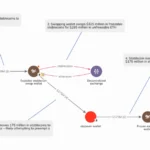
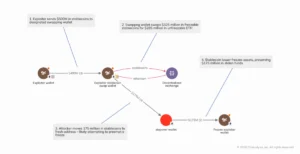
According to official statements from the Commission, the decision was precipitated by the recent $292 million exploit involving KelpDAO, a decentralized autonomous organization that utilized LayerZero’s infrastructure. Investigations into that incident revealed that attackers affiliated with the Democratic People’s Republic of Korea (DPRK) successfully compromised infrastructure operated by LayerZero Labs. The attackers reportedly used a forged message to bypass security protocols, resulting in the unauthorized release of substantial funds on the Ethereum network. This breach raised immediate red flags for Wyoming officials, who are tasked with maintaining the integrity and solvency of the state’s digital dollar.
Findings of the Security Review
The internal review conducted by the Wyoming Stable Token Commission went beyond the KelpDAO incident, uncovering what the agency described as deep-seated issues regarding access controls, private key management, and incident disclosure practices at LayerZero Labs. One of the most alarming findings was the failure of LayerZero Labs to transfer production authorization to the Commission. This lack of administrative handover meant that the state agency did not have full sovereignty over its own token’s deployment logic, a critical requirement for any government-backed financial product.
Furthermore, the Commission’s CISO reported that LayerZero Labs did not maintain proper control over a critical private key associated with a live deployment of the FRNT token. In the world of decentralized finance (DeFi), the compromise or mismanagement of a private key can lead to the total loss of assets or the unauthorized minting of tokens, making this a disqualifying factor for the Commission. The review also highlighted a lack of transparency regarding incident disclosures, suggesting that the Commission was not adequately informed of potential risks or past near-misses in a timely manner.
The Commission ultimately concluded that LayerZero’s architecture placed an undue amount of responsibility on individual developers to configure their own security parameters. This "opt-in" security model was deemed insufficient for institutional-grade assets. Specifically, the Commission noted that LayerZero deployments could be left dependent on a single verifier or a small, centralized set of verifiers, creating a "single point of failure" that contradicts the principles of decentralized security.
The Selection of Chainlink CCIP
Following the disqualification of LayerZero, the Commission evaluated several alternative cross-chain solutions. Chainlink CCIP emerged as the only protocol that met the state’s stringent institutional security requirements. The Commission cited several key features of CCIP that influenced its decision, including its decentralized network of independent node operators, which have a long-standing track record of reliability within the Chainlink Oracle Network.
A primary factor in the selection was Chainlink’s implementation of "Rate Limits" and its "Risk Management Network." Unlike many other bridges, CCIP includes a separate, independent network that monitors for suspicious activity and can automatically pause cross-chain transfers if anomalies are detected. This "defense-in-depth" approach provides an additional layer of protection that is essential for a state-issued asset like FRNT.
The Commission also emphasized the importance of direct issuer control. Under the Chainlink implementation, the Wyoming Stable Token Commission retains full authority over the token contracts and the implementation logic across all supported blockchains. This ensures that the state maintains its fiduciary responsibility to token holders without being beholden to the operational whims or security lapses of a third-party infrastructure provider.
Background and Chronology of the FRNT Token
The FRNT token (pronounced "front") represents a landmark achievement in the American digital asset landscape. Authorized by the Wyoming Stable Token Act, the asset is a US dollar-backed stablecoin intended to provide a transparent, liquid, and secure digital representation of the dollar for use in both public and private sectors. Wyoming has long been a pioneer in blockchain legislation, having created the first legal framework for Special Purpose Depository Institutions (SPDIs) and Decentralized Autonomous Organizations (DAOs).
The timeline of the FRNT project reflects Wyoming’s cautious but progressive approach to financial technology:
- March 2023: The Wyoming Stable Token Act is signed into law, establishing the Commission and authorizing the issuance of a state-backed stablecoin.
- Late 2023: The Commission begins the technical selection process, initially partnering with LayerZero to facilitate cross-chain movement across eight major blockchain networks.
- Early 2024: High-profile exploits in the broader bridge ecosystem, including the KelpDAO incident, prompt the Commission to initiate a deeper security audit of its infrastructure providers.
- Mid-2024: The Commission’s CISO presents findings of operational failures at LayerZero Labs, leading to a formal recommendation to migrate the project.
- Current Deployment: The Commission officially designates Chainlink CCIP as the exclusive cross-chain infrastructure for FRNT and begins the migration process.
The FRNT token is currently deployed across eight major blockchains, including Ethereum, Polygon, and Avalanche. The bridge used to move the asset between these networks is not merely a utility but a "critical part of the financial infrastructure," according to the Commission. As the token gains adoption, the security of these bridges becomes paramount to the stability of the state’s balance sheet.
Institutional Security and Market Impact
The decision by the Wyoming Stable Token Commission is expected to have ripple effects throughout the blockchain industry. For years, cross-chain bridges have been identified as the "weakest link" in the crypto ecosystem, with over $2 billion lost to bridge hacks in the last three years alone. By publicly detailing the reasons for its departure from LayerZero, the Commission is setting a new standard for what it calls "government-backed digital asset security."
Chainlink’s CCIP has been increasingly positioned as the bridge of choice for traditional financial institutions. The protocol is already being utilized or tested by major entities such as Swift, ANZ Bank, and the DTCC (Depository Trust & Clearing Corporation). Wyoming’s adoption further solidifies Chainlink’s position as the primary infrastructure for "Real World Assets" (RWA) and institutional tokenization.
The Commission’s focus on "decentralized oracle infrastructure" is a direct nod to Chainlink’s performance during periods of extreme market volatility and cloud service outages. While other protocols have experienced downtime or "liveness" issues during network congestion, Chainlink’s decentralized node operators have remained operational, ensuring that price feeds and cross-chain messages continue to flow.
Broader Implications for State-Issued Assets
The migration of FRNT highlights a growing divide in the blockchain world between "developer-centric" protocols and "compliance-centric" protocols. While LayerZero’s flexible, permissionless model is popular among DeFi developers who prioritize speed and customizability, the Wyoming Commission’s review suggests that such models may be incompatible with the needs of sovereign or semi-sovereign issuers.
The Commission’s insistence on "Production Authorization" and "Private Key Management" standards mirrors the requirements found in traditional banking and defense sectors. This move signals that as states and nations begin to experiment with Central Bank Digital Currencies (CBDCs) or state-issued stablecoins, the "move fast and break things" ethos of early crypto will be replaced by a "zero-trust" security architecture.
Industry analysts suggest that other states considering similar stablecoin initiatives—such as Texas or Florida—will likely look to Wyoming’s experience as a blueprint. The detailed security criteria shared by the Wyoming CISO provide a checklist for other government agencies to evaluate potential technology partners.
Official Responses and Future Outlook
While LayerZero Labs has not issued a formal rebuttal to the specific claims made by the Wyoming Commission regarding the FRNT deployment, the company has previously defended its security model, stating that it provides developers with the tools to build secure applications while maintaining decentralization. However, the loss of a high-profile state partner like Wyoming is a significant blow to its reputation in the institutional sector.
The Wyoming Stable Token Commission remains committed to the success of FRNT and views the transition to Chainlink as a necessary step to ensure long-term viability. "Our priority is the protection of the state’s assets and the trust of our users," a spokesperson for the Commission indicated. "By aligning with infrastructure that meets institutional standards, we are ensuring that Wyoming remains at the forefront of the digital economy without compromising on safety."
As the migration proceeds, the Commission will continue to monitor the performance of CCIP and work with Chainlink to implement further security enhancements. The full transition of FRNT away from LayerZero is expected to be completed in the coming months, marking a new chapter for the first state-issued stablecoin in the United States. This move serves as a stark reminder to the blockchain industry that in the realm of state-backed finance, security is not just a feature—it is the foundation.