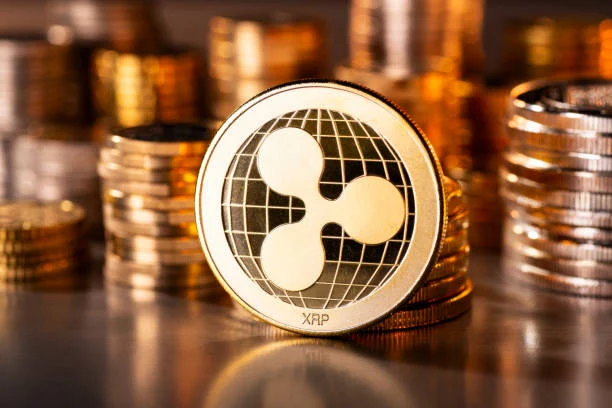
The XRP Ledger (XRPL) has recently come under intense scrutiny by market analysts and on-chain researchers following the release of fee data indicating a significant decline in daily network revenue. According to metrics tracked by DefiLlama and confirmed by various XRPL-native explorers, daily network fees on the decentralized public blockchain have dropped below the $400 threshold. This development has sparked a nuanced debate within the digital asset community regarding the balance between network efficiency and the tangible demand for block space on one of the industry’s oldest and most prominent distributed ledgers.
While low transaction costs are a fundamental design principle of the XRPL, the current levels of fee generation represent a stark contrast to other major Layer 1 protocols. Data suggests a weekly fee burn of approximately $3,100, a figure that highlights the ledger’s unique economic model but also raises questions about its current level of high-value transactional utility relative to its multi-billion-dollar market capitalization.
The Technical Architecture of XRPL Fees
To understand the significance of the $400 daily fee figure, it is necessary to examine how the XRP Ledger processes costs. Unlike Ethereum or Bitcoin, where fees are paid to miners or validators as a reward for securing the network, the XRPL utilizes a "burn" mechanism. Every transaction on the ledger requires a small amount of XRP to be destroyed. This serves two primary purposes: preventing spam attacks by making it costly to flood the network with junk data and creating a theoretical deflationary pressure on the total supply of XRP.
The standard minimum fee for a transaction on the XRPL is 0.00001 XRP. At current market prices, this represents a cost that is effectively negligible for the average user. While this "cheap by design" philosophy is a major selling point for Ripple—the enterprise software company that is the primary contributor to the XRPL ecosystem—it creates a unique data footprint. When daily fees drop below $400, it implies that while the network remains functional and efficient, the sheer volume of paid transactions is not reaching the levels seen on more fee-intensive networks like Ethereum, where daily gas fees can reach millions of dollars.
Chronology of XRPL Development and Fee Trends
The journey of the XRP Ledger from a niche payment protocol to a diversified smart contract platform provides essential context for the current fee data.
- 2012–2015: The Foundation: The XRPL was launched with a focus on cross-border payments and currency exchange. During this era, fee generation was secondary to the goal of proving that a consensus-based ledger could settle transactions in seconds for fractions of a penny.
- 2017–2021: Enterprise Expansion: Ripple focused heavily on "On-Demand Liquidity" (ODL), now known as Ripple Payments. This period saw a rise in institutional interest, though much of the volume was concentrated in specific payment corridors rather than diverse on-chain DeFi activity.
- 2023: The AMM Amendment (XLS-30): A pivotal moment occurred with the introduction of native Automated Market Maker (AMM) capabilities. This was expected to drive higher on-chain activity and, consequently, higher fee burns as users engaged in decentralized trading.
- 2024–2025: Stablecoin and EVM Integration: More recently, the focus has shifted toward the launch of RLUSD (Ripple’s USD-pegged stablecoin) and the development of an Ethereum Virtual Machine (EVM) compatible sidechain. These moves are intended to attract developers from the broader DeFi ecosystem.
The current dip in fees arrives at a time when the network is transitioning between these phases. The transition from a pure payment rail to a comprehensive financial services platform has yet to manifest in a sustained surge of on-chain fee generation.
Comparative Data and Network Metrics
The $400 daily fee figure is particularly striking when placed alongside the metrics of competing blockchains. On any given day, the Ethereum network may generate $5 million to $10 million in fees, driven by complex smart contract interactions, NFT mints, and high-frequency trading. Even Solana, known for its low-cost transactions, often generates hundreds of thousands of dollars in daily fees due to its massive transaction throughput.
According to DefiLlama’s XRPL dashboard, the weekly burn of $3,100 signifies that the network is operating at a very high level of efficiency but perhaps a lower level of "congested demand." In blockchain economics, high fees are often a sign of a "thriving" network where users are willing to outbid one another for inclusion in the next block. The XRPL’s lack of a fee market in the traditional sense means that unless the network is under extreme load, fees remain at their base level.
However, critics point out that if a network with a market capitalization exceeding $100 billion (depending on market fluctuations) only burns $3,100 worth of its native token per week, the "utility-driven" supply reduction is nearly non-existent. For investors who look at "burn rates" as a metric for long-term value, this data point requires a shift in perspective toward other growth indicators, such as Total Value Locked (TVL) in AMM pools or the number of active wallets.
Strategic Shift: RLUSD and AI Agent Payments
The low fee environment is not necessarily a signal of stagnation; rather, it may be the calm before a strategic expansion. Ripple has been vocal about its intent to capture the institutional stablecoin market with RLUSD. The introduction of a compliant, enterprise-grade stablecoin on the XRPL could significantly increase transaction counts. If RLUSD becomes a primary vehicle for settlement, the sheer volume of transactions could eventually move the needle on fee burns, even if individual costs remain low.
Furthermore, the emergence of AI agent payments presents a new frontier for the XRPL. Because AI agents require the ability to make micro-payments (often fractions of a cent) for API calls or data processing, a low-fee environment is an absolute necessity. High-fee chains like Ethereum are functionally locked out of the micro-payment market. The XRPL’s sub-$400 daily fee data confirms that it remains one of the few viable environments for this burgeoning sector of the digital economy.
Official Stance and Community Reactions
While Ripple Labs and the XRPL Foundation have not issued a specific statement regarding the recent $400 fee data, their historical stance has always prioritized throughput and cost-effectiveness over fee revenue. David Schwartz, Ripple’s CTO and one of the original architects of the XRPL, has frequently emphasized that the ledger’s goal is to be the "Internet of Value," where moving money is as easy and cheap as moving information.
Within the XRP community, reactions are divided. Proponents argue that the low fees are a testament to the network’s scalability and its readiness for mass adoption. They suggest that as traditional finance (TradFi) begins to tokenize real-world assets (RWAs), they will gravitate toward a stable, low-cost environment rather than volatile fee markets.
Conversely, some market analysts express concern that the low fee burn reflects a lack of "organic" DeFi activity. They point to the relatively low TVL on the XRPL compared to newer Layer 1 and Layer 2 solutions as evidence that the ledger is struggling to attract the "degen" liquidity that typically drives fee spikes on other chains.
Broader Impact and Market Implications
The implications of the current fee data extend to the broader crypto operating environment. As the industry moves away from pure speculation and toward "real-world utility," the metrics for success are changing.
- Network Sustainability: Because the XRPL does not rely on fee revenue to pay validators (validators are typically run by stakeholders like universities, exchanges, and businesses who benefit from the network’s health), the ledger is not at risk of "running out of money" due to low fees. This provides a level of structural stability that fee-dependent networks may lack.
- Regulatory Clarity: In the United States, the legal status of XRP as "not a security" in many contexts has given the XRPL a regulatory advantage. This clarity is expected to drive institutional usage, which values predictable, low costs over speculative fee burning.
- The Inflation/Deflation Balance: With a weekly burn of only $3,100, the deflationary impact on XRP is negligible. This means that price appreciation for XRP must come from demand and adoption rather than a shrinking supply caused by transaction activity.
Conclusion and What to Watch
The report of daily XRPL fees dropping below $400 is a significant data point that serves as a Rorschach test for the crypto industry. To some, it is a sign of a network that has mastered the art of cheap, efficient settlement. To others, it is a warning sign of low demand in an increasingly competitive blockchain landscape.
Moving forward, stakeholders should monitor several key indicators to see if this trend persists or reverses. First, the successful integration and volume of the RLUSD stablecoin will be a major factor. Second, the launch of the EVM sidechain could introduce a new class of smart contract activity that carries higher fee requirements. Finally, observers should watch for updates from native explorers like Bithomp to see if transaction counts are rising even as total fee revenue stays low—a scenario that would confirm the "high volume, low cost" thesis of the XRP Ledger.
The current data does not suggest that the XRPL is broken or failing; rather, it confirms that the network is operating exactly as designed. Whether that design can compete with the high-revenue models of other top-tier blockchains remains one of the most important questions for the future of the decentralized financial ecosystem.