


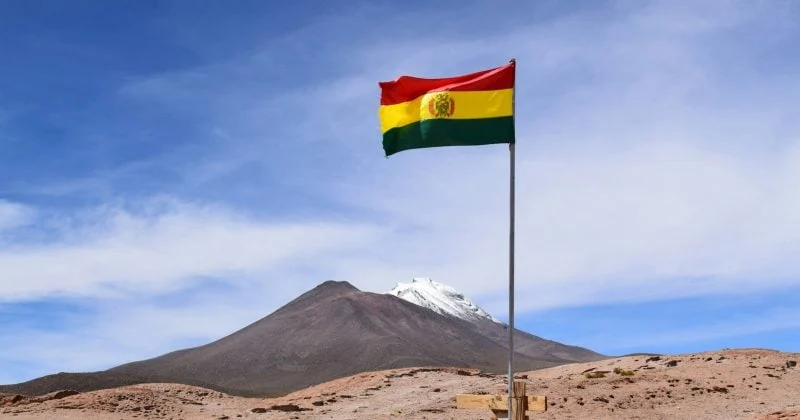
The Bolivian government has officially begun evaluating the formal integration of Tether (USDT) into its national payment system, a move that signals a transformative shift in the Andean nation’s approach to digital finance and monetary policy. Economy and Public Finance Minister José Gabriel Espinoza recently confirmed that the administration is exploring the adoption of the world’s largest stablecoin to function as a recognized medium of exchange alongside the US dollar and the national currency, the Bolivian boliviano. This initiative, first reported by EL DEBER, represents a strategic effort to modernize the country’s financial architecture and provide alternative liquidity solutions amidst ongoing challenges within the traditional banking sector.
The proposal aims to leverage the stability and massive liquidity of Tether, whose total market capitalization has recently been cited in government discussions as surpassing $184 billion within the broader digital asset ecosystem. By incorporating USDT into the national payment grid, the government intends to facilitate a more seamless environment for everyday consumer transactions, international trade, and the processing of remittances. The move is not merely a technical upgrade but a response to pressing economic realities, particularly the scarcity of physical US dollars that has plagued the Bolivian economy over the last two years.
The Economic Catalyst: Dollar Scarcity and Market Demand
The drive toward stablecoin integration is deeply rooted in Bolivia’s recent macroeconomic struggles. Since early 2023, the country has faced a significant shortage of foreign currency reserves, leading to the emergence of parallel exchange markets and difficulties for businesses attempting to fund imports. Traditionally, the boliviano was pegged to the US dollar at a fixed rate, but the depletion of Central Bank reserves made it increasingly difficult to maintain this peg in the informal sector.
In this vacuum, USDT emerged as a grassroots solution. Even before the government’s formal proposal, Bolivian importers and consumers began turning to Tether as a "digital dollar." The stablecoin provided a way to settle international invoices for essential goods, including fuel and machinery, without relying on the bottlenecked domestic banking system’s supply of physical greenbacks. By moving toward formal integration, the government is essentially seeking to codify and regulate a behavior that has already become a staple of the shadow economy.
Minister Espinoza noted that the initiative represents the logical next phase of a policy trajectory that began with the liberalization of digital assets earlier in 2024. The integration into the national payment system would mean that USDT is no longer just a speculative asset or a niche tool for tech-savvy traders, but a foundational component of the country’s financial plumbing.
Chronology of Bolivia’s Crypto Evolution
The journey toward the adoption of USDT has been a radical reversal of previous state policy. For nearly a decade, Bolivia maintained one of the strictest anti-crypto stances in Latin America.
- The 2014 Ban: The Central Bank of Bolivia (BCB) issued a resolution in 2014 explicitly prohibiting the use of any currency not issued or controlled by the state. This effectively banned Bitcoin and all other cryptocurrencies, with the government citing concerns over money laundering and the protection of the national currency.
- The 2020 Reiteration: Amidst the global crypto boom, the Bolivian authorities reaffirmed the ban, warning citizens of the risks associated with "unregulated" digital assets.
- The June 2024 Pivot: In a landmark decision, the BCB lifted the prohibition on digital asset transactions. This move was prompted by the need to modernize the payment system and provide businesses with tools to navigate the dollar liquidity crisis. The resolution allowed banks to facilitate crypto-related transactions, though it stopped short of making crypto legal tender.
- The Late 2024 Surge: Following the lifting of the ban, the use of USDT skyrocketed. Data from regional exchanges indicated that Bolivia became one of the fastest-growing markets for stablecoins in South America, driven primarily by commercial necessity rather than speculation.
- The 2025 Integration Proposal: The current proposal by the Ministry of Economy and Public Finance seeks to move beyond mere "permission" to "active integration," bringing stablecoins into the formal banking sector and the national settlement system.
Strategic Banking Integration and Digital Savings
A key pillar of the strategy led by the administration, under the broader vision of figures like President Rodrigo Paz Pereira, is the incorporation of digital assets into the formal banking sector. This would allow traditional financial institutions to offer a suite of crypto-based services that were previously confined to offshore exchanges or P2P (peer-to-peer) platforms.
Under the proposed framework, Bolivian banks would be authorized to offer USDT-denominated savings accounts. This is seen as a critical measure to protect the purchasing power of citizens against the inflation of the boliviano. Furthermore, the plan envisions the issuance of credit cards and the disbursement of loans backed by or denominated in stablecoins.
For the average Bolivian, this would mean the ability to receive a salary in bolivianos, convert it instantly to USDT within a regulated banking app to hedge against devaluation, and spend those funds at local merchants via standard point-of-sale terminals. For the state, it offers a way to track financial flows that are currently moving through unregulated channels, thereby increasing the tax base and improving oversight.
Regulatory Hurdles and the FATF Grey List
Despite the government’s enthusiasm, the path to integration is fraught with regulatory and international challenges. Minister Espinoza emphasized that the implementation of this system is strictly contingent upon the establishment of a comprehensive regulatory framework. This framework must align with international standards for Anti-Money Laundering (AML) and Countering the Financing of Terrorism (CFT).
A significant complication is Bolivia’s current standing with the Financial Action Task Force (FATF). The country remains on the FATF "grey list," a designation for jurisdictions that have strategic deficiencies in their regimes to counter money laundering and terrorist financing. Being on this list increases the scrutiny of international financial transactions involving Bolivian entities.
Integrating a digital asset like Tether—which has itself faced scrutiny from international regulators regarding its reserve transparency—requires a delicate balancing act. The Bolivian government must convince international observers that it can monitor digital transactions effectively. To satisfy these requirements, the proposed regulation is expected to include mandatory "Know Your Customer" (KYC) protocols for all digital asset service providers operating within the country and real-time reporting of large-scale USDT transfers.
Supporting Data and Market Impact
The scale of the stablecoin market makes it an attractive partner for a developing economy. Tether (USDT) currently dominates the stablecoin market, maintaining a 1:1 peg with the US dollar through a reserve of US Treasury bills, cash, and other assets. Its high liquidity ensures that large volumes can be traded without significant price slippage, a feature that is essential for national-level payment systems.
In Bolivia, the demand for USDT is reflected in the premium often paid on P2P platforms. At times when physical dollars were unavailable at the official rate of 6.96 Bs/USD, the "crypto-dollar" often traded at rates reflecting the true market demand, providing a more accurate barometer of the country’s economic health than official figures.
Furthermore, remittances play a vital role in the Bolivian economy, accounting for approximately $1.4 billion annually. Traditional remittance services often charge fees ranging from 5% to 10% and can take days to process. Integrating USDT into the national system could reduce these costs to less than 1% and allow for near-instant settlement, providing a direct economic boost to households that rely on funds from relatives in Spain, the United States, and Argentina.
Broader Implications and Regional Context
Bolivia’s move is part of a wider trend in Latin America where countries are turning to digital assets to solve structural economic problems. While El Salvador famously adopted Bitcoin as legal tender, Bolivia’s approach is more pragmatic and focused on "stable" assets. It mirrors the "stablecoinization" seen in Argentina, where citizens use USDT to navigate hyperinflation, but with the added element of formal government backing and banking integration.
The success of this initiative could serve as a blueprint for other nations facing foreign exchange shortages. By legitimizing USDT, Bolivia is effectively adopting a dual-currency system—one physical and national, the other digital and global.
However, analysts warn of the risks. Dependence on a private entity like Tether Limited carries "platform risk." If the stablecoin were to lose its peg or face a regulatory shutdown in the United States, the impact on the integrated Bolivian financial system could be catastrophic. Consequently, the government’s regulatory framework will likely need to include contingency plans or the potential for diversifying into other stablecoins like USDC or a future Central Bank Digital Currency (CBDC).
Conclusion and Future Outlook
The evaluation of Tether integration marks a "major policy shift," as described by Minister Espinoza. It signifies an admission that traditional monetary tools are no longer sufficient to meet the demands of a modern, globalized economy under pressure. By moving toward a digital-first financial policy, Bolivia is attempting to leapfrog traditional banking hurdles and provide its citizens with the tools necessary for economic survival and growth.
The coming months will be critical as the Ministry of Economy and Public Finance works to draft the specific regulations required to satisfy both domestic stakeholders and international watchdogs. If successful, the integration of USDT into the national payment system will not only alleviate the current dollar shortage but also position Bolivia as a pioneer in the regulated adoption of stablecoins at a sovereign level. The world will be watching closely to see if this digital experiment can provide the stability that the Andean nation’s traditional economy has struggled to maintain.














