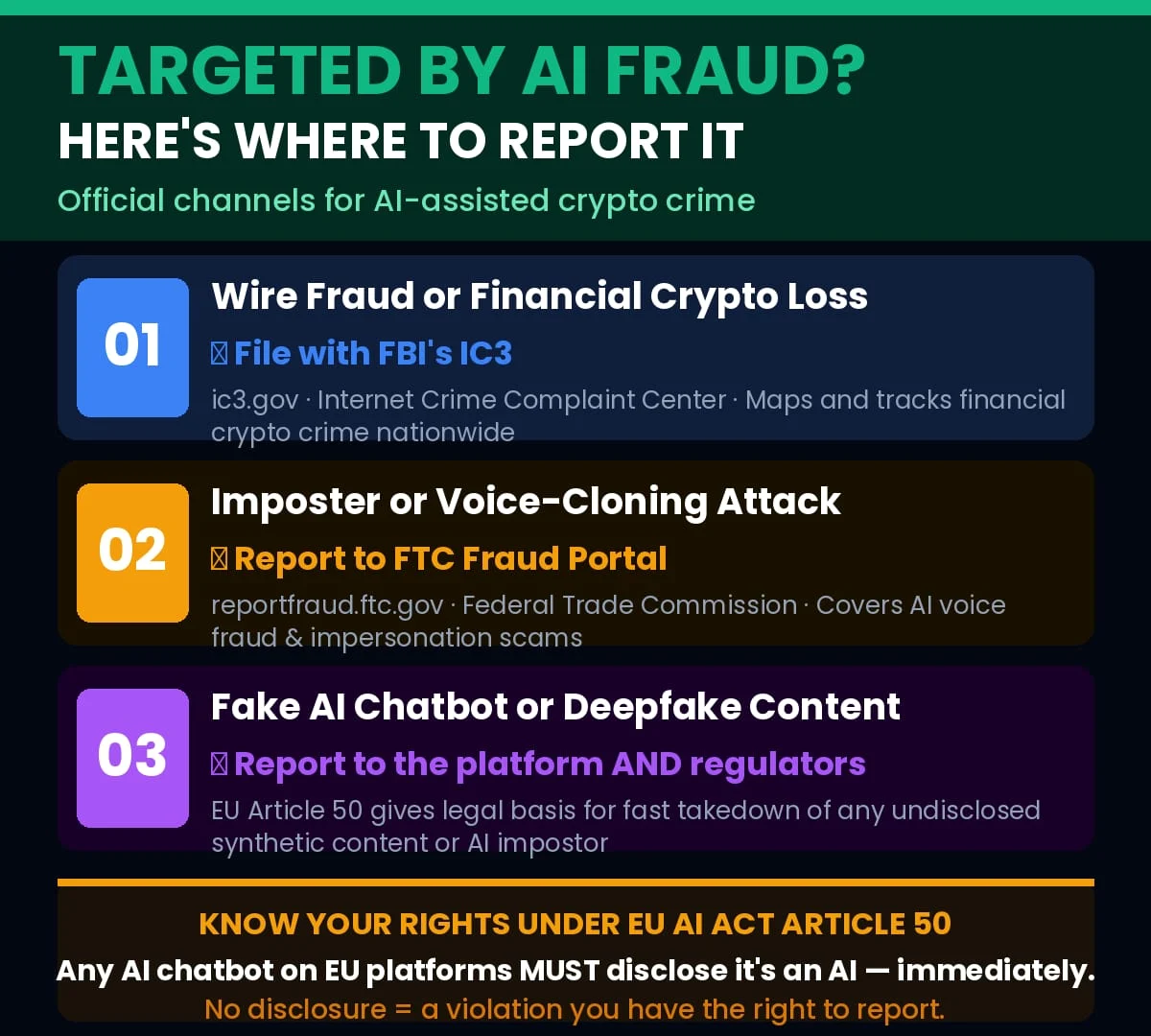
A chilling incident recently brought into stark focus the escalating threat of sophisticated AI-generated fraud: a finance employee at the renowned engineering firm Arup was deceived into authorizing a $25.6 million transfer after participating in an entire video call populated by AI-generated deepfakes of his company’s Chief Financial Officer and other senior colleagues. The employee witnessed their lifelike faces moving and heard their synthesized voices, completely unaware that none of it was real. The elaborate fraud only unraveled after the substantial sum had already been transferred, leaving a significant financial void and a profound illustration of the dangers posed by hyper-realistic artificial intelligence.
This audacious act of deception, and others like it, underscores the urgent necessity for robust regulatory frameworks governing AI technology. Far from being a theoretical policy discussion, the immediate and tangible impact of AI on daily financial security, particularly within the rapidly evolving crypto landscape, is now undeniably clear. The pervasive reliance of modern crypto fraud on such highly realistic impersonation tactics makes the European Union’s comprehensive AI Act one of the most pivotal technological policy developments for digital asset users worldwide.
The Arup Deepfake Incident: A Precedent-Setting Deception
The Arup case, while not unique in its use of deepfake technology for financial fraud, stands out due to the sheer scale of the deception and the financial loss incurred. The attackers meticulously crafted a scenario designed to exploit trust and urgency, critical components in high-value corporate transactions. By generating convincing visual and auditory replicas of senior executives, they created an environment where the unsuspecting employee believed he was communicating directly with trusted colleagues. The seamless integration of these deepfakes into a live video conference call represented a significant leap in the sophistication of social engineering tactics, moving beyond mere voice cloning to a full-sensory deception.
Details emerging from similar incidents often reveal a carefully orchestrated prelude, where fraudsters may gather publicly available audio and video snippets of their targets from social media, corporate videos, or online interviews. This data is then fed into advanced AI models capable of synthesizing highly accurate voice patterns, facial expressions, and mannerisms. The resulting deepfake can then participate in real-time interactions, making detection incredibly challenging for even vigilant individuals. The psychological pressure of a direct request from a perceived superior, coupled with the convincing nature of the deepfake, creates a potent recipe for successful fraud. The Arup incident serves as a stark reminder that traditional security protocols, often focused on verifying written communications or two-factor authentication for login, may be insufficient against such advanced, real-time visual and auditory threats. The unraveling of the fraud only after the funds were irrecoverable highlights the critical need for preventative measures and immediate detection capabilities.

The EU AI Act: A Proactive Regulatory Framework Takes Shape
In response to the escalating risks posed by rapidly advancing AI technologies, the European Union has pioneered the world’s first comprehensive legal framework for artificial intelligence. The EU AI Act, formally known as Regulation (EU) 2024/1689, officially entered into force in August 2024. This landmark legislation adopts a risk-based approach, categorizing AI systems based on their potential to cause harm and imposing corresponding obligations. While the full spectrum of the Act’s provisions will roll out in staged phases over several years, the specific rules addressing AI transparency, directly pertinent to preventing deepfake fraud, have garnered immediate attention.
Crucially, Article 50 (Transparency Obligations) of the EU AI Act became enforceable on August 2, 2026. This specific article is designed to combat the very types of deceptive practices exemplified by the Arup case. The Act’s overarching goal is to ensure that AI systems placed on the EU market or otherwise affecting EU citizens are safe, transparent, non-discriminatory, and environmentally sound. The transparency requirements are seen as a foundational pillar in building public trust and mitigating risks associated with increasingly sophisticated AI applications. The full official text of the regulation is publicly available on EUR-Lex, providing a clear roadmap for compliance for AI developers and deployers globally. The development of the EU AI Act itself was a multi-year process, beginning with initial proposals in 2021, undergoing extensive parliamentary debate, and culminating in its final approval and entry into force, a testament to the complex challenge of regulating rapidly evolving technology.
Core Transparency Mandates Under Article 50
The EU AI Act’s transparency obligations for AI systems reaching EU users are stringent and multi-faceted, aiming to leave no room for ambiguity or hidden AI interactions. These rules represent a significant shift in how AI-generated content and interactions must be presented to the public.
1. Mandatory Identity Disclosure for AI Systems:
This rule mandates that chatbots, virtual assistants, and any AI system designed to interact with humans must immediately and clearly inform users that they are communicating with an AI, not a human being. This disclosure must be perceivable during the interaction itself, meaning it cannot be buried in lengthy terms-and-conditions documents or obscure settings. The intent is to prevent scenarios where users unknowingly form a false sense of trust or personal connection with an AI, which can then be exploited for social engineering purposes. This is particularly relevant in customer service, financial advice, healthcare consultations, or any sensitive online interaction where the identity of the interlocutor is critical. For instance, a customer service chatbot for a bank must clearly state "You are now speaking with an AI assistant" at the outset of the conversation.
2. Machine-Readable Watermarking for Synthetic Content:
The Act requires that AI-generated or significantly manipulated images, audio, video, and text content must carry machine-readable digital marks. These watermarks serve as an indelible digital fingerprint, identifying the content as synthetic. The purpose is twofold: to enable automated detection of AI-generated content by other AI systems or platforms, and to provide a verifiable audit trail for content origin. This technical requirement places a significant burden on AI developers (providers) to integrate these features directly into their AI models’ output generation processes. It aims to create a systemic defense against the proliferation of unidentifiable deepfakes across digital platforms, particularly in areas susceptible to misinformation, such as news reporting or political campaigns. Challenges remain in ensuring these watermarks are robust against removal or alteration by malicious actors, prompting ongoing research into advanced digital forensics.
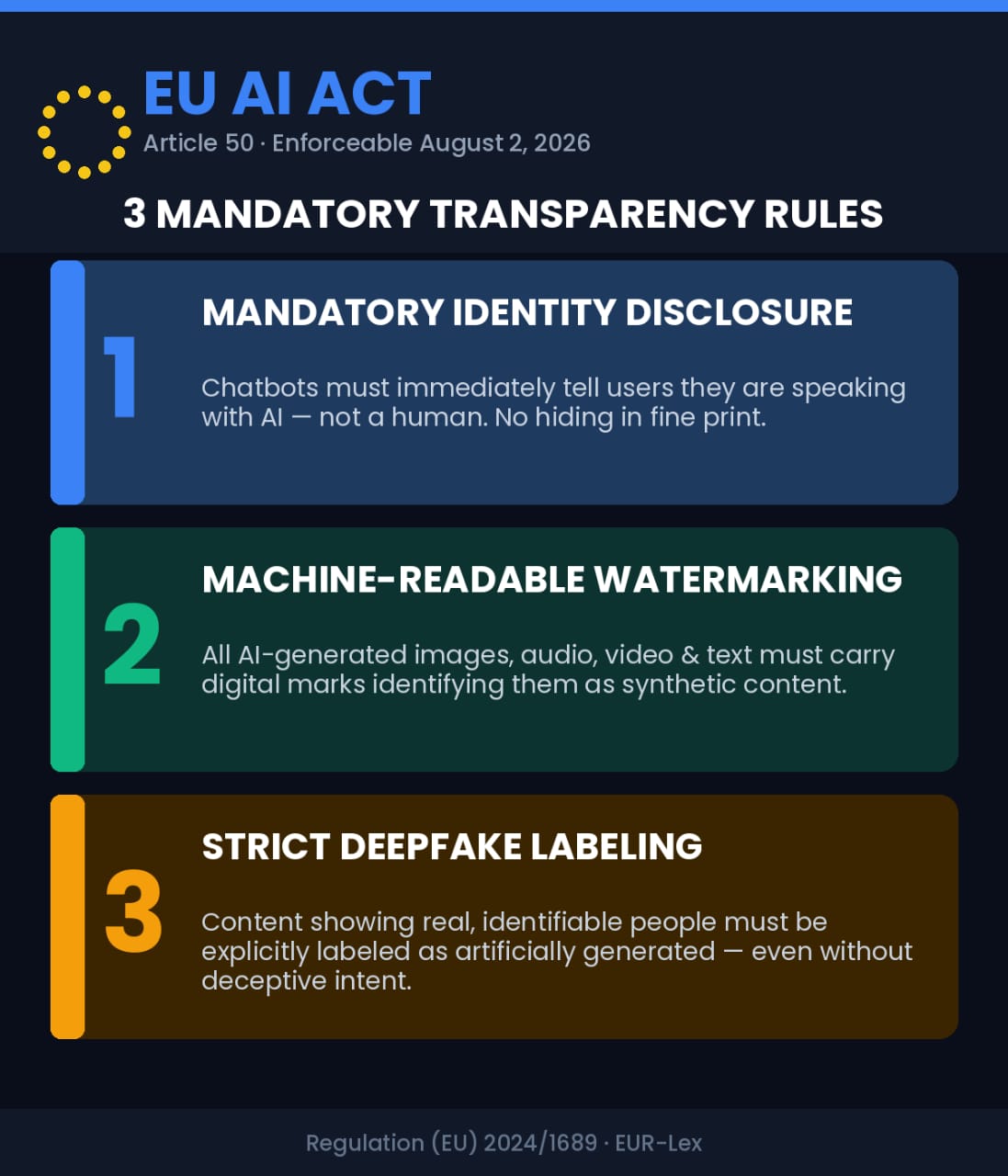
3. Strict Deepfake Labeling for Identifiable Persons:
Perhaps the most direct response to incidents like the Arup fraud, this obligation dictates that any content depicting real, identifiable people must explicitly state that it is artificially generated or manipulated. This rule applies even if there was no intent to deceive on the part of the creator, or if the person depicted does not technically exist but appears lifelike. This ensures that users are always aware when they are viewing a synthetic representation of a human, preventing the exploitation of human likenesses for malicious purposes or the blurring of lines between reality and simulation. This is crucial for safeguarding public discourse, combating misinformation, and protecting individuals from unauthorized use of their digital likeness. Examples include AI-generated news anchors, virtual influencers, or deepfake videos used in entertainment or advertising, all of which would require explicit "AI-generated" or "synthetic content" labels.
Enforcement Framework: A Global Reach with Severe Penalties
The efficacy of the EU AI Act’s transparency rules is underpinned by a clearly defined enforcement framework that allocates responsibility and imposes substantial penalties for non-compliance. The regulation strategically divides obligations between two key parties:
- Providers (AI Developers): These are the companies responsible for building and developing AI software. Under the Act, providers are legally obligated to embed technical metadata and watermarks directly into the outputs generated by their AI systems. This means that the AI model itself must be designed to inherently tag its creations as synthetic. This places the onus on the source of the AI technology to build transparency into its core functionality.
- Deployers (Platform Operators): These are the organizations that put AI content or chatbots in front of EU users. Deployers bear the legal duty to disclose deepfakes and clearly identify bot interactions to end users. This involves implementing user interfaces that prominently display the required disclosures and ensuring that any AI-generated content they host or disseminate is appropriately labeled. This responsibility extends to social media platforms, online marketplaces, and any service distributing AI-generated content.
A critical aspect of the EU AI Act is its extraterritorial scope. The law extends well beyond the geographical borders of the European Union. Any AI provider or platform located outside the Union is fully in scope and subject to the Act’s provisions if its system’s output reaches users inside the EU. This means a crypto exchange based in the United States, operating an AI support chatbot for its European customers, is just as accountable under the EU AI Act as a company headquartered in Brussels. This broad reach is intended to prevent regulatory arbitrage and ensure a consistent level of protection for EU citizens regardless of where the AI system originates. EU officials have consistently emphasized this extraterritorial reach, signaling their intent to set a global standard for AI governance.
Failure to comply with these stringent regulations carries severe financial consequences. Penalties can reach up to €15 million or 3% of a company’s total worldwide annual turnover, whichever amount is higher. For larger global corporations, these fines could translate into hundreds of millions or even billions of euros, signaling the EU’s unwavering commitment to enforcing its AI safety and transparency standards. These penalty levels are comparable to those imposed under the General Data Protection Regulation (GDPR), underscoring the EU’s determination to establish a robust and effective regulatory regime for AI that is taken seriously by businesses worldwide.
The $17 Billion AI Scam Explosion Fueling Regulatory Urgency
The aggressive stance taken by lawmakers on AI transparency is directly correlated with the alarming and rapid scaling of AI-driven financial fraud. According to recent estimates by Chainalysis, AI-powered crypto scams were projected to have siphoned off a staggering $14 billion to $17 billion on-chain in 2025 alone. This represents a sharp escalation from the estimated $9.9 billion to $12 billion recorded in the previous year, highlighting an exponential growth trajectory in AI-enabled illicit activities. This trend suggests that as AI tools become more accessible and sophisticated, so too does their misuse in financial crime.
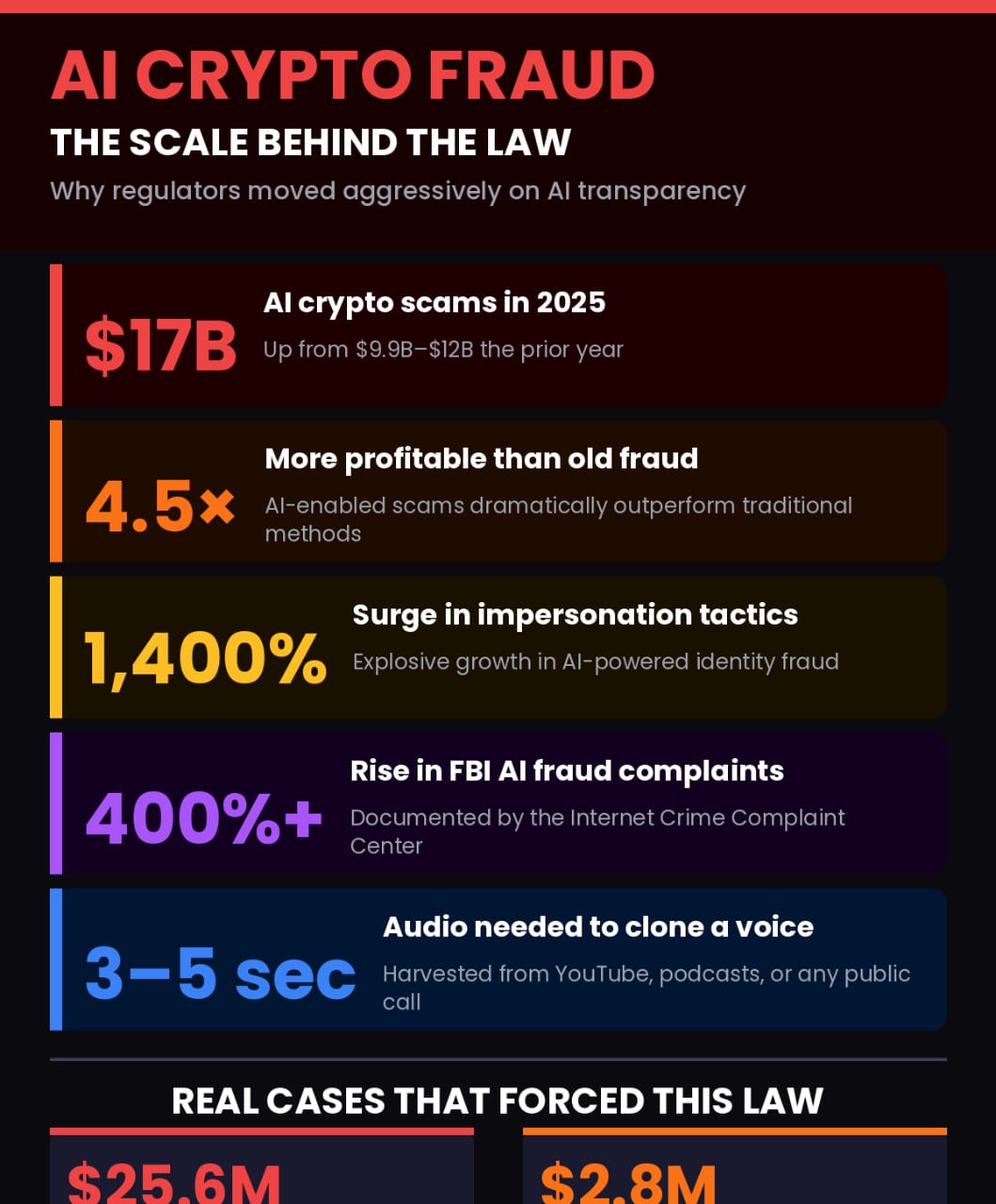
Beyond the sheer volume of funds stolen, AI-enabled scams have proven to be exceptionally effective. Data indicates that these sophisticated schemes are roughly 4.5 times more profitable than traditional fraud methods, suggesting a higher conversion rate for scammers utilizing AI tools. The surge in impersonation tactics, which escalated by over 1,400% in a short period, further illustrates the potency of AI in facilitating identity-based deception. The technical barriers to executing such fraud have virtually vanished, democratizing sophisticated scamming techniques. Voice cloning, for instance, now requires as little as three to five seconds of audio, which can be easily harvested from publicly available sources such as YouTube videos, podcasts, or even public conference calls. This ease of access and deployment means that a wider array of malicious actors can engage in highly convincing impersonation scams, making them a threat to individuals and corporations alike.
Law enforcement agencies globally are grappling with the fallout. The FBI’s Internet Crime Complaint Center (IC3) has documented a concerning 400%+ surge in AI-related fraud complaints, indicating a significant uptick in incidents reported by victims across various sectors. This surge in reports provides crucial data for mapping emerging threats and informs policy responses like the EU AI Act. The psychological toll on victims, who often feel deeply betrayed and violated by the impersonation of trusted figures, adds another layer of urgency to these regulatory efforts. The emotional distress can be profound, as victims struggle with the realization that they were deceived by seemingly real individuals.
Real Cases Driving Regulatory Imperatives
While the Arup incident is a recent high-profile example, numerous other documented cases have contributed to the regulatory momentum behind deepfake disclosures. One notable early example occurred in 2019, where the CEO of a UK-based energy firm was tricked into transferring €220,000 to a fraudulent account after receiving a deepfake