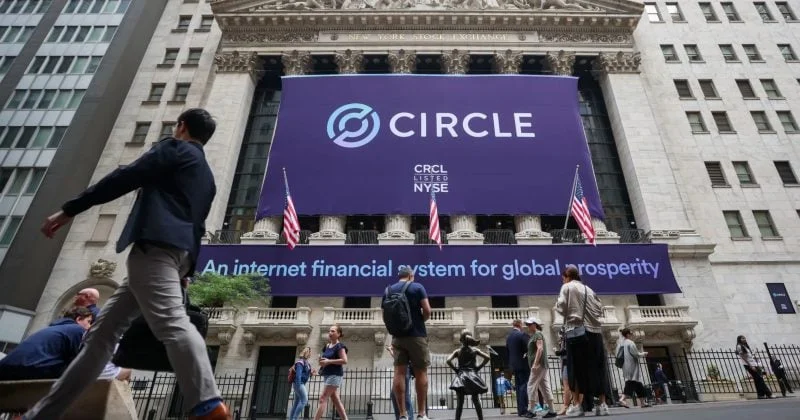
The Office of the Comptroller of the Currency (OCC) has officially granted approval to Circle, the issuer of the USDC stablecoin, to operate as a national digital currency bank. This landmark regulatory milestone represents the culmination of a multi-year effort by the Boston-based fintech firm to move beyond its status as a state-licensed money transmitter and into the upper echelons of the federal financial system. By securing a national bank charter, Circle has effectively bridged the gap between the nascent world of decentralized finance and the established infrastructure of the United States banking system. This decision by the OCC places Circle on the same regulatory footing as some of the country’s largest and most established financial institutions, signaling a fundamental shift in how federal regulators perceive and integrate digital asset issuers.
For Circle, the acquisition of an OCC charter is a structural upgrade that transforms its business model from a fintech-led stablecoin operation into a federally supervised banking entity. Historically, stablecoin issuers have occupied a complex and often precarious regulatory middle ground. While they manage billions of dollars in liquid assets and facilitate hundreds of billions in monthly transaction volume, they have largely operated under a patchwork of state-level regulations. The transition to a national bank charter centralizes oversight under a single federal authority, providing Circle with a uniform regulatory framework that applies across all fifty states. This move is expected to streamline operations, reduce compliance costs associated with state-by-state licensing, and, perhaps most importantly, instill a new level of institutional confidence in USDC as a reliable medium of exchange and store of value.
The Path to Federal Recognition: A Chronology of Circle’s Regulatory Journey
The journey toward a national bank charter began several years ago as Circle’s leadership, led by CEO Jeremy Allaire, recognized that the long-term viability of stablecoins depended on their integration into the formal financial sector. Circle was founded in 2013, initially focusing on peer-to-peer payments and cryptocurrency exchange services. However, the launch of USDC in 2018, in partnership with Coinbase via the Centre Consortium, shifted the company’s focus toward the creation of a price-stable digital asset backed by the U.S. dollar.
By 2021, as the total market capitalization of USDC began to surge, Circle publicly signaled its intent to become a "full-reserve national commercial bank." This ambition was set against a backdrop of increasing scrutiny from the President’s Working Group on Financial Markets, which released a report in late 2021 suggesting that stablecoin issuers should be subject to the same regulations as insured depository institutions. Rather than resisting this push for oversight, Circle leaned into it, positioning itself as the "compliance-first" alternative to other stablecoin issuers.
Throughout 2022 and 2023, Circle navigated a series of market shocks, including the collapse of several high-profile crypto firms and the temporary de-pegging of USDC following the failure of Silicon Valley Bank (SVB). During the SVB crisis, a portion of USDC’s cash reserves was held at the failed institution, causing the stablecoin to briefly drop below its $1.00 peg. Circle’s transparent handling of the situation—including a commitment to cover any shortfall using corporate funds—bolstered its reputation for accountability. This period of volatility served as a stress test that arguably strengthened Circle’s case for a federal charter, demonstrating the need for stablecoin issuers to have direct access to the Federal Reserve’s payment systems and more robust custodial arrangements.
Understanding the Structural Shift: From Fintech to National Bank
The OCC charter is not merely a badge of honor; it is a fundamental change in the legal and operational identity of the company. As a national digital currency bank, Circle will be subject to rigorous federal examination, capital requirements, and liquidity standards. Unlike traditional fractional-reserve banks that lend out a significant portion of their deposits, Circle has committed to a full-reserve model. This means that for every USDC in circulation, a corresponding dollar (or dollar-equivalent asset) is held in highly liquid reserves, such as cash and short-term U.S. Treasuries.
Under the supervision of the OCC, Circle’s reserve management practices will face continuous monitoring. This includes regular audits and transparency requirements that exceed the "attestations" typically provided by other stablecoin issuers. For market participants, this level of scrutiny provides a safeguard against the "run-on-the-bank" scenarios that have plagued the cryptocurrency industry in the past. If the OCC’s supervision framework functions as intended, USDC will effectively become a private-sector extension of the U.S. dollar, backed by the full weight of federal oversight.
Furthermore, the charter may eventually grant Circle direct access to the Federal Reserve’s master account. Currently, stablecoin issuers must rely on commercial bank partners to access the Fed’s payment rails, such as FedWire or the Automated Clearing House (ACH). Direct access would allow Circle to settle transactions directly with the central bank, reducing counterparty risk and increasing the efficiency of the USDC ecosystem. This is a critical advantage that could allow USDC to settle large-scale institutional trades with near-instant finality.
Supporting Data: The Market Dominance and Reserve Composition of USDC
The significance of Circle’s new status is underscored by the sheer scale of the USDC ecosystem. As of mid-2024, USDC maintains a market capitalization of approximately $34 billion, making it the second-largest stablecoin in the world and a cornerstone of the decentralized finance (DeFi) markets. While its primary competitor, Tether (USDT), holds a larger market share with a capitalization exceeding $110 billion, USDC is widely regarded as the preferred choice for institutional investors and regulated entities.
Circle’s reserve transparency has been a key driver of its growth. According to the company’s latest reserve reports, the majority of the assets backing USDC are held in the Circle Reserve Fund, a SEC-registered money market fund managed by BlackRock. This fund consists primarily of short-term U.S. Treasuries, which are considered the safest and most liquid assets in the global financial system. By moving these reserves under the umbrella of a national bank charter, Circle ensures that its asset management is aligned with the highest standards of the U.S. banking industry.
The competitive landscape is also shifting. While Tether continues to dominate in terms of volume, particularly in offshore markets, it operates largely outside the U.S. regulatory perimeter. Tether is domiciled in the British Virgin Islands and has historically faced criticism for its lack of detailed audits. In contrast, Circle’s decision to embrace the OCC’s authority creates a clear "regulatory moat." For institutional players such as BNY Mellon, State Street, or BlackRock—firms that are bound by strict fiduciary and compliance obligations—the choice between a federally chartered issuer and an offshore entity is increasingly straightforward.
Official Responses and Industry Reactions
While the OCC’s decision has been met with praise from proponents of digital asset integration, it has also sparked a broader conversation about the future of stablecoin legislation in Congress. Lawmakers have been debating the "Clarity for Stablecoins Act" and similar bills for several sessions, with the primary point of contention being whether stablecoins should be regulated at the state or federal level.
Industry analysts suggest that the OCC’s move provides a "proof of concept" for federal oversight. By granting a charter under existing banking laws, the OCC has demonstrated that the current National Bank Act is flexible enough to accommodate digital-native firms. However, some critics in the banking sector have expressed concerns. Traditional banking trade groups have previously argued that crypto-native firms should not be allowed to access the federal safety net without adhering to the same "same activity, same risk, same regulation" principles as commercial banks, including requirements for FDIC insurance.
In statements following similar regulatory discussions, Circle’s executive team has emphasized that their goal is to provide a "global, 24/7, programmable dollar" that can modernize the plumbing of the global financial system. The approval is seen by many in the industry as a validation of the "long game" played by Circle—choosing the path of maximum compliance over rapid, unregulated growth.
Broader Implications for the Global Financial System
The implications of Circle becoming a national bank extend far beyond the borders of the United States. As the U.S. dollar remains the world’s primary reserve currency, the creation of a federally regulated digital dollar (via USDC) strengthens the dollar’s role in the digital age. In a global economy where China is testing its own Central Bank Digital Currency (CBDC) and Europe is implementing the Markets in Crypto-Assets (MiCA) regulation, the U.S. has been under pressure to provide a clear regulatory framework for its own digital dollar initiatives.
By empowering a private-sector issuer like Circle through a national bank charter, the U.S. is pursuing a "public-private partnership" model. This allows for the innovation and speed of a technology company while maintaining the stability and oversight of a traditional bank. This model may serve as a blueprint for other nations looking to modernize their financial systems without the complexities of launching a fully sovereign CBDC.
For the DeFi sector, a federally chartered USDC provides a more stable foundation. USDC is used as collateral in countless decentralized lending protocols and as a liquidity pair on decentralized exchanges. The reduction in "regulatory tail risk"—the fear that a stablecoin could be suddenly shut down or seized by authorities—makes the entire DeFi ecosystem more resilient. It also opens the door for traditional financial products, such as tokenized bonds and real-world asset (RWA) platforms, to use USDC as their primary settlement layer with greater legal certainty.
Conclusion: The Challenges Ahead
Despite the historic nature of this approval, Circle’s transition to a national bank is not without its challenges. Being a bank means playing by a set of rules that were largely designed for an analog era. The OCC will need to adapt its supervision framework to account for the unique risks of digital assets, including cybersecurity threats, 24/7 liquidity demands, and the complexities of blockchain-based settlement.
There is also the risk of "regulatory capture" or operational constraints. As a national bank, Circle may face limitations on the types of activities it can engage in, or it may be required to hold higher levels of capital than its offshore competitors, potentially impacting its profit margins. Furthermore, the political climate remains volatile. A change in administration or a shift in the leadership at the Treasury Department could lead to changes in how the OCC interprets its authority over digital currency banks.
Nevertheless, the granting of an OCC charter to Circle marks the end of the "wild west" era for major stablecoin issuers in the United States. It signifies the arrival of a new era where digital assets are no longer viewed as peripheral experiments but as core components of the national financial infrastructure. For investors, the message is clear: the bridge between traditional finance and the digital economy has been built, and it is now officially open for business.