Understanding the Mechanics of Spot Sell Pressure
In the cryptocurrency markets, "spot" trading refers to the direct purchase or sale of an asset for immediate delivery, as opposed to derivatives trading, which involves contracts based on future price movements. Spot flows are widely considered a more reliable indicator of long-term investor sentiment because they represent "real" demand and ownership. While derivatives can drive short-term price volatility through leverage and liquidations, sustained spot selling suggests that holders are actively offloading their positions and reducing their exposure to the market.
The $209 billion cumulative net-selling stretch identified by CryptoQuant indicates that for a significant duration, the volume of sell orders has drastically outweighed buy orders across major exchanges. This is not merely a flash crash or a localized correction; it is a systemic draining of liquidity from the altcoin market. When spot selling reaches these levels, it creates a "heavy" market where any attempt at a price rally is met with immediate overhead resistance from investors looking to "exit at break-even" or minimize further losses.
The Macroeconomic and Internal Factors Driving the Slump
Several factors have converged to create this environment of extreme sell pressure. Primarily, the cryptocurrency market has become increasingly bifurcated. Since the approval of Spot Bitcoin Exchange-Traded Funds (ETFs) in the United States in early 2024, Bitcoin has functioned more like a traditional financial asset, absorbing the vast majority of institutional inflows. This has left altcoins—traditionally the domain of retail speculation—competing for a shrinking pool of liquidity.
Furthermore, the "flight to quality" has seen investors move capital away from high-beta altcoins and toward Bitcoin, Ethereum, and stablecoins. Stablecoins, in particular, have evolved into a significant competitor for altcoin capital. In previous cycles, investors would "park" their profits in smaller-cap coins during Bitcoin’s consolidation phases. Today, with high-yield opportunities available in tokenized treasuries and stablecoin lending protocols, the incentive to take on the high risk of altcoins has diminished.
The internal fragmentation of the altcoin market has also played a role. The sheer number of new tokens launched in 2023 and 2024 has diluted available capital. From the explosion of memecoins on the Solana network to the proliferation of Layer 2 scaling solutions on Ethereum, the market is currently "oversupplied" with tokens. This fragmentation means that even when new money enters the space, it is spread too thin to trigger a broad-based rally across the thousands of existing altcoins.
A Chronology of Altcoin Market Cycles (2020–2024)
To understand the gravity of the current $209 billion sell pressure, it is necessary to examine the timeline of altcoin performance over the last four years:
- March 2020 (The COVID-19 Liquidity Crisis): The last time sell pressure reached similar depths was during the global liquidity crunch triggered by the pandemic. At that time, investors liquidated all "risk-on" assets. However, this period of extreme stress preceded the "DeFi Summer" and the massive 2021 bull run.
- 2021 (The Peak of Euphoria): Altcoins reached record highs, driven by the NFT boom, the rise of "Ethereum killers" like Solana and Avalanche, and massive retail participation fueled by stimulus checks and social media hype.
- 2022 (The Year of Contagion): The collapse of the Terra-Luna ecosystem and the subsequent bankruptcy of FTX led to a massive wipeout of altcoin valuations. While sell pressure was high, it was characterized more by forced liquidations than the slow, grinding spot distribution we see today.
- 2023 (The Great Decoupling): Bitcoin began to recover ahead of the ETF approvals, but altcoins struggled to keep pace. The market began to see a shift where Bitcoin dominance steadily increased, a trend that has persisted into 2025.
- Late 2024 – Early 2025 (The Current Phase): Despite Bitcoin hitting new all-time highs, the broader altcoin market has remained stagnant or declined. This has culminated in the current $209 billion net-selling signal, marking a historic divergence between the "market leader" and the rest of the field.
Sector-Specific Impacts: DeFi, L1s, and Memecoins
The impact of this sell pressure is not uniform across all sectors of the crypto economy. Decentralized Finance (DeFi) protocols, which were the darlings of the 2020-2021 cycle, have seen a significant "valuation reset." Many governance tokens for major DeFi platforms are trading at 80-90% discounts from their peaks, as investors prioritize protocols that generate real yield over those that offer purely speculative rewards.
Layer 1 (L1) blockchains are also facing a "utility crisis." While platforms like Solana have maintained high transaction volumes—largely driven by memecoin trading—other L1s are struggling to retain developers and users. The data suggests that unless a blockchain has a vibrant ecosystem or a clear institutional use case, it is being treated as a sell-on-strength asset.
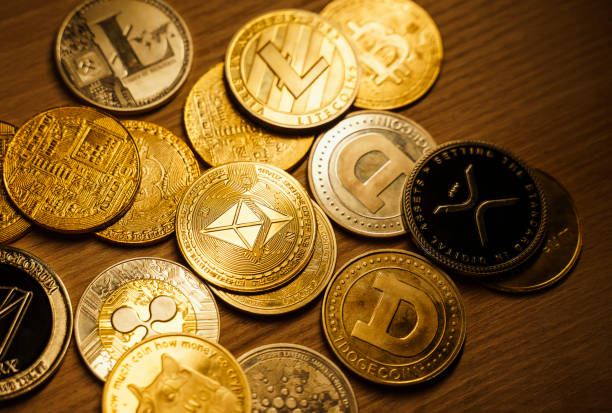
The memecoin sector remains the outlier. While "utility-based" altcoins suffer from spot selling, memecoins continue to attract speculative "degens." However, analysts warn that memecoins are highly cannibalistic; they do not bring in much new capital but rather rotate existing liquidity within the ecosystem, further starving legitimate technology projects of the funding they need to survive.
The Contrarian View: Is a Bottom in Sight?
While the CryptoQuant data paints a grim picture, some market analysts argue that extreme sell pressure is a necessary precursor to a market bottom. In technical analysis, "capitulation" occurs when the last remaining "weak hands" exit the market, leaving only "diamond hand" holders who are unwilling to sell at current prices.
The "Altcoin Season Index," which measures the performance of the top 50 altcoins against Bitcoin, currently sits in a mid-to-low range. Historically, a reading of extreme "Bitcoin Season" (where altcoins are deeply undervalued) has often served as a contrarian buy signal. If the $209 billion in selling represents the final exhaustion of sellers, then the market may require very little buy-side pressure to begin a recovery.
However, the "contrarian" argument faces a new hurdle in this cycle: institutional indifference. Unlike 2020, when a rising tide lifted all boats, the current institutional environment is highly selective. Large-scale buyers are not interested in "the market"; they are interested in Bitcoin as "digital gold" and Ethereum as a "global settlement layer." Without a clear narrative to attract these big players, many altcoins may remain in a state of permanent stagnation regardless of how much selling has already occurred.
Implications for Investors and the Broader Ecosystem
The persistence of spot sell pressure has several long-term implications for the cryptocurrency industry. First, it likely signals the end of the "everything rally." Investors must now become much more discerning, focusing on projects with sustainable tokenomics, real-world adoption, and clear regulatory compliance.
Second, the lack of a broad altcoin recovery may lead to a consolidation of the industry. Many "zombie projects"—blockchains and dApps with high valuations but no users—may finally run out of runway as their treasury assets (often held in their own tokens) continue to devalue. This "cleansing" of the market, while painful for current holders, could ultimately lead to a healthier ecosystem where capital is allocated to projects that provide genuine value.
Finally, the role of Bitcoin dominance (the measure of Bitcoin’s market cap relative to the total crypto market cap) will remain the key metric to watch. As long as Bitcoin dominance remains high and spot selling in altcoins continues, the "altseason" remains a theoretical possibility rather than a market reality.
Conclusion and Outlook
The CryptoQuant data serves as a sobering reminder that the cryptocurrency market has matured and changed since the wild volatility of 2020. The $209 billion net-selling figure is a testament to a market that is currently skeptical of the "next big thing" in the altcoin space. While the magnitude of the selling suggests we are closer to a bottom than a top, the lack of a clear "buy" signal means that caution remains the order of the day.
For the altcoin market to reclaim its former glory, it will need more than just a pause in selling; it will need a resurgence of real-world utility and a narrative that can compete with the institutional allure of Bitcoin. Until that shift occurs, the deepest spot sell pressure since 2020 stands as a monument to the current "defensive" era of digital asset investing, where survival is prioritized over speculation.