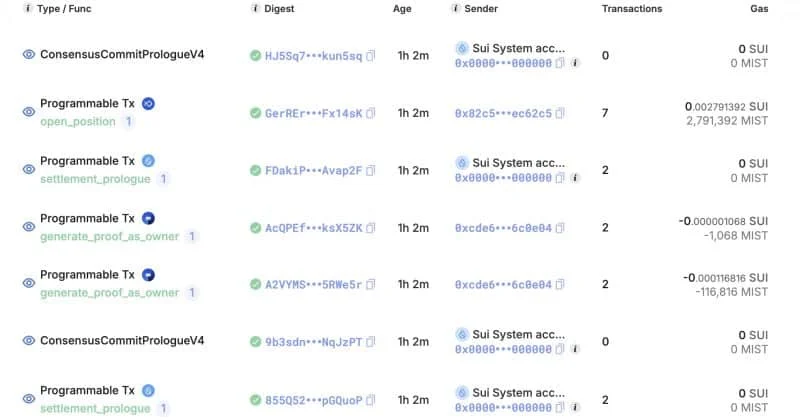
The Sui mainnet has successfully returned to full operational status following a significant network disruption that lasted approximately 5 hours and 55 minutes. The outage, which commenced on May 28th, was triggered by a critical bug identified in the gas charging logic within the network’s latest software release, version 1.72. This flaw caused a complete halt in the processing of new blocks and transactions, effectively freezing the highly anticipated Layer 1 blockchain. Validators, working collaboratively, implemented a coordinated fix and successfully upgraded to a patched version of the software, restoring normal checkpoint production on May 29th. The incident, while concerning, did not result in any loss of user funds, underscoring the robustness of Sui’s safety guarantees.
The Genesis of the Outage: A Flaw in Gas Fee Calculation
The core of the disruption lay in a fundamental component of blockchain operation: the mechanism for calculating transaction fees. In the context of Sui, the 1.72 software update introduced a defect in the gas charging logic. This meant that the system responsible for determining how much users would pay for their transactions malfunctioned. The consequence was immediate and severe: the entire network ceased to process new blocks, leading to a complete standstill. This type of vulnerability, impacting core economic and operational functions, highlights the delicate balance in maintaining decentralized network stability.
A Detailed Chronology of the Disruption and Recovery
The incident began unfolding on May 28th as validators, in the process of adopting the 1.72 update, encountered the critical bug. This led to an immediate cessation of new checkpoint production, the fundamental building blocks of transaction finality on the Sui network. Consequently, no new transactions could be successfully processed or finalized, leaving the network in a frozen state.
The recovery process was far from instantaneous. Unlike a simple software patch that can be deployed with minimal coordination, Sui’s robust consensus mechanism, designed for high throughput and security, mandated a broad-based validator consensus for restoration. Specifically, validators holding more than two-thirds of all staked SUI tokens were required to upgrade to the patched software. This distributed governance model, while a cornerstone of decentralization, necessitates a significant coordination effort during emergencies. The process of communicating the issue, disseminating the patch, and ensuring widespread adoption across the global validator set took several hours.
The timeline of the outage can be broken down as follows:
- May 28th, [Approximate Time of Outage Start]: Validators begin experiencing the gas logic bug after updating to Sui version 1.72. New checkpoint production halts.
- Throughout the Outage: The network remains frozen, with no new transactions being finalized. DeFi protocols and other on-chain applications are effectively in a suspended state.
- May 29th, [Approximate Time of Restoration]: Validators successfully coordinate and deploy the patched software (version 1.72.1 or equivalent).
- May 29th, [Shortly After Restoration]: Normal checkpoint production resumes, and the Sui mainnet is declared back online. The entire outage duration is approximately 5 hours and 55 minutes.
Unwavering Safety Guarantees Amidst Disruption
Despite the extended downtime, a critical positive takeaway from the incident is the reaffirmation of Sui’s core safety principles. Crucially, no user funds were compromised or lost during the nearly six-hour disruption. The network’s inherent design prevented any data inconsistencies or corruption from occurring while the chain was stalled. This is a testament to the resilience of its architecture, which prioritizes the integrity of the ledger even under extreme stress.
However, the functional impact on the Sui ecosystem was immediate and profound. Decentralized Finance (DeFi) protocols built on Sui experienced a complete freeze. This meant that users were unable to adjust existing positions, execute new trades, or trigger any automated functions such as liquidations. For participants in these protocols, the outage represented a period of complete operational paralysis, with potential financial implications depending on market volatility during the downtime.
A Recurring Pattern: Lessons from Past Incidents
This recent outage is not an isolated event for the Sui network. This marks the second significant multi-hour disruption within a relatively short period in 2026. On January 14th of the same year, the Sui network experienced a similar extended stall, lasting approximately six hours. That prior incident was attributed to a different, yet equally critical, bug related to the consensus commit mechanism.
The recurrence of such substantial downtime within a five-month span raises questions about the development and testing lifecycle of Sui’s software releases. Both incidents share a common thread: a bug introduced via a software update, followed by a complex and time-consuming process of coordinating validator upgrades across the decentralized network. This pattern suggests a need for enhanced scrutiny in the pre-release testing and validation phases to identify and rectify potential vulnerabilities before they impact the live mainnet.
Market Reaction and Investor Sentiment
The cryptocurrency market, known for its sensitivity to network stability and operational integrity, reacted promptly to the news of the Sui outage. The SUI token, the native cryptocurrency of the Sui blockchain, experienced a noticeable price decline during the disruption. Reports indicate that the token’s value dropped to approximately $0.89, representing a decline in the range of 6-8%. This price action reflects investor sentiment and the immediate impact of perceived network instability on market valuation. Following the restoration of normal operations, the SUI token showed a partial recovery, suggesting that the market views the issue as addressable, but the volatility underscores the importance of consistent uptime for investor confidence.
Implications for Investors and the Sui Ecosystem
Sui has ambitious aspirations to position itself as a leading high-throughput Layer 1 blockchain. Its architecture is designed to support demanding decentralized applications, including complex DeFi protocols, and to eventually attract significant institutional capital. The growth of the total value locked (TVL) across the Sui ecosystem, which has reportedly reached hundreds of millions of dollars since its launch, underscores the confidence developers and users have placed in its potential.
However, the recent spate of extended outages presents a challenge to this narrative. For traders and investors, the observed price volatility during the outage and the subsequent partial recovery offer a potential playbook for future market behavior. If a third incident of similar magnitude were to occur, it is plausible that the market would react with a similar pattern of decline followed by a cautious recovery. This emphasizes the critical need for Sui to demonstrate a sustained period of stability and reliability to solidify its position in the competitive Layer 1 landscape.
The Path Forward: Enhancing Network Resilience
The recent Sui mainnet outage, while resolved without financial loss to users, serves as a critical learning opportunity for the project. The recurring nature of these disruptions necessitates a deep dive into the root causes of software vulnerabilities. This may involve:
- Enhanced Pre-Release Testing: Implementing more rigorous and comprehensive testing protocols for all software updates, including extensive simulation of various network conditions and edge cases.
- Bug Bounty Programs: Potentially expanding or intensifying bug bounty programs to incentivize the broader security research community to identify and report vulnerabilities before they reach production.
- Validator Communication and Coordination Protocols: Streamlining and improving the communication channels and coordination mechanisms for validators during emergency situations to expedite future recovery efforts.
- Post-Mortem Analysis Transparency: Continuing to provide detailed and transparent post-mortem analyses of such incidents to build trust and inform the community about the steps being taken to prevent future occurrences.
The long-term success of Sui, and indeed any high-performance blockchain, hinges not only on its technological innovation and throughput capabilities but also on its unwavering reliability and stability. The recent events, while a setback, offer a clear path for improvement, and the project’s ability to address these challenges proactively will be crucial in shaping its future trajectory and its ability to attract and retain both retail and institutional participants. The ecosystem’s growth is a testament to the promise of Sui, but sustained uptime is the bedrock upon which that promise must be built.