The United States Court of Appeals for the D.C. Circuit has issued a pivotal ruling that solidifies the legal standing of blockchain analytics in federal criminal proceedings. In a decision that carries significant weight for the future of digital asset litigation, the appellate court upheld a lower court’s determination that Chainalysis Reactor, a leading software tool used to trace cryptocurrency transactions, meets the rigorous Daubert standard for evidentiary admissibility. This ruling marks the first time an appellate court has scrutinized and validated the underlying methodology of blockchain attribution software, effectively setting a high-water mark for the industry and law enforcement agencies worldwide.
The decision stems from the high-profile criminal case of United States v. Sterlingov, involving Roman Sterlingov, a dual Swedish-Russian national who was convicted of operating "Bitcoin Fog," one of the longest-running and most prolific cryptocurrency mixing services on the darknet. Sterlingov’s legal team had challenged the use of Chainalysis Reactor as evidence, arguing that the software’s methodology was proprietary, lacked sufficient peer review, and did not have a known error rate. However, the appellate court’s rejection of these arguments provides a robust legal framework for the continued use of sophisticated analytical tools in the prosecution of cybercrime and financial misconduct involving decentralized technologies.
The Case of Bitcoin Fog and Roman Sterlingov
The legal saga began with the investigation into Bitcoin Fog, a service that advertised its ability to anonymize Bitcoin transactions, making them nearly impossible for law enforcement to track. Launched in 2011, Bitcoin Fog operated for over a decade, processing hundreds of millions of dollars in illicit transactions. According to Department of Justice (DOJ) records, the service facilitated the laundering of over 1.2 million Bitcoin, valued at approximately $400 million at the time of the transactions. Much of this volume was tied to notorious darknet marketplaces, including Silk Road, Agora, and AlphaBay, which utilized the mixer to hide proceeds from drug trafficking, computer fraud, and identity theft.
In 2021, federal authorities arrested Roman Sterlingov, alleging he was the principal operator of the service. During the subsequent trial in 2024, the prosecution relied heavily on data derived from Chainalysis Reactor to map the flow of funds between Bitcoin Fog and various criminal entities. The software attributed more than 900,000 specific Bitcoin addresses to the Bitcoin Fog service, a feat of data aggregation that was central to the government’s argument that Sterlingov controlled the platform’s infrastructure.
Following a jury trial, Sterlingov was found guilty of money laundering conspiracy, sting money laundering, operating an unlicensed money transmitting business, and money transmission without a license. He was sentenced to more than 12 years in prison and ordered to pay a forfeiture money judgment of $395 million. Sterlingov’s appeal focused primarily on the admissibility of the blockchain evidence, asserting that the District Court erred in allowing expert testimony based on Chainalysis Reactor.
Understanding the Daubert Standard and Its Application
To understand the significance of this ruling, it is necessary to examine the Daubert standard, the legal benchmark used by U.S. federal courts to evaluate the reliability of expert scientific or technical testimony. Established by the Supreme Court in the 1993 case Daubert v. Merrell Dow Pharmaceuticals, Inc., the standard requires judges to act as "gatekeepers" to ensure that any expert testimony presented to a jury is both relevant and reliable.
Under Daubert, courts typically consider four non-exclusive factors:
- Whether the theory or technique can be (and has been) tested.
- Whether it has been subjected to peer review and publication.
- Its known or potential error rate.
- Whether the technique has gained "general acceptance" within the relevant scientific or technical community.
In the Sterlingov case, the defense argued that Chainalysis Reactor failed on multiple fronts. They contended that because the software’s "clustering" algorithms are proprietary, they cannot be independently tested or peer-reviewed in the traditional academic sense. They further argued that without a quantified error rate, the software’s attributions were speculative.
The appellate court, however, took a broader view of reliability. It noted that while blockchain analysis is a relatively new and specialized field, the methodologies used by Chainalysis—specifically "clustering" and "change address analysis"—are grounded in logical, verifiable principles of computer science and cryptography. The court emphasized that the lack of traditional academic peer review does not automatically disqualify a technology, especially when that technology is widely accepted and utilized by both government agencies and private-sector specialists.
Technical Methodology: Clustering and Digital Fingerprinting
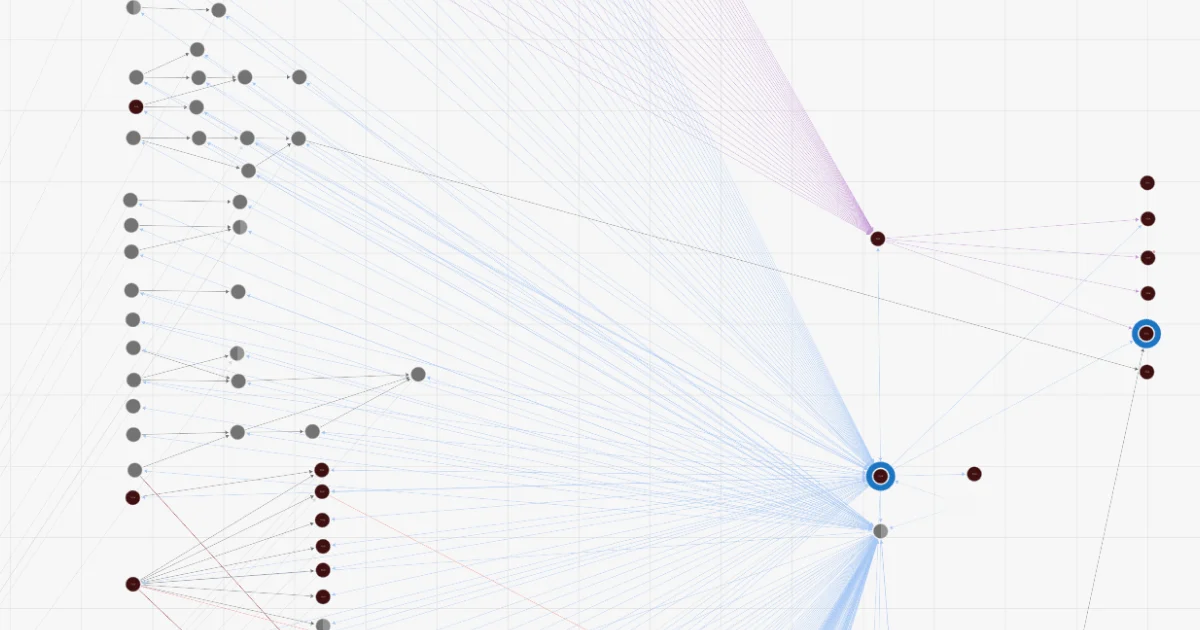
At the heart of the court’s validation was the specific methodology employed by Chainalysis Reactor. The platform uses a process known as "clustering" to group multiple cryptocurrency addresses into a single entity. This is achieved through several sophisticated techniques:
- Co-Spend Analysis: If multiple addresses are used as inputs in a single transaction, it is a strong indicator that they are controlled by the same user or entity.
- Change Address Analysis: When a user sends cryptocurrency, the "change" is often sent back to a new address. Reactor identifies these change addresses by analyzing transaction patterns and behavioral characteristics.
- Digital Fingerprinting: This involves identifying unique scripts or transaction structures that are characteristic of specific services or wallet providers.
The appellate court cited testimony from FBI Specialist Luke Scholl and Chainalysis expert Elizabeth Bisbee, who explained that Reactor takes a "deliberately conservative" approach to attribution. Rather than making speculative links, the software prioritizes defensible connections. The court viewed this conservatism as a hallmark of reliability, noting that an underinclusive methodology (one that might miss some connections but ensures the ones it finds are accurate) is preferable in a legal context to an overinclusive one that produces false positives.
Furthermore, the experts testified that they could not recall a single instance where a Reactor attribution had been proven incorrect through subsequent investigation. This practical track record served as a powerful counter-argument to the defense’s claims regarding the lack of a theoretical error rate.
A Chronology of Legal and Technical Milestones
The path to this appellate decision involves a series of critical milestones that reflect the maturing relationship between blockchain technology and the American legal system:
- 2011: Bitcoin Fog begins operations as one of the first major cryptocurrency mixers.
- 2014-2015: Chainalysis is founded and begins developing Reactor to assist law enforcement in tracking illicit crypto flows.
- April 2021: Roman Sterlingov is arrested in Los Angeles, marking a major victory for the DOJ’s then-new National Cryptocurrency Enforcement Team (NCET).
- March 2024: A federal jury in the District of Columbia finds Sterlingov guilty. The District Court rules that Chainalysis Reactor meets the Daubert standard for the first time.
- 2025: Independent academic researchers publish a granular evaluation of blockchain analysis tools. The study confirms that Chainalysis data possesses the highest coverage and the lowest false-positive rate in the industry, providing a form of the "peer review" the defense had previously claimed was missing.
- September 2026: The U.S. Court of Appeals for the D.C. Circuit upholds the lower court’s decision, affirming the admissibility of Reactor-based evidence.
Broader Implications for Law Enforcement and the Crypto Industry
The appellate court’s ruling has far-reaching implications that extend well beyond the Sterlingov case. By validating the methodology of blockchain analytics, the court has provided a "green light" for law enforcement to continue utilizing these tools in increasingly complex investigations. This is particularly relevant as the crypto landscape shifts from simple peer-to-peer transfers to more sophisticated decentralized finance (DeFi) protocols and cross-chain bridges.
For the private sector, the ruling reinforces the importance of methodological rigor in compliance and risk management. Financial institutions and cryptocurrency exchanges that rely on Chainalysis for Anti-Money Laundering (AML) and Know Your Customer (KYC) requirements can now do so with greater legal certainty. The court’s endorsement suggests that "defensible" data is the gold standard for high-stakes decision-making.
Furthermore, the decision highlights the evolving role of Artificial Intelligence (AI) in forensic investigations. As noted in the original Chainalysis report, AI has the potential to accelerate sound methodologies but cannot fix flawed ones. The recent work on the $387 million Bitget hack serves as a prime example; while AI helped process vast amounts of data, the success of the investigation relied on the underlying reliability of the blockchain attribution data. The appellate court’s ruling ensures that as AI becomes more integrated into these tools, the foundational data remains legally sound.
Industry Reaction and Fact-Based Analysis
While the defense bar may express concerns about the reliance on proprietary software in criminal cases, the general consensus among legal and technical experts is that the D.C. Circuit’s decision reflects the reality of modern forensics. Much like DNA analysis or cell tower triangulation in previous decades, blockchain analysis has moved from a novel technique to an established forensic discipline.
The ruling also addresses the "black box" argument often leveled against proprietary software. By allowing experts to testify about the principles of the software (clustering, change address analysis) rather than requiring the disclosure of the source code, the court balanced the need for transparency with the protection of intellectual property. This balance is crucial for fostering innovation in the private sector, as companies like Chainalysis invest heavily in R&D to stay ahead of cybercriminals.
Ultimately, the Sterlingov appeal serves as an independent validation of the foundation upon which the next generation of investigation tools is being built. As blockchain technology continues to scale and integrate with global financial systems, the need for reliable, legally admissible analytical tools will only grow. The D.C. Circuit has ensured that the "rules of the road" for this new frontier are clear, emphasizing that methodological rigor, conservative attribution, and a proven track record are the keys to surviving judicial scrutiny.
This landmark decision confirms that Chainalysis Reactor is not just a tool for investigators, but a legally recognized instrument of justice. As of October 2026, Chainalysis remains the only blockchain analytics platform to have successfully withstood the Daubert standard at both the district and appellate levels, cementing its position as the industry leader in forensic reliability.