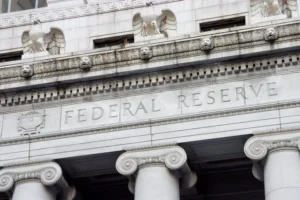
The Securities and Exchange Commission has unveiled a transformative proposal for the digital asset custody landscape, signaling a structural shift that could dismantle the long-standing "charter moat" enjoyed by traditional banking institutions. Under the proposed regime, state-chartered trust companies would be granted a permanent, formalized role in the regulated cryptocurrency ecosystem, while investment advisers would be permitted to hold assets themselves under specific conditions when no qualified custodian is available. This regulatory evolution moves the industry away from a rigid focus on federal banking charters and toward a competitive model centered on asset diversity, technical integration, and the ability to support the complex portfolios that modern institutional investors now demand.
Historically, registered investment advisers (RIAs) and institutional funds have operated within a custody framework primarily restricted to national banks, broker-dealers, and other federally regulated entities. However, the rapid expansion of the digital asset market exposed a significant structural gap: traditional custodians often lack the technical infrastructure to support the hundreds of emerging tokens and decentralized finance (DeFi) assets that investors seek. Conversely, the firms most capable of securing these assets—crypto-native entities often operating under state trust charters—faced a clouded regulatory path under federal custody rules. The SEC’s new proposal seeks to bridge this divide by codifying a pathway that has existed under temporary staff no-action relief since September 2025, effectively leveling the playing field for state-chartered institutions.
The Shift Toward Commercial Competition and Asset Coverage
If adopted, the SEC’s proposal would fundamentally change the criteria by which institutional clients select their custody partners. For years, the primary hurdle for crypto-native firms was obtaining the "qualified custodian" status required by the Investment Advisers Act of 1940. By formalizing the status of state trust companies, the SEC is shifting the competitive focus from regulatory permission to commercial capability.
This shift places a premium on asset coverage. In the traditional finance world, a custodian’s ability to hold a specific stock or bond is rarely in question. In the digital asset space, however, the ability to support a wide range of tokens, staking protocols, and Layer-2 assets is a primary differentiator. The proposal suggests that the most valuable feature of a modern custodian may soon be its asset list. For firms like Coinbase, Gemini, and Fireblocks, which have built their businesses around the flexibility of trust charters rather than the more restrictive commercial-bank models, this represents a significant strategic advantage.
Coinbase Prime, for instance, provides custody through the Coinbase Custody Trust Company, a New York-chartered entity regulated by the New York State Department of Financial Services (NYDFS). The platform currently advertises support for more than 470 digital assets, a figure that dwarfs the offerings of most traditional banks. Similarly, Gemini Trust Company and the newly established Fireblocks Trust Company are positioned to leverage their deep technical roots to capture institutional market share that was previously hesitant to move outside the federal banking perimeter.
Chronology of the Regulatory Evolution
The path to this proposal has been marked by several years of tension between the SEC, the crypto industry, and traditional financial lobbyists.
- February 2023: The SEC first proposed the "Safeguarding Advisory Client Assets" rule, which aimed to expand the existing custody rule to cover all client assets, including crypto. This initial proposal met with significant pushback from both crypto firms and traditional banks concerned about the feasibility of "possession or control" requirements.
- September 2025: Following a period of intense industry consultation, the SEC’s Division of Investment Management issued a landmark staff no-action letter. This allowed investment advisers to treat certain state-chartered trust companies as qualified custodians on an interim basis, provided they met rigorous safeguarding and audit standards.
- October 2026: The SEC formally introduced the current proposal, seeking to turn the temporary no-action relief into a permanent rule. This proposal includes the controversial but pragmatic "self-custody fallback," allowing advisers to manage assets in-house if no qualified custodian can support them.
- Current Status: The proposal is now entering a 60-day public comment period following its publication in the Federal Register. If finalized, it will set a new global standard for how institutional digital assets are managed and protected.
The Cost of Compliance: Self-Custody as a Fallback
One of the most notable aspects of the proposal is the provision for adviser self-custody. The SEC recognizes that in a fast-moving market, an adviser may wish to invest in a token that no qualified custodian yet supports. To prevent this from stifling investment, the rules would allow advisers to hold these assets themselves, provided they implement "substantial controls."
However, this is not a shortcut. The SEC has designed the self-custody requirements to be operationally demanding and financially burdensome, ensuring it remains a fallback rather than a primary strategy. The Commission estimates that the requirements for self-custody would cost an adviser approximately $433,833 annually on average. A staggering $376,000 of this estimate is attributed to the required independent internal-control reports, which involve rigorous third-party audits of cybersecurity, key management, and authorization protocols.
These high fixed costs mean that only the largest and most sophisticated investment firms will likely find self-custody viable. For smaller RIAs, the economic reality will force them toward qualified custodians, creating a powerful incentive for firms like Coinbase or BNY Mellon to add new assets to their platforms as quickly as possible. Under the proposed rules, an adviser must revisit their self-custody determination at least quarterly; if a qualified custodian begins supporting the asset, the adviser is required to move the assets to that custodian "as soon as reasonably practicable."
Traditional Banks and the Battle for the "Distribution Layer"
Traditional custody giants like BNY Mellon and State Street are not standing idly by. These institutions, which collectively oversee hundreds of trillions of dollars in global assets, have spent the last few years building out their own digital asset platforms. BNY Mellon has integrated digital asset custody into its broader suite of services, recently adding staking capabilities through a partnership with Galaxy Digital. State Street has launched a dedicated digital asset platform focused on custody, wallet management, and the burgeoning field of tokenized funds and stablecoins.
The Bank Policy Institute (BPI) and other industry groups have historically urged the SEC to maintain strict standards, arguing that crypto custody conducted outside the bank perimeter should face safeguards equivalent to those imposed on national banks. While the SEC proposal does grant state trusts a permanent seat at the table, it does so by imposing bank-like requirements for asset segregation, financial audits, and internal controls.
The advantage for legacy banks lies in their ability to bundle crypto custody with existing services such as cash management, fund accounting, and tax reporting. For a major pension fund or insurance company, the convenience of having crypto assets integrated into the same reporting framework as their treasury bonds and S&P 500 holdings is a compelling value proposition. Consequently, the competition is becoming less about who is "allowed" to hold the assets and more about who can offer the most seamless and comprehensive service.
Implications for Crypto Issuers and Market Liquidity
The proposed rules create a new "gatekeeper" dynamic for crypto issuers. In the early days of the industry, the primary goal for a new token project was to get listed on a major exchange to ensure retail liquidity. Under the new SEC regime, getting "institutional-ready" by securing support from qualified custodians becomes equally important.
If regulated capital can only invest in assets that are either supported by a qualified custodian or managed through a high-cost self-custody stack, then the custodian’s asset list becomes the de facto "distribution layer" for institutional money. This shift may lead to a bifurcated market: a "regulated tier" of assets supported by major custodians and accessible to institutional funds, and an "experimental tier" of assets that remain largely within the retail and DeFi ecosystems.
Furthermore, the demand for sophisticated infrastructure is expected to surge. Firms like Fordefi, which specializes in institutional self-custody infrastructure using Multi-Party Computation (MPC), stand to benefit as advisers seek the technology necessary to meet the SEC’s proposed "internal control" standards. This creates a secondary market where cybersecurity firms and specialized accounting practitioners become essential intermediaries in the institutional crypto value chain.
Conclusion: A More Competitive and Transparent Future
The SEC’s proposed custody regime represents a maturing of the digital asset market. By formalizing the role of state trust companies and creating a regulated (albeit expensive) path for self-custody, the Commission is acknowledging that the future of finance is multi-platform and technologically diverse.
For crypto-native firms, the proposal offers a clearer regulatory lane and a chance to compete directly with Wall Street’s incumbents. For traditional banks, it serves as a wake-up call that a federal charter alone is no longer enough to protect their market share; they must now compete on technical agility and asset breadth. As the 60-day comment period begins, the industry will be watching closely to see how the final rules balance the need for investor protection with the practical realities of a digital-first financial system. Ultimately, the winners in this new landscape will be those who can most effectively bridge the gap between the innovative potential of decentralized assets and the rigorous requirements of institutional-grade oversight.