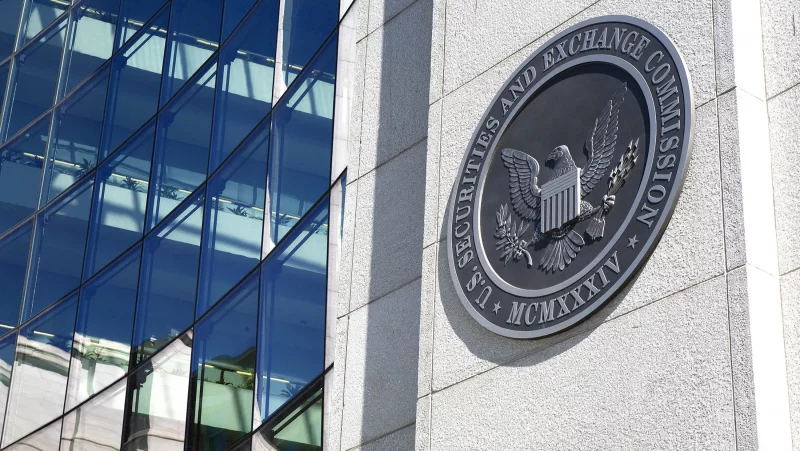
The United States Securities and Exchange Commission (SEC) staff has released a comprehensive set of Frequently Asked Questions (FAQs) through the Division of Corporation Finance, aimed at clarifying the regulatory treatment of several core activities within the digital asset ecosystem. This new guidance, issued on Friday, specifically addresses the nuances of token buybacks, the classification of staking receipt tokens, and the legal implications of ongoing blockchain network development. While the guidance builds upon the Commission’s previous interpretations from March, it serves as a non-binding staff analysis that does not carry the force of law, yet it provides a critical roadmap for how the agency’s staff evaluates compliance with federal securities laws, particularly the Securities Act of 1933 and the Securities Exchange Act of 1934.
The publication of these FAQs comes at a pivotal moment for the cryptocurrency industry, which has long called for "regulatory clarity" amidst a series of high-profile enforcement actions. By detailing the conditions under which certain activities might—or might not—trigger the "investment contract" classification under the Howey Test, the SEC staff is attempting to delineate the boundaries between regulated securities offerings and decentralized utility-based operations.
The Nuance of Token Buybacks and the Howey Test
One of the most significant clarifications in the new guidance involves the practice of token buybacks. In the traditional finance world, share buybacks are a common mechanism for returning value to shareholders, often signaling a company’s health. In the crypto sector, buybacks have frequently been scrutinized as potential evidence of a "common enterprise" where investors expect profits based on the "managerial efforts of others"—the core tenets of the Howey Test.
According to the SEC staff, the timing and context of a buyback are paramount. The guidance clarifies that when a cryptocurrency network is already fully functional, the mere announcement of a buyback for a non-security crypto asset does not, in isolation, constitute a promise to perform "essential managerial efforts." This suggests that for established, decentralized protocols where the token serves a clear utility, the act of reducing supply through buybacks may not automatically transform the token into a security.
However, the analysis shifts dramatically for networks that are still in development. If a network is not yet functional and a buyback program is presented to potential buyers as a way to generate yield, "burn" tokens to increase value, or provide a return on investment, the staff notes that this could contribute to the finding of an investment contract. In this scenario, the buyback is viewed as a central effort by a management team to support the asset’s price, thereby fulfilling the Howey requirement of reliance on the efforts of a third party.
Liquid Staking and the Emergence of Digital Tools
The guidance also tackles the rapidly growing sector of liquid staking. Liquid staking allows users to stake their digital assets to secure a blockchain network while receiving a "receipt token" (such as stETH or similar assets) that represents their staked position and accrued rewards. These receipt tokens can then be traded or used in other decentralized finance (DeFi) protocols.
The SEC staff introduced a distinction between "digital tools" and "digital commodities" in the context of these receipts. A staking receipt token that represents an underlying digital commodity (like Ethereum) and is not subject to an investment contract may be treated simply as a "digital tool." In this view, the token acts as a functional receipt for the underlying asset rather than a separate investment vehicle.
Furthermore, the staff addressed protocol-based liquid staking providers. When a staking receipt token is issued by a decentralized protocol and its value is intrinsically tied to the operation of a functional cryptographic system—driven by market supply and demand rather than the promotional efforts of a centralized entity—it may be classified as a digital commodity. This clarification is seen as a potential win for decentralized staking pools that operate via smart contracts rather than centralized intermediaries.
Ongoing Development and Network Utility
A recurring concern for blockchain developers has been whether the continuous improvement of a network constitutes the "essential managerial efforts" that define a security. The SEC staff’s Friday guidance offers some breathing room for the developer community. The staff stated that promoting a network’s current utility, features, or existing capabilities generally does not amount to a promise of essential managerial efforts.
Crucially, the guidance notes that developers can continue to maintain, secure, and improve a functional network without these activities necessarily triggering the Howey Test. This recognizes that software maintenance is a standard part of technology infrastructure. Even "aspirational statements" regarding future features may fall outside the scope of an investment contract, provided those statements are focused on the technical roadmap and utility of the network rather than the promotion of potential profits for token holders.
Secondary Markets and Promoter Definitions
The FAQs also provide clarity for trading platforms and secondary market operators. Under Securities Act Rule 405, a "promoter" is generally defined as any person who takes initiative in founding or organizing a business or enterprise. The crypto industry has feared that merely providing a venue for trading could lead to a platform being labeled a promoter of every asset it lists.
The SEC staff clarified that operating a secondary market for a crypto asset does not automatically make the platform a promoter. To be classified as such, the platform would still have to meet the specific criteria outlined in Rule 405, which involves a more active role in the organization and promotion of the underlying enterprise. This distinction is vital for exchanges seeking to avoid the legal liabilities associated with being an "underwriter" or "promoter" of the thousands of tokens available in the market.
Chronology of SEC Regulatory Guidance
The issuance of these FAQs is the latest step in a multi-year effort by the SEC to apply 20th-century securities laws to 21st-century digital assets. To understand the significance of this guidance, it is necessary to look at the timeline of the Commission’s evolving stance:
- July 2017: The SEC issues the "DAO Report," which first established that tokens could be securities and that the Howey Test would be the primary tool for evaluation.
- April 2019: The Strategic Hub for Innovation and Financial Technology (FinHub) publishes the "Framework for ‘Investment Contract’ Analysis of Digital Assets," providing a more detailed list of factors the SEC considers.
- 2021–2023: A period of "Regulation by Enforcement," where the SEC filed high-profile lawsuits against Ripple, Coinbase, and Binance, arguing that many tokens and staking-as-a-service products are unregistered securities.
- March 2024: The SEC’s Division of Corporation Finance issues an initial interpretation regarding the accounting and reporting of digital assets.
- Friday, Current: The release of the current FAQs, providing more granular detail on buybacks, staking, and development.
Supporting Data and Market Context
The need for this guidance is underscored by the scale of the activities involved. As of late 2024, the liquid staking market represents a massive segment of the crypto economy. For instance, Lido, the largest liquid staking protocol, currently holds over $25 billion in Total Value Locked (TVL). The classification of these receipt tokens as "digital tools" or "commodities" rather than "securities" has profound implications for the liquidity and tax treatment of billions of dollars in assets.
Similarly, token buybacks have become a staple of "tokenomics." Protocols like MakerDAO (now Sky) and exchanges like Binance have historically used buybacks or "burns" to manage their ecosystems. In 2023 alone, billions of dollars worth of tokens were removed from circulation through these mechanisms. The SEC’s distinction between buybacks in "functional" versus "non-functional" networks provides a clearer (though still subjective) boundary for projects currently in the "Initial Coin Offering" (ICO) or early development stages.
Industry Reactions and Fact-Based Analysis
While the SEC staff’s guidance is intended to clarify, legal experts note that it remains an "interpretation" rather than a "rule." This means the SEC still retains significant discretion in how it brings enforcement actions.
Initial reactions from legal commentators suggest that the guidance on "functional networks" is the most impactful. It suggests a "maturity model" for crypto assets—where an asset might start as a security during its fundraising and development phase but could potentially transition into a non-security commodity once the network is sufficiently decentralized and functional. This echoes the "Sufficiently Decentralized" theory famously proposed by former SEC Director William Hinman in 2018.
However, the guidance also leaves several questions unanswered. The definition of what constitutes a "functional" network remains open to interpretation. Furthermore, by stating that aspirational statements must not "promote potential profits," the SEC staff sets a high bar for marketing teams, who must now carefully balance technical excitement with financial neutrality.
Broader Implications for the Crypto Ecosystem
The broader impact of this guidance will likely be felt in how new blockchain projects are structured. Developers may become more cautious about announcing buyback programs before their Mainnet is fully operational and may shift their communication strategies to focus strictly on "utility" and "technical maintenance" rather than "roadmap milestones" that could be construed as value-driving managerial efforts.
For the liquid staking industry, the "digital tool" classification provides a degree of comfort for developers of decentralized protocols. It suggests that as long as the protocol remains a neutral piece of software that issues receipts for an underlying commodity, it may avoid the heavy regulatory burden of being a securities issuer.
In conclusion, while the Friday FAQs from the SEC staff do not signal a total shift in the agency’s "regulation by enforcement" approach, they represent a significant effort to provide the "rules of the road" for specific, common activities in the crypto market. As the industry continues to mature, these distinctions between tools, commodities, and investment contracts will form the legal bedrock upon which the next generation of decentralized finance is built.