The Stellar network has officially integrated Chainlink’s price oracles, marking a significant infrastructure upgrade aimed at bolstering its decentralized finance (DeFi) capabilities and real-world asset (RWA) ecosystem. This integration, confirmed by the Stellar Development Foundation (SDF), introduces Chainlink Data Feeds and Data Streams to the Stellar mainnet, providing critical, tamper-proof price data for various on-chain applications. While the SDF highlights Stellar’s "$4+ billion in RWAs" as a backdrop for this launch, a closer examination of the figures reveals a nuanced picture, particularly regarding the inclusion of stablecoins in the RWA calculation and the initial scope of the oracle feeds.
The Strategic Imperative: Oracles and the RWA Landscape
The integration of robust oracle networks like Chainlink is a foundational step for any blockchain ecosystem aiming to support sophisticated DeFi applications and the burgeoning RWA sector. Oracles act as bridges, securely connecting on-chain smart contracts with off-chain data, such as asset prices, event outcomes, and identity verification. Without reliable and secure price feeds, lending protocols, stablecoins, and tokenized real-world assets cannot function effectively or securely, making them vulnerable to price manipulation and exploits.
Stellar, traditionally known for its focus on cross-border payments and tokenization of fiat currencies, has been increasingly positioning itself as a key player in the RWA space. The network’s architecture, designed for speed, low transaction costs, and enterprise-grade reliability, makes it a suitable candidate for hosting tokenized assets ranging from government bonds and corporate credit to precious metals and real estate. The SDF’s emphasis on RWAs in its announcement underscores this strategic pivot, recognizing the immense potential of bringing traditional financial assets onto the blockchain.
Chainlink’s Rollout on Stellar: Data Feeds and Data Streams
The launch brings two primary Chainlink products to the Stellar mainnet:
- Data Feeds: These push real-time, aggregated price data directly onto the blockchain, ensuring that smart contracts always have access to the latest market information. The SDF indicates these feeds are intended for critical DeFi functions such as collateral checks, loan-to-value (LTV) calculations, automated liquidations, and maintaining stablecoin reference rates. This ‘push’ model is crucial for applications requiring high assurance and immediate data availability.
- Data Streams: In contrast to Data Feeds, Data Streams operate on a ‘pull’ model. Applications fetch signed price reports off-chain through various methods (REST, WebSocket, SDKs) and then send them to a verifier contract on Stellar. This contract validates the report by requiring a minimum number of unique, valid signatures from registered oracles, ensuring data integrity before it’s consumed by the application. This model offers flexibility for applications that might require more frequent updates or specific data points not continuously pushed on-chain.
It is noteworthy that Chainlink’s Cross-Chain Interoperability Protocol (CCIP), a crucial component for secure cross-chain messaging and asset transfers, was not part of this initial launch. While an earlier SDF announcement hinted at Stellar’s participation in the Chainlink Scale program – which often involves CCIP – the official launch post explicitly omits it from the list of live products. This suggests a phased approach to Chainlink’s integration, with foundational data services preceding more complex interoperability solutions.

Deconstructing the "$4 Billion+ RWA Ecosystem" Claim
A central point of discussion surrounding the Chainlink integration is the SDF’s assertion that "The Stellar network already supports $4+ billion in RWAs." This figure, cited in the launch post and Stellar’s real-world assets page, is presented "as of September 1, 2026," without naming a specific source in the public-facing documentation. Such a forward-dated claim is unusual and raises questions about the data’s recency and methodology.
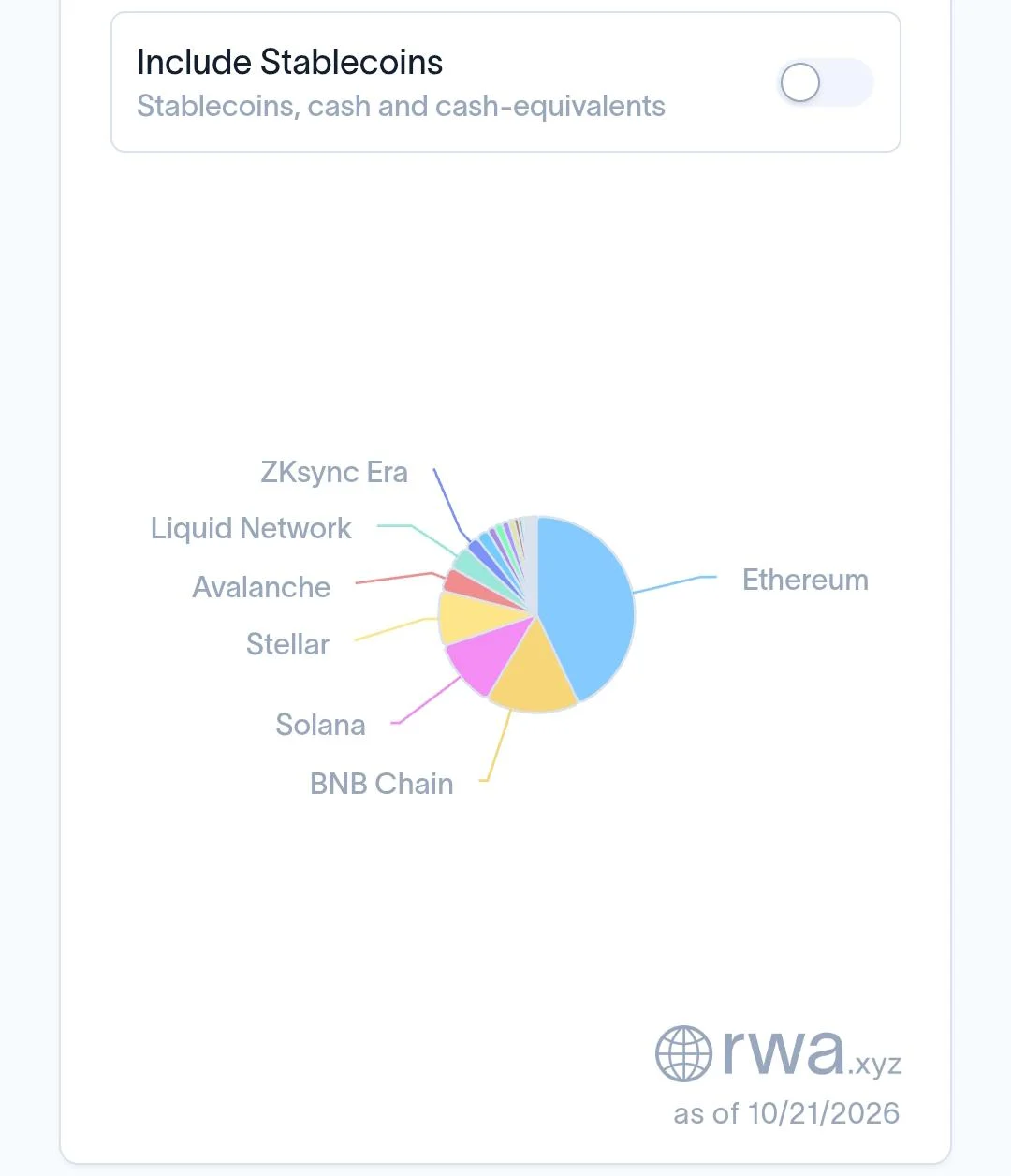
To independently verify and contextualize this figure, industry trackers like RWA.xyz provide valuable insights. As of October 21, RWA.xyz’s network table showed Stellar’s RWA figures varying significantly based on the inclusion of stablecoins:
- Excluding Stablecoins: When the "Include Stablecoins" toggle is switched off (the default on RWA.xyz, as stablecoins are often considered distinct from more complex, illiquid RWAs like tokenized bonds or real estate), Stellar’s distributed RWA figure stood at approximately $3.5 billion. Adding "represented assets" brought this total to roughly $3.64 billion.
- Including Stablecoins: To surpass the $4 billion mark, stablecoins must be factored in. RWA.xyz’s data for October 21 showed an additional $517.8 million in stablecoins on Stellar. Summing these figures ($3,640,460,565 + $517,814,875) yields a total of approximately $4,158,275,440.
This analysis reveals that while "$4B+" can be technically defended, it hinges on a definition that includes cash-like tokens, which RWA.xyz typically segregates from its core RWA total. On RWA.xyz’s own terms for "distributed RWAs" (excluding stablecoins), Stellar was approximately $360 million short of $4 billion at the time of the Chainlink integration. The discrepancy highlights the importance of clear definitions and transparent methodology when presenting market figures, especially in nascent and evolving sectors like RWA.
Stellar’s Ascending Position in the RWA Market
Despite the definitional debate, Stellar’s RWA market is far from stagnant. RWA.xyz’s Top Net Flows chart, also dated October 21, demonstrated Stellar’s impressive momentum, recording $258 million in net inflows over the preceding 30 days. This figure placed Stellar third among all networks, trailing only BNB Chain ($463 million) and Ethereum ($297 million), and significantly outpacing networks like Solana and Arbitrum, which experienced net outflows during the same period.
Globally, distributed RWAs across all networks amounted to approximately $39.00 billion as of October 21. Stellar’s $3.56 billion (excluding stablecoins) translated to roughly 9% of the total RWA market share, solidifying its position as a significant player. The network ranked fourth on RWA.xyz’s network table, boasting 83 RWA assets and 23,695 holders. This substantial market presence, regardless of the exact headline figure used, underscores Stellar’s growing relevance in the tokenized asset space and its ability to attract capital. At this pace of inflows, Stellar could plausibly cross the $4 billion mark on RWA.xyz’s own stablecoin-exclusive count in the near future.
The Oracle Gap: Initial Feeds Versus Major RWA Assets

One of the more telling aspects of the Chainlink launch is the specific list of Data Feeds that went live. The SDF’s developer guide, "Two Ways to Read Chainlink Prices on Stellar," published on October 19, listed nine feeds available at launch:
- XLM/USD
- BTC/USD
- ETH/USD
- USDC/USD
- EUR/USD
- XAU/USD (Gold)
- ARST/USD (ARS Token)
- BRZ/USD (Brazilian Digital Token)
- EURC/USD (Euro Coin)
Eight of these feeds update when the price moves by 0.5% or after a 24-hour heartbeat, whichever comes first. The gold feed (XAU/USD) uses a tighter 0.1% threshold, also with a 24-hour heartbeat, acknowledging gold’s tendency for smaller, but significant, fractional price movements.
A crucial observation emerges when comparing this list with Stellar’s largest RWA products. Stellar’s RWA page identifies its leading tokenized funds as:
- Spiko: Approximately $1.7 billion (a significant portion of Stellar’s RWA total).
- Ondo’s USDY: Over $500 million.
- Franklin Templeton’s BENJI: $605 million (as of October 6, per RWA.xyz).
Strikingly, none of these major RWA assets — Spiko, USDY, or BENJI — have a dedicated price feed in SDF’s initial launch list. Only one feed, XAU/USD, is explicitly labeled as an RWA. This suggests that while the oracle network is launching within a "$4B+ RWA ecosystem," its initial primary function appears to be supporting crypto and stablecoin-centric DeFi activities on Stellar, rather than directly pricing the network’s most prominent tokenized real-world assets. The SDF has noted that the feed list is a snapshot and will evolve, with Chainlink’s Stellar Data Feeds documentation being the official source for updates.
For Data Streams, while a mainnet verifier contract (CAKA3NBYPC6OBEUEGNIYGNYG3ES2GPQK736B5SR7ASGUXRDAKXI2JCQI) is listed, neither SDF nor Chainlink has published a public list of available streams on Stellar mainnet. Users are instructed to "contact us" to inquire about available streams, and Chainlink’s tutorial utilizes a testnet environment, suggesting that public access and comprehensive documentation for Data Streams are still in development.
Developer Warnings and Implications for Protocol Design
The SDF’s developer guide included several direct and important caveats for developers leveraging the new Chainlink feeds:
- Staleness: With a 24-hour heartbeat and a 0.5% price deviation threshold, a quiet market could see an on-chain price remain unchanged for up to a full day. This is a common characteristic of push oracles, but it necessitates careful consideration by protocol developers.
- Staleness Limits: Lending protocols and other critical DeFi applications are advised to implement their own staleness limits. This means they should not solely rely on the oracle to provide an up-to-the-second price, but rather check if the last updated price falls within an acceptable timeframe for their specific use case. If the data is too old, the protocol should halt operations or switch to a fallback mechanism.
- Single Oracle Reliance: The guide cautions against relying on a single oracle’s price for critical functions without additional checks or safeguards. Diversifying data sources or implementing circuit breakers can enhance security and robustness.
These warnings underscore the critical responsibility developers bear in integrating oracle data securely. While Chainlink provides highly reliable data, the ultimate security of a DeFi protocol depends on how that data is consumed and validated within the smart contract logic. For a blockchain like Stellar, which is attracting institutional interest, adherence to such best practices is paramount for building trust and preventing exploits.

Broader Impact and Future Outlook
The integration of Chainlink oracles represents a significant infrastructure upgrade for the Stellar network. It provides a credible and robust data foundation, essential for fostering a more dynamic and secure DeFi ecosystem. For developers, this means access to reliable price feeds for building lending platforms, stablecoin protocols, derivatives, and other financial primitives on Stellar.
In the short term, the initial set of feeds primarily supports the pricing of cryptocurrencies (XLM, BTC, ETH) and stablecoins (USDC, EURC) against the USD and EUR, along with a few regional digital tokens (ARST, BRZ). This focus suggests an immediate aim to strengthen the basic liquidity and trading functions within Stellar’s existing crypto-economic framework. The absence of feeds for Stellar’s largest tokenized real-world assets like Spiko, USDY, and BENJI indicates that the direct utility of these oracles for the largest RWA projects on Stellar is yet to be realized. These projects, which often represent complex underlying assets, may require custom feeds or different data aggregation strategies.
Looking ahead, the evolution of Chainlink’s presence on Stellar will be critical. Key indicators to watch include:
- Expansion of RWA Feeds: The addition of dedicated price feeds for major tokenized assets like Spiko, USDY, and BENJI would significantly enhance the RWA narrative on Stellar, enabling more sophisticated DeFi interactions with these assets.
- Growth in RWA Total: Continued strong net inflows could see Stellar’s stablecoin-exclusive RWA total surpass the $4 billion mark on RWA.xyz’s count, aligning the network’s internal claims with independent verification.
- CCIP Integration: The eventual integration of Chainlink’s CCIP would unlock secure cross-chain functionality, allowing Stellar-based RWAs to interact seamlessly with other blockchain ecosystems, potentially expanding their reach and liquidity.
- Named Adoptions: The SDF mentioned "leading ecosystem applications" adopting Chainlink at launch without naming them. Public announcements from these applications would provide tangible evidence of the integration’s immediate impact.
Ultimately, Chainlink on Stellar is a foundational step, laying the groundwork for more advanced financial applications. While the "$4B+ RWA ecosystem" claim requires a nuanced interpretation, Stellar’s strong RWA inflows and its strategic commitment to tokenized assets position it as a significant contender in this rapidly expanding sector. The true measure of this integration’s success will be seen in the coming months, as the oracle network expands its coverage and enables increasingly complex and secure RWA-backed DeFi innovations on the Stellar blockchain.
Disclosure: This article is for informational purposes only and does not constitute financial advice. Readers should conduct their own research and consult with a qualified financial professional before making any investment decisions.