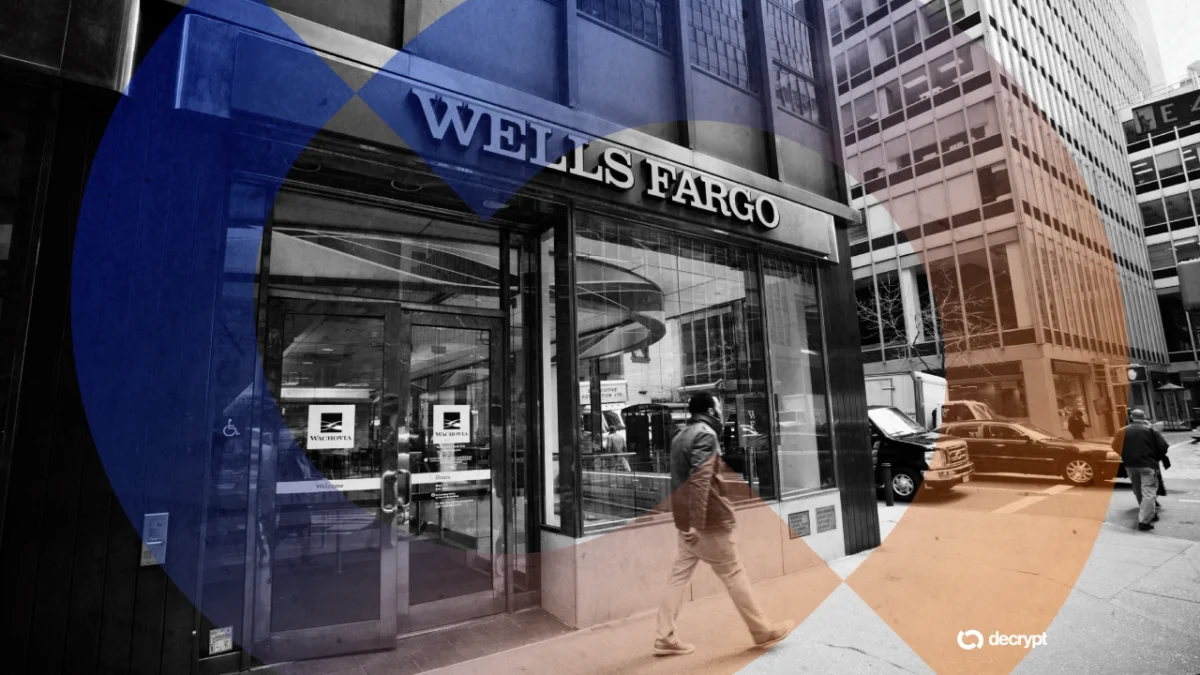
The roster of prominent companies expressing their disinterest in having their shares traded on the forthcoming tokenized stock venue, a joint venture between cryptocurrency exchange OKX and Intercontinental Exchange (ICE), the parent company of the New York Stock Exchange, continues to expand significantly. This escalating opposition underscores the complex challenges and underlying anxieties within traditional financial markets as they navigate the nascent landscape of blockchain-based securities. The latest update, detailed in a public notice from OKXICE Tokenized Securities Venue (TSV) dated Friday, October 26, 2023, revealed six new corporate giants joining the growing list of objectors. These additions include financial titan Wells Fargo, networking and cybersecurity leader Cisco Systems, semiconductor firm Marvell Technology, chip design powerhouse Arm Holdings, biotech innovator Moderna, and financial software provider Intuit. Their inclusion brings the total number of dissenting companies to 22, a notable surge from 16 just a week prior on October 19, and a mere nine on October 15. This rapid increase signals a deepening reluctance among established corporations to embrace the tokenization of their shares on a platform that blends traditional market infrastructure with decentralized finance (DeFi) principles.
The Genesis of OKXICE TSV: Bridging TradFi and DeFi
The OKXICE TSV represents an ambitious initiative designed to revolutionize equity trading by leveraging blockchain technology. Announced earlier this year and further detailed in October, the venture is a 50-50 partnership between ICE’s U.S. holding company and OKX, one of the world’s leading cryptocurrency exchanges. The primary objective of the OKXICE TSV is to facilitate 24/7 trading of tokenized U.S. stocks, a significant departure from the traditional market hours that have long governed equity markets. This round-the-clock accessibility is touted as a major advantage, potentially unlocking new liquidity and investment opportunities for global participants.
The operational backbone of the OKXICE TSV is rooted in decentralized finance. Trades on the venue are planned to run through Uniswap v4 liquidity pools, deployed on OKX’s proprietary XLayer blockchain. These tokenized shares would be paired with stablecoins, such as USDC, to enable seamless, instant settlements. This technical architecture is intended to harness the benefits of blockchain – transparency, immutability, and programmability – while offering a familiar asset class.
Crucially, the OKXICE TSV is designed to operate under the U.S. Securities and Exchange Commission’s (SEC) "innovation exemption." This regulatory pathway, unveiled by the agency in September 2023, emerged after the proposed Clarity Act, which aimed to provide a clearer regulatory framework for digital assets, stalled in the Senate. The innovation exemption offers a temporary or conditional reprieve from certain existing securities regulations, allowing novel financial technologies and business models to develop within a controlled environment. For the OKXICE TSV, this exemption is pivotal, providing a legal basis for its operations in a regulatory landscape that is still largely evolving for tokenized securities. The venue has also clarified that it intends to list shares tokenized by issuers themselves, as well as by outside parties, offering flexibility in how these digital representations of equities are brought to market. However, none of the current objectors appear to have pursued this issuer-led tokenization path.
A Growing Chorus of Dissent: The Expanding List of Objectors
The burgeoning list of companies opposing the tokenization of their shares on the OKXICE TSV is a significant development, reflecting a broader hesitation within corporate America towards the integration of traditional equities with blockchain technology. The trend of objections has escalated rapidly since mid-October, highlighting a collective concern among some of the world’s most influential businesses.
Timeline of Objections:
- October 15, 2023: Nine initial companies are identified as objectors.
- October 19, 2023: The list grows to 16 companies, including high-profile names like Microsoft, Alphabet (Google’s parent company), and Goldman Sachs. Other early objectors included Verizon, Broadcom, UnitedHealth Group, and Qualcomm. These companies represent a cross-section of tech, telecommunications, healthcare, and finance.
- October 26, 2023: The latest public notice adds six more companies, bringing the total to 22. The new additions are Wells Fargo, Cisco Systems, Marvell Technology, Arm Holdings, Moderna, and Intuit.
The inclusion of Wells Fargo adds another major U.S. banking institution to the list, aligning it with Goldman Sachs and signaling a potential cautious stance from the traditional financial sector regarding these new venues. Wells Fargo, with its vast consumer and corporate banking operations, represents a pillar of the conventional financial system. Its objection, alongside Goldman Sachs, a leading global investment bank, suggests that even institutions with significant technological capabilities and an interest in innovation are approaching tokenized securities with a degree of circumspection.
The tech sector continues to be heavily represented among the objectors. Cisco Systems, a global leader in networking hardware, software, and telecommunications equipment, adds another layer of technological heavyweight. Marvell Technology and Arm Holdings, both critical players in the semiconductor and chip design industry, reinforce the presence of major technology firms. These companies join existing tech objectors like Microsoft (software, cloud computing), Alphabet (internet services, AI), Broadcom (semiconductors, infrastructure software), and Qualcomm (semiconductors, wireless technology). This concentration of tech giants is particularly noteworthy, given that these are often the companies at the forefront of technological adoption and innovation. Their hesitation indicates that the complexities of integrating their equity with a blockchain-based trading platform might outweigh the perceived benefits for now.
Moderna, a pharmaceutical and biotechnology company known for its mRNA vaccine technology, represents the biotech sector’s entry into the objectors’ list. Intuit, a financial software company behind products like TurboTax and QuickBooks, further diversifies the profile of the opposing companies, touching on financial services software. This broad representation across various critical industries—finance, technology, healthcare, and software—suggests that the concerns are not isolated to a single sector but are rather systemic across large, publicly traded entities.
Unstated Reasons and Inferred Concerns

A significant aspect of these objections, as highlighted in the initial report, is the lack of explicit explanations from the companies themselves. The public notices from OKXICE TSV simply list the names without detailing the specific reasons for their dissent or the exact legal and operational implications of an objection. This silence necessitates an analysis of potential underlying concerns that might be driving these corporate decisions, drawing on broader industry trends, regulatory discussions, and the inherent characteristics of tokenized securities markets.
One primary inferred concern revolves around regulatory uncertainty and compliance risk. While the OKXICE TSV operates under an SEC innovation exemption, the broader regulatory landscape for tokenized securities remains ambiguous and subject to evolution. Companies may fear that participating, even passively, in such a nascent market could expose them to unforeseen regulatory liabilities, enforcement actions, or reputational damage should the regulatory framework shift or if the platform encounters issues. The SEC’s historically cautious approach to novel crypto-related financial products might contribute to this apprehension. Broker-dealers trading on the platform, as the OKXICE TSV’s own notice warns, face "unsettled questions about trade reporting and best execution," which could limit their participation and consequently thin out liquidity. These unresolved issues pose significant compliance hurdles for regulated entities.
Control over shareholder rights and corporate governance is another critical area. Traditional equity markets have well-established mechanisms for shareholder identification, voting, dividend distribution, and other corporate actions. The migration of these shares to a blockchain, even in tokenized form, introduces new complexities. Companies may be concerned about how their existing legal and operational frameworks for shareholder engagement would interface with a decentralized trading system. There might be fears of losing direct control or oversight over who holds their shares and how corporate actions are executed in a tokenized environment.
Reputational risk is also a significant factor. Many of the objecting companies are household names with deeply entrenched brands and investor bases primarily accustomed to traditional financial markets. Associating their stock with a crypto-native platform, especially one utilizing DeFi mechanisms like Uniswap pools, might be perceived as risky. The crypto market has, at times, been characterized by extreme volatility, security breaches, and regulatory scrutiny. Companies might want to distance themselves from any potential negative externalities associated with the crypto ecosystem to protect their brand integrity and investor confidence.
Furthermore, operational complexity and technical understanding could play a role. The underlying technology of the OKXICE TSV involves advanced blockchain concepts, such as XLayer and Uniswap v4. While these technologies offer potential efficiencies, their integration into existing, often legacy, corporate and financial systems can be daunting. Companies might lack the internal expertise or be unwilling to commit the resources required to understand and manage the nuances of having their shares traded in such a manner, preferring the established and well-understood infrastructure of traditional exchanges. The venue’s notice itself points to risks, such as administrators being able to upgrade smart contracts without advance notice and the internal-only audit of the contract controlling trading access, which could raise security and governance concerns for potential participants.
Finally, market fragmentation and liquidity concerns might be influencing decisions. If a company’s shares are traded on multiple venues—traditional exchanges and a tokenized platform—it could lead to fragmentation of liquidity. This could potentially affect price discovery and the efficiency of trading. While proponents argue that tokenization can enhance liquidity through 24/7 trading and fractional ownership, the initial stages of such markets often suffer from low liquidity, as noted by the IMF. Companies might prefer their shares to consolidate liquidity on established exchanges where they benefit from deep order books and robust trading volumes.
The Broader Landscape of Tokenized Securities
The pushback against OKXICE TSV is occurring within a rapidly evolving but still nascent market for tokenized securities. The concept of representing real-world assets on a blockchain has gained considerable traction, promising benefits such as increased efficiency, transparency, and accessibility. However, practical implementation faces numerous hurdles.
Nasdaq, another major U.S. exchange operator, also received SEC approval for its own tokenized securities pilot program. Notably, Nasdaq has publicly stated its intention to opt its own shares out of the SEC’s innovation exemption, aligning with the cautious approach seen from many of the companies objecting to the OKXICE TSV. This parallel action from a direct competitor underscores the industry-wide deliberation over the appropriate path for tokenizing traditional assets. Nasdaq’s move could be interpreted as a preference for a more robust, perhaps bespoke, regulatory framework for its own shares, rather than relying on a general innovation exemption.
The International Monetary Fund (IMF) recently weighed in on the tokenized securities market, providing an objective assessment. Its findings suggest "real demand" for tokenized stocks, particularly during off-hours when traditional stock markets are closed. This aligns with one of the core value propositions of the OKXICE TSV – 24/7 trading. The IMF’s report highlights the potential for these markets to capture trading activity that would otherwise be missed. However, the IMF also issued a crucial warning: the market for tokenized stocks "remains volatile and illiquid." This observation reinforces the concerns about market stability and depth that may be contributing to the hesitancy of large corporations to allow their shares to be traded on such platforms. The inherent volatility of the underlying crypto assets and the relatively small trading volumes compared to traditional markets present significant risks for institutional investors and the companies whose shares are being tokenized.
Implications and the Road Ahead
The continually expanding list of objectors presents significant challenges for the OKXICE TSV and the broader tokenized securities market.
- Limited Asset Pool: A shrinking pool of available assets due to corporate objections could severely limit the venue’s appeal and its ability to achieve critical mass in terms of liquidity and trading volume. If a substantial number of major companies opt out, the venue might struggle to attract a diverse range of investors and broker-dealers.
- Investor Confidence: The visible reluctance of prominent corporations could erode investor confidence in tokenized securities, especially among traditional finance participants who are already cautious about the crypto space. It sends a signal that even the issuers themselves are not fully comfortable with this new paradigm.
- Regulatory Scrutiny: The growing opposition might prompt regulators, including the SEC, to re-evaluate the scope and conditions of the innovation exemption. It could highlight areas where clearer guidelines or more robust protections are needed before widespread adoption can occur. The SEC might interpret the objections as a call for more comprehensive regulatory frameworks rather than relying solely on exemptions.
- Future of TradFi-DeFi Convergence: The situation underscores the fundamental friction points in converging traditional finance with decentralized finance. While the technological potential of blockchain is immense, the established legal, operational, and cultural norms of traditional markets are deeply entrenched. Bridging this gap requires more than just technological solutions; it demands a careful navigation of stakeholder concerns and a gradual evolution of regulatory and market practices.
- Corporate Autonomy: The objections also highlight a desire among corporations to maintain control over how and where their shares are traded. This is not merely a technical or regulatory issue but a matter of corporate strategy and brand management. Companies want to ensure that any platform trading their shares aligns with their corporate values, governance standards, and long-term strategic objectives.
In conclusion, the increasing number of major corporations, including Wells Fargo, Cisco Systems, and Moderna, rejecting the tokenization of their shares on the OKXICE TSV is a pivotal development in the nascent market for blockchain-based securities. While the OKXICE TSV aims to offer innovative 24/7 trading leveraging DeFi technology under an SEC innovation exemption, the widespread corporate reluctance signals deep-seated concerns. These likely include regulatory uncertainty, reputational risks, complexities in corporate governance, and operational challenges. The absence of explicit statements from the objecting companies leaves much to inference, but the collective action from such a diverse group of industry leaders suggests that the path to widespread adoption of tokenized traditional equities remains fraught with significant hurdles, necessitating further clarity, robust regulatory frameworks, and perhaps, more explicit engagement from platform providers with asset issuers. The coming months will be critical in determining whether the OKXICE TSV can overcome these objections and establish itself as a viable alternative in the global equity trading landscape.