The cryptocurrency market is currently witnessing a series of technical and fundamental shifts that suggest a major transition in capital allocation is underway, moving from Bitcoin-led dominance toward a broader altcoin expansion. Recent market signals and cycle analyses indicate that Ethereum (ETH) is entering the early stages of relative outperformance against Bitcoin (BTC), a development that has historically served as a precursor to sustained strength across the wider digital asset landscape. This shift in market leadership is not an isolated event but is instead supported by long-term momentum indicators, changing speculative appetites, and evolving macroeconomic conditions that favor risk-on assets.
The Ethereum-Bitcoin Relationship as a Market Bellwether
The ETH-to-BTC exchange rate is widely regarded by institutional and retail analysts as one of the most reliable indicators for identifying shifts in crypto market leadership. Across multiple market cycles, Ethereum has frequently assumed a dominant role during periods of expanding global liquidity. In these scenarios, Ethereum acts as a functional bridge, capturing capital as it rotates out of Bitcoin and subsequently distributing that liquidity into mid-cap and small-cap altcoins.
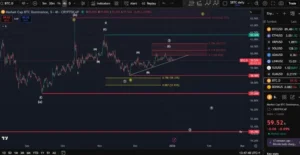
Current chart structures reveal that the ETH/BTC ratio is moving into a critical rotation phase. After a prolonged period of Bitcoin dominance—driven largely by the approval and successful launch of spot Bitcoin Exchange-Traded Funds (ETFs) in the United States—Ethereum is beginning to demonstrate technical resilience. This rotation phase is often the most aggressive period of the cycle for altcoins, as Ethereum’s price appreciation tends to lower the perceived risk for other assets in the decentralized finance (DeFi) and smart contract sectors.
Historical Context and Cycle Analysis
To understand the significance of the current market structure, it is necessary to examine the chronology of previous "altcoin seasons." In the 2017 cycle, Ethereum’s breakout against Bitcoin led to a massive expansion in the Initial Coin Offering (ICO) market. Similarly, in the 2020-2021 cycle, Ethereum’s outperformance coincided with the "DeFi Summer" and the subsequent explosion of the Non-Fungible Token (NFT) market.
In the current environment, the market has followed a distinct timeline:
- The Recovery Phase (Late 2022 – 2023): Bitcoin led the initial recovery from the bear market lows, driven by its status as a "digital gold" and a flight to quality following the collapse of several centralized entities.
- The Institutional Phase (Early 2024): The launch of Bitcoin ETFs solidified BTC’s position within traditional finance, leading to new all-time highs while altcoins largely lagged behind.
- The Rotation Phase (Late 2024 – 2025): The current period, characterized by the stabilization of Bitcoin and the emerging strength of Ethereum, particularly following the approval of spot Ethereum ETFs and technical upgrades like the Dencun hard fork, which reduced Layer-2 transaction costs.
Technical Indicators: The Bullish MACD Flip
Adding weight to the thesis of an impending altcoin surge is the behavior of long-term momentum indicators. The Moving Average Convergence Divergence (MACD) for the total altcoin market capitalization (excluding Bitcoin) has flipped bullish on the monthly timeframe for the first time in several years. The MACD is a trend-following momentum indicator that shows the relationship between two moving averages of an asset’s price.
Historical data shows that when the long-term MACD crosses into bullish territory for the altcoin market, it often coincides with multi-month expansions. These periods are characterized by high "beta" returns, where altcoins outperform Bitcoin on a percentage basis. This technical signal suggests that the "smart money" is beginning to position itself for a sustained move higher, anticipating that the period of Bitcoin’s absolute dominance may be nearing a temporary ceiling.
The Decline and Potential Revival of Speculative Assets
Speculative segments of the market, particularly memecoins, provide a unique lens into retail investor sentiment and risk appetite. After a period of intense mania in early 2024, memecoin dominance entered a steady decline. By late 2025, memecoins accounted for just over 3% of the total altcoin market capitalization, a significant drop from the 11% peak recorded during the height of the previous speculative frenzy.
However, recent market activity suggests this trend may be reversing. Several major memecoins have recorded double-digit gains in recent weeks, lifting the overall dominance ratio for this sector. In past cycles, a resurgence in memecoin activity has often signaled the final "risk-on" phase of a liquidity cycle. While these assets lack the fundamental utility of platforms like Ethereum, Solana, or Polygon, they serve as high-volatility vehicles that attract retail capital and increase overall market velocity.

Case Studies: Polygon, Cardano, and Solana
The potential for a "meteoric boost" is particularly evident in large-cap altcoins that have spent the last year building infrastructure and expanding their ecosystems.
- Solana (SOL): Solana has emerged as a primary competitor to Ethereum, capturing a significant share of the retail market through its high throughput and low transaction costs. Its ability to maintain network stability during periods of high traffic has restored investor confidence, positioning it as a leader in any upcoming altcoin expansion.
- Polygon (POL/MATIC): As Ethereum’s premier scaling solution, Polygon has undergone significant transformations, including its transition to the "AggLayer" and the rebranding of its native token. These developments aim to unify liquidity across multiple chains, making it a central pillar of the Ethereum ecosystem.
- Cardano (ADA): Cardano has continued its slow and steady approach to decentralized governance and smart contract security. With the recent "Chang" hard fork, the network has moved closer to full decentralization, a move that analysts believe could attract long-term institutional holders looking for "green" and governed blockchain solutions.
Macroeconomic Drivers and Global Liquidity
The broader macroeconomic environment remains a critical factor in the timing of the altcoin rotation. Digital assets are highly sensitive to global liquidity conditions, often measured by the M2 money supply. When central banks, particularly the U.S. Federal Reserve, pivot toward a more accommodative monetary policy—such as lowering interest rates or slowing quantitative tightening—liquidity flows into riskier assets.
Currently, the market is navigating a complex landscape of cooling inflation and shifting employment data. While full-scale liquidity expansion has yet to materialize, the anticipation of a more favorable interest rate environment is already being priced into crypto assets. If the Fed continues to signal a "soft landing" or moves toward rate cuts, the resulting influx of capital could cause the Ethereum-led rotation to accelerate rapidly.
Market Sentiment and Expert Projections
Industry observers and market analysts have expressed a mix of cautious optimism and strategic positioning. Many point out that while the technical setup is constructive, the market requires a catalyst to ignite a full-scale "Altseason." This catalyst could take the form of a major technological breakthrough, a favorable regulatory ruling, or a significant shift in institutional capital flows.
Financial analysts have noted that the "wealth effect" from Bitcoin’s recent gains is starting to trickle down. Investors who have seen substantial profits in BTC are increasingly looking to diversify into "blue-chip" altcoins to capture higher percentage gains. This behavior is a staple of crypto market psychology and serves as the engine for the rotation cycles observed in 2017 and 2021.
Risks and Counter-Arguments
Despite the bullish signals, several risks remain that could delay or dampen the expected altcoin boost. Bitcoin dominance (BTC.D) remains historically high, and any significant volatility in the traditional stock market could lead to a "risk-off" event where investors liquidate crypto holdings across the board. Furthermore, the regulatory environment for altcoins remains fragmented, with ongoing legal challenges regarding the classification of certain tokens as securities.
Additionally, the sheer number of new tokens entering the market has led to "liquidity dilution." Unlike previous cycles where capital was concentrated in a few dozen major projects, the current market must support thousands of protocols, which may result in a more fragmented and less explosive growth phase for individual assets.
Conclusion and Future Outlook
The current market setup for altcoins appears to be emerging rather than fully complete. The combination of a strengthening ETH/BTC ratio, a bullish MACD flip, and a potential revival in speculative interest points toward a significant shift in market dynamics. While Bitcoin remains the foundational asset of the industry, the data suggests that the "bridge" to an Ethereum-led altcoin expansion is being built.
As the market enters the final quarter of the year and looks toward 2025, the focus will remain on whether these technical signals can translate into sustained price action. For investors and market participants, the coming months will likely be defined by the tension between Bitcoin’s institutional stability and the high-growth potential of the broader altcoin ecosystem. If historical patterns hold true, the transition currently being observed could mark the beginning of the cycle’s most transformative phase.