


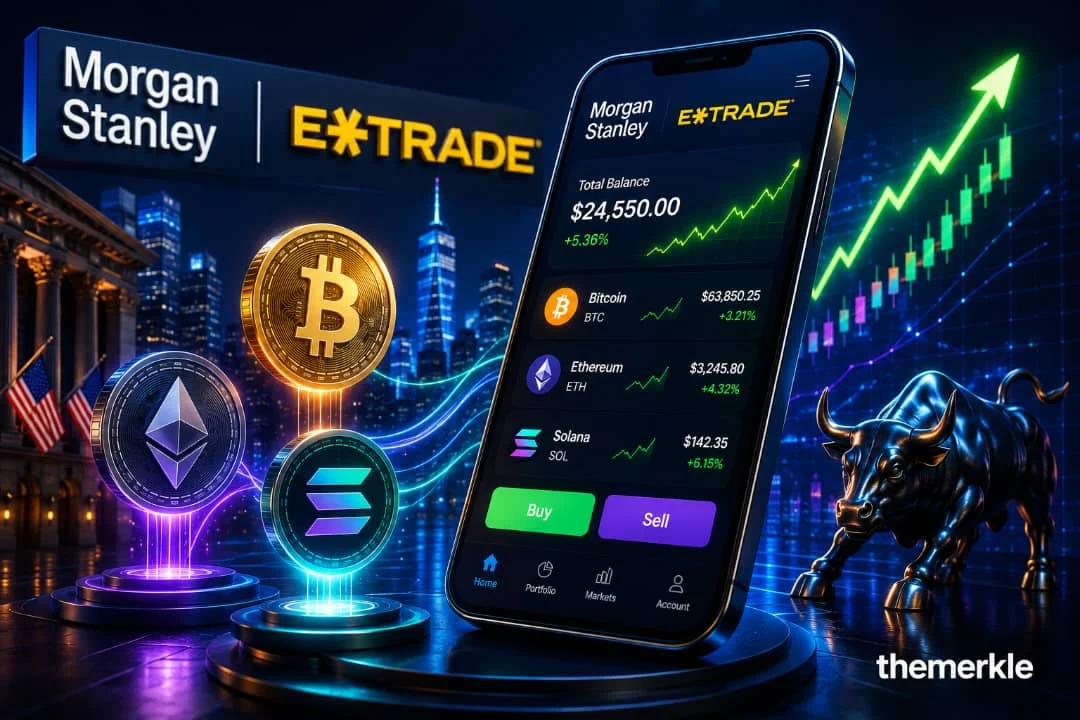
Morgan Stanley, a titan of traditional finance, is making a definitive stride into the burgeoning digital asset space with the imminent launch of direct cryptocurrency trading on its ETrade platform. This strategic move, currently in a testing phase, signals a profound shift in the financial landscape, bridging the historical chasm between Wall Street and the decentralized crypto environment. With an anticipated rollout to all 8.6 million ETrade users by the close of the year, the firm is set to offer seamless access to major cryptocurrencies, including Bitcoin (BTC), Ethereum (ETH), and Solana (SOL), directly within existing brokerage accounts, thereby eliminating the need for external exchanges or separate digital wallets.
This initiative positions Morgan Stanley in direct competition with established crypto platforms such as Coinbase and Robinhood, as well as fellow traditional brokerage houses like Charles Schwab. However, the firm is entering the arena with an aggressive, consumer price-disrupting model, poised to ignite what analysts are already terming a "crypto fee war" among large financial institutions. Early information, corroborated by reports from Bloomberg, indicates that Morgan Stanley will charge an estimated 0.50% per trade. This pricing strategy significantly undercuts Charles Schwab’s reported 0.75% fee and presents a more aggressive stance against Coinbase’s variable pricing structure, which can often be higher for smaller retail trades.
A Strategic Entry: Morgan Stanley’s Digital Asset Journey
Morgan Stanley’s foray into direct crypto trading is not an isolated event but rather the culmination of a calculated and evolving strategy regarding digital assets. Historically, Wall Street maintained a cautious, often skeptical, distance from cryptocurrencies, viewing them primarily as speculative assets lacking regulatory clarity and institutional-grade infrastructure. However, a confluence of factors, including escalating client demand, the maturation of crypto market infrastructure, and a gradual increase in regulatory frameworks, began to shift this perception.
The firm’s initial steps into the digital asset realm were measured. In early 2021, Morgan Stanley became one of the first major U.S. banks to offer wealthy clients access to Bitcoin funds, signaling a recognition of the asset class’s growing importance within sophisticated investment portfolios. This was followed by increased research into blockchain technology, investments in crypto-focused startups, and the development of internal expertise in the digital asset ecosystem. The acquisition of ETrade in 2020, which brought with it a significant retail client base and a robust online trading platform, provided Morgan Stanley with the ideal vehicle to launch broader crypto services. ETrade, known for its accessible trading tools and extensive user base, offered a ready-made channel to introduce digital assets to a wide demographic of investors. Rumors and pilot programs for direct crypto trading on the platform began circulating in late 2023 and early 2024, setting the stage for the current formal announcement. This chronology underscores a deliberate and phased approach, moving from indirect exposure for institutional clients to direct trading for its vast retail segment.
The Intensifying Crypto Fee War
Morgan Stanley’s pricing strategy is not merely competitive; it is a tactical maneuver designed to capture a significant share of the burgeoning retail crypto trading volume. At 50 basis points (0.50%), E*Trade’s offering is positioned as one of the most cost-effective options from a major traditional brokerage. To put this in perspective, Charles Schwab currently charges approximately 75 basis points (0.75%) for crypto services, while Fidelity Investments is reported to levy fees close to 1.00% (100 basis points). Crypto-native exchanges like Coinbase employ a tiered, variable pricing model that often results in higher effective fees for smaller retail transactions, in addition to spreads. Robinhood, while promoting "commission-free" trading, generates revenue through payment for order flow (PFOF) and spreads, which can obscure the true costs to consumers.
This aggressive pricing echoes the intense competition witnessed during the early days of Bitcoin exchange-traded funds (ETFs), where a "race to the bottom" drove expense ratios to near zero. Analysts predict a similar trajectory for crypto trading fees. Should this trend persist, it could lead to a rapid erosion of trading fees across various platforms, ultimately benefiting consumers but posing a significant challenge to the revenue models of crypto-native exchanges. For long-time purveyors of retail crypto trading like Coinbase, this marks a pivotal moment. They must now contend with traditional financial enterprises that possess immense distribution networks, deep pockets, and the established brand trust to appeal to a broader base of traditional investors who might have previously been hesitant to engage with crypto-native platforms.
Supporting Data and Market Context
The global cryptocurrency market, despite its inherent volatility, has demonstrated remarkable growth and resilience. Peaking at an approximate market capitalization of $3 trillion in late 2021, it currently hovers around $2.5 trillion, indicative of a substantial asset class. The number of crypto investors worldwide has surged, with estimates from Statista indicating over 425 million individuals owning cryptocurrencies in 2023. This rapid adoption underscores a significant and untapped demand from retail investors.
Morgan Stanley’s entry via ETrade, with its 8.6 million users, is particularly impactful when compared to the user bases of crypto-native platforms. While Coinbase boasts over 100 million verified users globally and Robinhood reports millions of active crypto users, ETrade’s existing client base represents a crucial segment of traditional investors who are already accustomed to brokerage platforms and may now feel more comfortable exploring digital assets through a familiar and trusted intermediary. The firm’s aggressive fee structure is a direct play for market share, aiming to convert existing E*Trade users into crypto traders and potentially attract new clients seeking lower-cost access to digital assets.
Consider a hypothetical $5,000 trade:
- At E*Trade (0.50% fee): $25
- At Charles Schwab (0.75% fee): $37.50
- At Fidelity (estimated 1.00% fee): $50
- At Coinbase (variable, but often higher for retail, e.g., 1.49% for small trades): potentially $74.50 or more, plus spread.
These figures clearly illustrate the disruptive potential of Morgan Stanley’s pricing model, which could force competitors to re-evaluate their own fee structures to remain competitive.
Accessibility: Bridging the User Experience Gap
Beyond competitive pricing, Morgan Stanley’s push is fundamentally about accessibility and user experience. One of the primary barriers to mainstream crypto adoption has been the perceived complexity of managing digital assets. Retail investors often face challenges with processes like managing private keys, navigating unfamiliar interfaces of crypto-native exchanges, and transferring assets between separate wallets and platforms. The fear of losing assets due to technical errors or cyberattacks has deterred many potential participants.
By embedding crypto trading directly into the familiar ETrade brokerage interface, Morgan Stanley effectively removes these significant friction points. Clients will be able to purchase and sell digital assets from within the same application they use for stocks, bonds, and ETFs, vastly simplifying the investment experience. This integration leverages the inherent trust and operational familiarity that millions of users already have with ETrade, lowering the psychological barrier to entry for digital assets.
This seamless integration is made possible through a strategic partnership with Zero Hash, a decentralized crypto-backend infrastructure provider. Zero Hash’s technology empowers Morgan Stanley to provide robust, compliant, and operationally efficient trade execution, ensuring the security and reliability that traditional finance clients expect. This partnership highlights the importance of specialized infrastructure in enabling traditional financial institutions to enter the crypto market responsibly.
Furthermore, this launch is explicitly labeled "phase one," indicating Morgan Stanley’s long-term commitment rather than a mere exploratory venture. Anticipated future enhancements include "complete wallet performance" and a "bigger series of property assistance." "Complete wallet performance" could imply more advanced features such as the ability to transfer crypto in and out of the E*Trade platform, potentially offering self-custody options or integration with decentralized finance (DeFi) protocols, while maintaining the simplicity of a brokerage interface. "Bigger series of property assistance" strongly suggests an expansion beyond Bitcoin, Ethereum, and Solana to include a wider array of cryptocurrencies, stablecoins, and potentially even tokenized assets, reflecting a comprehensive vision for digital asset offerings.
Wall Street’s Growing Dominance in Crypto Markets
Morgan Stanley’s ETrade initiative represents the latest, and one of the most significant, steps in a broader trend toward the deeper integration of Wall Street into digital asset markets. The line between traditional finance and decentralized finance continues to blur as large financial institutions increasingly incorporate crypto products and services into their core offerings. This shift is poised to unlock substantial new flows of capital. Providing direct crypto access to millions of ETrade users could dramatically boost market participation, enhance liquidity, and introduce digital assets to a demographic that might have previously deemed them too risky or complex.
For retail investors, the presence of an institutional intermediary like Morgan Stanley offers a sense of security and legitimacy that was often absent in the early, wild west days of crypto. This "institutional halo effect" could encourage a new wave of investors to engage with digital assets. Simultaneously, this increased institutional participation is likely to alter the dynamics of crypto markets. While it may bring greater stability and reduce extreme volatility through increased liquidity and more sophisticated trading strategies, it will also inevitably lead to increased scrutiny from regulators and a closer coupling of crypto assets with existing asset classes and global macroeconomic trends.
The entry of a firm of Morgan Stanley’s stature is expected to catalyze a cascade of similar integrations across other major brokerage platforms. As digital assets continue their transition from an obscure, niche asset class to a recognized and increasingly legitimate component of global investment portfolios, they are on track to become what many analysts are calling the "third pillar" alongside traditional stocks and bonds.
Morgan Stanley is not merely dabbling in crypto trading; it is doing so with a clear intent to disrupt and lead in a crowded field. With its combination of lower fees, massive distribution through the E*Trade platform, seamless in-app purchase features, and a vastly simplified user experience, the firm is strategically positioned to redefine how the general populace views and accesses digital assets. The coming months, as the full rollout progresses later this year, will be crucial in revealing the true extent of this impact. However, one undeniable fact is clear: the race between Wall Street incumbents and crypto-native platforms for the future of digital asset trading has begun in earnest, promising innovation, competition, and potentially, a new era of mainstream crypto adoption.














